Artwork
Anticoli Corrado
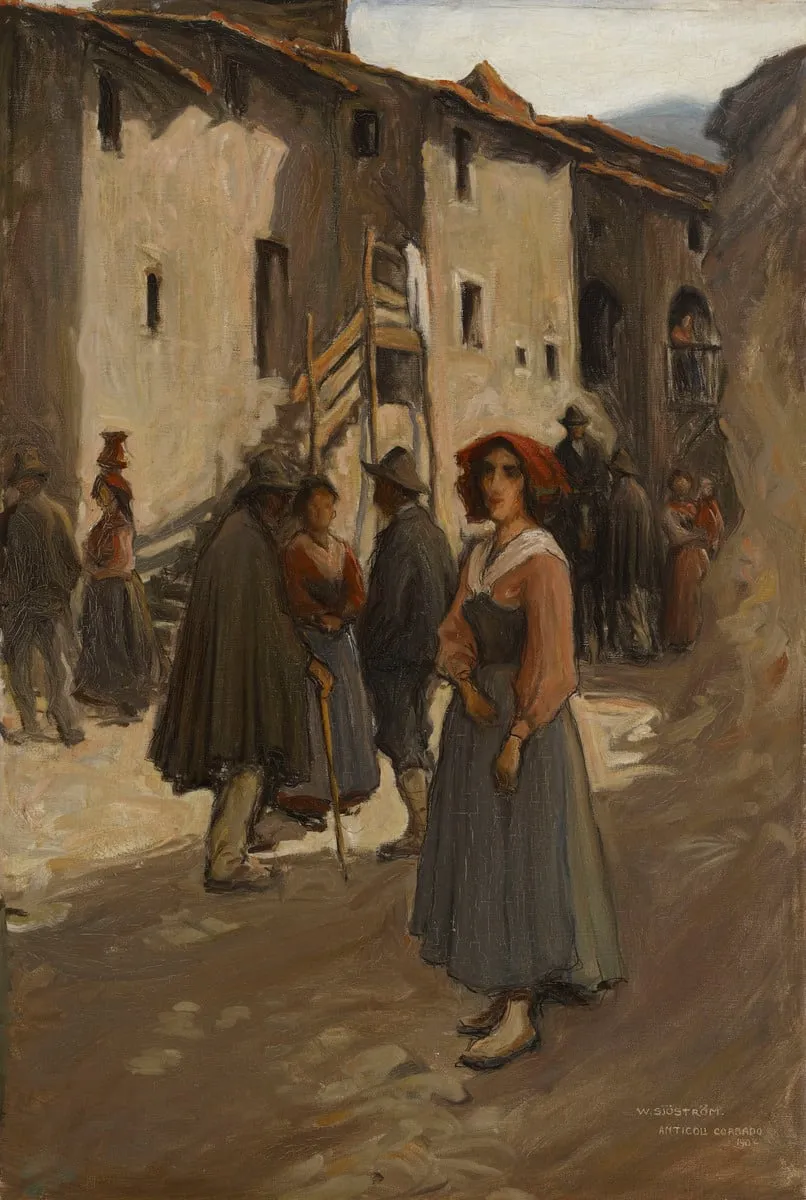
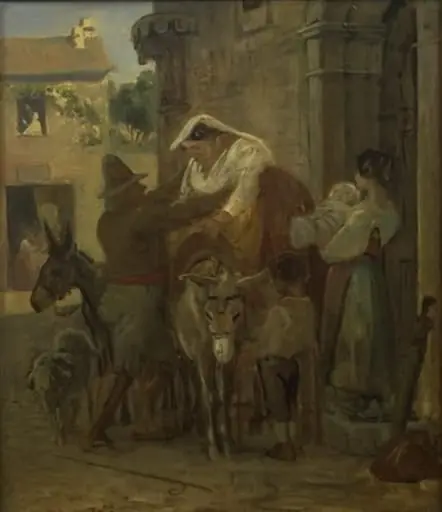
Anticoli Corrado is an unspecified painting by Wilho Sjöström. It is held in the collection of the Finnish National Gallery. The painting portrays a quiet moment in a rural Italian village, centered on a woman in a long dress and red headscarf.
About this work
Overview
The composition is grounded in everyday life, with a tiled-roof building and a leaning ladder anchoring the scene in a tangible, unidealized environment.
The painting portrays a quiet moment in a rural Italian village, centered on a woman in a long dress and red headscarf. She stands among a small group of figures, their attire and the surrounding architecture suggesting a traditional, modest setting. The composition is grounded in everyday life, with a tiled-roof building and a leaning ladder anchoring the scene in a tangible, unidealized environment.
Subject & Meaning
The central figure, distinguished by her headscarf and stillness, appears to observe or await something just beyond the frame. The surrounding figures, dressed in layered garments and hats, suggest a community engaged in routine activities. The scene conveys no dramatic narrative, instead evoking a sense of quiet endurance and the rhythms of rural existence.
Technique & Style
The artist employs layered brushwork to build texture in clothing and surfaces, with visible impasto adding tactile depth to fabrics and walls. Warm, muted tones dominate, enhancing the intimate atmosphere. Light falls softly across the figures and architecture, modeling forms without harsh contrast, reinforcing the scene’s subdued, contemplative mood.
History & Provenance
The painting originates from Anticoli Corrado, a small hill village near Rome known for its artistic community in the late 19th and early 20th centuries. It was likely created by a local painter or visitor drawn to the area’s preserved traditions. Its provenance remains tied to regional collectors before entering broader institutional holdings.
Context
Created during a period when rural Italy was undergoing gradual modernization, the work reflects a fascination with vanishing customs. Artists from urban centers often visited villages like Anticoli Corrado to document traditional dress and daily life, producing images that balanced ethnographic interest with aesthetic restraint.
Legacy
The painting contributes to a broader body of regionalist art that valued authenticity over idealization. While not widely exhibited beyond local collections, it remains a quiet testament to the visual record of Italian village life, preserving details of dress, architecture, and social posture that might otherwise have been lost.
Artist & collection
Artist
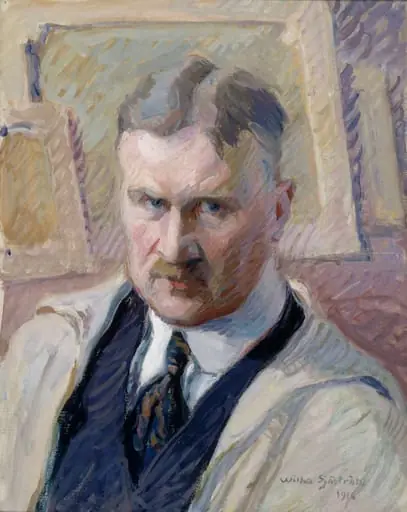
Wilho Sjöström painted quiet scenes of everyday life in Finland from the early 1900s.

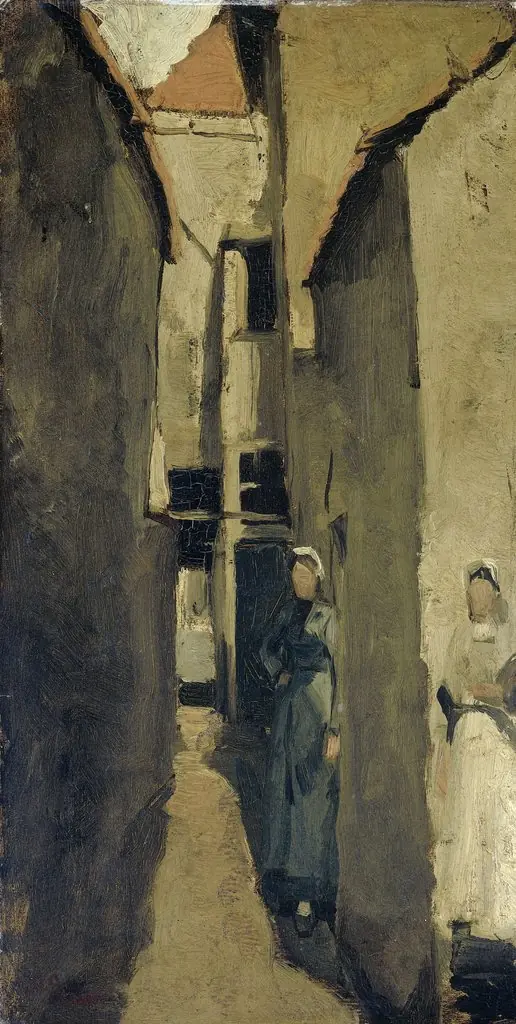 Neighborhood Street in The Hague or Scheveningen
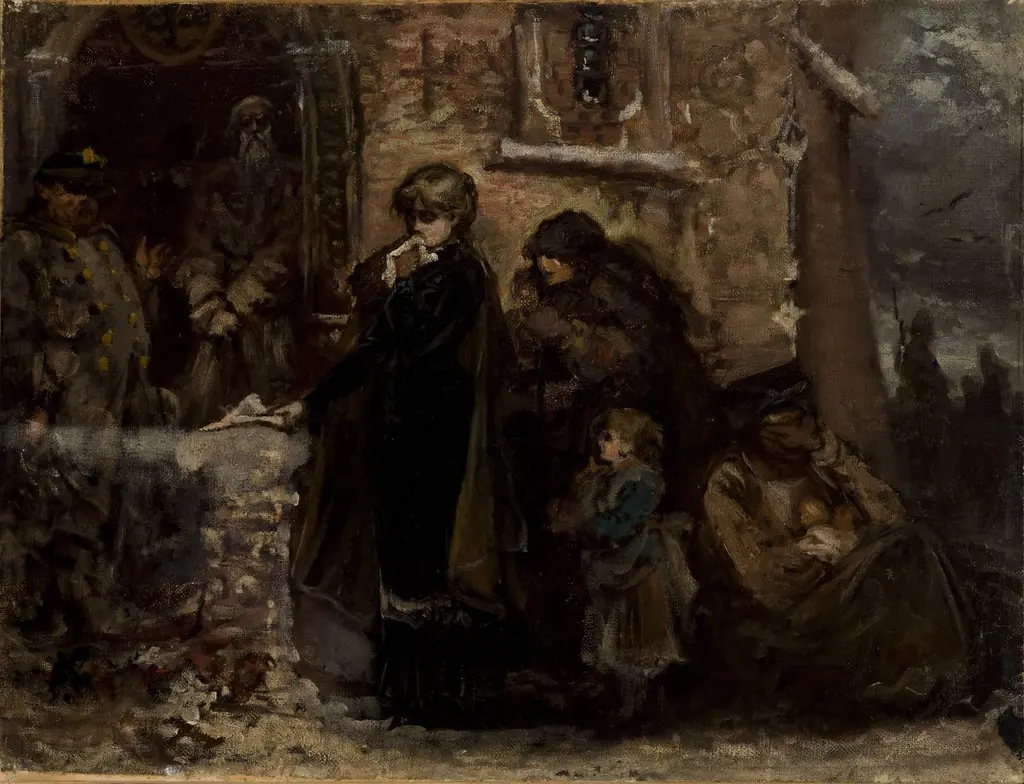 In Front of a Church
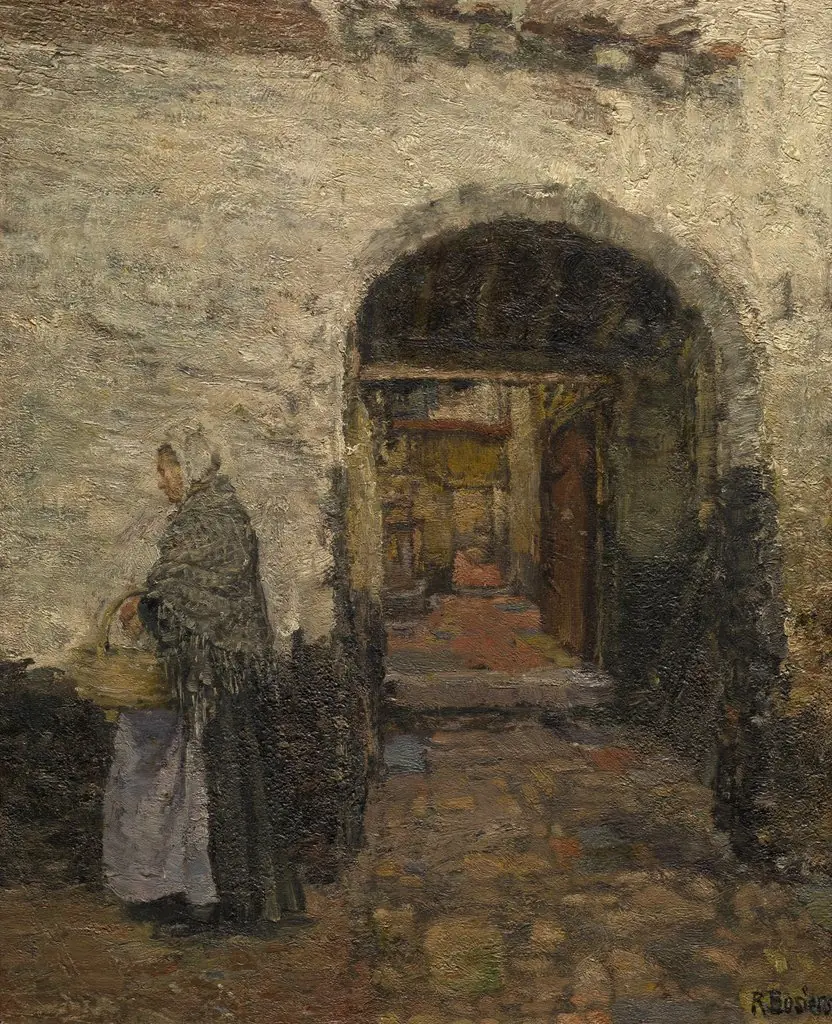 The Vlaaikensgang in Antwerp
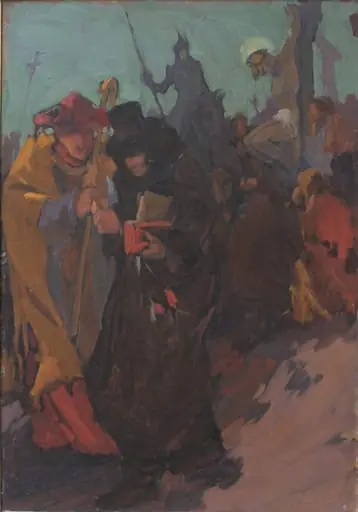 Trădătorii
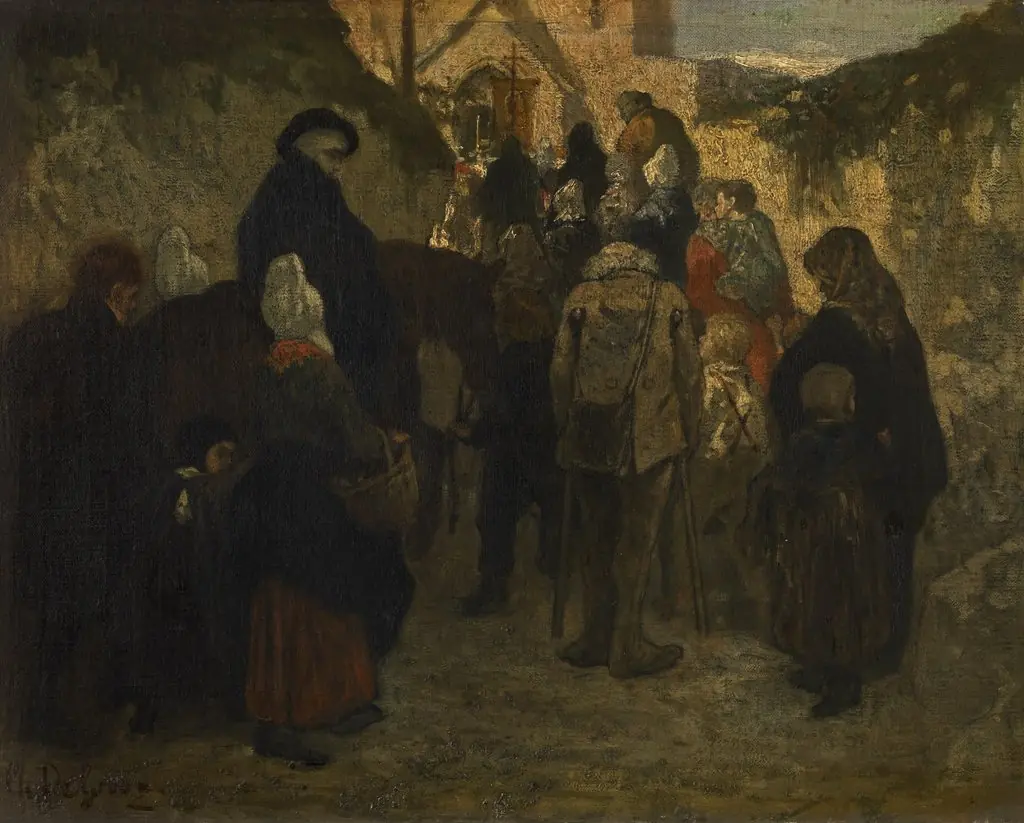 Pilgrimage in Diegem
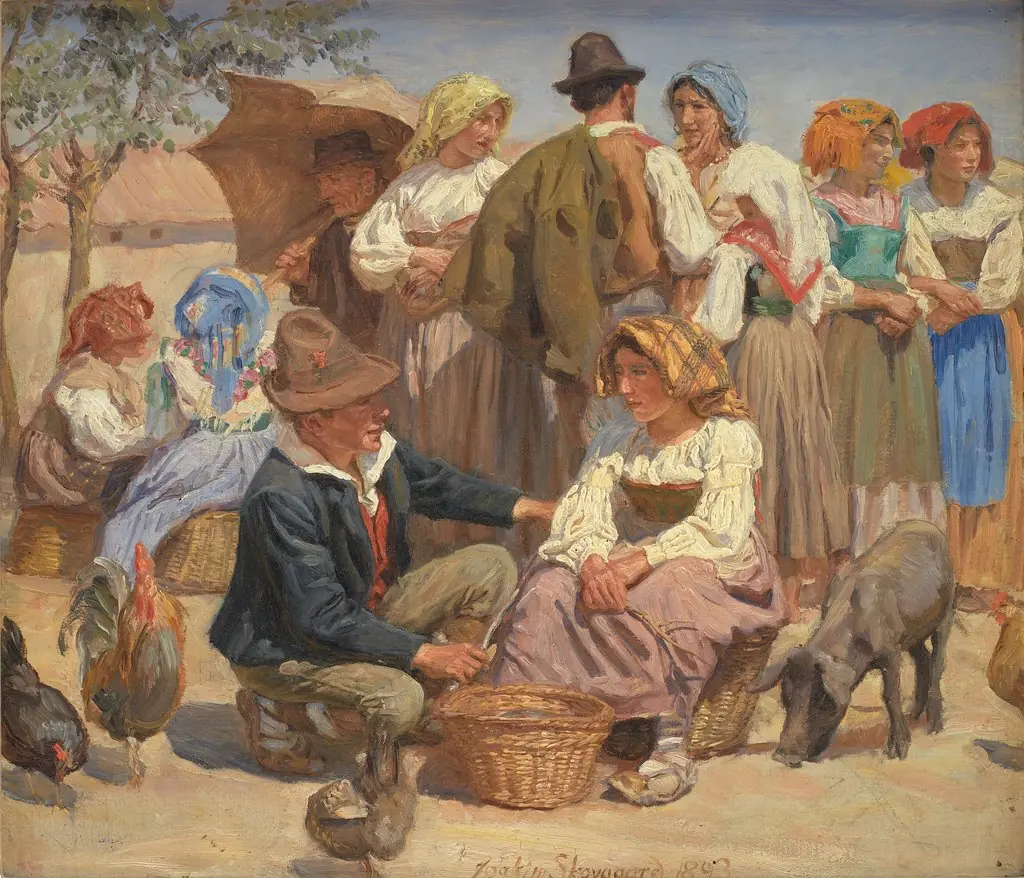 Market in Sora
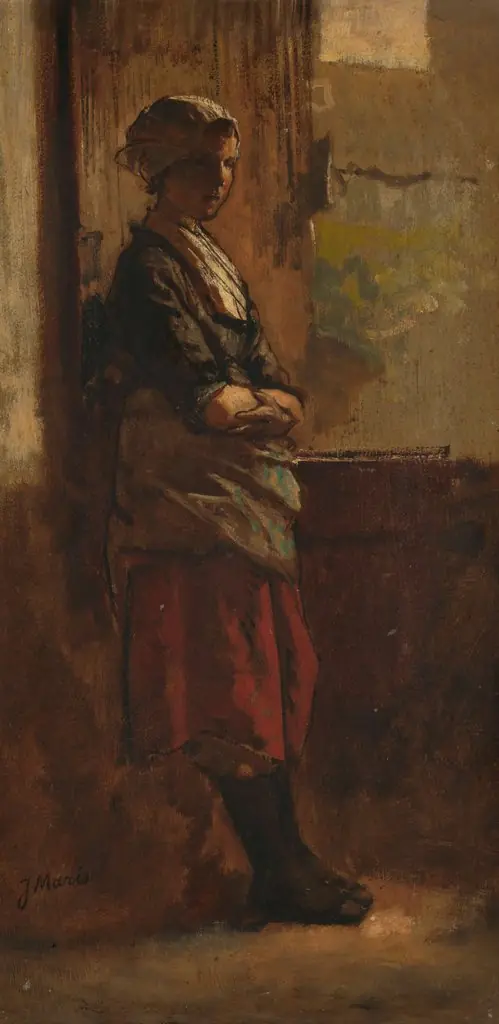 Meisje bij een deuropening.
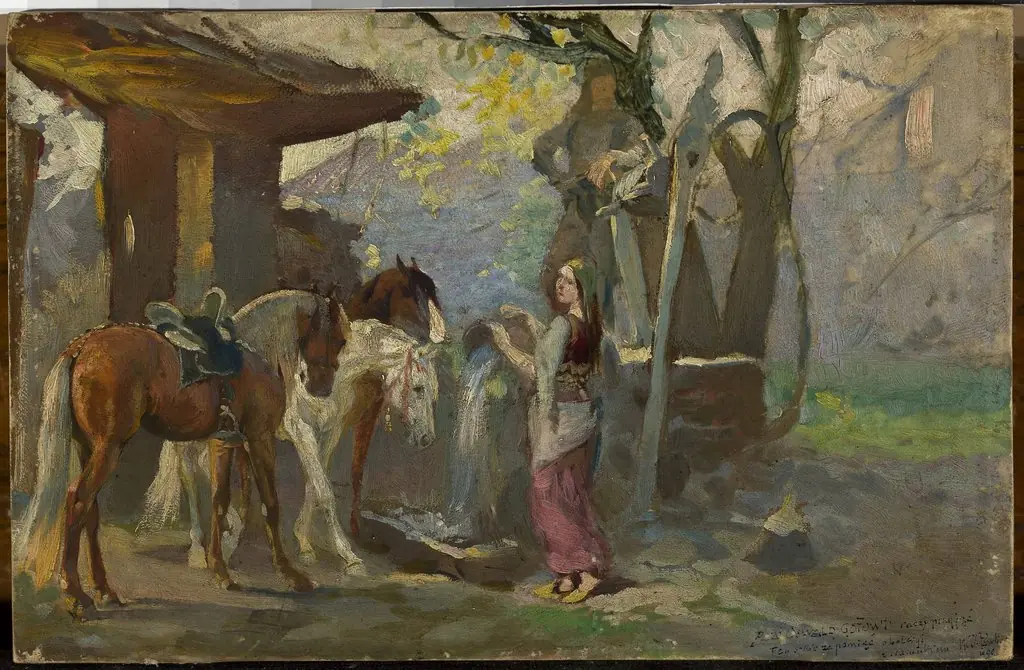 Horses at the waterhole, sketch
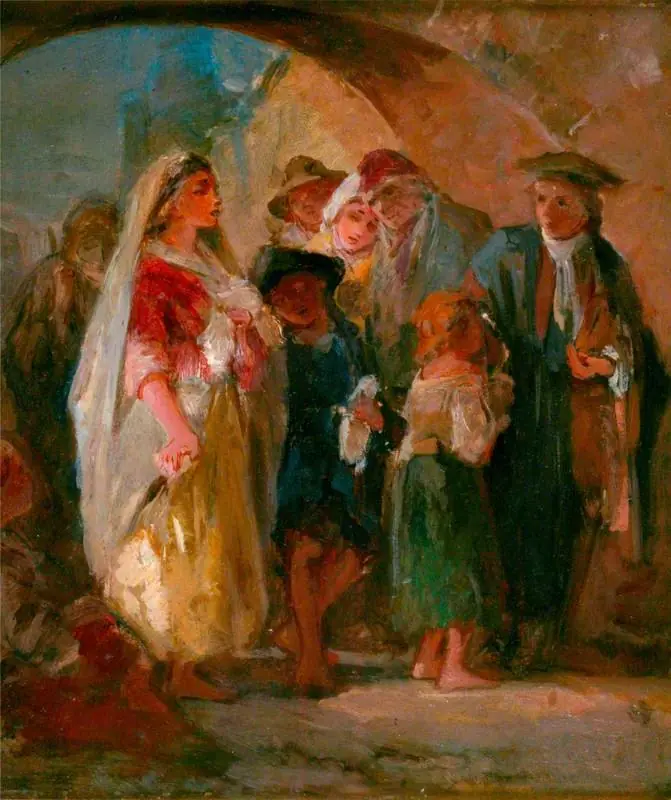 Oliver Goldsmith (1728/1730–1774), as a Young Man (sketch for John Forster's 'Life of Oliver Goldsmith')
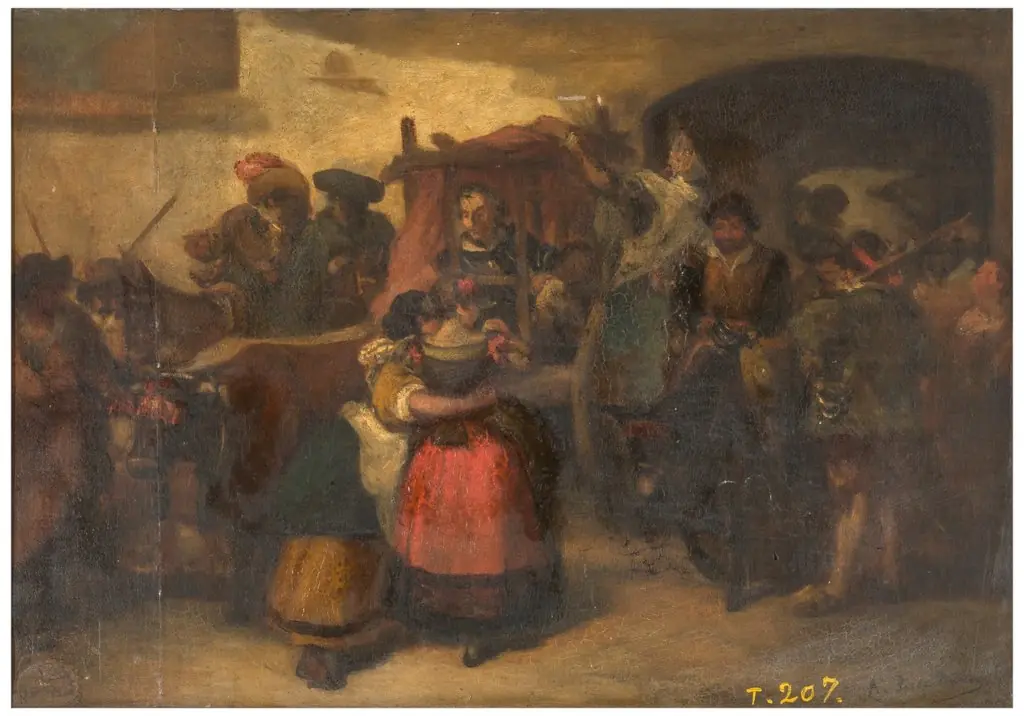 Don Quijote en el carro saliendo de la venta
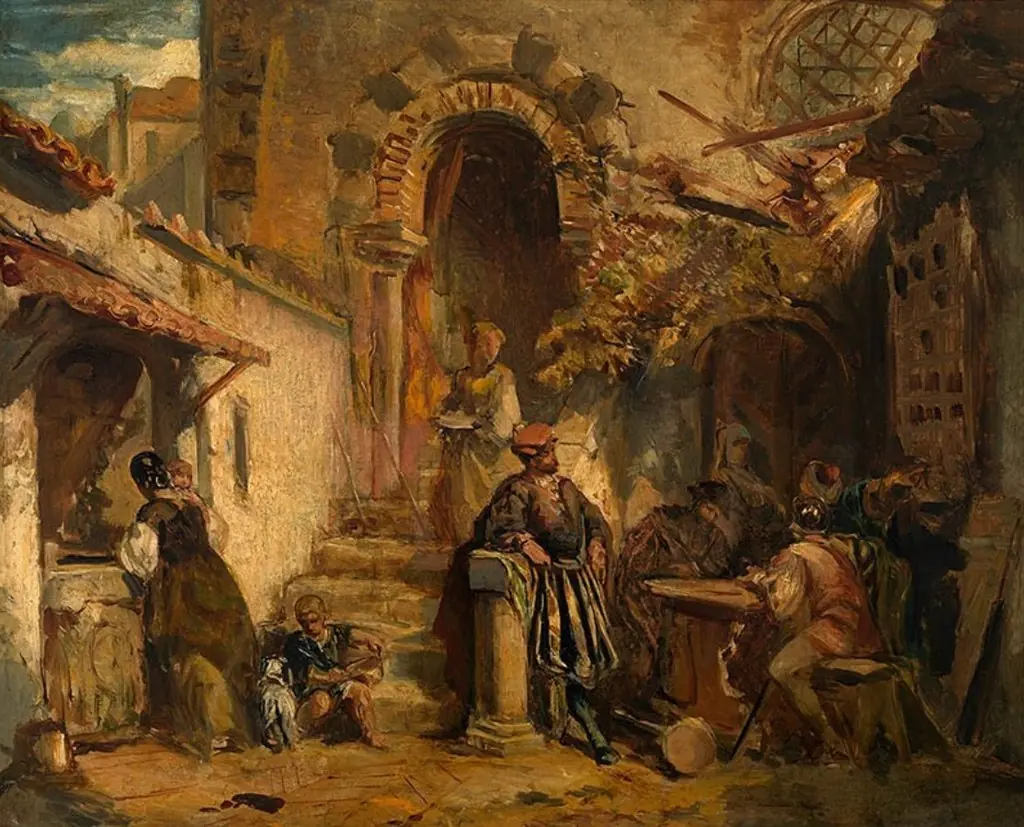 Gypsies
 A Stout Roman Woman Being Helped onto a Donkey