Artwork
Ruins by a River with a Man in a Boat
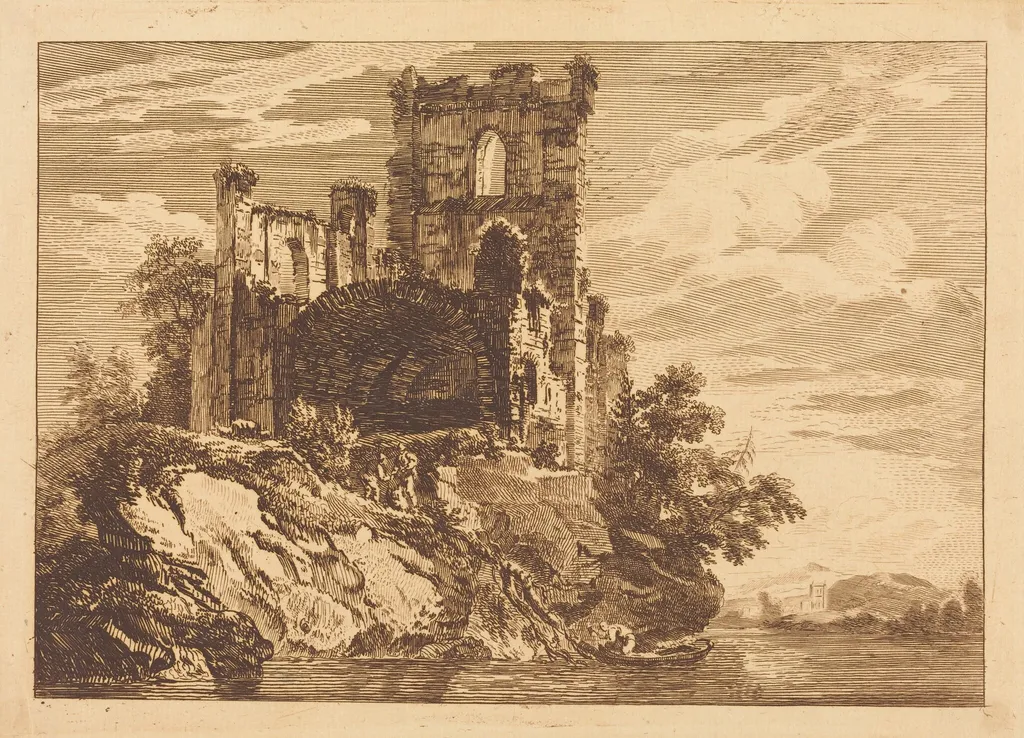
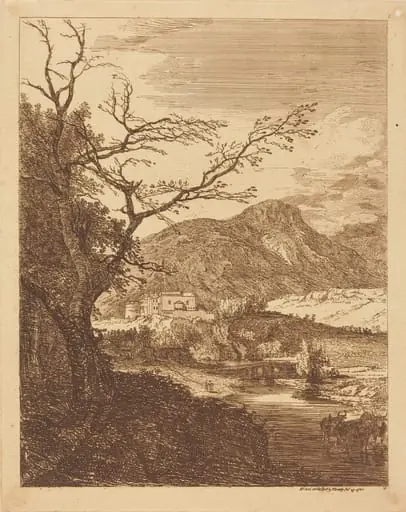
Ruins by a River with a Man in a Boat is an ink print by the Romanticist artist Paul Sandby. It dates from 1758 and is held in the collection of the National Gallery of Art.
About this work
This etching shows crumbling stone walls near a slow river. A small boat carries one man. The trees are bare. The sky looks heavy.
Paul Sandby made this in 1758. Etchings use acid to bite lines into metal plates. That gives soft edges here. The ruins feel old, almost forgotten.
Look up etching to see why lines can look fuzzy.
Overview
Created in 1758, this etching by Paul Sandby captures a quiet riverside scene dominated by weathered stone ruins and a solitary figure in a small boat.
Created in 1758, this etching by Paul Sandby captures a quiet riverside scene dominated by weathered stone ruins and a solitary figure in a small boat. As a skilled mapmaker turned landscape artist, Sandby employed etching techniques to render subtle tonal variations, giving the scene a muted, contemplative atmosphere. The work reflects his early interest in topographical accuracy combined with poetic observation of the natural and built environment.
Subject & Meaning
The composition centers on decaying architecture beside a slow-moving river, suggesting the passage of time and the quiet erosion of human endeavor. The lone figure in the boat adds no narrative, instead reinforcing solitude and stillness. Bare trees and a low, overcast sky deepen the sense of melancholy, inviting reflection on impermanence rather than celebrating grandeur or ruin as spectacle.
Technique & Style
Sandby used etching, a method involving acid to bite lines into a metal plate, to achieve soft, fluid contours rather than sharp definition. The resulting lines vary in density, creating atmospheric depth and a sense of weathered texture in the ruins. The absence of bold contrasts and the delicate handling of light and shadow reflect a restrained, observational approach characteristic of his early work.
History & Provenance
Made in 1758, this print predates Sandby’s role as a founding member of the Royal Academy in 1768. It belongs to a series of topographical etchings he produced during his travels across Britain, often documenting landscapes with historical remains. While its early ownership is undocumented, it aligns with the growing 18th-century interest in antiquarian subjects and landscape as a subject worthy of artistic study.
Context
In mid-18th-century England, interest in ruins and pastoral scenery grew alongside antiquarianism and the Picturesque movement. Sandby’s etching fits within this trend, offering a quiet alternative to dramatic Romantic depictions of decay. His background in surveying informed precise spatial relationships, yet here he prioritizes mood over documentation, bridging cartographic discipline with lyrical sensitivity.
Legacy
Though not among Sandby’s most widely reproduced works, this etching exemplifies his contribution to elevating landscape printmaking as a serious genre. His technical precision and restrained emotional tone influenced later topographical artists and helped shape the British tradition of landscape etching, emphasizing observation over idealization.
Artist & collection
Artist
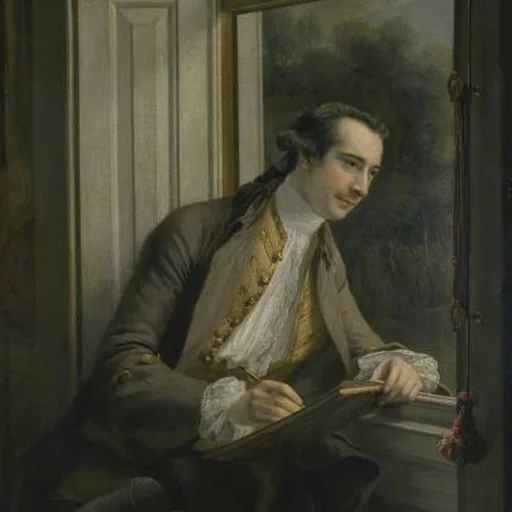
Paul Sandby, (1731 – 7 November 1809) was an English mapmaker and painter who specialised in landscape art. Along with his older brother Thomas Sandby, he was one of the founding members of the Royal Academy in 1768.

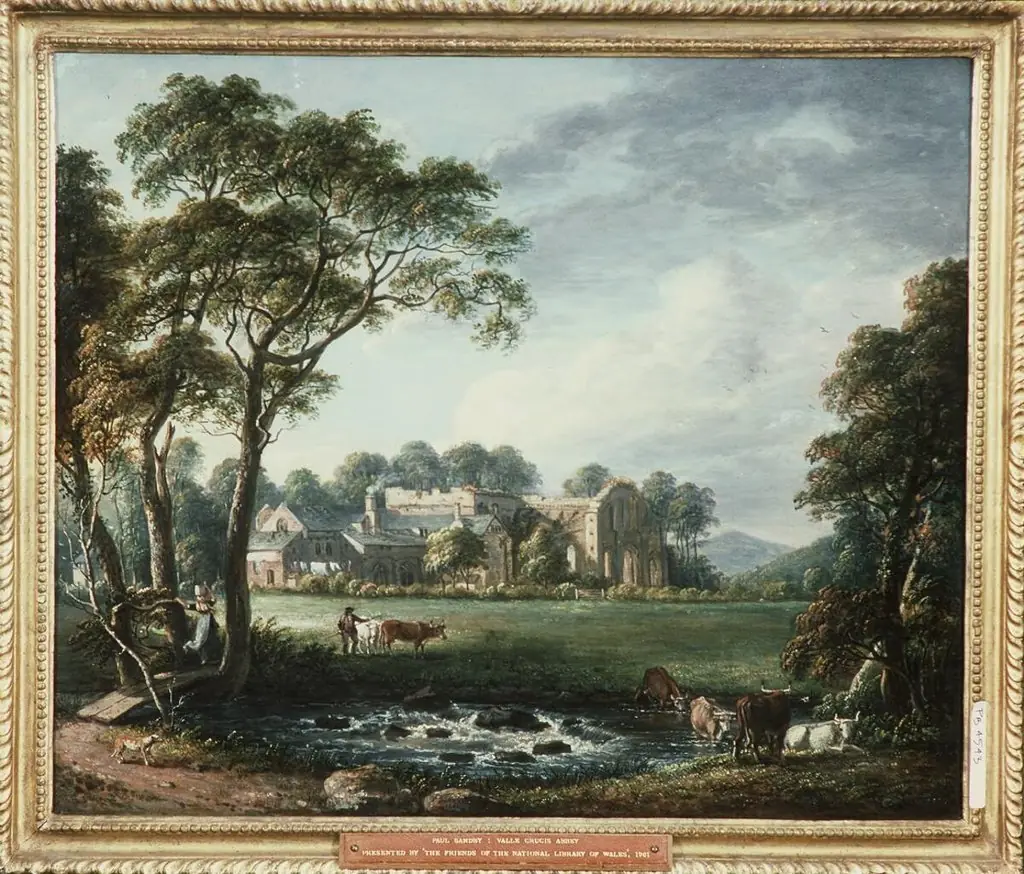
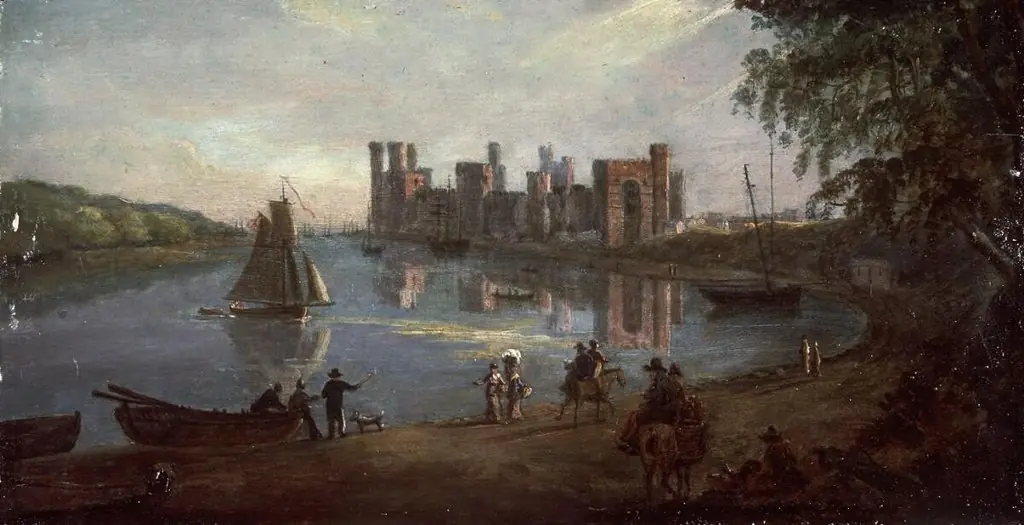
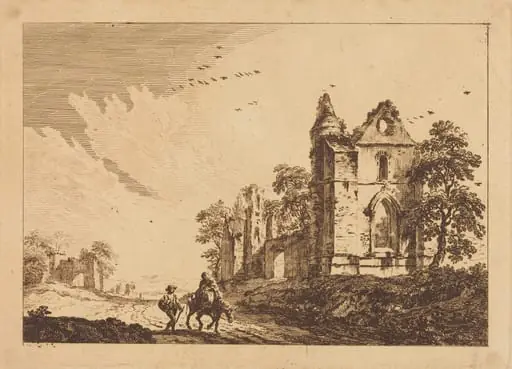 Ruined Abbey with Travelers on the Road
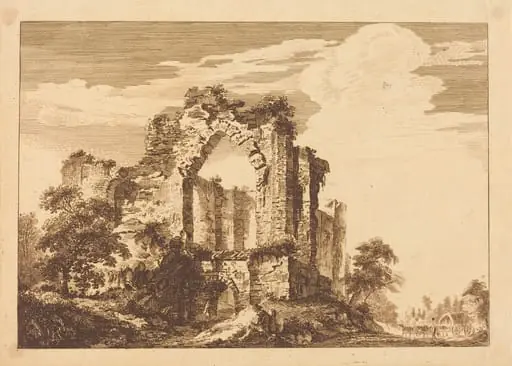 Ruins with a Seated Man, and a Covered Wagon in the Distance
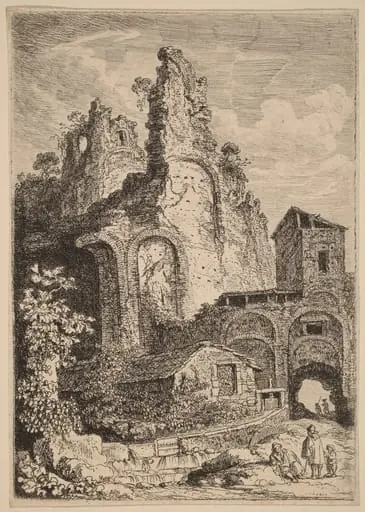 The Old Palace at Tivoli
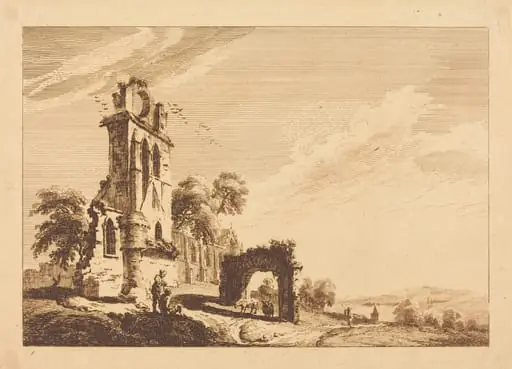 Ruined Abbey
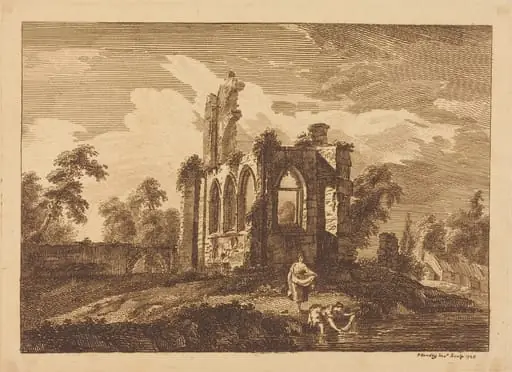 Ruins with Two Women Washing Clothes in a River
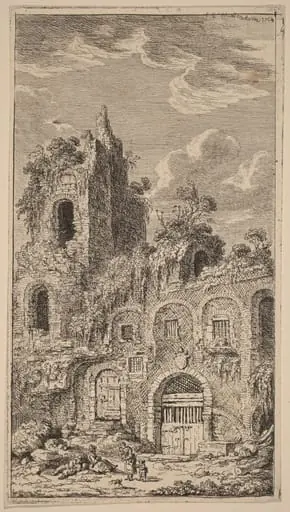 Fragment of the Old City Wall at San Giovanni Laterano
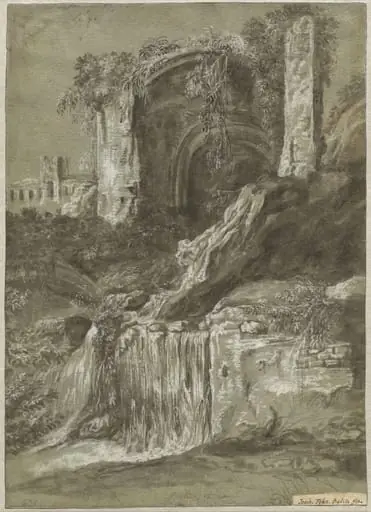 A Waterfall with Ruins (verso)
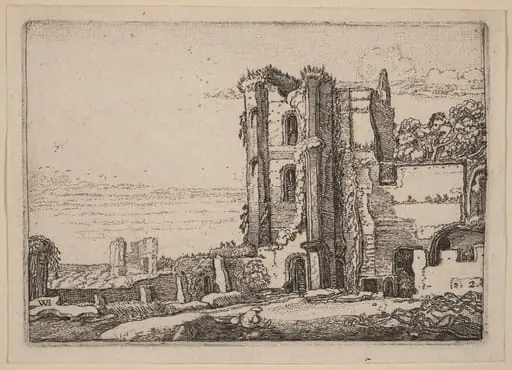 Ruined Tower Right of Center
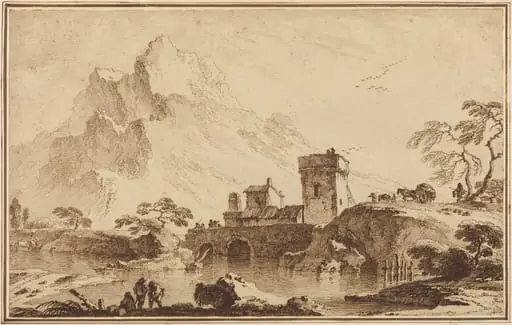 Fortified Bridge against Distant Mountains
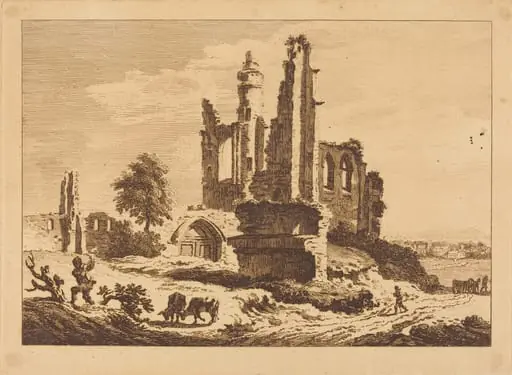 Ruined Abbey with Cattle and a Man Chopping Wood