Artwork
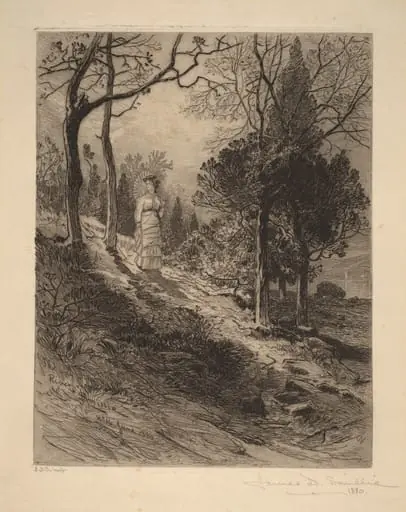
Up the Hill
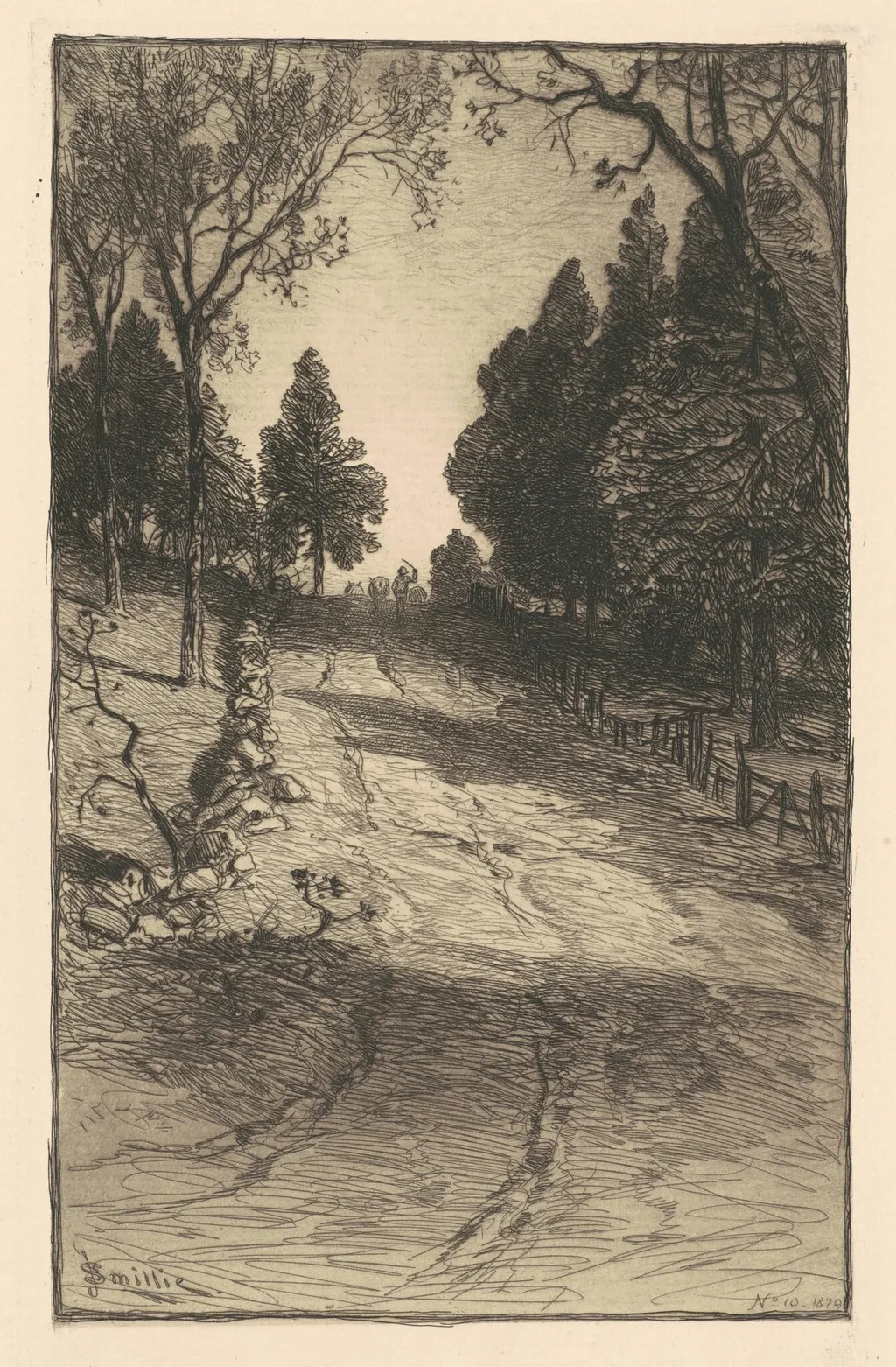
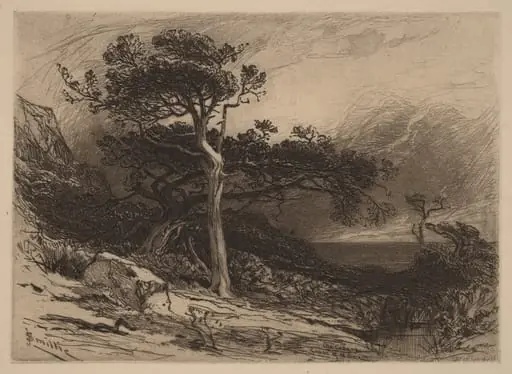
Up the Hill is an ink print by the Impressionist artist James David Smillie. It dates from 1879 and is held in the collection of the National Gallery of Art.
About this work
Overview
James David Smill’s 1879 print titled Up the Hill is an etching executed on laid paper. The work presents a modest landscape dominated by a gentle rise and scattered trees, rendered in stark black lines that emphasize form and atmosphere without the distraction of colour.
Subject & Meaning
The composition depicts a solitary hill ascending into the distance, flanked by a few trees that suggest a quiet, rural setting. The simplicity of the scene invites contemplation of the natural environment, emphasizing the quiet dignity of an unadorned landscape.
Technique & Style
Created by incising a design into a metal plate and then printing onto laid paper, the etching allows Smill to achieve fine linear detail and subtle tonal variation. The black ink, applied uniformly, produces a range of textures that convey depth and the play of light across the terrain.
History & Provenance
Smill produced Up the Hill in 1879, during a period when etching enjoyed renewed popularity among British artists seeking to explore atmospheric effects. The print’s provenance is not extensively documented, but it remains representative of Smill’s broader output in the late nineteenth‑century printmaking revival.
Artist & collection

Artist
James David Smillie was an American artist, cofounder of the American Watercolor Society and New York Etching Club. His brother was painter George Henry Smillie.

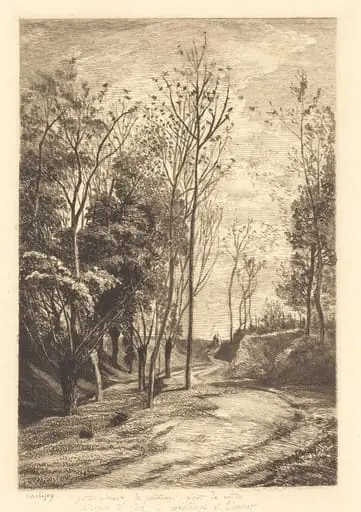 Little Birds (Les Petits oiseaux)
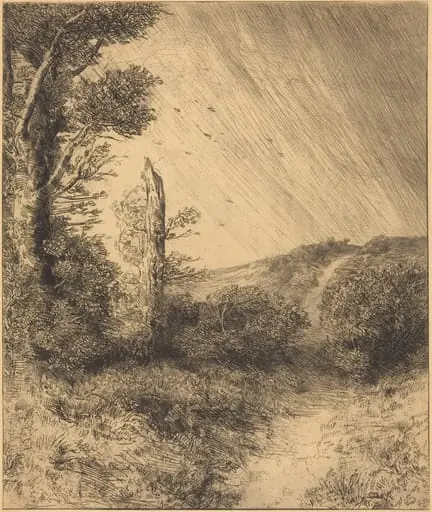 Gust of Wind (Le coup de vent)
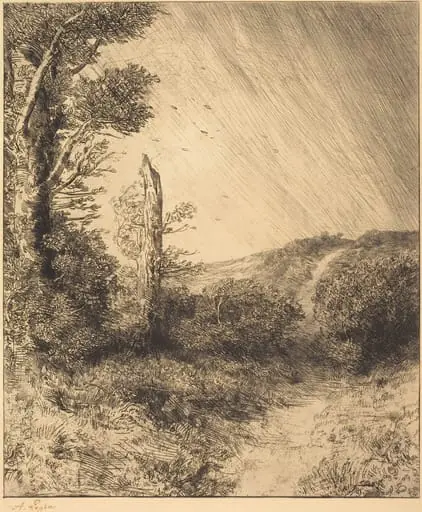 Gust of Wind (Le coup de vent)
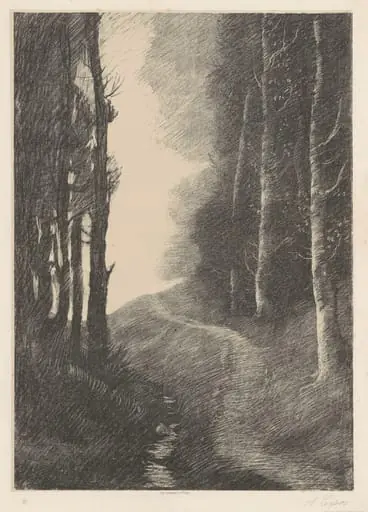 Landscape with Birch Trees (Le Paysage aux Bouleaux)
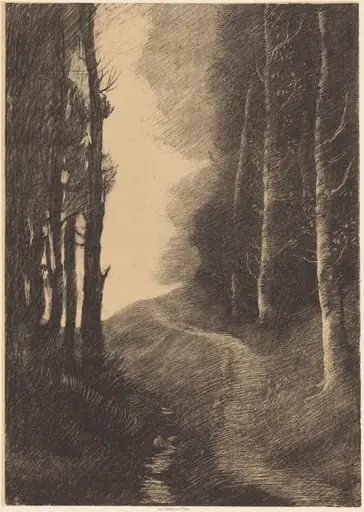 Landscape with Birch Trees (Le paysage aux bouleaux)
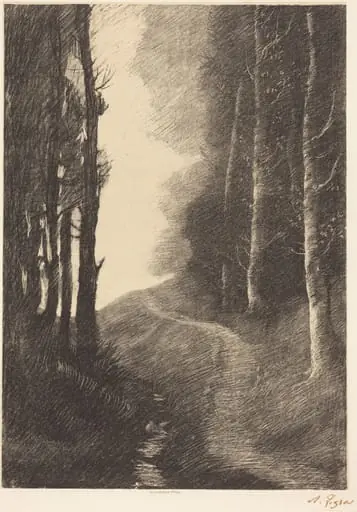 Landscape with Birch Trees (Le paysage aux bouleaux)
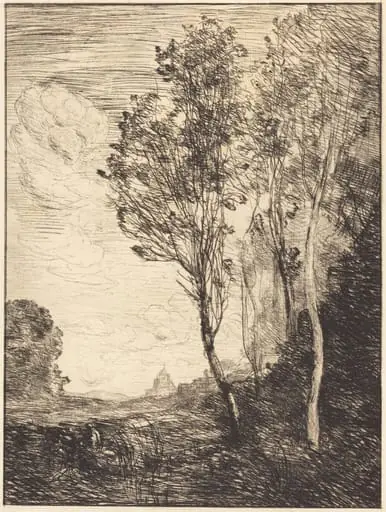 Souvenir of Italy (Souvenir d'Italie)
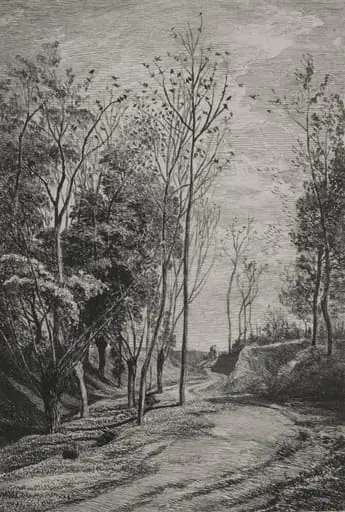 The Little Brids
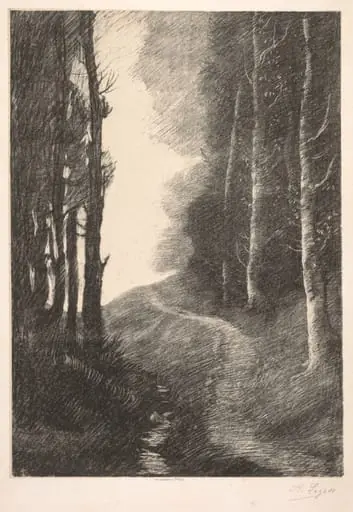 Landscape at Bouleaux
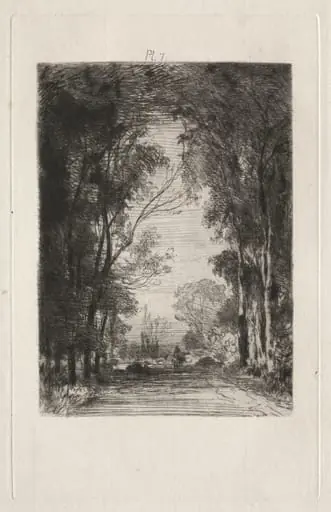 Traveler on a Road in a Forest