Artwork
The Way to the River
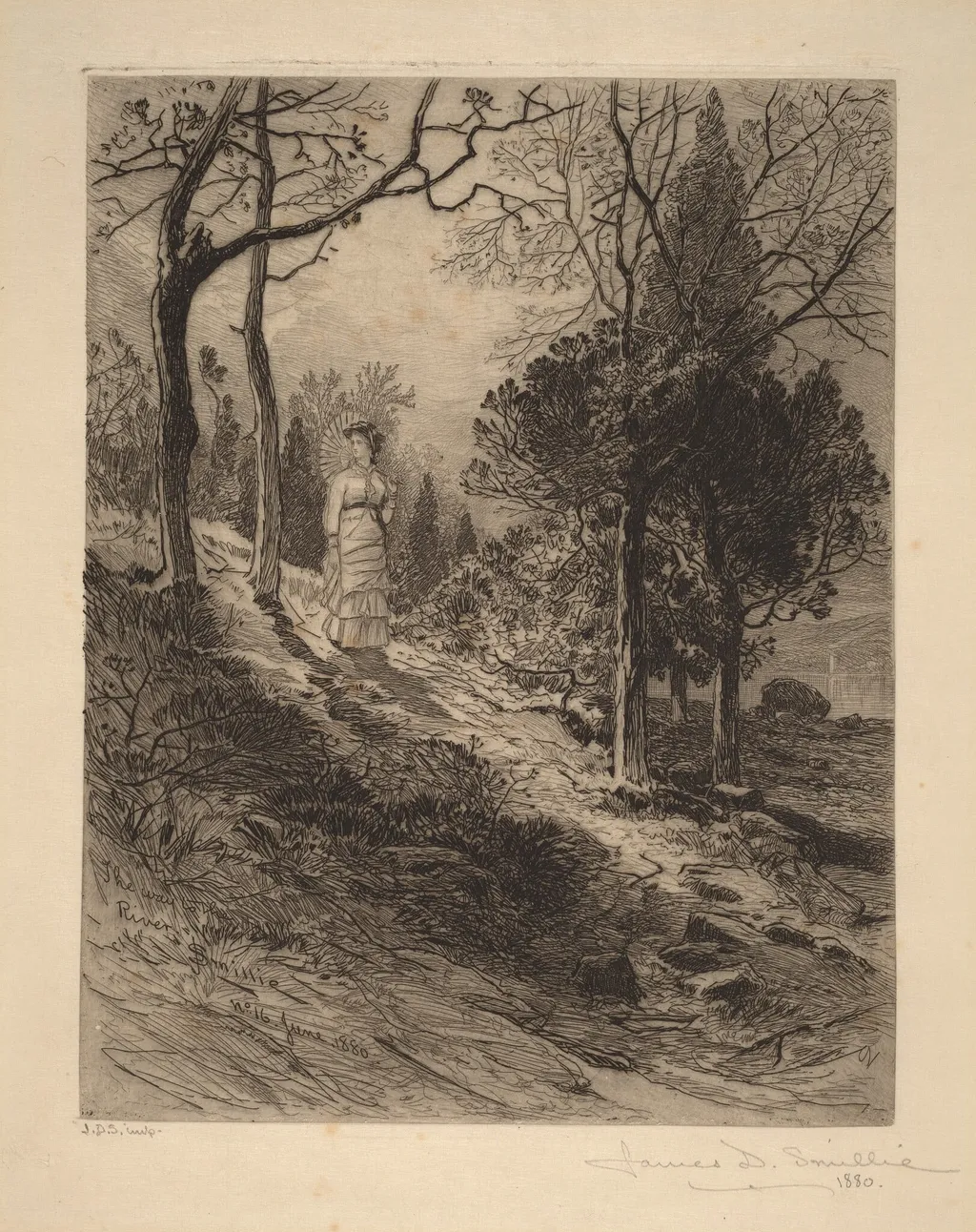
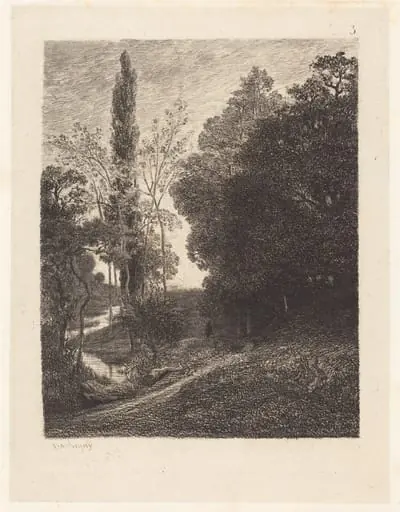
The Way to the River is an ink print by the Impressionist artist James David Smillie. It dates from 1880 and is held in the collection of the National Gallery of Art.
About this work
Overview
James David Smill’s 1880 etching titled *The Way to the River* depicts a solitary female figure traversing a narrow, tree‑lined track. Rendered entirely in black ink, the composition leads the eye from the foreground toward a muted waterway that recedes into the distance, creating a sense of quiet progression.
Subject & Meaning
The central figure, clothed in a long, high‑collared dress and crowned with a leafy wreath, appears to be moving purposefully toward a small stream. The surrounding bare‑branch trees and dappled shadows suggest a tranquil, perhaps contemplative journey through a wooded landscape.
Technique & Style
Executed with fine etching lines, Smill achieves a delicate balance of light and dark, using cross‑hatching to render deep shadows and subtle textures in the foliage and ground. The monochrome palette emphasizes form and atmosphere over color, reinforcing the work’s still, introspective mood.
History & Provenance
Created in 1880, the print belongs to Smill’s mature period, when he frequently explored rural and pastoral subjects through printmaking. While specific ownership records are limited, the work has been catalogued among his etchings of the late nineteenth century and appears in several museum collections of American print art.
Artist & collection

Artist
James David Smillie was an American artist, cofounder of the American Watercolor Society and New York Etching Club. His brother was painter George Henry Smillie.

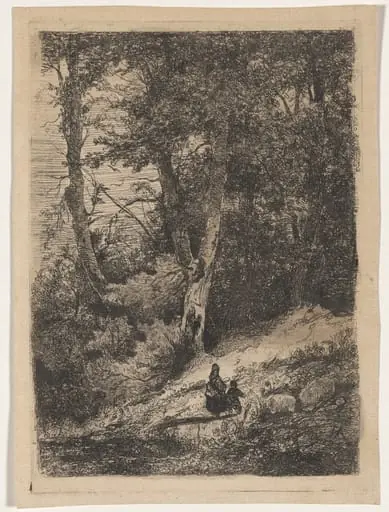 The Inner Forest (Intérieur du bois)
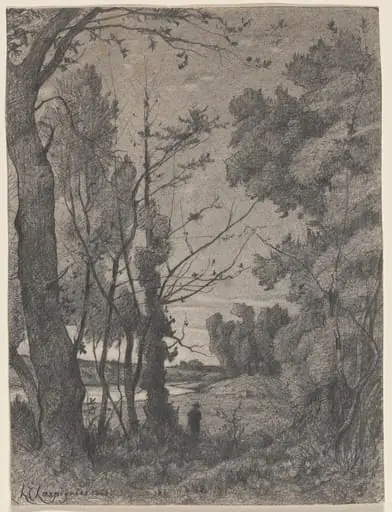 Wooded Landscape beside a River
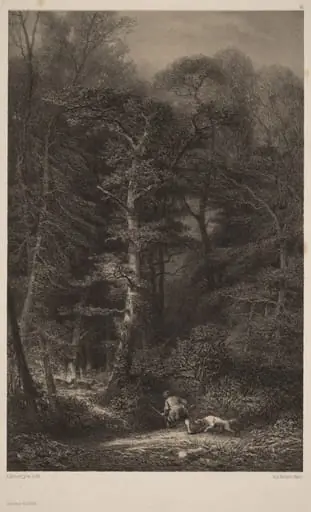 Intérieur de Forêt
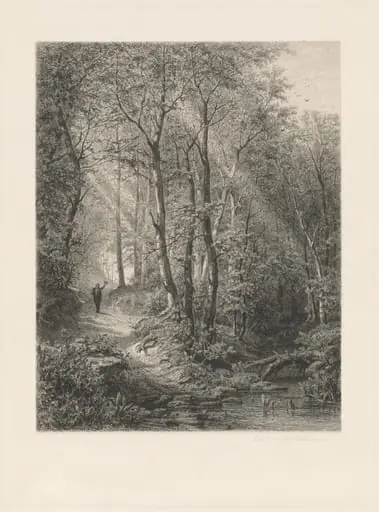 Spring
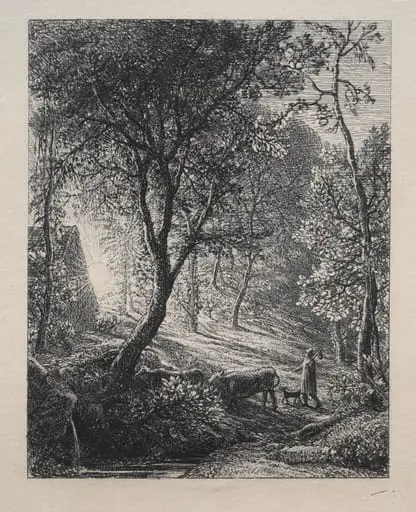 The Herdsman's Cottage
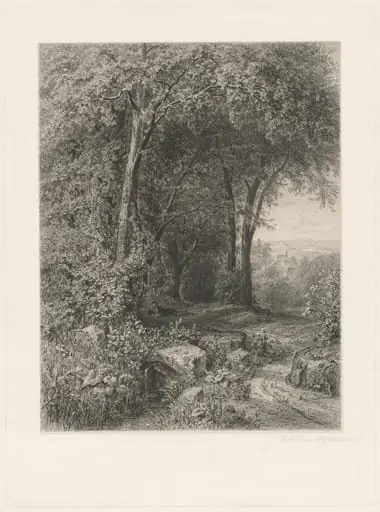 Summer
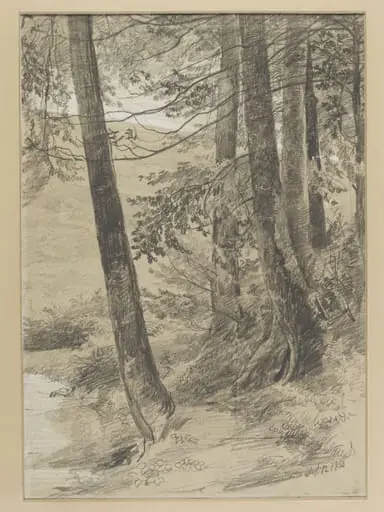 Study of tree stems at King George's Hill, Abinger
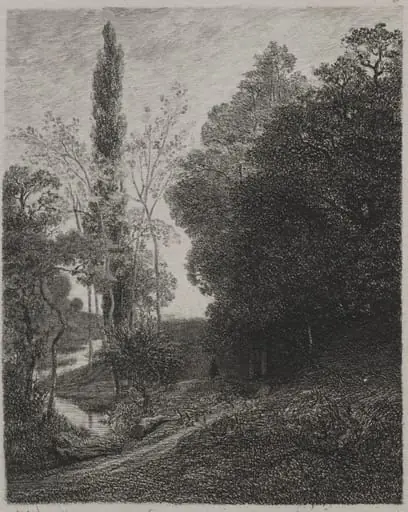 Banks of the River Cousin
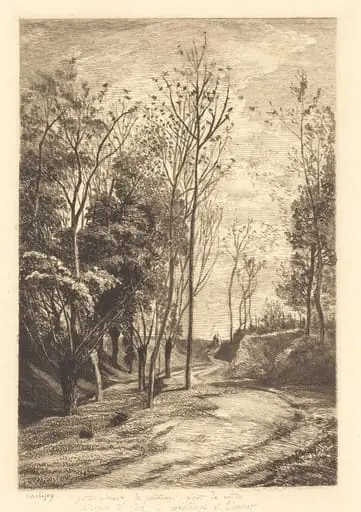 Little Birds (Les Petits oiseaux)
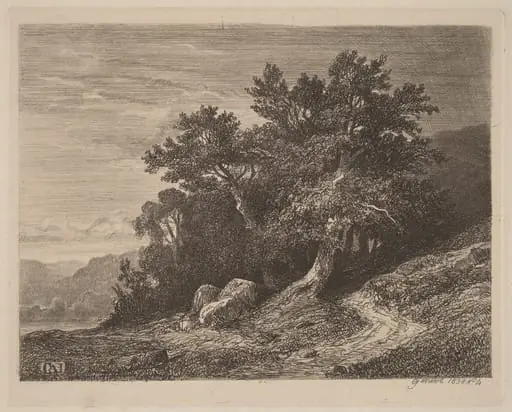 Ancient Trees on a Hillside
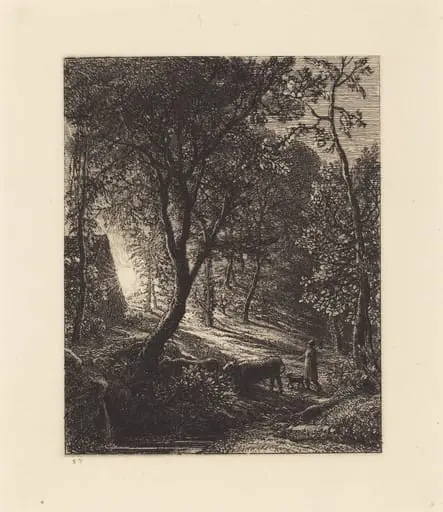 The Herdsman's Cottage
 The Banks of the Cousin (Les Bords du Cousin)