Artwork
Hollyhocks in a Long-Necked Vase
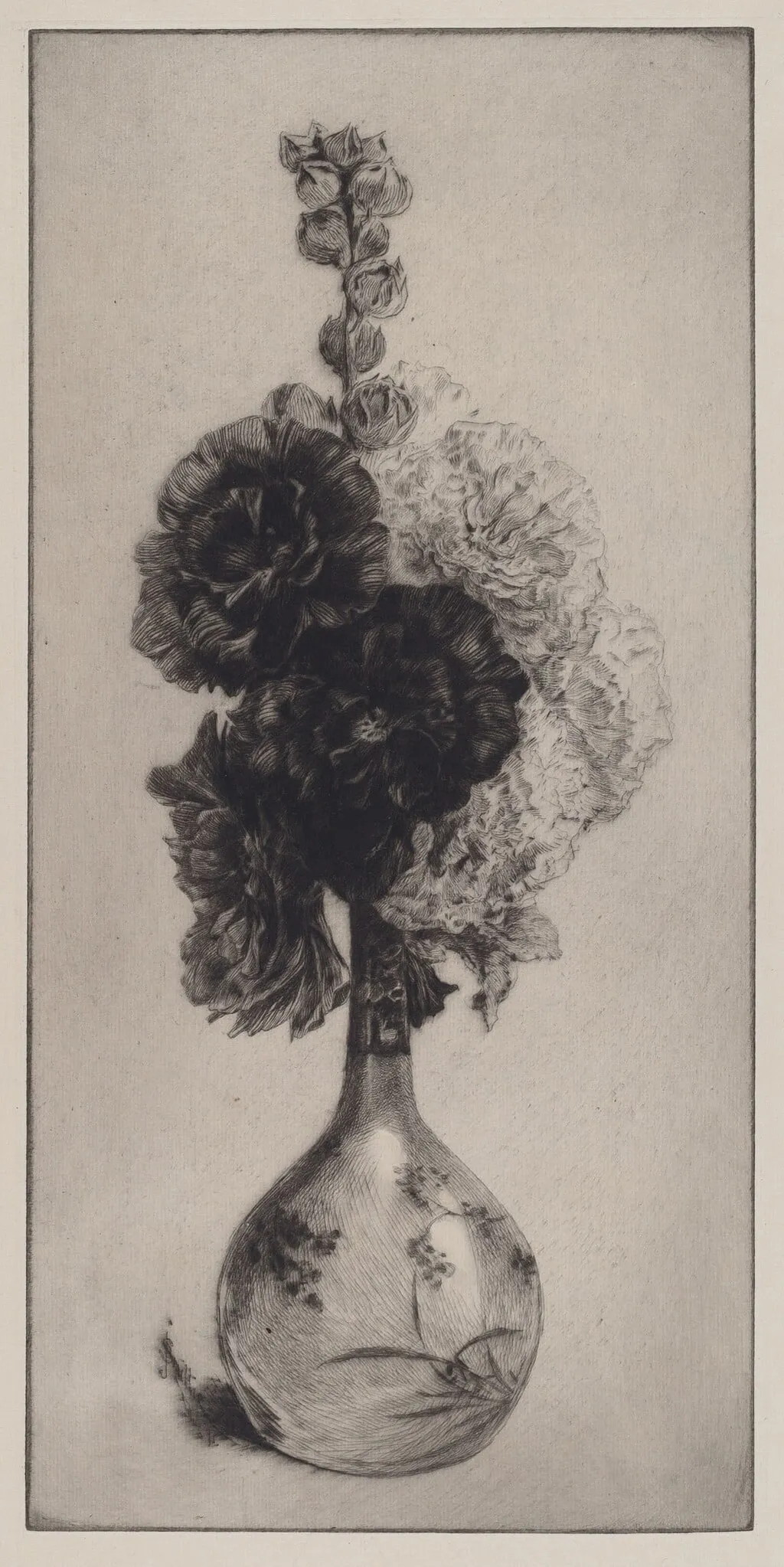
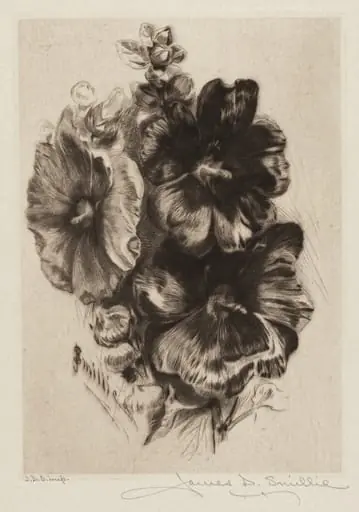
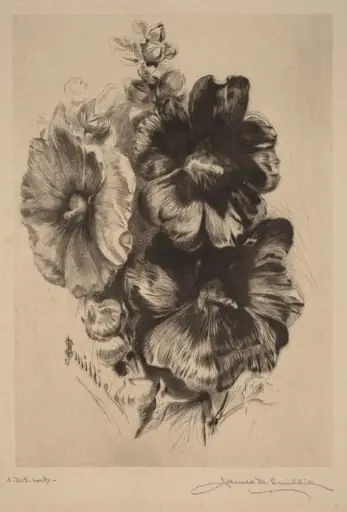
Hollyhocks in a Long-Necked Vase is an ink print by the Impressionist artist James David Smillie. It dates from 1891 and is held in the collection of the National Gallery of Art.
About this work
Overview
Hollyhocks in a Long-Necked Vase is a drypoint print created by James David Smillie in 1891, featuring a monochromatic depiction of a distinctive vase and its floral contents.
Subject & Meaning
The print focuses on a tall, narrow-necked vase with a wide, rounded base, adorned with dark spots, and filled with three large, leafy hollyhocks. The flowers are rendered with textured, lumpy forms and prominent stems, topped with buds.
Technique & Style
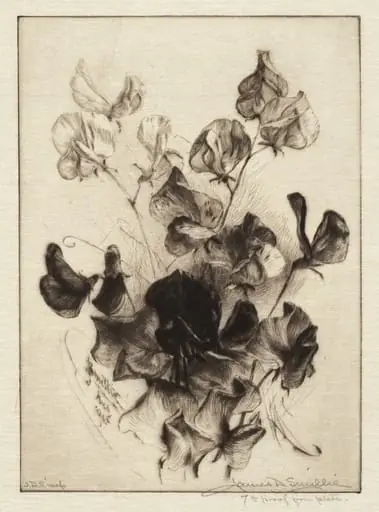
Smillie employed the drypoint technique, scratching lines into a metal plate to achieve the print. The shading is characterized by rough, expressive lines, imparting a tactile, almost three-dimensional quality to the flowers.
History & Provenance
Created in 1891, specific details regarding the print's exhibition history, ownership, or edition size are not provided.
Context
This work reflects Smillie's exploration of still life through drypoint, a medium allowing for expressive, handmade marks. The piece may relate to late 19th-century interests in capturing everyday beauty through printmaking.
Legacy
While not widely discussed in broad art historical narratives, Hollyhocks in a Long-Necked Vase remains a representative example of Smillie's drypoint work, potentially appealing to those interested in the technical aspects of printmaking and the aesthetic of late 19th-century still-life prints.
Artist & collection

Artist
James David Smillie was an American artist, cofounder of the American Watercolor Society and New York Etching Club. His brother was painter George Henry Smillie.