Artwork
Charles Montagu, First Earl of Halifax
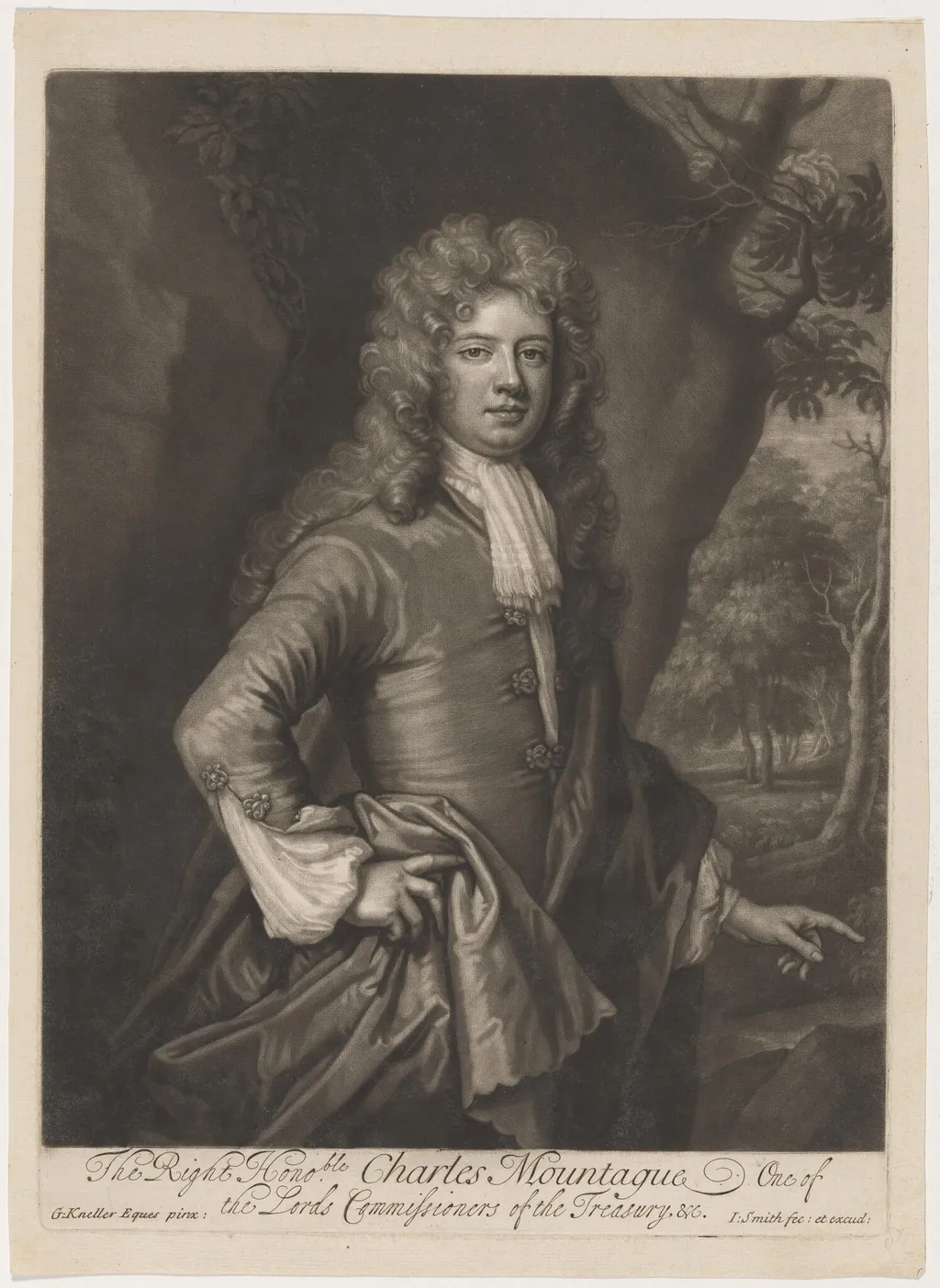
Charles Montagu, First Earl of Halifax is an ink print by the Baroque artist John Smith. It dates from 1697 and is held in the collection of the National Gallery of Art.
About this work
Overview
This 1697 mezzotint by John Smith depicts Charles Montagu, First Earl of Halifax, a prominent English statesman. The print captures him in a full-length portrait, rendered in the tonal richness characteristic of mezzotint technique. His posture and attire reflect the formal conventions of late 17th-century portraiture, emphasizing status and composure rather than individual expression.
Subject & Meaning
His right hand on the hip and left hand pointing suggest deliberation and direction, common gestures in portraits of public men.
Montagu, a key political figure under William III, is portrayed with quiet authority. His right hand on the hip and left hand pointing suggest deliberation and direction, common gestures in portraits of public men. The inclusion of a tree behind him may allude to stability or growth, reinforcing his role as a pillar of government. The image conveys dignity without overt symbolism, aligning with the restrained ideals of his era.
Technique & Style
John Smith employed mezzotint, a method known for its velvety gradations of tone, to render texture and depth. The dark background enhances the luminosity of Montagu’s white shirt, lace cravat, and sash, drawing focus to his figure. The soft rendering of his wig and fabric contrasts with the sharper outlines of the tree, demonstrating the technique’s capacity for both detail and atmospheric effect.
History & Provenance
Created in 1697, the print was made during Montagu’s tenure as Chancellor of the Exchequer and a leading member of the Whig party. Smith, a prolific engraver, produced numerous portraits of the English elite, often based on paintings by contemporaries like Godfrey Kneller. This mezzotint likely served to disseminate Montagu’s image among political circles and the literate public.
Context
The portrait emerges from the Baroque tradition, where portraiture balanced realism with symbolic representation. In post-Restoration England, such images reinforced social hierarchy and political legitimacy. Montagu’s attire—dark coat, white undergarments, and ornate sash—reflects courtly fashion, while the mezzotint medium itself was favored for its ability to reproduce the subtleties of aristocratic dress and demeanor.
Legacy
As one of many engraved portraits of political figures from the period, this work contributed to the visual culture of early modern governance. It survives as a record of how elite identity was constructed and circulated through print. Though not widely known today, it remains a representative example of how mezzotint served as a tool of political visibility in late Stuart England.
Artist & collection

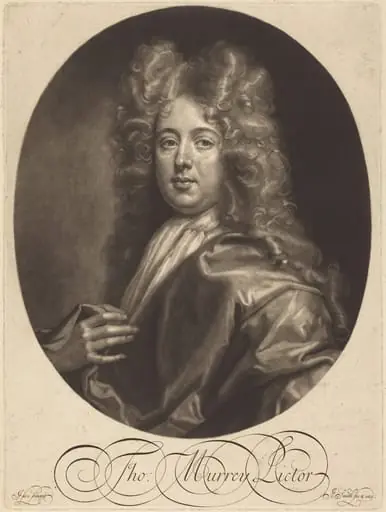 Thomas Murray
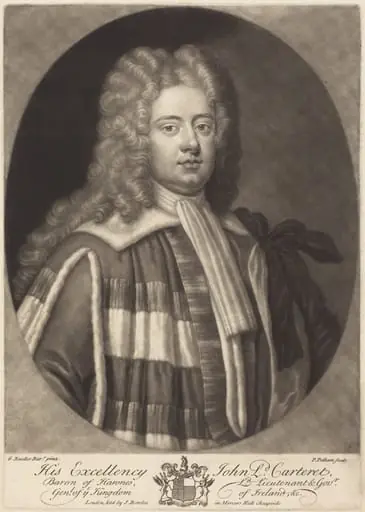 John, Lord Carteret
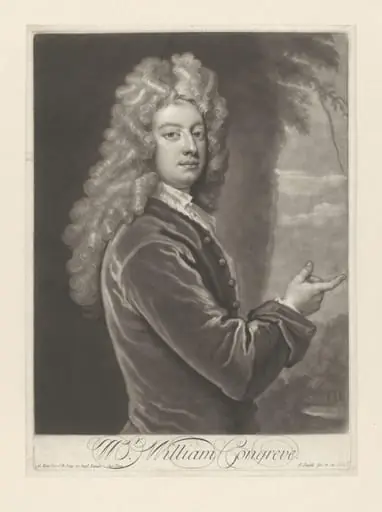 H Beard Print Collection
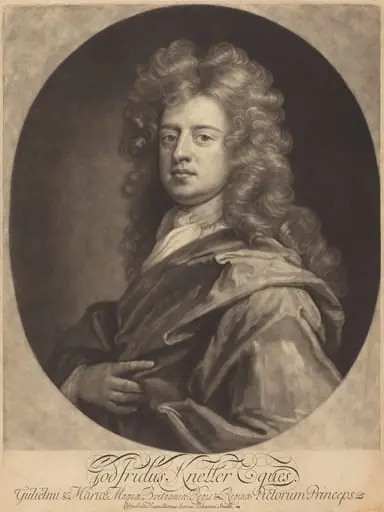 Godfrey Kneller
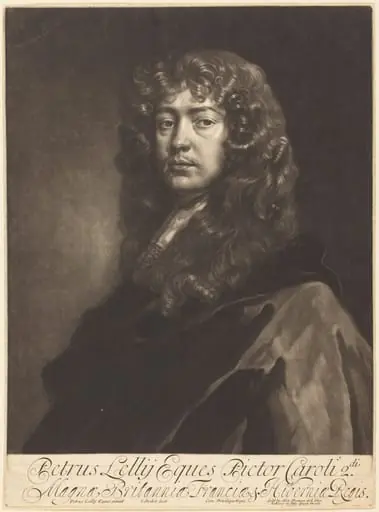 Sir Peter Lely
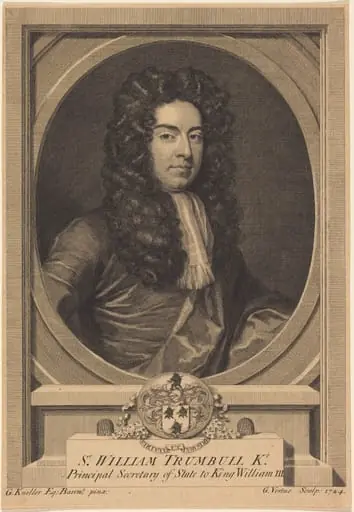 William Trumbull
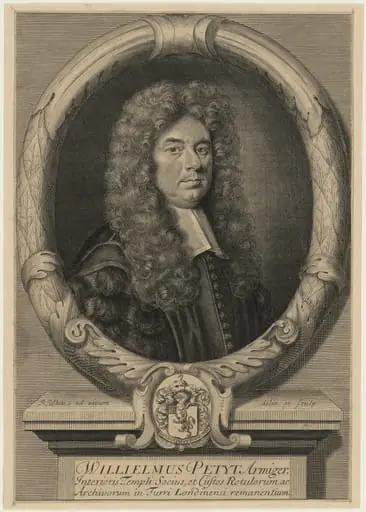 William Petyt, Keeper of the Records in the Tower
 Portrait of Jan Boudaen Courten (1635-1716), lord of St. Laurens, Schellach and Popkensburg, Judge and alderman of Middelburg
 Robert Bruce, First Earl of Arlesbury
 Sir Thomas Isham
 Edward Montagu, First Earl of Sandwich