Artwork
John Smith
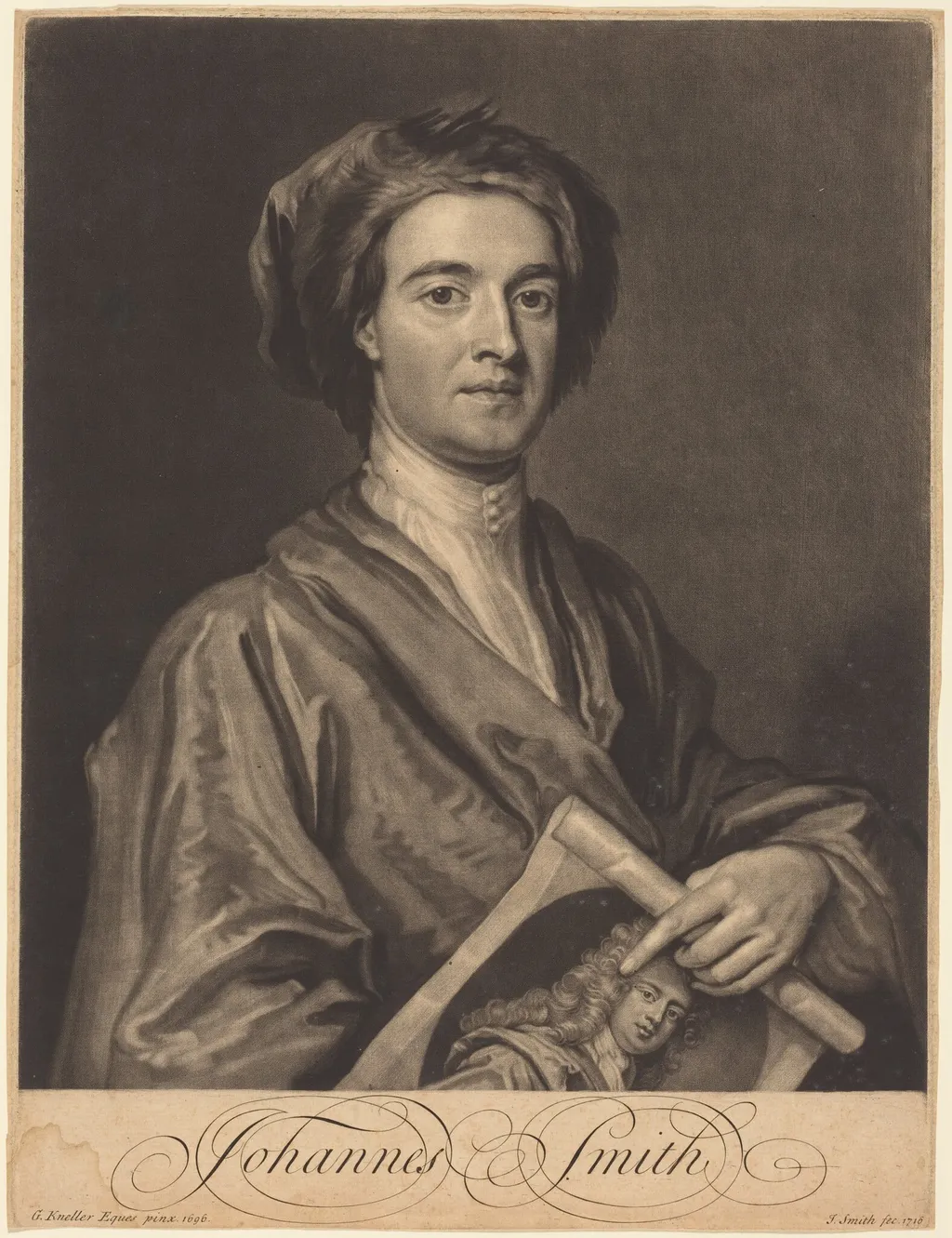
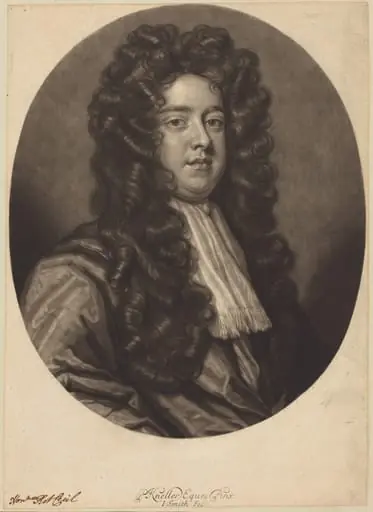
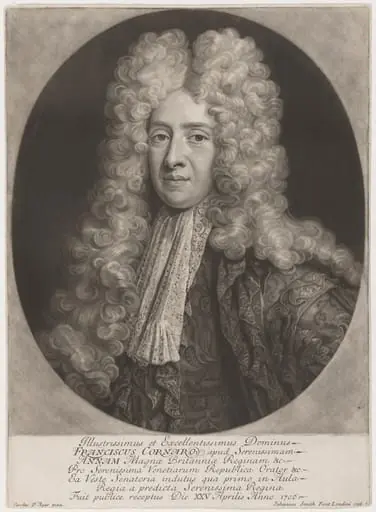
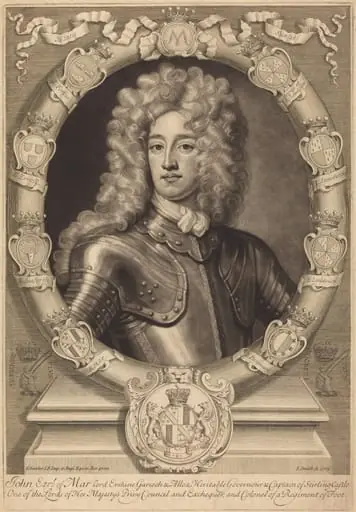
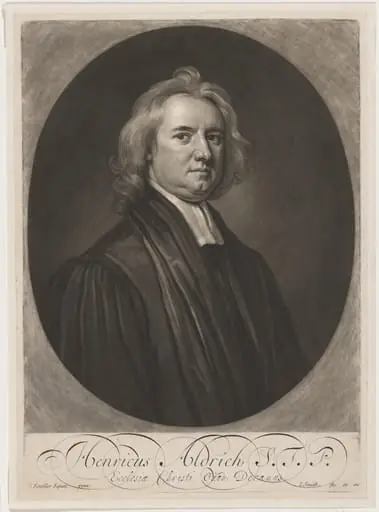
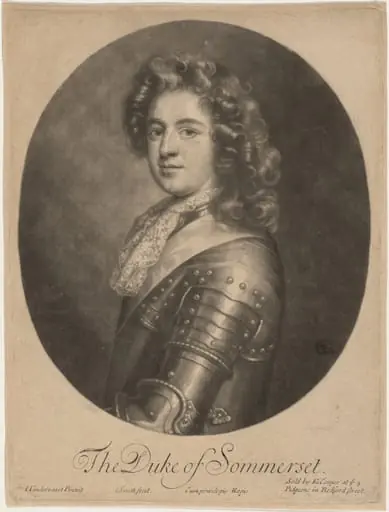
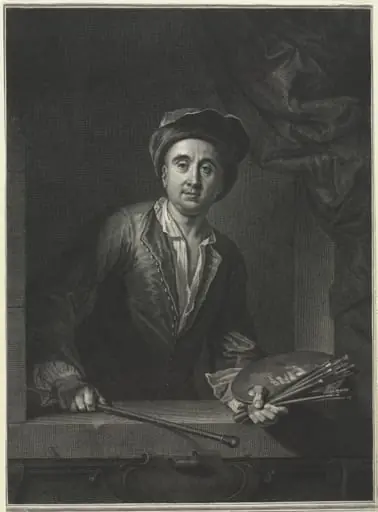
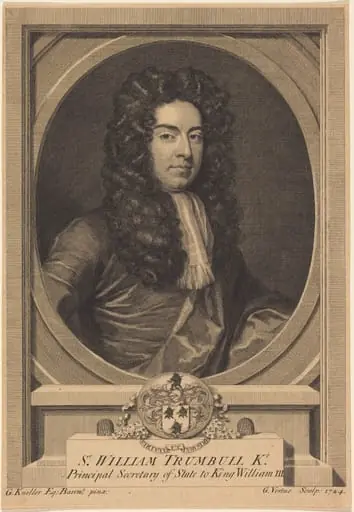
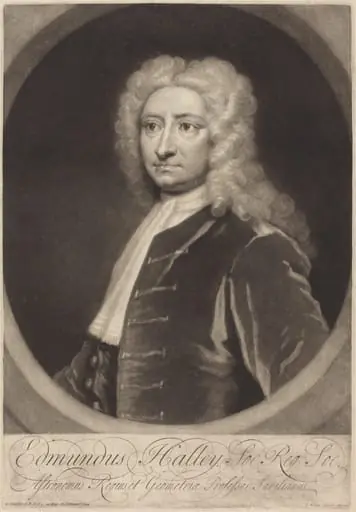
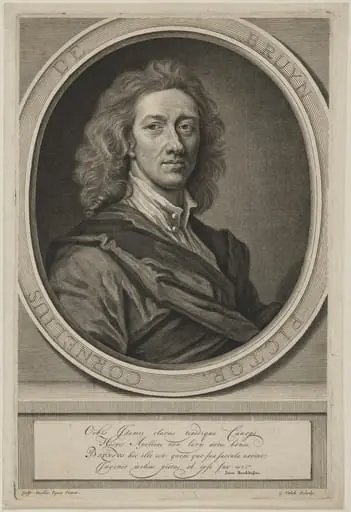
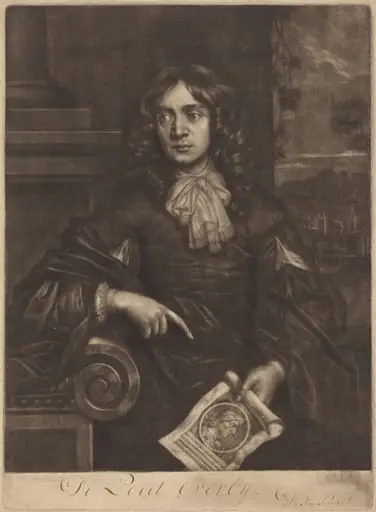
John Smith is an ink print by the Baroque artist John Smith. It dates from 1716 and is held in the collection of the National Gallery of Art. This early‑18th‑century mezzotint, executed on laid paper, presents a solitary male figure in period attire.
About this work
Overview
This early‑18th‑century mezzotint, executed on laid paper, presents a solitary male figure in period attire. The composition is rendered entirely in black and white, with a dark, unadorned background that concentrates attention on the sitter’s solemn expression and gestures.
Subject & Meaning
The man is depicted holding a diminutive portrait of a woman in his left hand, while his right hand rests upon his chest. The juxtaposition of the two images suggests a personal or commemorative purpose, perhaps indicating affection, remembrance, or a memorial context.
Technique & Style
Created with the mezzotint process, the work exhibits the characteristic tonal gradations and soft transitions of the medium, typical of early 1700s printmaking. The artist’s signature, "J. Smith," appears in the lower margin, confirming authorship and aligning the piece with contemporary Baroque portrait conventions.
History & Provenance
The print bears the date 1716, situating it within the early Georgian period. The name "Johannes C. Smith" printed at the bottom is likely a misreading; the confirmed signature is "J. Smith," indicating the work was produced by an artist of that name, though further biographical details remain scarce.
Context
Mezzotint was a favored medium for reproducing portraits in the Baroque era, allowing for subtle modeling of light and shadow. This piece reflects the period’s interest in individualized representation and the use of printed images to convey personal narratives.
Artist & collection