Artwork
Charles Seymour, Sixth Duke of Somerset
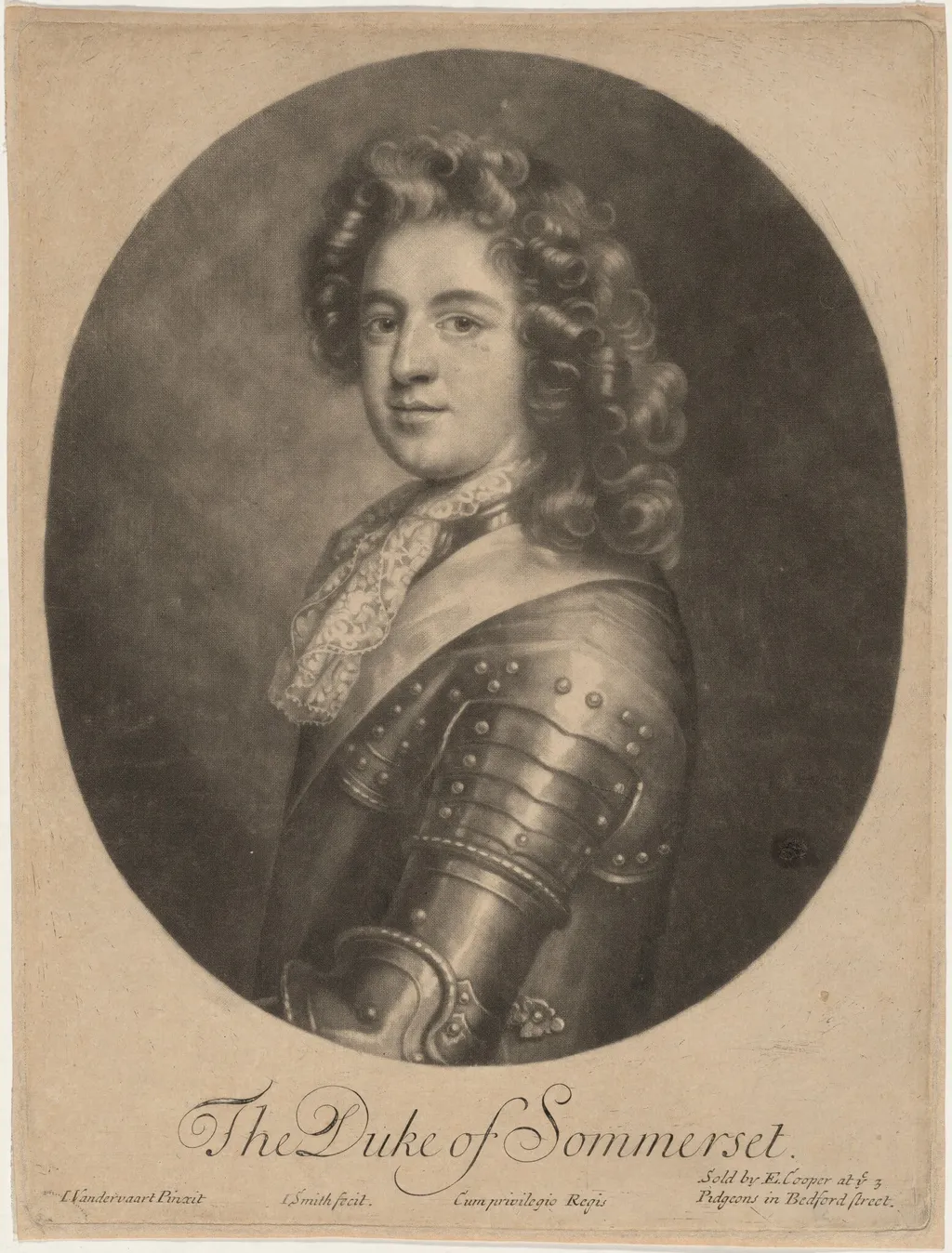
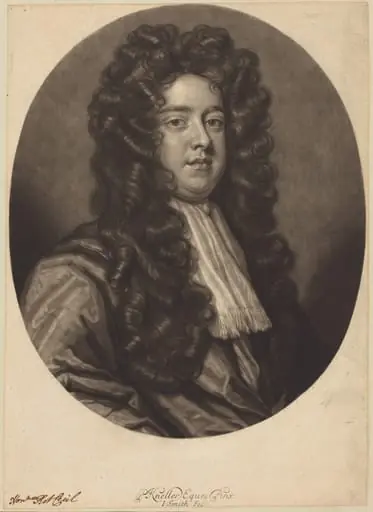
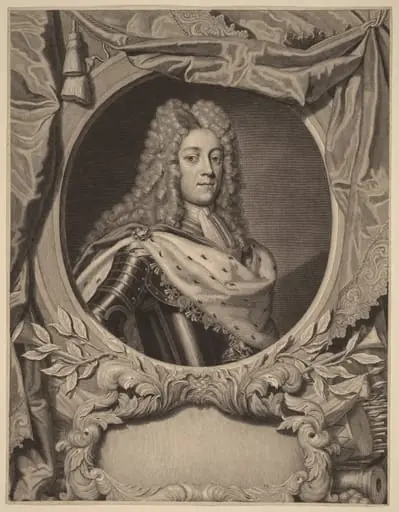
Charles Seymour, Sixth Duke of Somerset is an ink print by the Baroque artist John Smith. It dates from 1697 and is held in the collection of the National Gallery of Art.
About this work
Overview
The medium’s capacity for rich tonal gradations lends the image a sculptural presence, typical of late 17th-century English portraiture.
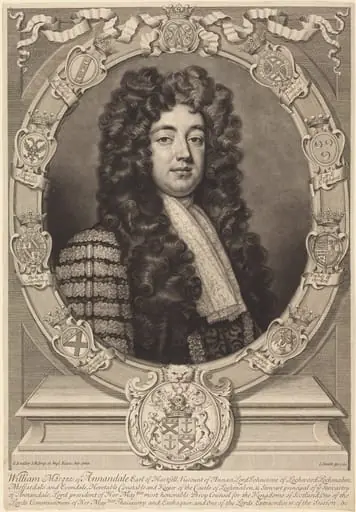
This 1697 mezzotint by John Smith depicts Charles Seymour, the sixth Duke of Somerset, as a formal portrait in a circular format. Executed in the mezzotint technique, the print captures the duke in armor with a lace collar, set against a deep, unbroken background. The medium’s capacity for rich tonal gradations lends the image a sculptural presence, typical of late 17th-century English portraiture.
Subject & Meaning
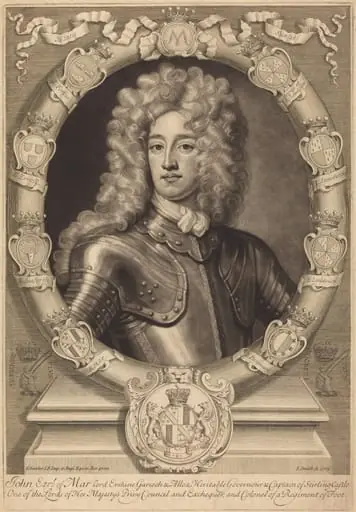
The portrait presents the duke in military attire, signaling his status as a nobleman and former commander. The inclusion of armor, rather than civilian dress, emphasizes his role in public service and aristocratic duty. The restrained expression and composed posture reflect ideals of stoic leadership, common among elite portraiture of the period, avoiding overt emotion in favor of dignified authority.
Technique & Style
John Smith employed mezzotint, a process involving roughening a copper plate to hold ink, allowing subtle transitions between light and dark. The technique excels in rendering textures—lace, metal, and hair—with remarkable nuance. The dark background isolates the figure, heightening the contrast and three-dimensionality, aligning with Baroque sensibilities without theatricality.
History & Provenance
Created in 1697, the print was made during the duke’s later years, likely to commemorate his position within the aristocracy. John Smith, a leading English engraver of the time, produced numerous portraits of nobility, often based on painted originals. This impression was likely circulated among elite circles as a status object, though its early ownership records remain undocumented.
Context
In late 17th-century England, mezzotint became the preferred medium for aristocratic portraiture due to its ability to reproduce the richness of oil paintings. The format and subject reflect a tradition of using prints to disseminate the likenesses of the powerful. The duke’s armor and formal bearing align with post-Civil War efforts to reinforce noble identity amid shifting political landscapes.
Legacy
Smith’s mezzotint of the Duke of Somerset exemplifies the technical maturity of English printmaking in the late Baroque era. While not widely reproduced today, it remains a key example of how portraiture served both commemorative and social functions. The work illustrates the intersection of print culture and aristocratic self-representation in early modern Britain.
Artist & collection