Artwork
Lieutenant Colonel Sir Banastre Tarleton
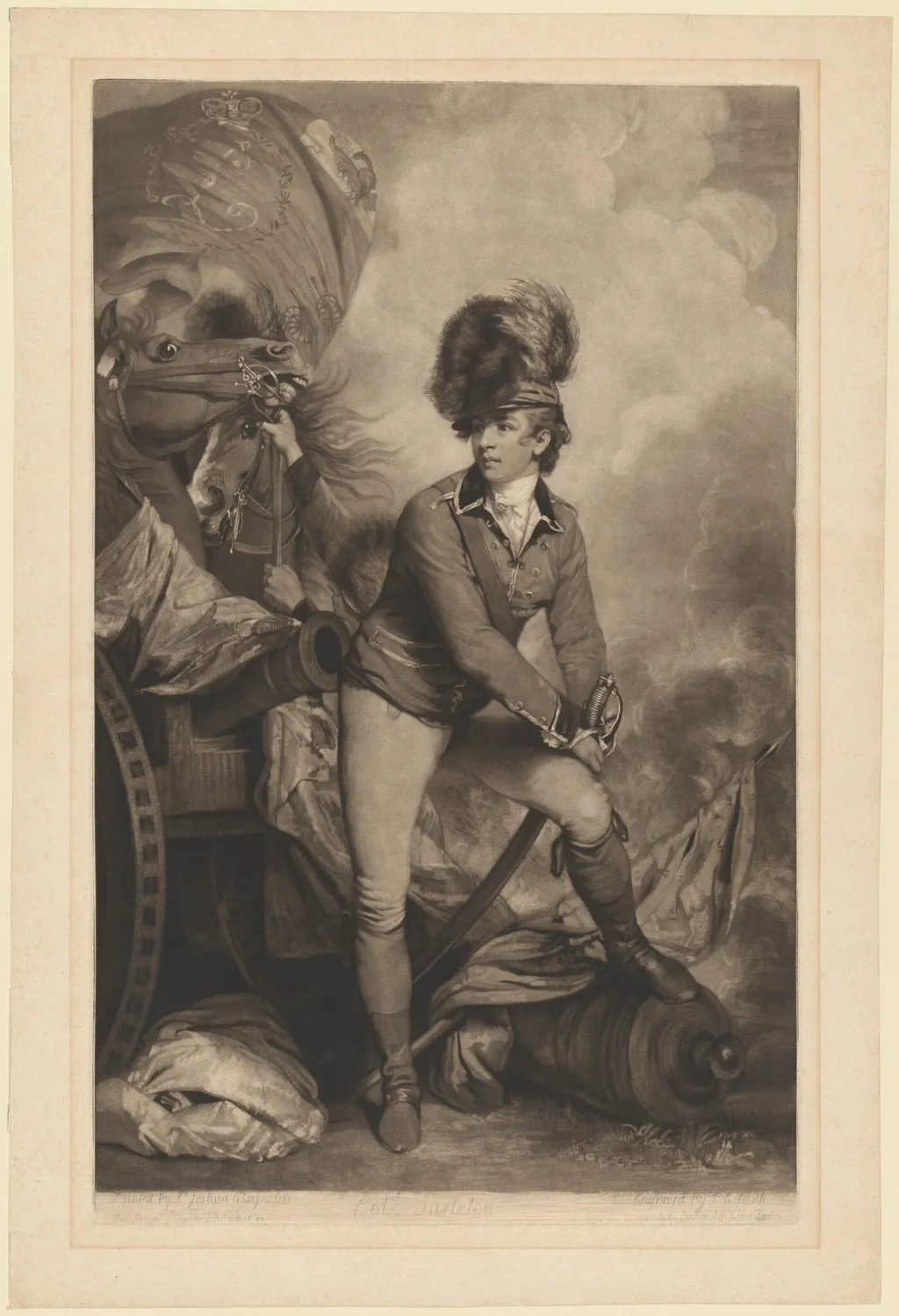
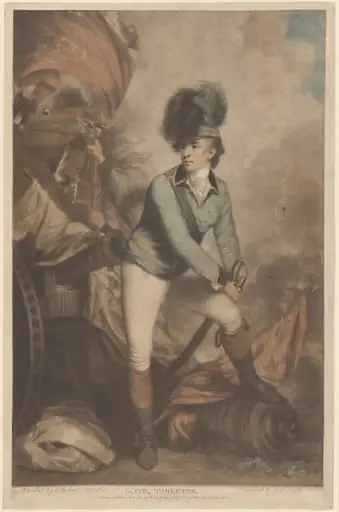
Lieutenant Colonel Sir Banastre Tarleton is an ink print by the Romanticist artist John Raphael Smith. It dates from 1782 and is held in the collection of the National Gallery of Art.
About this work
Overview
This 1782 mezzotint by John Raphael Smith portrays Lieutenant Colonel Sir Banastre Tarleton, a British cavalry officer during the American Revolutionary War.
This 1782 mezzotint by John Raphael Smith portrays Lieutenant Colonel Sir Banastre Tarleton, a British cavalry officer during the American Revolutionary War. Executed on laid paper, the print captures Tarleton in full military attire, rendered with the tonal richness characteristic of the mezzotint process. Smith, known for his reproductive engravings, translated a portrait into a detailed graphic work that emphasized texture and depth through gradations of light and shadow.
Subject & Meaning
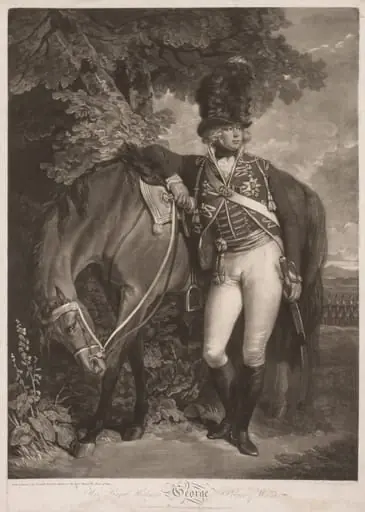
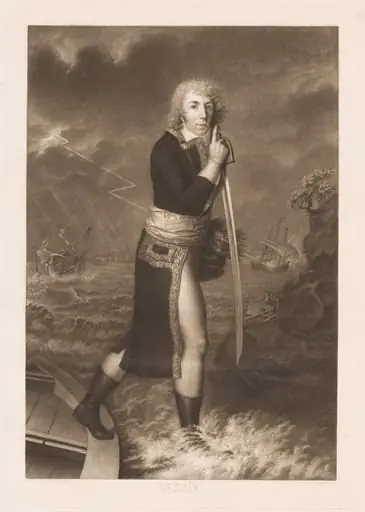
Tarleton is depicted in a poised, authoritative stance, one hand resting on his hip and the other gripping a sword. His dark uniform contrasts with lighter breeches and a tall hat adorned with a feather, signaling rank and martial identity. The horse behind him, partially turned, suggests readiness for action. The composition conveys discipline and command, aligning with the image of a professional officer rather than a flamboyant figure.
Technique & Style
Smith employed mezzotint, a technique that begins with a roughened plate to hold ink, then smooths areas to create highlights. This allowed for subtle transitions between shadow and light, particularly effective in rendering the sheen of leather, the weave of wool, and the gleam of metal. The chiaroscuro effect draws focus to Tarleton’s face and uniform, enhancing the three-dimensionality of the figure without overt dramatic contrast.
History & Provenance
The print was produced in London during the height of public interest in British military figures following the American Revolutionary War. John Raphael Smith, a prominent reproductive artist, often worked from portraits by other painters. This mezzotint likely derived from a painted likeness, serving as a widely distributed image of Tarleton among British audiences, though no earlier painting has been definitively identified as its source.
Context
In the early 1780s, mezzotints were a popular medium for disseminating portraits of military and political leaders. Tarleton, controversial for his role in Southern campaigns, remained a recognizable figure in Britain. Smith’s print contributed to the visual culture of the era, where printed images helped shape public perception of wartime leaders, balancing admiration with the political tensions of the postwar period.
Legacy
Though Tarleton’s reputation has been reassessed over time, Smith’s mezzotint endures as a technical example of late 18th-century reproductive printmaking. It reflects the era’s reliance on engraved portraiture to circulate images of public figures. The work remains in institutional collections, valued for its craftsmanship and as a historical artifact of British military imagery during the American conflict.
Artist & collection
Artist
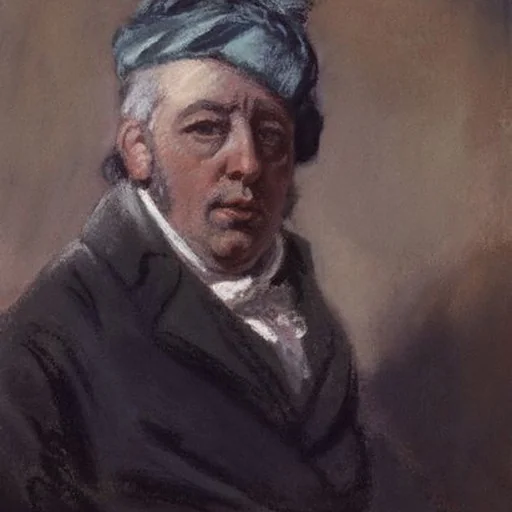
John Raphael Smith (25 May 1751 – 2 March 1812) was a British painter and mezzotinter. He was the son of the landscape painter Thomas Smith and the father of John Rubens Smith, a painter who emigrated to the United States.