Artwork
Theresa Soterius von Sachsenheim (în RI: Clara Soterus von Sachsenheim)
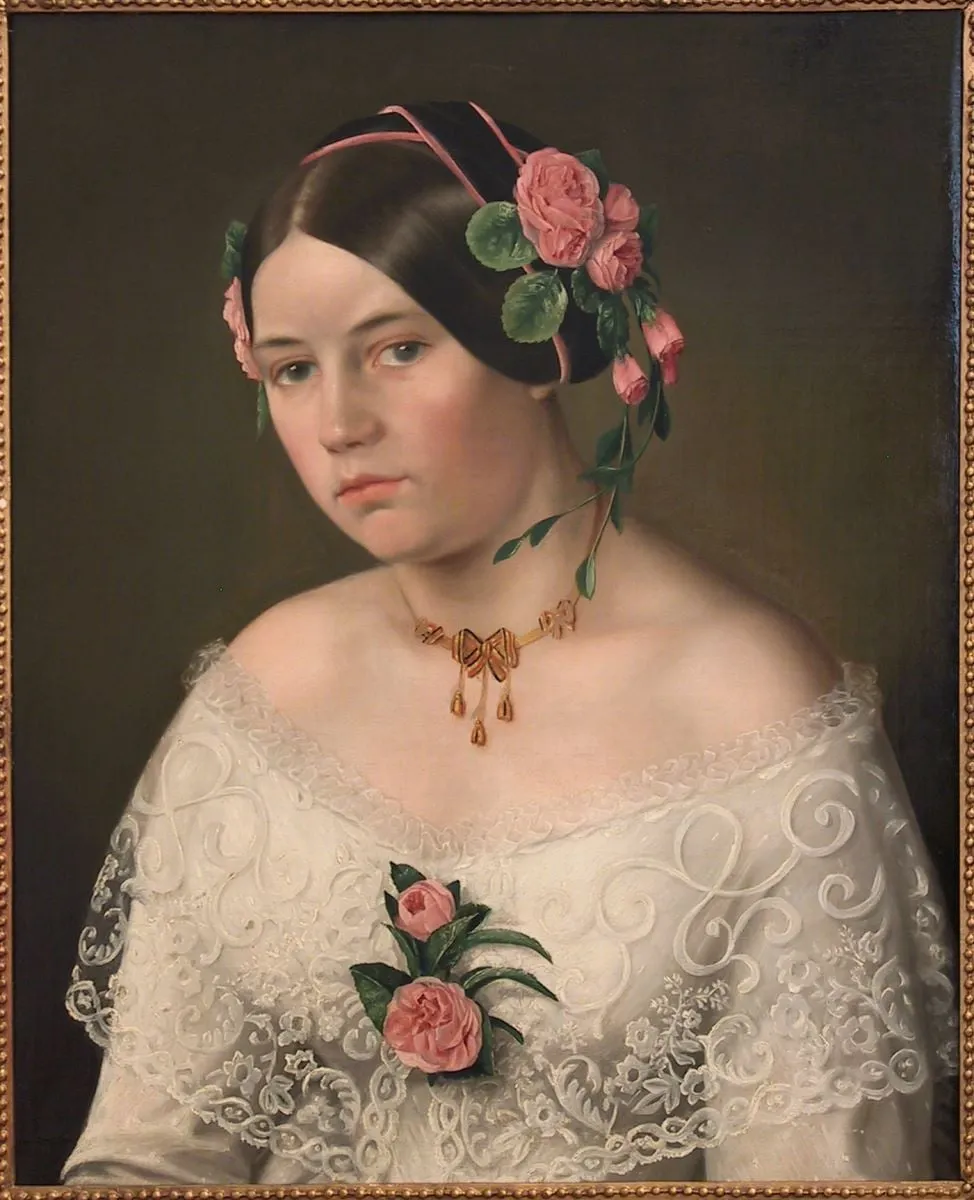
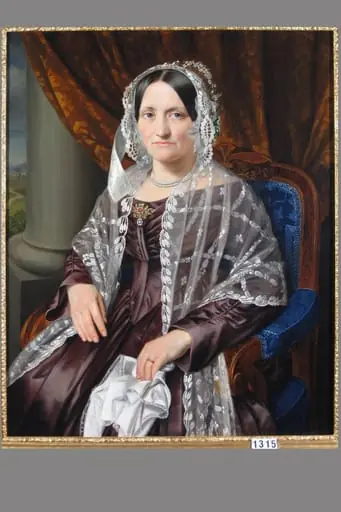
Theresa Soterius von Sachsenheim (în RI: Clara Soterus von Sachsenheim) is a print by Theodor Benedict Sockl. It is held in the collection of the Brukenthal National Museum. This portrait depicts a woman named Theresa Soterius von Sachsenheim, rendered with quiet refinement.
About this work
Overview
The background remains unobtrusive, allowing focus on her figure and the delicate interplay of light and texture.
This portrait depicts a woman named Theresa Soterius von Sachsenheim, rendered with quiet refinement. Her dark hair is gathered into a loose bun, and she wears a white lace gown with full sleeves, accented by a gold necklace and a single rose pinned near her collar. A wreath of flowers rests on her head, suggesting a moment of personal celebration or ceremonial significance. The background remains unobtrusive, allowing focus on her figure and the delicate interplay of light and texture.
Subject & Meaning
The subject’s attire and adornments—lace, floral wreath, rose, and jewelry—convey a sense of refined femininity and private dignity rather than public status. The rose may symbolize affection or remembrance, while the wreath hints at seasonal or ritual occasions. Her calm expression and modest pose suggest introspection, avoiding overt grandeur in favor of intimate, personal resonance.
Technique & Style
The artist employs subtle chiaroscuro to model the face and hands, creating a soft, luminous quality that enhances the texture of lace and skin. Shadows are gentle, never harsh, contributing to an overall sense of tranquility. The rendering of fabric and floral elements is precise yet restrained, avoiding excessive detail to preserve the portrait’s serene atmosphere.
History & Provenance
The sitter, Clara Soterius von Sachsenheim, was a member of a noble German family, though specific details about the painting’s commission or artist remain undocumented. Its provenance is not publicly traced beyond early 20th-century records. The work likely originated in Central Europe during the late 18th or early 19th century, a period when private portraiture among aristocratic women emphasized elegance over political identity.
Context
In the decades surrounding 1800, portraits of women often blended romantic ideals with personal symbolism—flowers, lace, and modest jewelry signaled virtue and refinement rather than wealth. This work aligns with regional trends in German-speaking areas, where domestic portraiture favored intimacy over spectacle, reflecting shifting values in aristocratic circles after the Enlightenment.
Legacy
Though not widely exhibited or reproduced, the portrait endures as an example of quiet, skilled portraiture from a transitional era. Its emphasis on texture, light, and restrained symbolism offers insight into how personal identity was visually constructed among European elites outside the grand courtly tradition. It remains a quiet testament to individual presence in an age of changing social norms.
Artist & collection
Artist
This 19th-century printmaker carved crisp black-and-white likenesses on copper plates.

 Ahvenanmaalainen talonpoikaismorsian
 Portret de femeie
 Portrait of a Young Woman
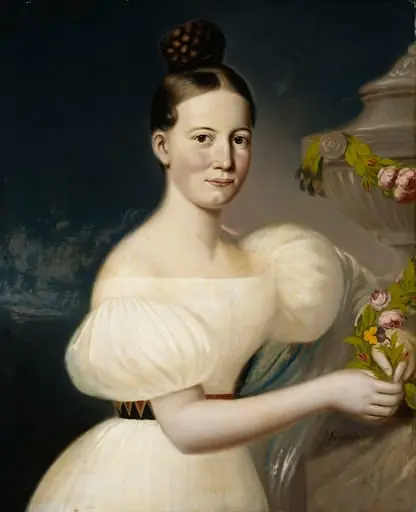 Eva Törngrenin muotokuva
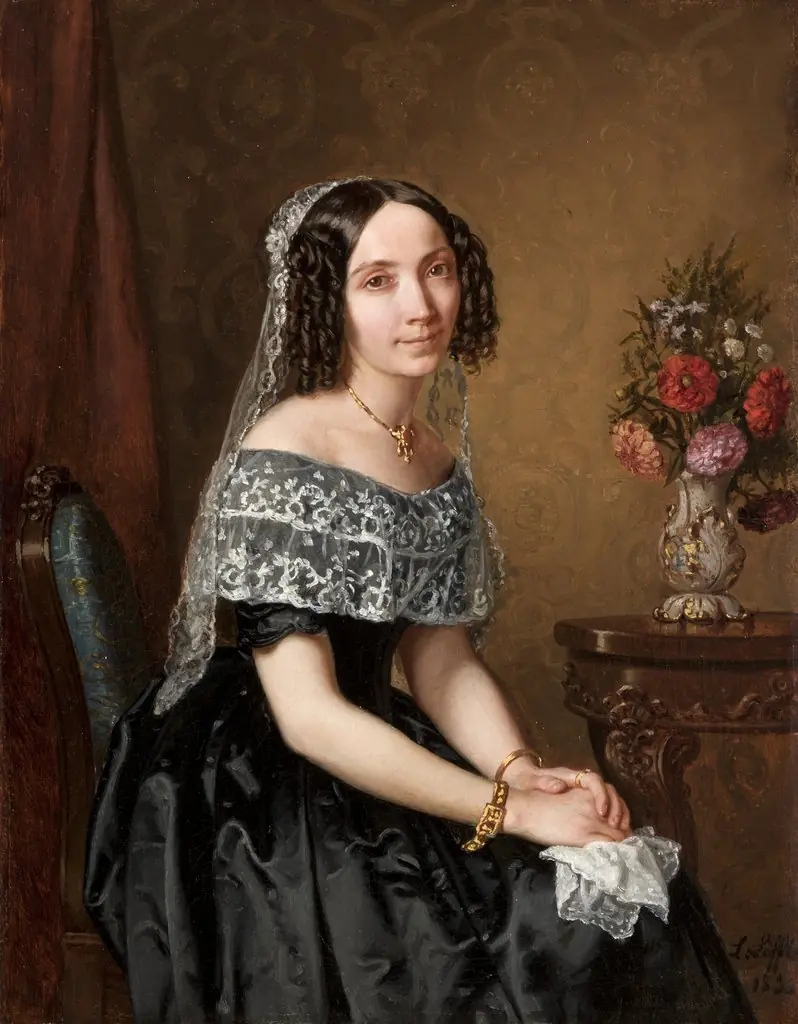 Female Portrait
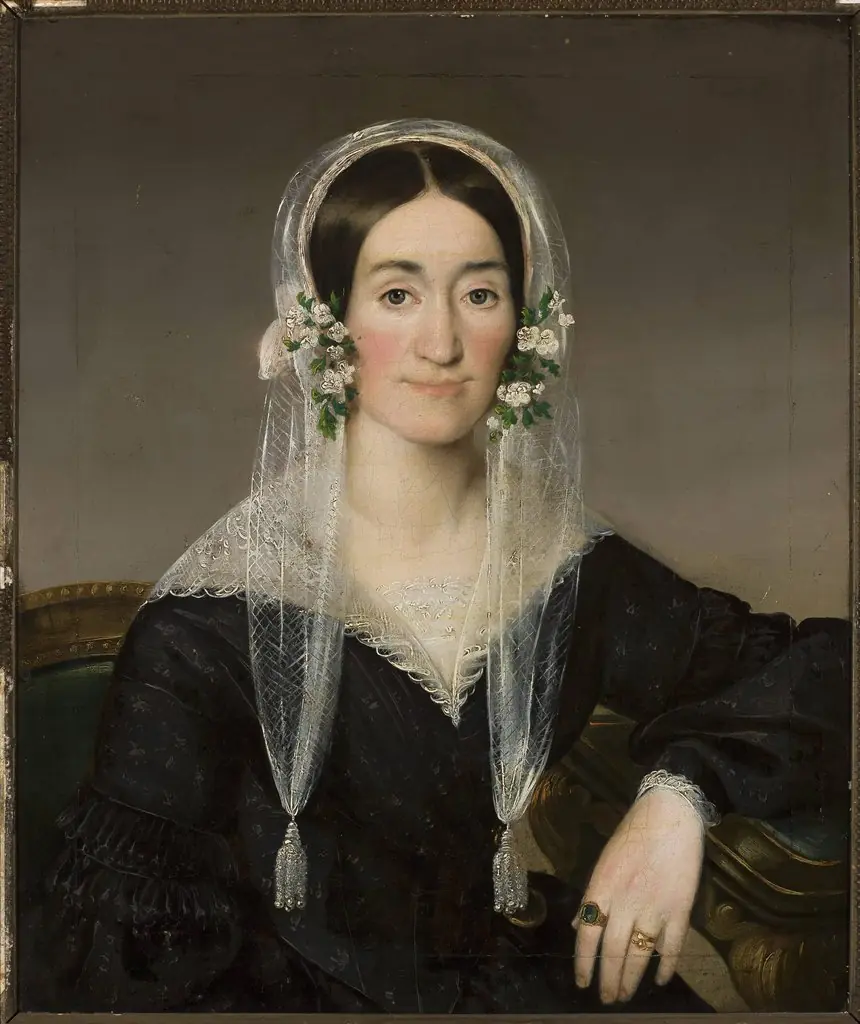 Portrait of Konstancja Góra
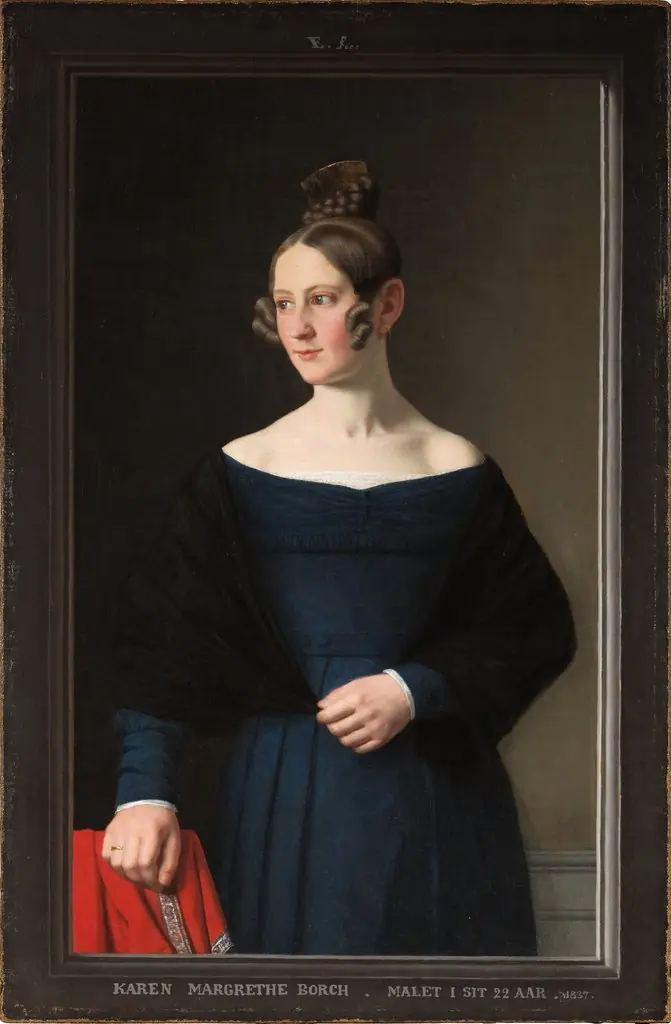 Karen Margrethe Borch
 Portrait of Eleonora Gomólińska née Pelletier
 Madame Moitessier
 Emilie Henriette Massmann, gift 1824 med kammerjunker Frederik Wilhelm Caspar von Benzon
 Portrait of Princess Anna Nikolayevna
 Justina Soterius von Sachsenheim