Artwork
Sappho
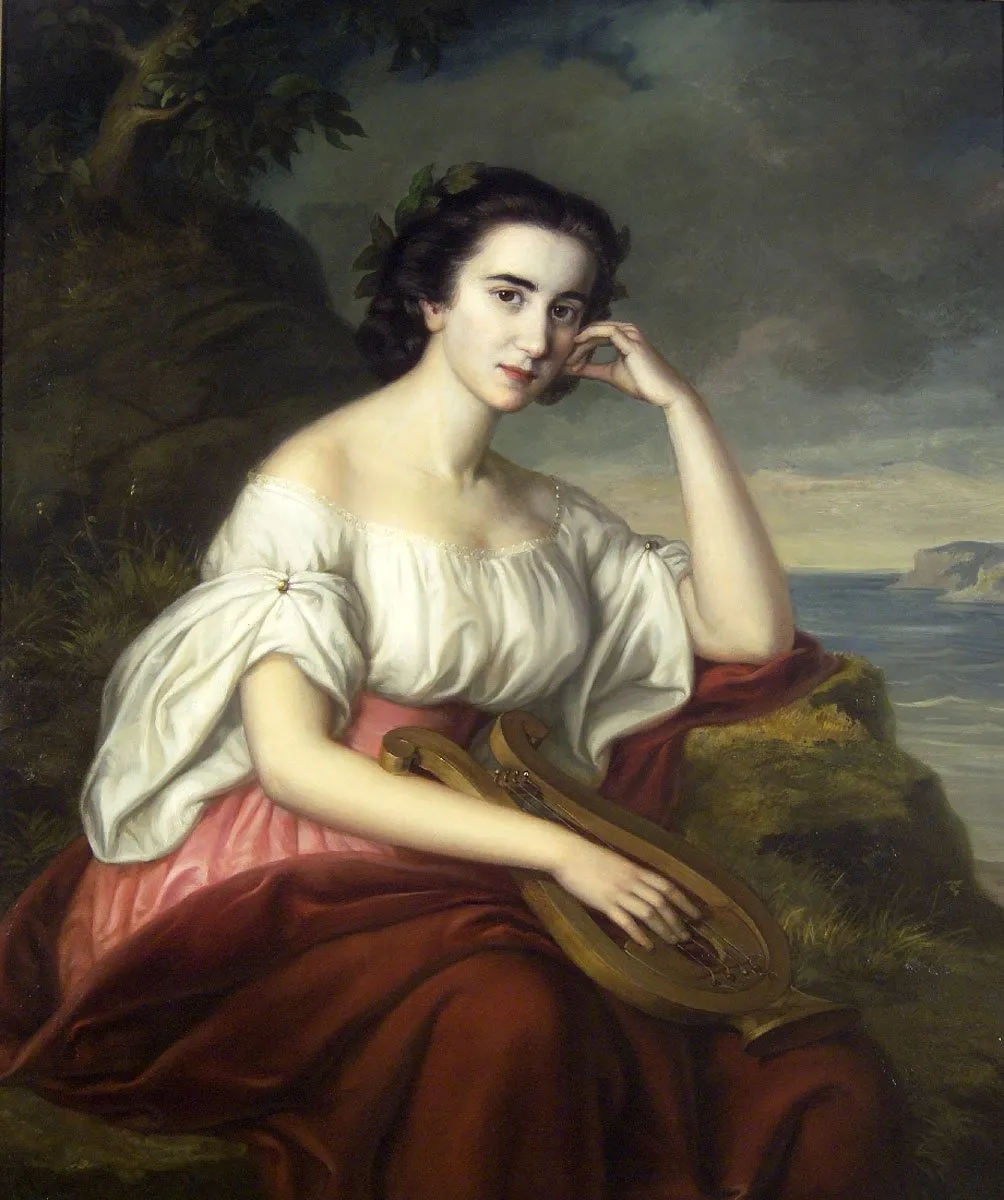
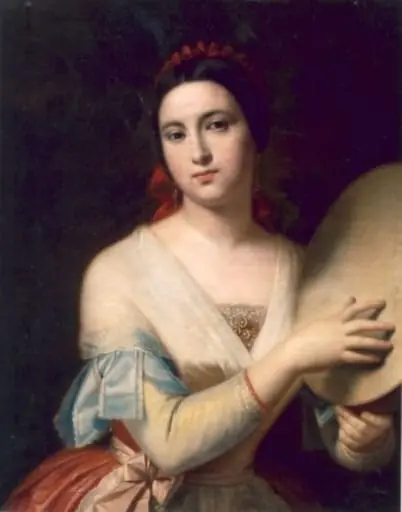
Sappho is an oil painting by the Realist artist Soma Orlai Petrich. It dates from 1860 and is held in the collection of the Hungarian National Gallery.
About this work
Overview
Soma Orlai Petrich’s 1860 oil painting depicts the ancient Greek poet Sappho seated on a rugged cliffside.
Soma Orlai Petrich’s 1860 oil painting depicts the ancient Greek poet Sappho seated on a rugged cliffside. Executed in the Realist tradition, the work blends historical subject matter with naturalistic detail. Petrich, a Hungarian artist focused on historical and portrait themes, rendered the figure with careful attention to posture and environment, reflecting both academic training and 19th-century artistic priorities. The painting is part of the Hungarian National Gallery’s collection.
Subject & Meaning
The figure represents Sappho, the archaic lyric poet of Lesbos, traditionally associated with music and emotional expression. Holding a lyre and resting her head in contemplation, she embodies the archetype of the solitary muse. The setting—cliffs above water, overcast sky—evokes isolation and introspection, reinforcing her cultural image as a voice of personal, often melancholic, verse. The attire, while not historically accurate, aligns with 19th-century romanticized notions of antiquity.
Technique & Style
Petrich employed chiaroscuro to model the figure’s form, using subtle shifts in light to define the curve of the arm, the fold of fabric, and the texture of rock. The brushwork is precise but not overly polished, characteristic of Realist tendencies that favored observable detail over idealization. The palette is restrained—soft whites, deep reds, muted grays—enhancing the somber mood. Background elements are rendered with loose, atmospheric strokes, drawing focus to the central figure.
History & Provenance
Painted in 1860, the work entered the Hungarian National Gallery’s collection soon after its completion. Petrich, active in Budapest and Vienna, was a recognized figure in Central European academic circles. The painting reflects the period’s interest in classical themes reinterpreted through a modern lens. No significant alterations or reattributions are recorded; its provenance remains stable within Hungarian institutional holdings.
Context
In mid-19th-century Europe, classical subjects were frequently revisited as symbols of cultural identity and intellectual heritage. Hungarian artists, navigating national awakening, often turned to ancient models to assert continuity with Western traditions. Petrich’s Sappho aligns with this trend, offering a quiet, introspective counterpoint to more dramatic historical narratives popular at the time.
Legacy
While not widely reproduced or studied outside Hungary, the painting remains a representative example of academic Realism in Central European art. It preserves Petrich’s approach to mythological figures—grounded in physical presence rather than allegory. The work continues to be displayed as part of the National Gallery’s 19th-century collection, offering insight into how antiquity was visually reimagined in a nationalist context.
Artist & collection

Artist
Soma Orlai Petrich, aka Soma Orlay-Petrich (October 22, 1822, Mezőberény - June 5, 1880, Budapest) was a Hungarian painter famous for his historical paintings and portraits.

 Johanna Margarete Christine Gräfin von Brühl
 Logofeteasa Maria Dudescu
 The Court Opera singer Theresa Hall as "Eva" in Joseph Haydn's "Creation"
 Szentiványi Ignácné
 Thalia
 Marie-Joséphine Lafont-Porcher
 Портрет Д.С. Яковлевой
 Portrait of a Woman from the Schmidt Family
 Woman Playing the Lute
 Portrait of Leontyna Aniela Aszpergerówna
 Untitled
 Femeie cu tamburină