Artwork
Suq al-Nahhasin, Cairo
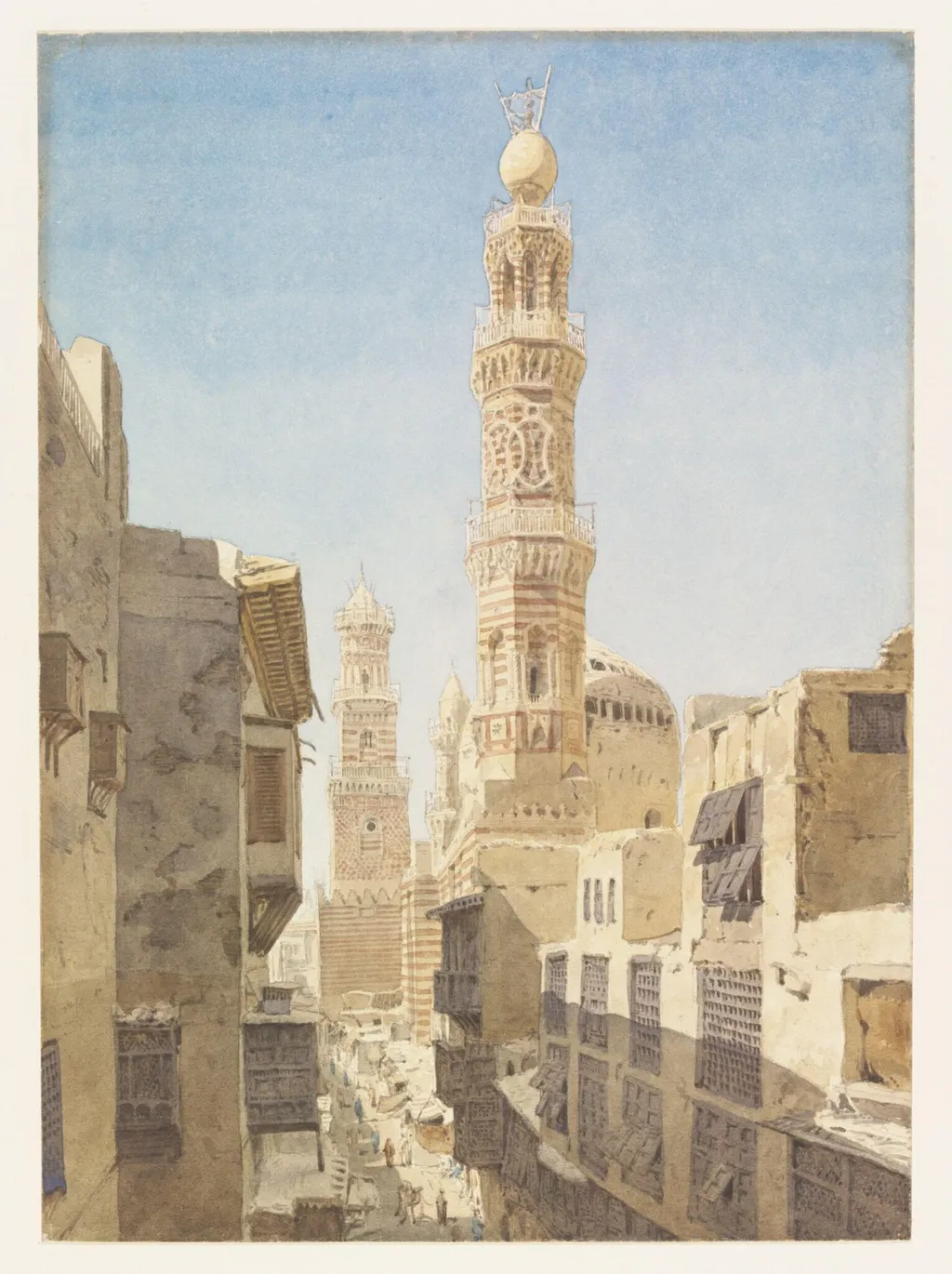
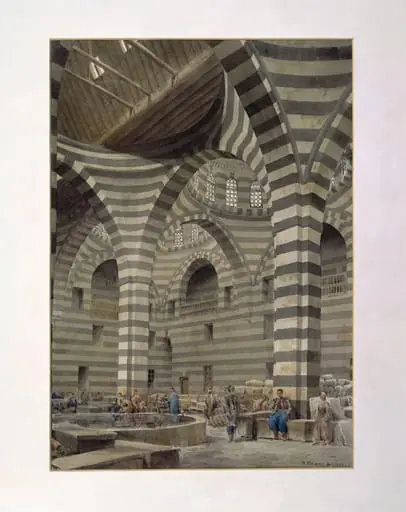
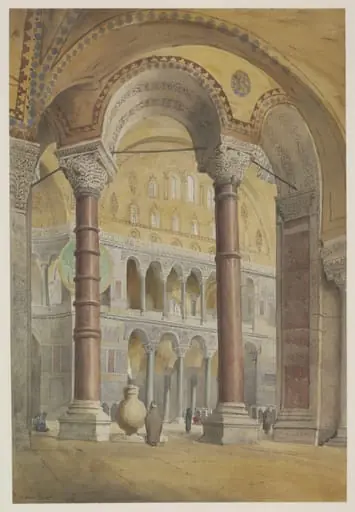
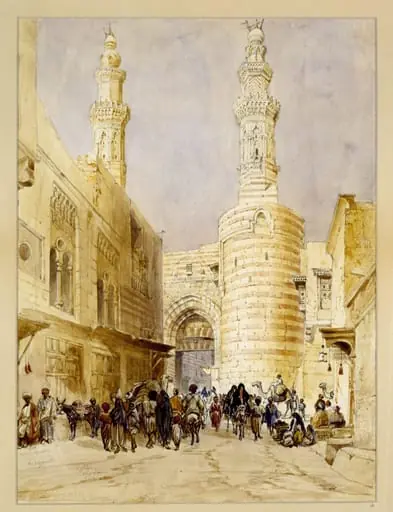
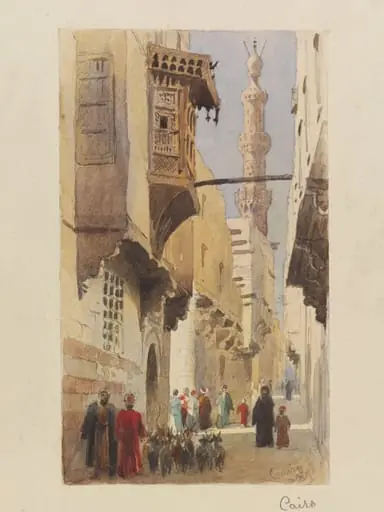
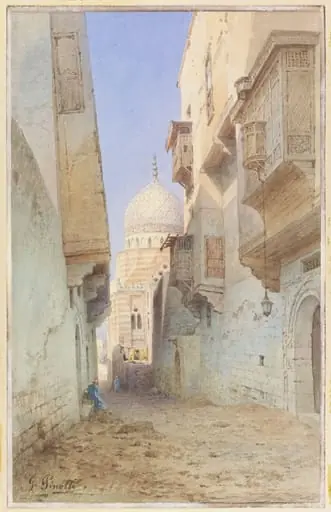
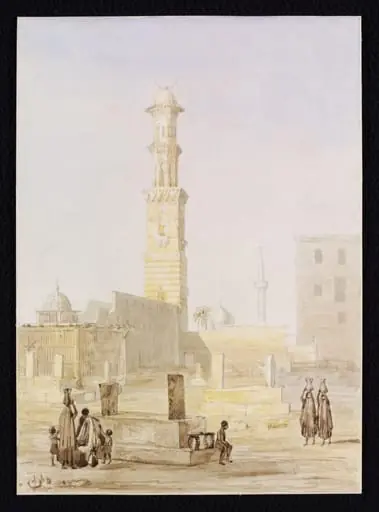
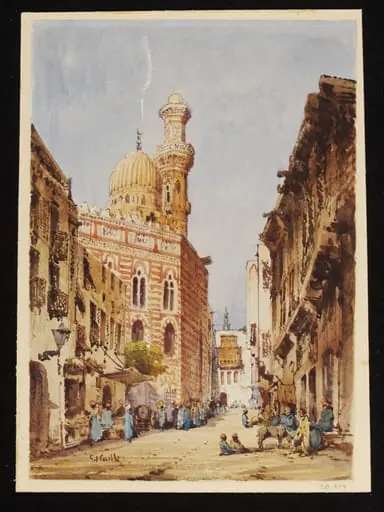
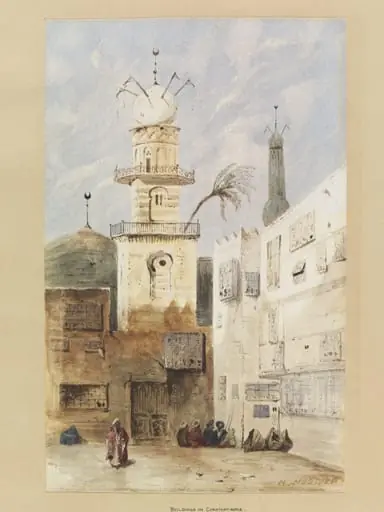
Suq al-Nahhasin, Cairo is a watercolor work on paper by the Impressionist artist Richard Phené FRIBA FSA Spiers. It dates from 1866 and is held in the collection of the Victoria and Albert Museum. This 1866 watercolour by John Pollard Spiers depicts Suq al-Nahhasin, a copper-sellers' market in Cairo.
About this work
This watercolour shows an Egyptian marketplace in Cairo from 1866. The artist painted it while on a trip to the Middle East. It’s a study of how light falls on buildings and shadows stretch.
He wasn’t just touring—he was gathering ideas for British architects. They wanted to borrow styles from other cultures before they disappeared.
Look up the Victoria and Albert Museum next.
Overview
This 1866 watercolour by John Pollard Spiers depicts Suq al-Nahhasin, a copper-sellers' market in Cairo.
This 1866 watercolour by John Pollard Spiers depicts Suq al-Nahhasin, a copper-sellers' market in Cairo. Created during a Royal Academy-funded journey through the Middle East, the work belongs to a broader 19th-century effort to document non-European architecture before it was altered by modernization. Spiers, primarily known as an educator and writer, used his sketches to inform architectural discourse in Britain, emphasizing the value of Islamic design traditions.
Subject & Meaning
The scene captures the dense, arched stalls and narrow passageways of a Cairo bazaar, highlighting the interplay of sunlight and shadow across textured surfaces. Rather than romanticizing the setting, Spiers treated it as a study in spatial organization and structural detail. His focus was on architectural form—how vaults, columns, and overhangs shaped daily life—intended as a reference for British designers seeking alternatives to prevailing Western styles.
Technique & Style
Executed in watercolour, the work employs loose, observational brushwork to convey atmosphere rather than precise detail. Light is rendered subtly, with washes suggesting the warmth of midday sun and the coolness of shaded alcoves. The composition avoids dramatic perspective, instead favoring a grounded, almost documentary approach that prioritizes architectural accuracy over aesthetic embellishment.
History & Provenance
Spiers produced this piece during his 1865–66 travels across the Middle East, supported by a Royal Academy scholarship. Upon returning to Britain, he exhibited several works from the trip, including this one, at the Royal Academy. The watercolour was likely part of a private collection of architectural studies, later acquired by institutions interested in 19th-century Orientalist documentation, such as the Victoria and Albert Museum.
Context
In mid-19th century Britain, architects increasingly looked beyond Europe for design inspiration, drawn to Islamic architecture’s structural ingenuity and decorative richness. As urban development threatened historic sites across the Ottoman Empire, scholars and artists documented them as cultural records. Spiers’s work emerged within this movement, positioning drawing as a form of preservation and pedagogical tool.
Legacy
Spiers’s watercolours contributed to academic discussions on architectural eclecticism, influencing later generations of British designers who incorporated Islamic motifs into public and institutional buildings. Though not widely known as a practitioner, his field studies helped legitimize non-Western forms as worthy of serious architectural consideration, embedding them into the curriculum and discourse of British design education.
Artist & collection
Artist
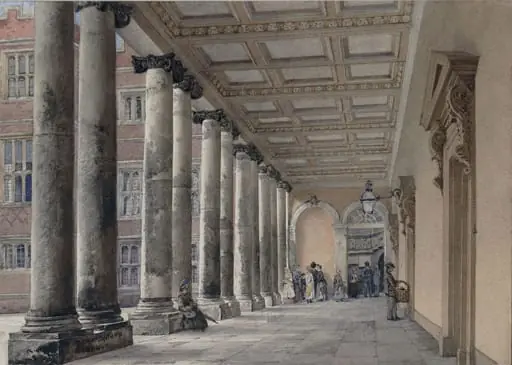
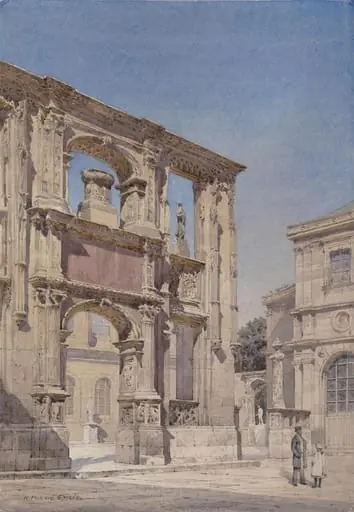
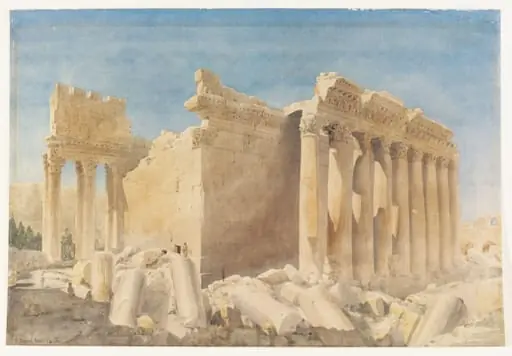
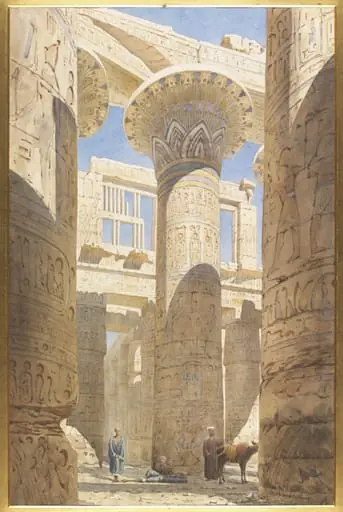
Richard Phené FRIBA FSA Spiers
Richard Phené painted watercolours of grand old buildings in the 1800s. His brush captured places like Cairo’s Suq al-Nahhasin (1866) and the Great Khan in Damascus (1865–66). He also turned his eye to Hampton Court…