Artwork
Colonnade in the Clock Court of Hampton Court Palace
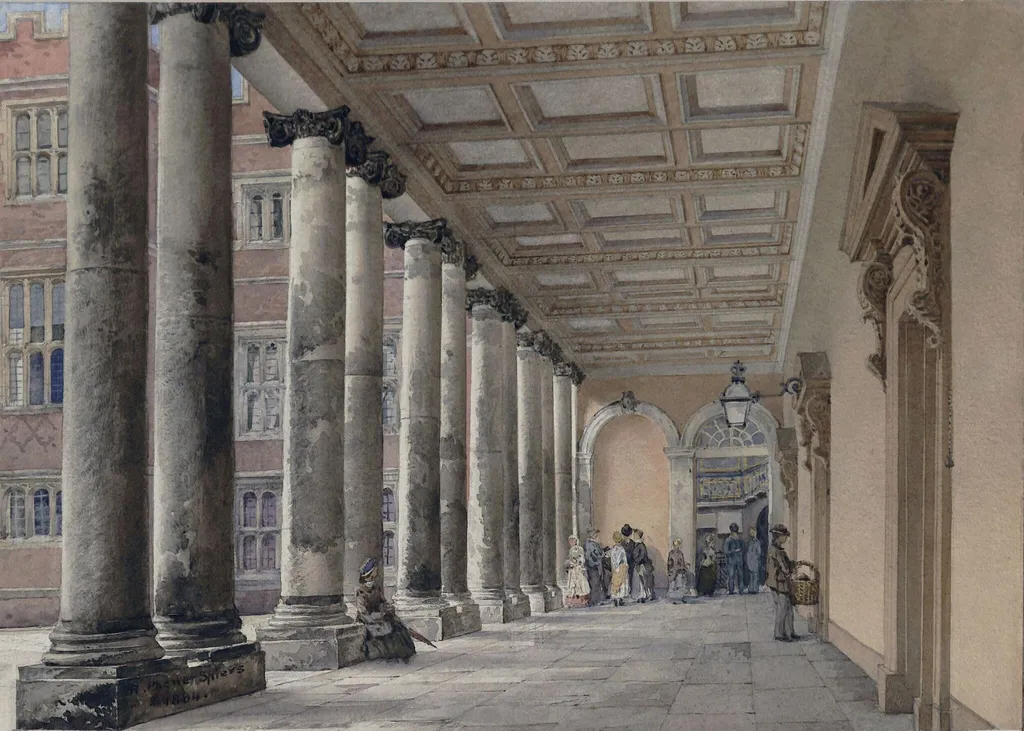
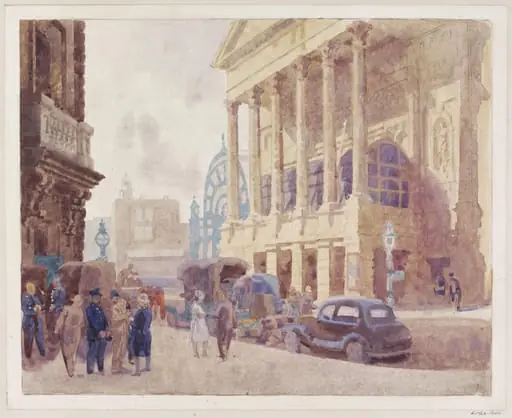
Colonnade in the Clock Court of Hampton Court Palace is a watercolor work on paper by the Impressionist artist Richard Phené FRIBA FSA Spiers. It dates from 1884 and is held in the collection of the Victoria and Albert Museum. This watercolour captures the colonnade within Hampton Court Palace’s Clock Court, rendered in delicate washes of pigment.
About this work
Overview
The artist records the worn stone, hanging lantern, and quiet human presence with quiet precision, reflecting a documentary approach to landscape and structure.
This watercolour captures the colonnade within Hampton Court Palace’s Clock Court, rendered in delicate washes of pigment. The composition emphasizes architectural detail and atmospheric light, avoiding idealization in favor of observed reality. The artist records the worn stone, hanging lantern, and quiet human presence with quiet precision, reflecting a documentary approach to landscape and structure.
Subject & Meaning
The scene portrays ordinary figures in period dress gathered near an archway, their interactions unposed and subdued. The colonnade, with its weathered columns and arched windows, functions not as a monument but as a lived-in space. The inclusion of people suggests daily activity within the palace grounds, grounding the architecture in human routine rather than ceremonial grandeur.
Technique & Style
The artist employs transparent watercolour to suggest texture and depth—light filters through the ceiling, casting soft shadows on stone and fabric. Subtle gradations in tone model the surfaces without heavy outline, while the lantern’s glow is implied through faint washes. The handling is restrained, prioritizing observational accuracy over dramatic effect.
History & Provenance
The work originates from a tradition of topographical watercolours popular in 18th- and 19th-century Britain, often created for private collections or architectural study. Though the artist’s identity is not specified here, the subject aligns with documented visits to Hampton Court by artists seeking to record historic royal sites with fidelity.
Context
Hampton Court Palace, a Tudor and Stuart royal residence, was increasingly open to the public by the 19th century. Its courtyards became subjects for artists interested in the intersection of history and everyday life. This watercolour reflects a broader cultural shift toward valuing authentic architectural detail over romanticized interpretations.
Legacy
The piece contributes to a body of work that preserved the appearance of historic British architecture before modern restoration. Its quiet realism influenced later topographical artists and remains a reference for understanding how such spaces were perceived and recorded in the pre-photographic era.
Own this work as a print
Artist & collection
Artist
Richard Phené FRIBA FSA Spiers
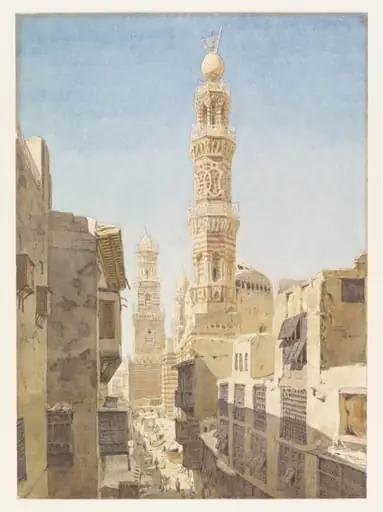
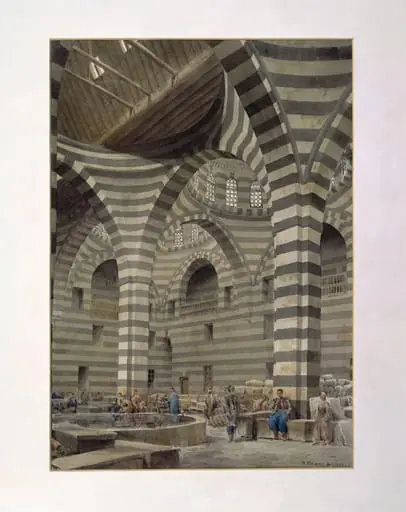
Richard Phené painted watercolours of grand old buildings in the 1800s. His brush captured places like Cairo’s Suq al-Nahhasin (1866) and the Great Khan in Damascus (1865–66). He also turned his eye to Hampton Court…



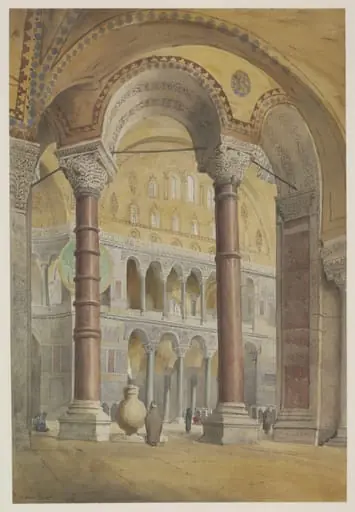
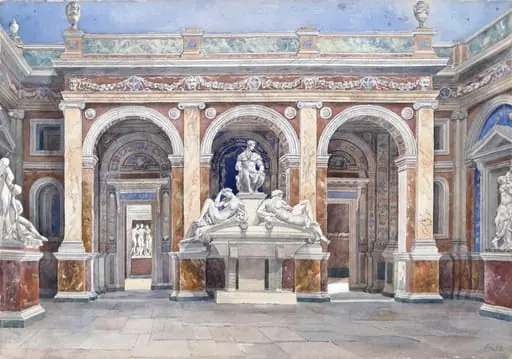 Marbled room with statues at Crystal Palace
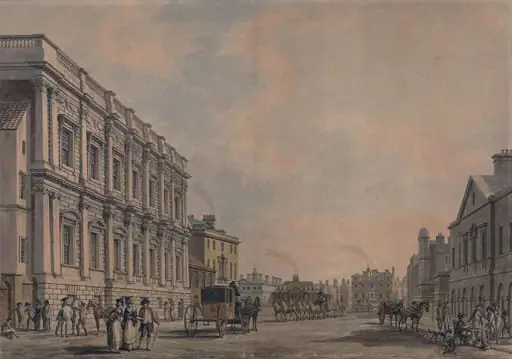 Whitehall, with the Banqueting House
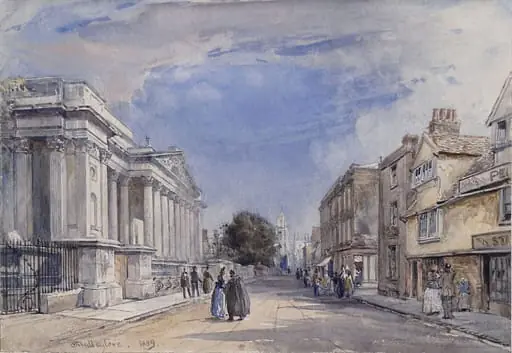 The Fitzwilliam Museum, Cambridge
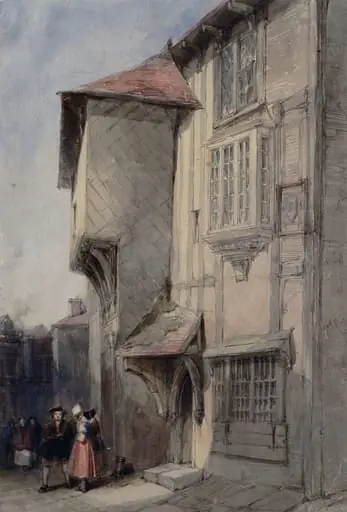 A street scene
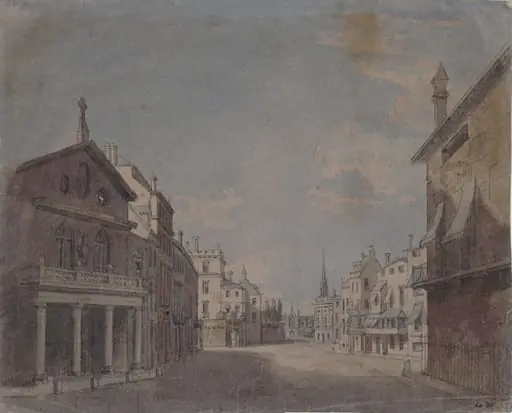 Street Scene
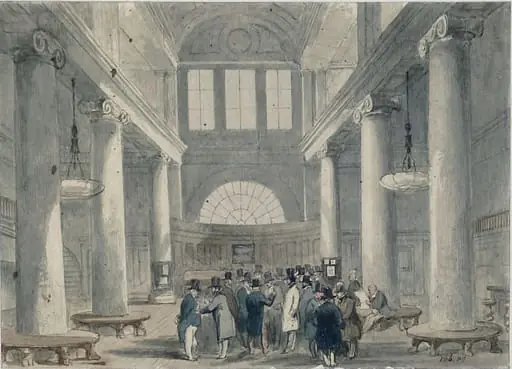 The interior of the old corn exchange, Mark Lane
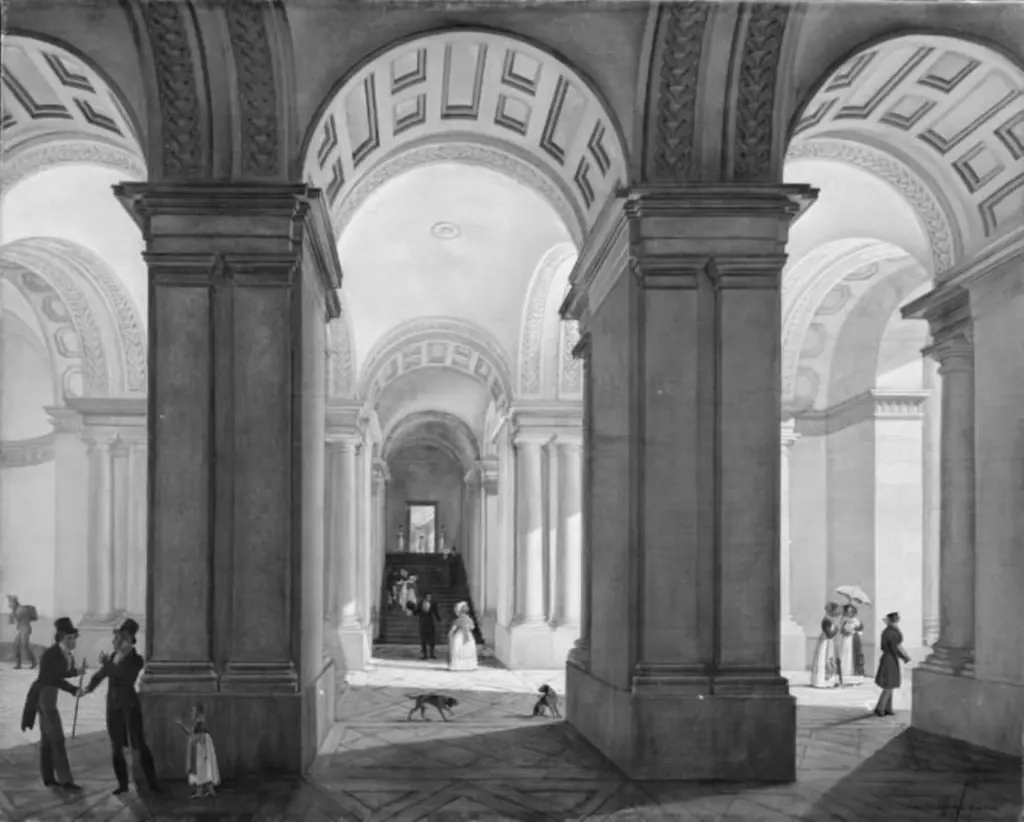 Christiansborg Slots vestibule
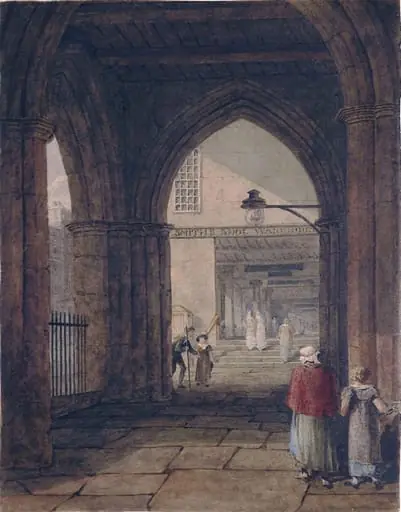 View in the Rows, Chester
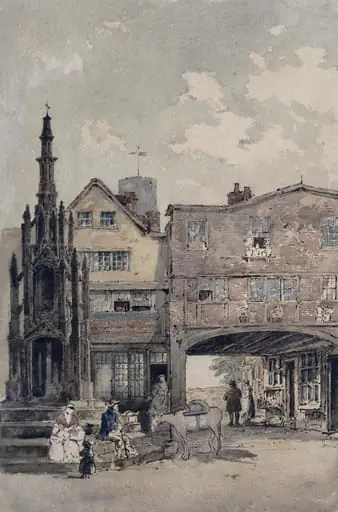 The Butter-Cross, Winchester
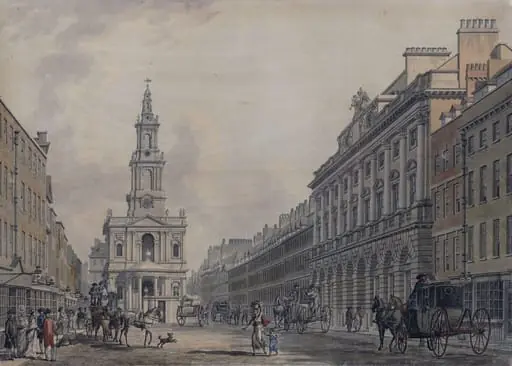 The Strand, with Somerset House and St Mary's Church
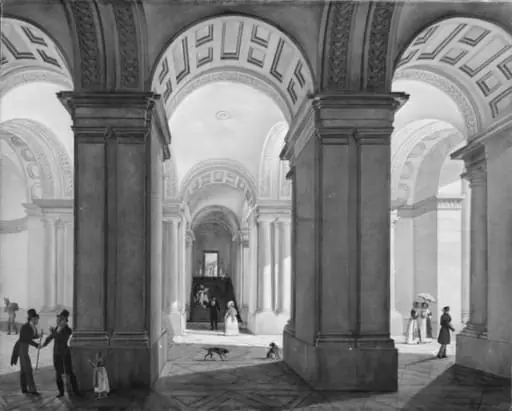 The Vestibule of Christiansborg Palace
 Covent Garden Opera House; The Colonnade