Artwork
Imitație de icoană
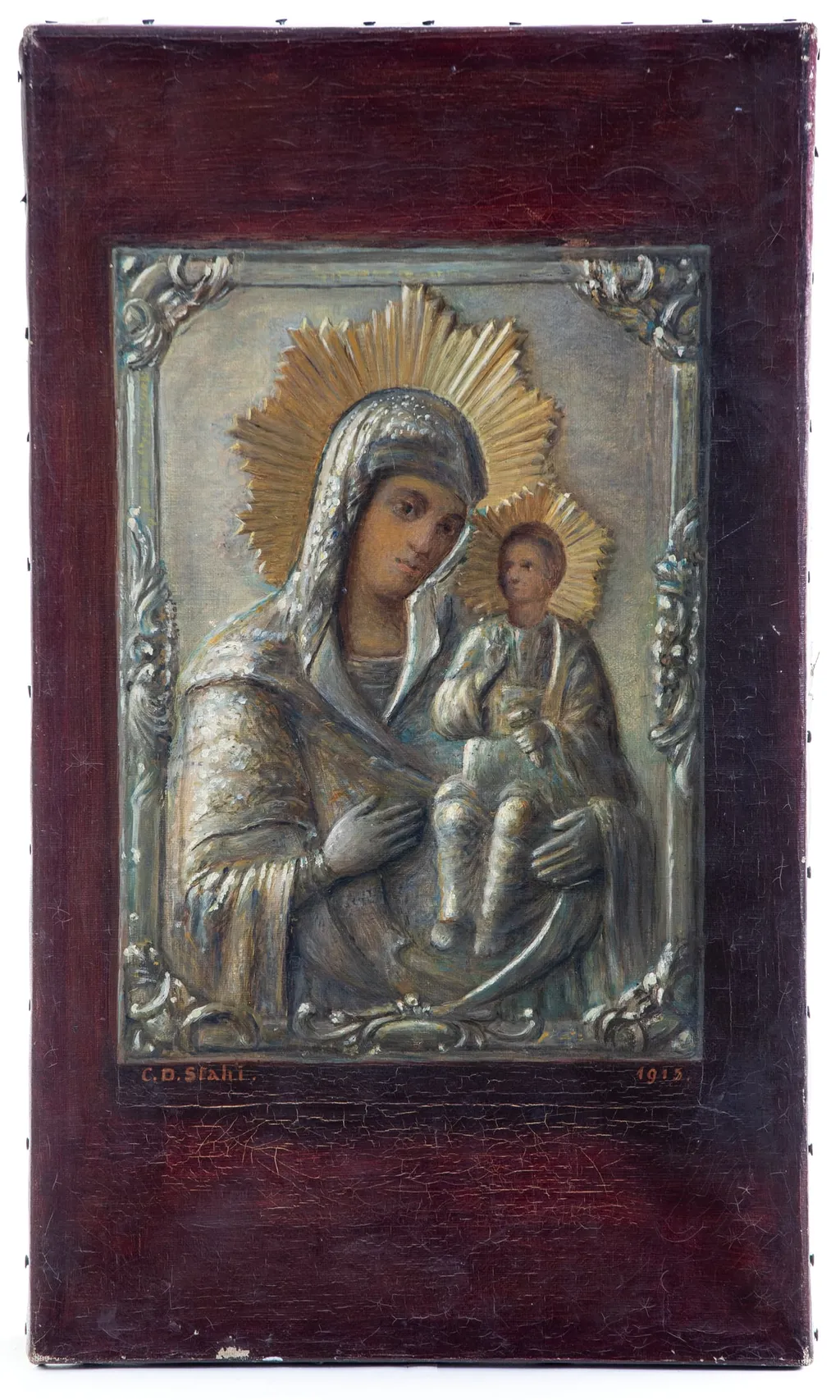
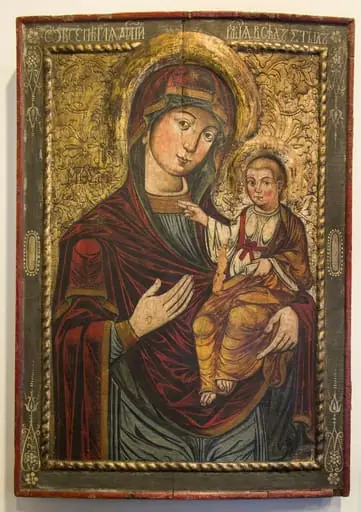
Imitație de icoană is a drawing by Stahi D. Constantin. It dates from 1850 and is held in the collection of the Moldova National Museum Complex. Created around 1850 by Stahi D.
About this work
Overview
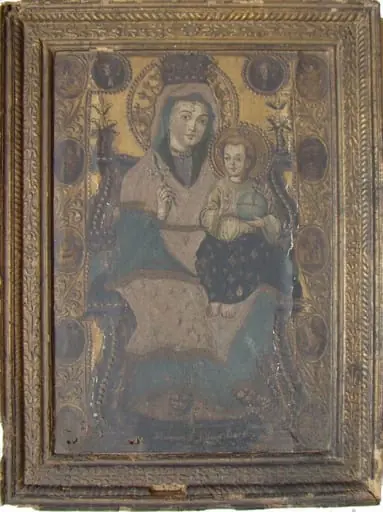
Created around 1850 by Stahi D. Constantin, this work imitates the formal conventions of Eastern Orthodox icons. Though painted on a flat surface, it emulates the devotional tone and composition of traditional religious panels. The subject, a maternal figure with a child, is rendered with restrained gestures and symbolic elements, aligning it with sacred imagery rather than secular portraiture.
Subject & Meaning
The figures depict a woman and infant, both crowned with golden halos, indicating their sacred status. The woman’s calm expression and the child’s relaxed posture suggest tenderness within a spiritual context. While not a specific biblical scene, the composition evokes the Virgin and Child, a common motif in Orthodox iconography meant to inspire reverence and contemplation.
Technique & Style
The painting employs flat, even modeling with minimal shading, adhering to iconographic traditions that prioritize symbolic clarity over naturalism. The figures are outlined clearly against a plain background, focusing attention on their forms. The frame, adorned with carved floral and swirling motifs, contrasts with the simplicity of the image, enhancing its ritual character.
History & Provenance
The work originates from a period when Romanian artists were reengaging with religious art after centuries of Ottoman influence. Stahi D. Constantin, active in the mid-19th century, produced such pieces for private devotion or local churches. Its survival suggests it was valued within a religious household or community, though its exact early ownership remains undocumented.
Context
In mid-19th century Romania, there was a cultural revival of Orthodox traditions, including icon painting. Artists like Constantin often blended folk aesthetics with canonical forms, creating works that felt both familiar and sacred. This piece reflects a broader movement to reclaim religious imagery as part of national identity during a time of political and cultural transformation.
Legacy
This imitation icon represents a transitional phase in Romanian religious art, where traditional forms were preserved even as modern techniques emerged. It serves as a quiet testament to the endurance of devotional imagery in everyday life. Though not widely exhibited, it remains a meaningful example of how sacred aesthetics persisted in domestic and regional settings.
Artist & collection
Artist
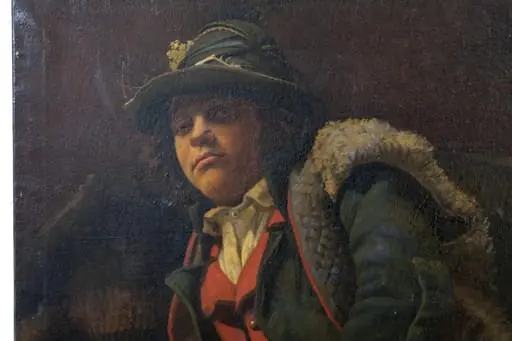
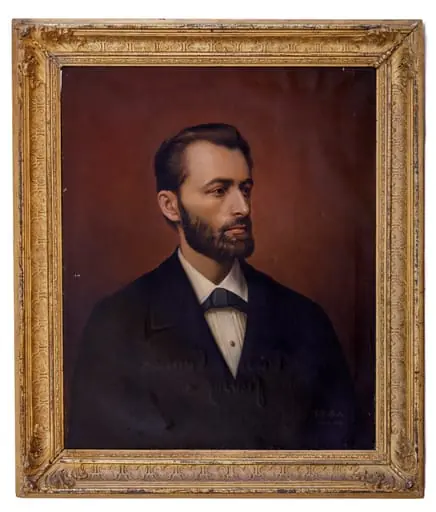
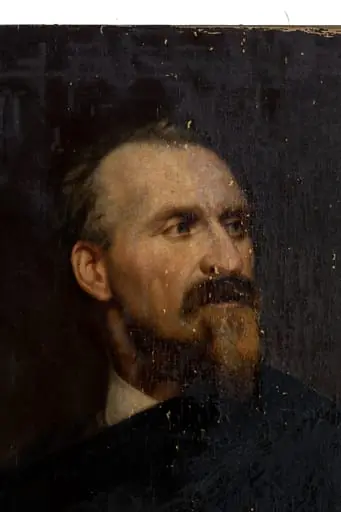
Stahi D. Constantin printed quiet portraits and gentle scenes in 19th-century Romanian ink and paint. Look for his family studies like Preotul Dimitrie Stahi (Tatăl artistului) and tender figures such as June (șovăind)…
 Maica Domnului cu pruncul; Icoană de catapeteasmă; Icoană împărătească
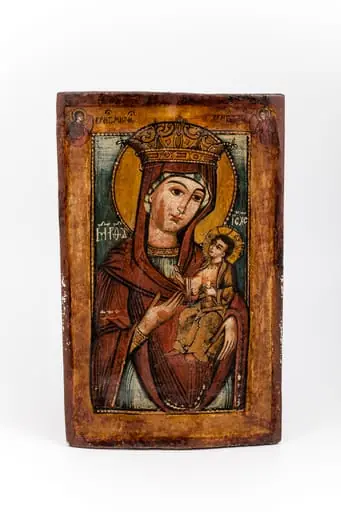 Maica Domnului ține în brațe Pruncul Iisus Hristos, care arată cu mâna dreaptă înspre Maica Domnului, prezentându-ne-o. Maica Domnului este înveșmântată în mantie cu maforion roșu-stacojiu, cu interiorul verde-olive și ciupag brodat auriu-bronziu. Veșmântul este de o eleganță deosebită. Pruncul Iisus Hristos este înveșmântat cu sacos și omofor alb-rozaliu, de asemenea, cu omofor brun-ocru, cu coroană și aureolă pe cap. Maica Domnului cu mâna dreaptă ni-L arată pe Mântuitorul Iisus Hristos ca fiind Calea. Adevărul și Viața, este tip Hodighitria. Fondul icoanei este verde-olive foarte deschis, până la transparent, verdele fiind culoarea Duhului Sfânt. Cromatică: roșu stacojiu, brun, acajou, brun-ocru, brun, bej, alb, verde-olive, negru. Icoana este încadrată și de un chenar decorativ-geometrizant-ramă brun-ocru. Inscripția din româno-chirilică se traduce MP IC XC Maica Domnului Iisus Hristos. Icoana este de iconostas. Desenul, cromatica, compoziția, fondul, încadrarea, trăsăturile chipurilor sunt deosebit de frumoase. Pe ramă pictată pe aceeași bucată de lemn, în colțurile superioare, stânga-dreapta, sunt Sfinții Arhangheli Mihail și Gavriil. Icoana se remarcă mult și prin supradimensionarea capului-chipului, maforiomului și aureolei Maicii Domnului, care parcă vor să iasă din încadrarea icoanei propriu-zise, accentuându-se ocrotirea și aplecare înspre noi, întreaga icoană fiind ca un acoperământ pogorât. Icoana aparține autorului Ivan Zugravul din Rășinari.
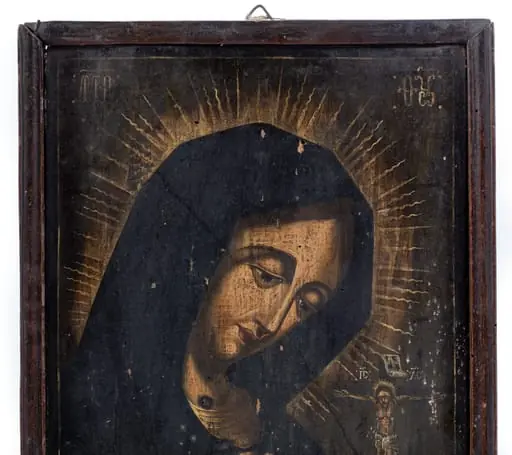 Maica Domnului Îndurerată
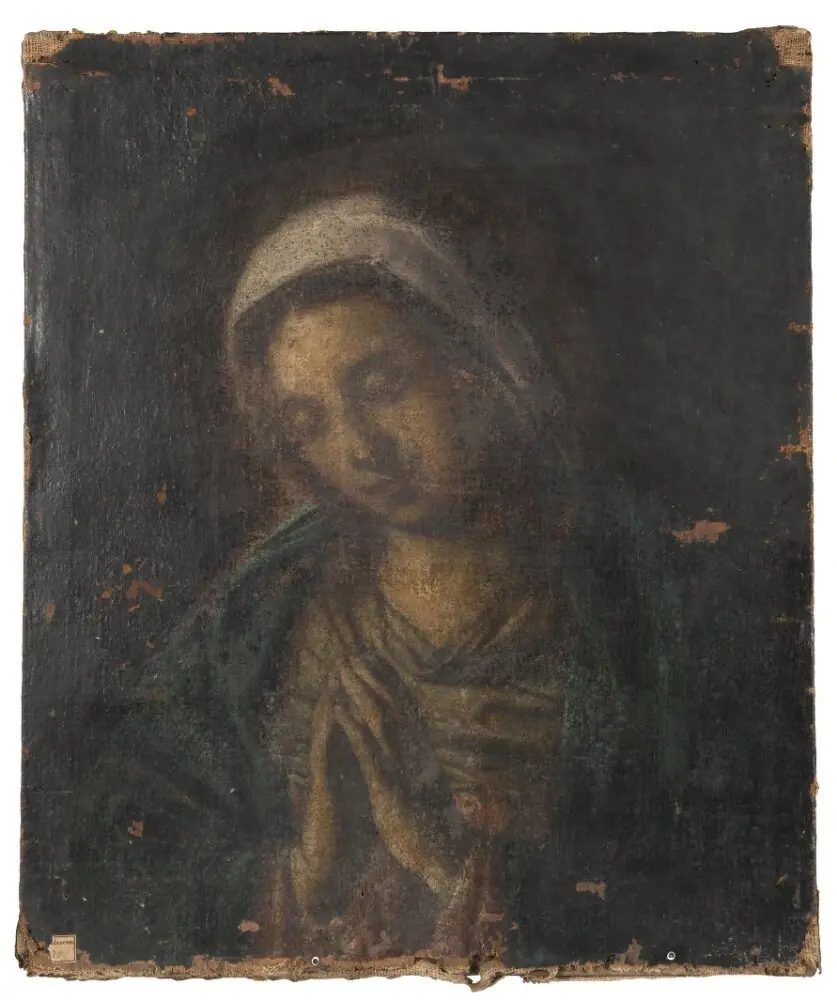 Madonna
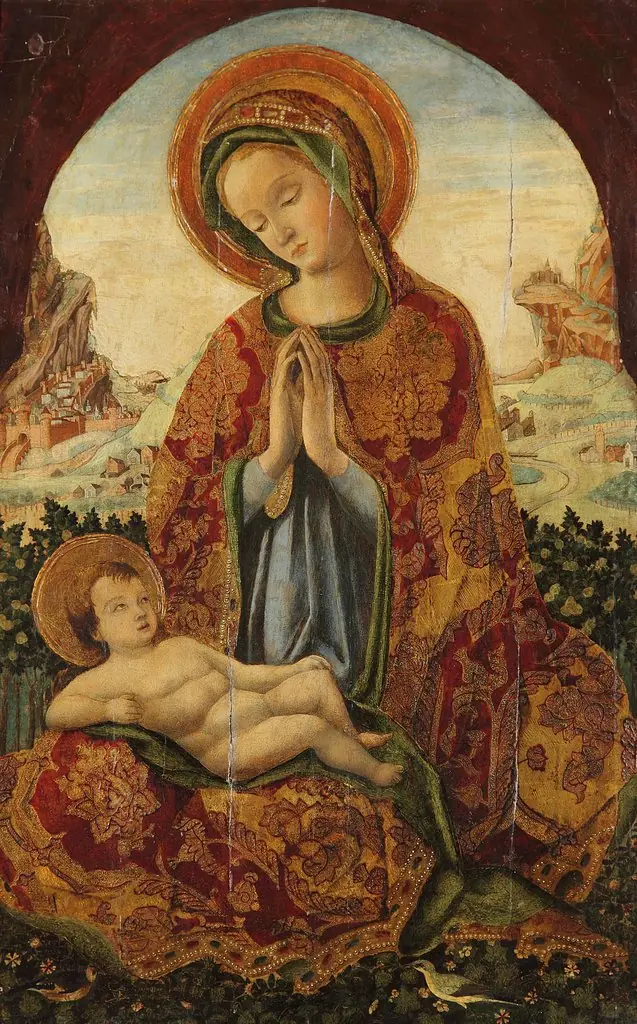 The Virgin and Child
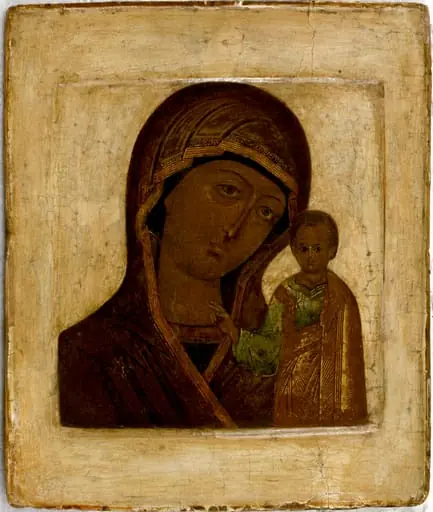 Kazanin Jumalanäiti, venäläinen ikoni
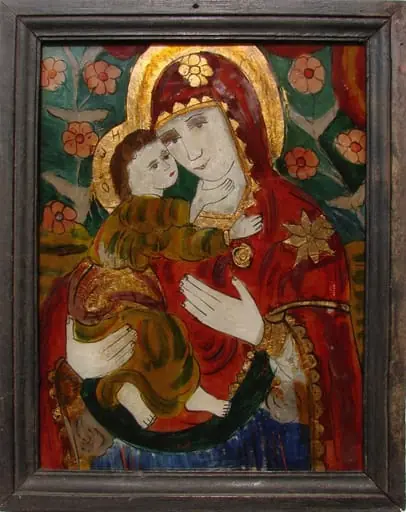 Maica Domnului cu Pruncul
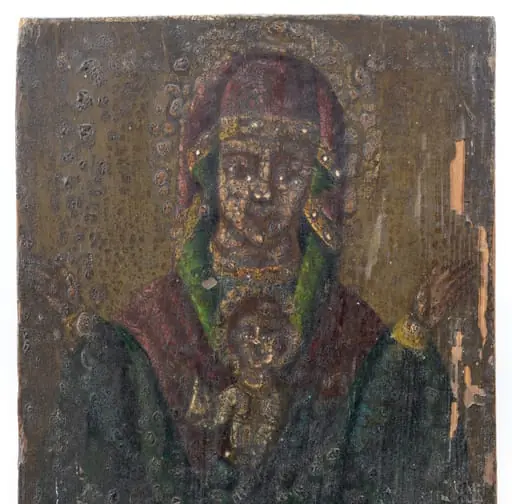 Fecioara cu Pruncul (Orantă)
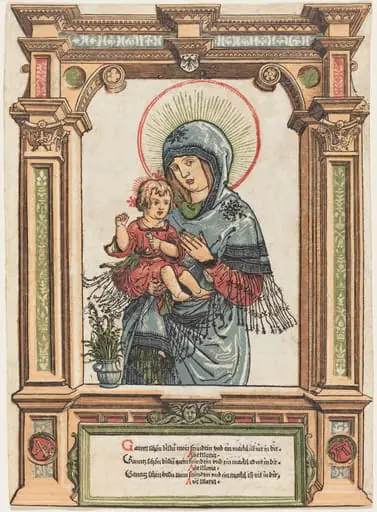 The Beautiful Virgin of Regensburg
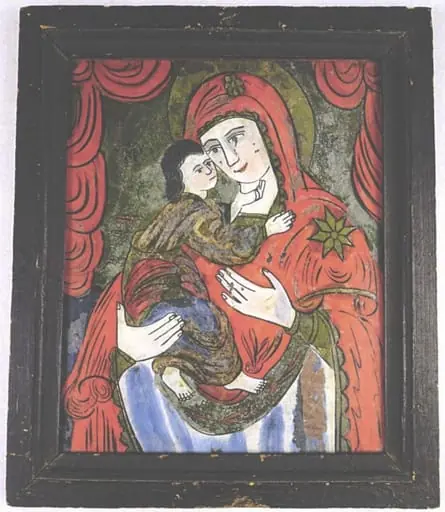 Maica Domnului Glykophilousa
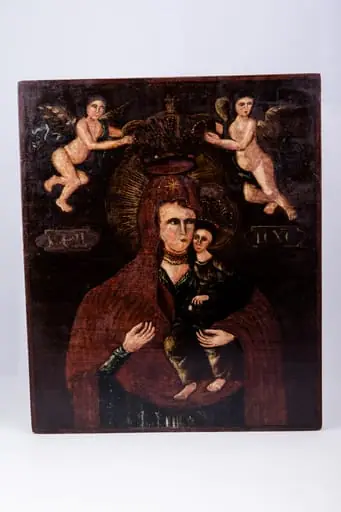 Maica Domnului ține în brațe Pruncul Iisus Hristos, care arată cu mâna dreaptă înspre Maica Domnului, prezentându-ne-o. Maica Domnului este înveșmântată în mantie cu maforion roșu-stacojiu, cu interiorul negru. Maica Domnului are aureola în raze luminoase de soare. Pruncul Iisus Hristos este înveșmântat cu sacos și omofor brun spre negru, cu coroană și aureolă pe cap. Fondul icoanei este negru întunecat, în contrast fiind cu lumina chipurilor și cromatica veșmintelor. În registrul superior sunt doi îngeri îndreptați spre coroana stilizată a Maicii Domnului, făcând gestul Încoronării. Îngerii sunt pictați asemenea unor putti, din pictura barocă. Cromatică este armonioasă: roșu stacojiu, brun, acajou, brun-ocru, brun, bej, alb, verde-olive, negru. Inscripția din româno-chirilică se traduce MP IC XC Maica Domnului Iisus Hristos. Icoana este pictată în manieră barocă și are atmosfera catolică.
 Maica Domnului cu Pruncul, floarea neveștejită