Artwork
The Apple Market
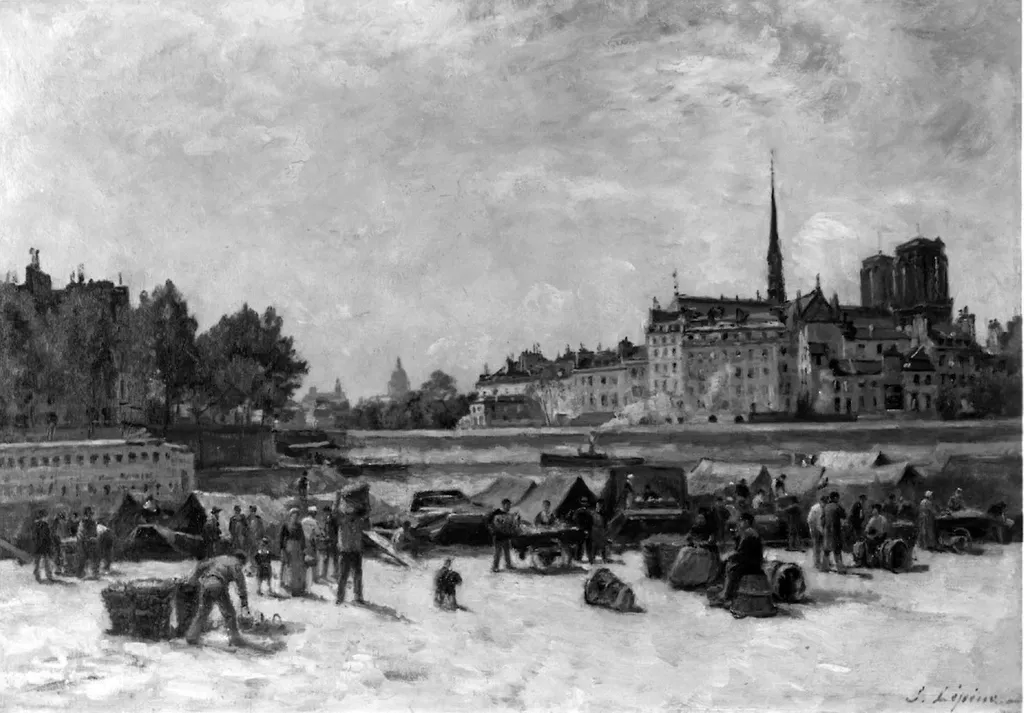
The Apple Market is an oil painting by the Impressionist artist Stanislas Lépine. It dates from 1890 and is held in the collection of the Art Institute of Chicago.
About this work
Overview
The scene captures everyday commerce in a French town, rendered with careful attention to light, movement, and spatial depth.
Painted in 1890 by Stanislas Lépine, The Apple Market is an oil-on-canvas work depicting a lively outdoor marketplace. It is part of the permanent collection at the Art Institute of Chicago. The scene captures everyday commerce in a French town, rendered with careful attention to light, movement, and spatial depth. Lépine’s approach reflects his interest in urban and rural life outside the academic tradition.
Subject & Meaning
The painting portrays a common market day, with vendors and shoppers engaged in routine transactions. Baskets of apples, scattered goods, and varied postures suggest the rhythm of daily life. The presence of a distant church spire hints at the integration of commerce and community within the urban fabric. There is no overt narrative, but the scene conveys the quiet dignity of ordinary labor and exchange.
Technique & Style
Lépine employed a loose yet precise brushwork to convey texture and atmosphere. The palette is muted, dominated by grays and earth tones, with subtle accents of red and green from the fruit and clothing. Perspective is carefully constructed to draw the eye toward the background spire, while the foreground’s cluttered arrangement enhances the sense of crowded activity. The sky, overcast and diffuse, unifies the composition with soft, even light.
History & Provenance
Created in 1890, the painting remained in private hands until it entered the Art Institute of Chicago’s collection. Lépine, known for his landscapes and market scenes, was active in the French Impressionist circle but maintained a more restrained style than his peers. The work’s acquisition by the museum reflects its value as an example of late 19th-century French realism with observational depth.
Context
Lépine worked during a period when urbanization transformed French towns, and artists increasingly turned to scenes of public life. Unlike the radical experiments of some Impressionists, his approach was grounded in careful observation and traditional composition. The Apple Market aligns with a broader trend of depicting non-idealized, everyday settings, offering a quiet counterpoint to grand historical or mythological subjects.
Legacy
Though not widely known today, Lépine’s work contributed to the documentation of 19th-century French daily life. The Apple Market remains a representative example of a genre that valued authenticity over spectacle. Its presence in a major American museum underscores its role in bridging European realism with international collections focused on social observation in art.
Artist & collection
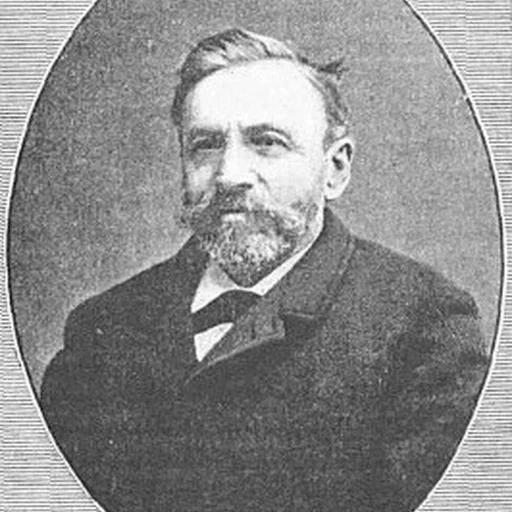
Artist
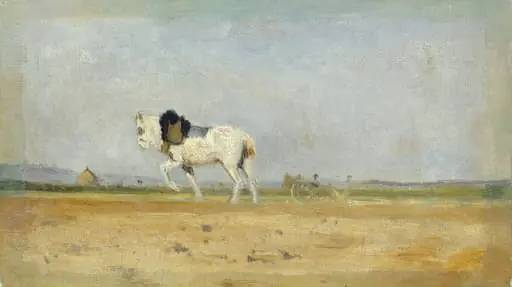
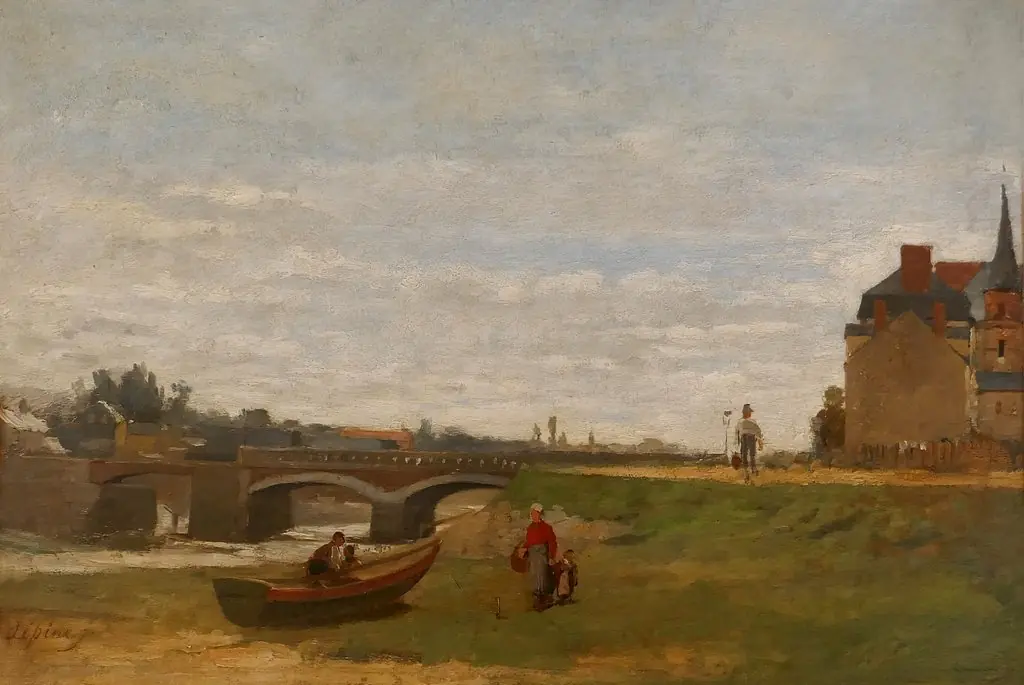
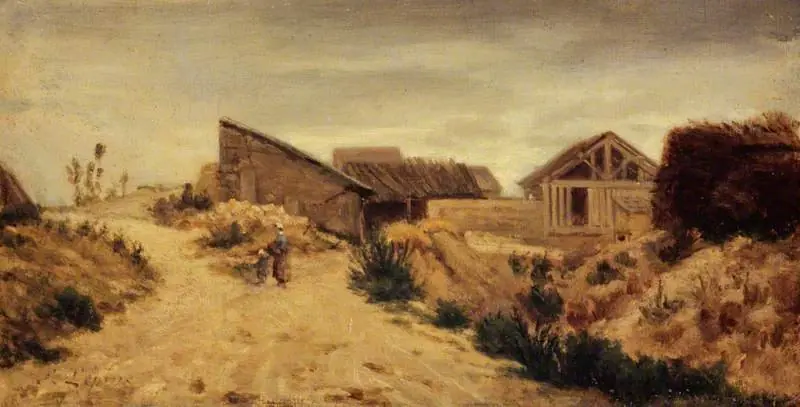
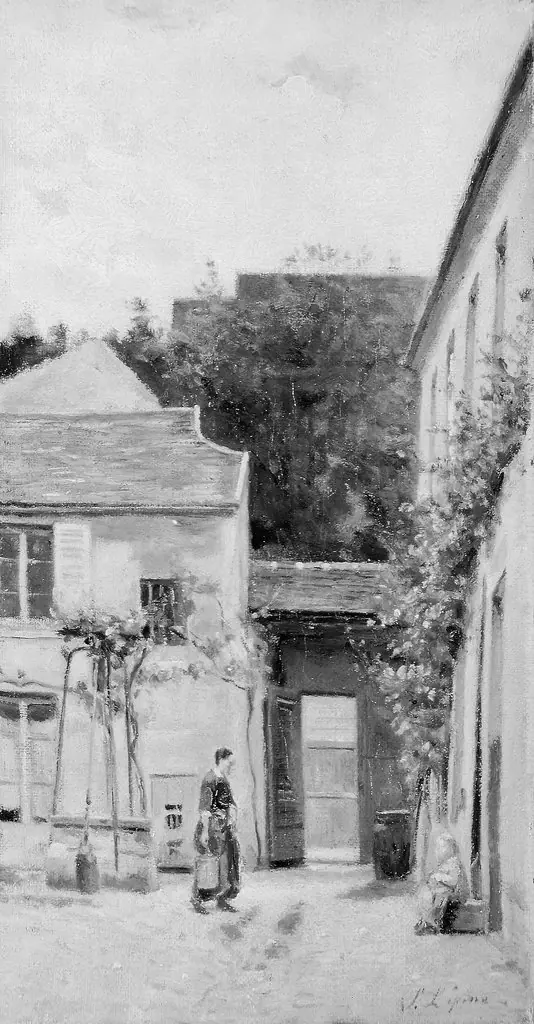
Stanislas Victor Edouard Lépine (October 3, 1835 – September 28, 1892) was a French painter who specialized in landscapes, especially views of the Seine.

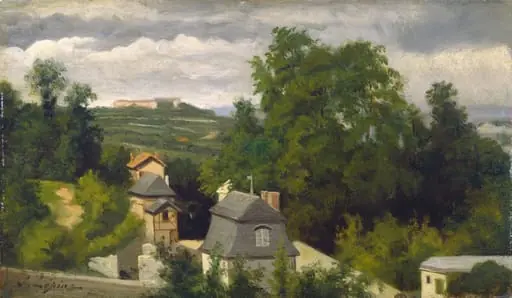
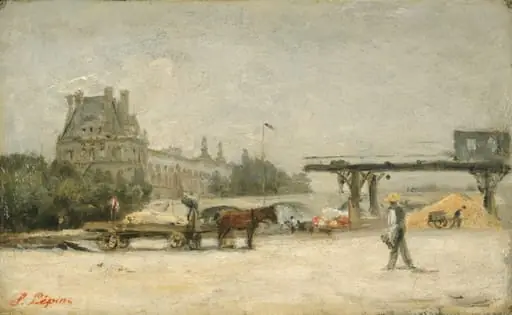


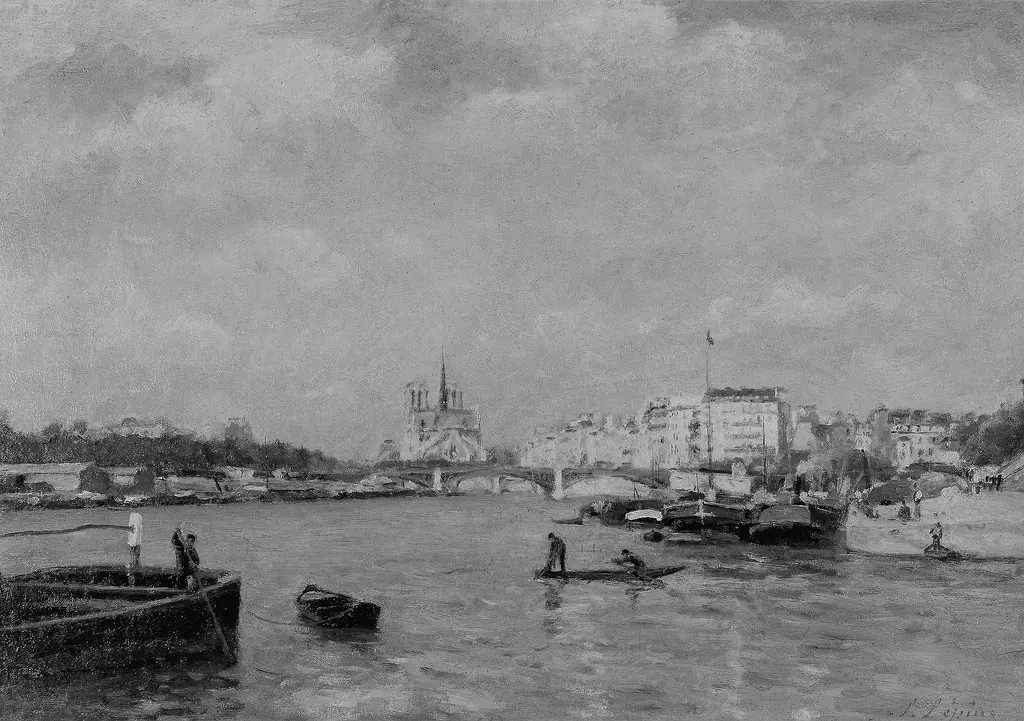 View on the Seine, Paris
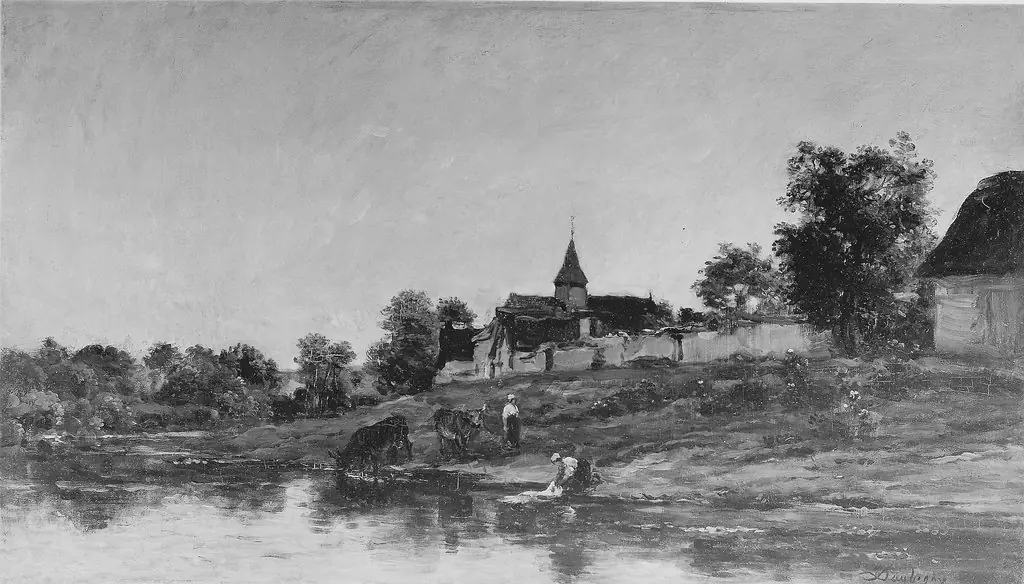 On the Bank of the Seine at Portejoie
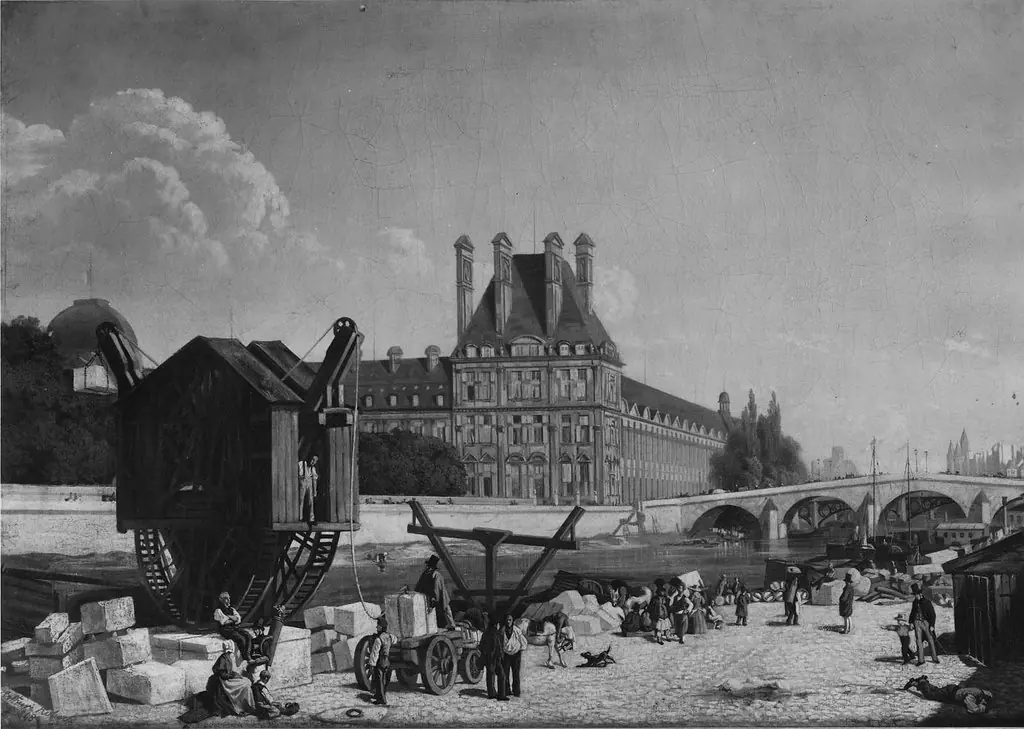 The Port aux Pierres on the Quai d'Orsay
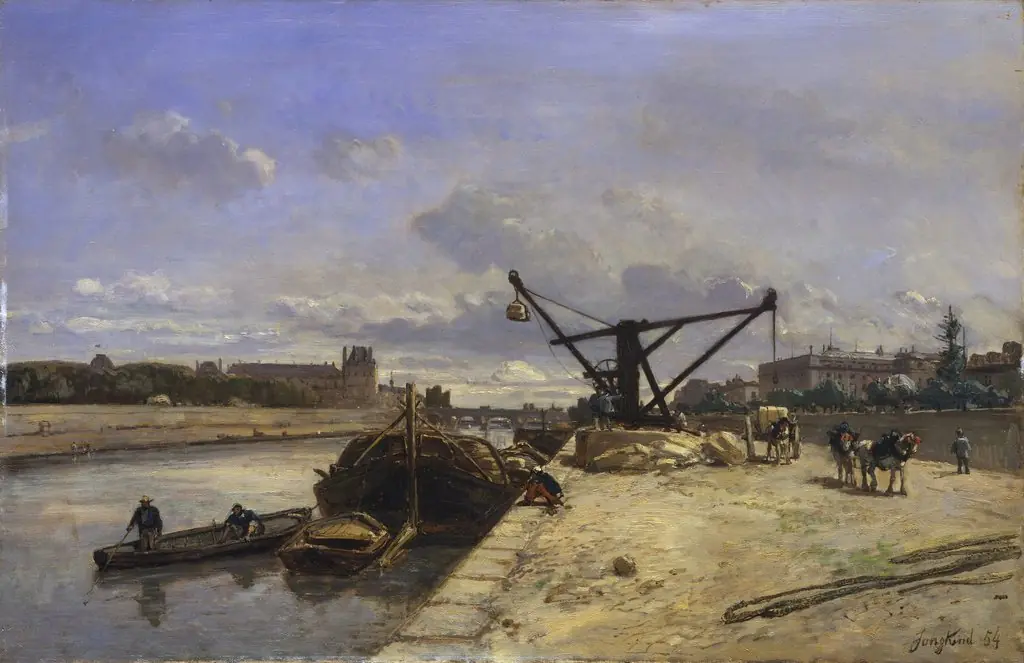 View from the Quai d'Orsay
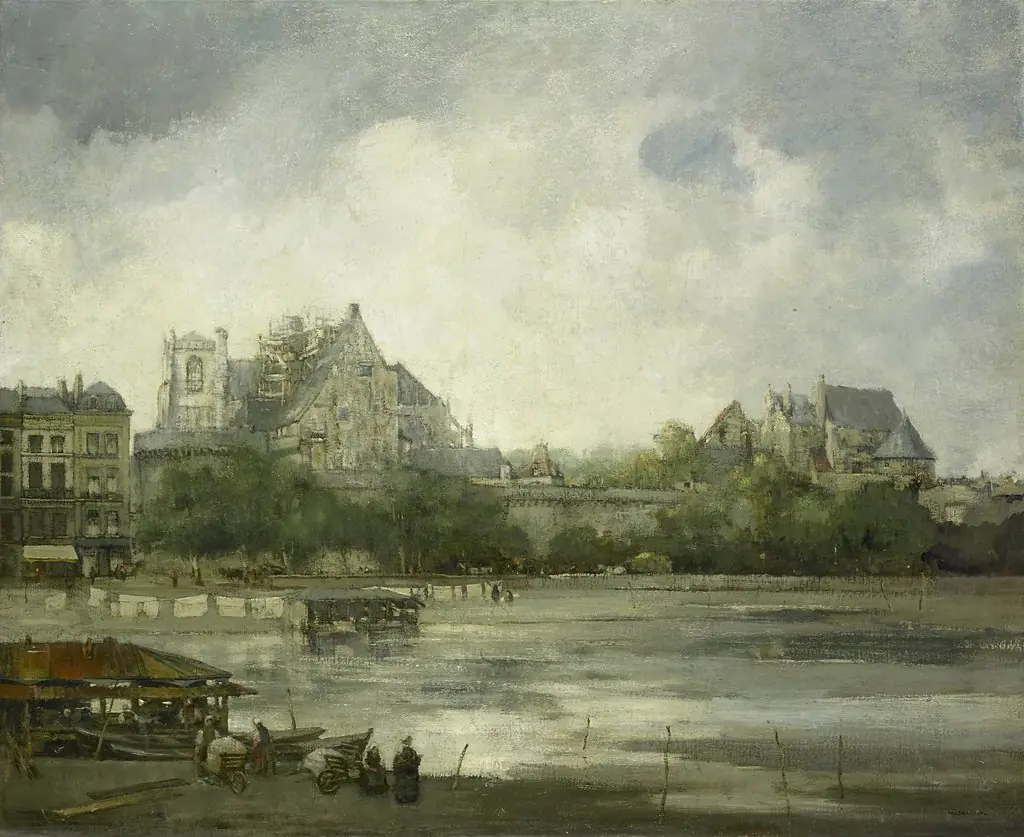 View of Nantes
 Havn i en lille købstad
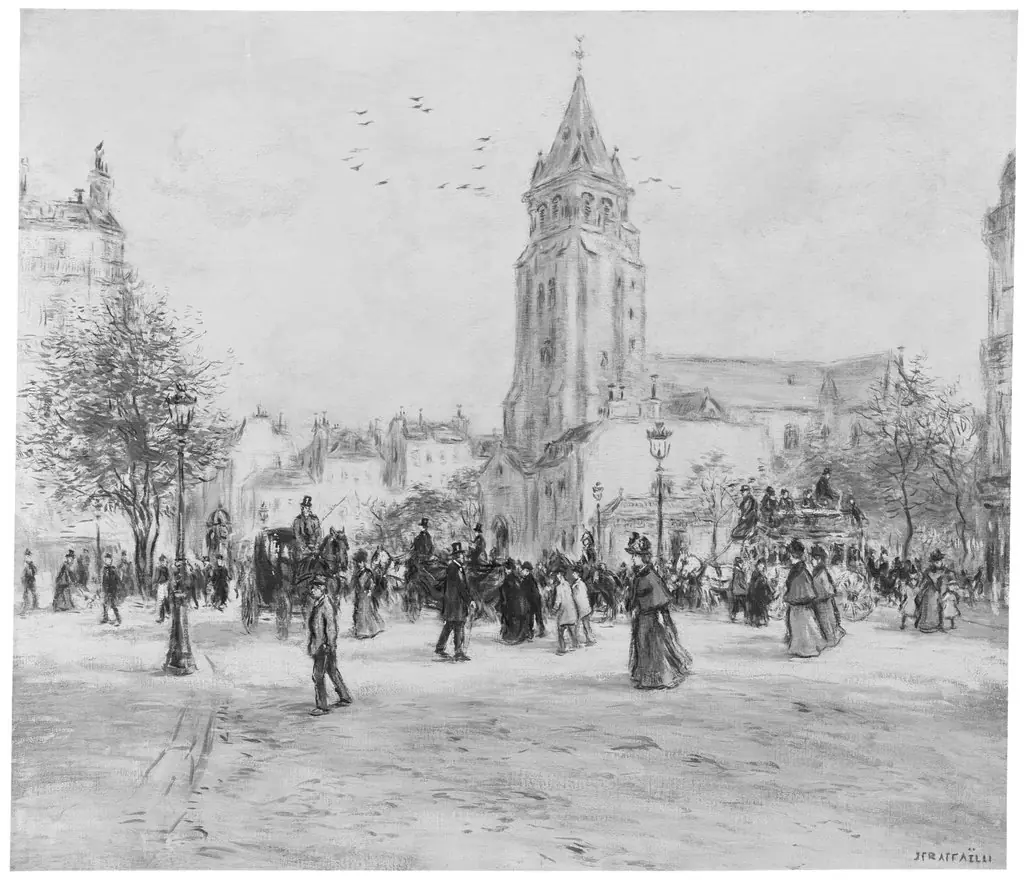 Place Saint-Germain-des-Prés, Paris
 From the Old Kristiania
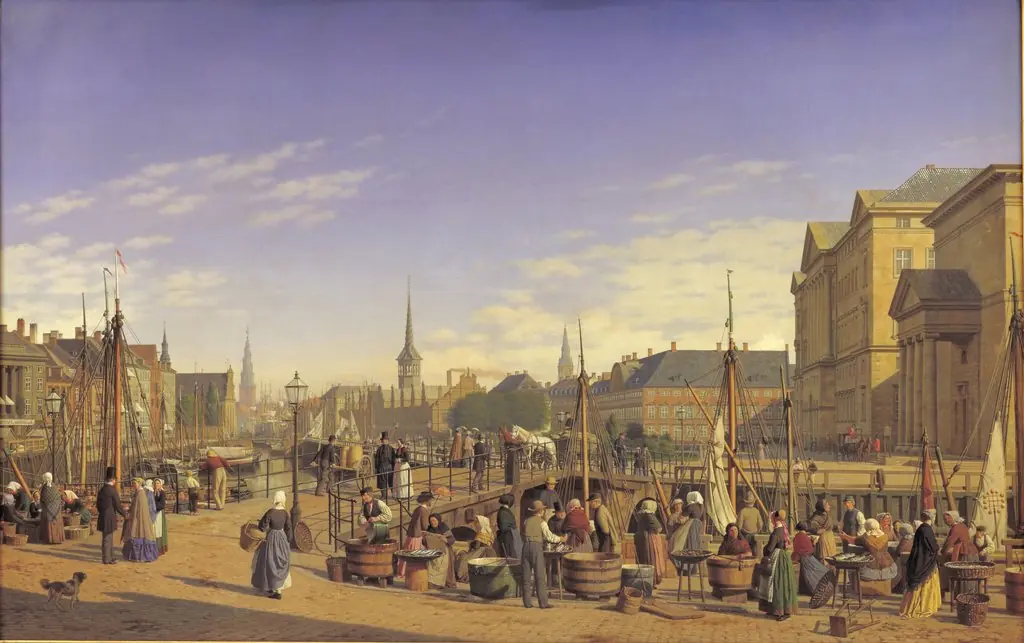 Udsigt fra Gammel Strand mod Christiansborg
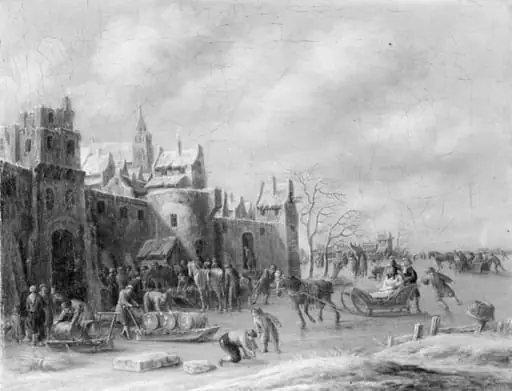 Winter Scenery
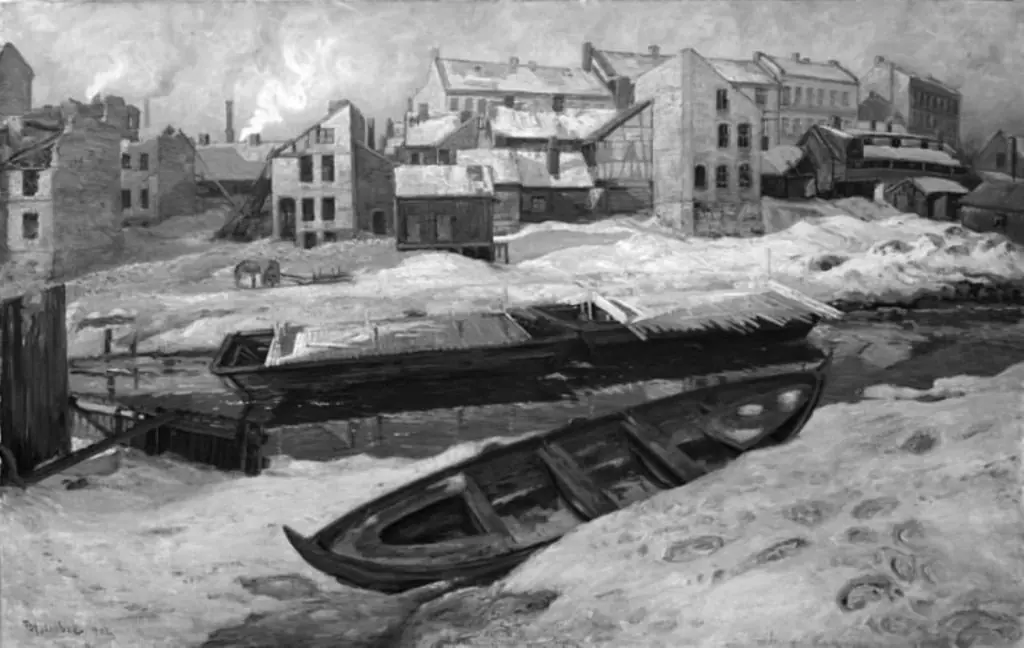 From the Old Kristiania