Artwork
Sir James Pennethorne's office building (the 'junction') in 1863, after the erection behind it of the Residences
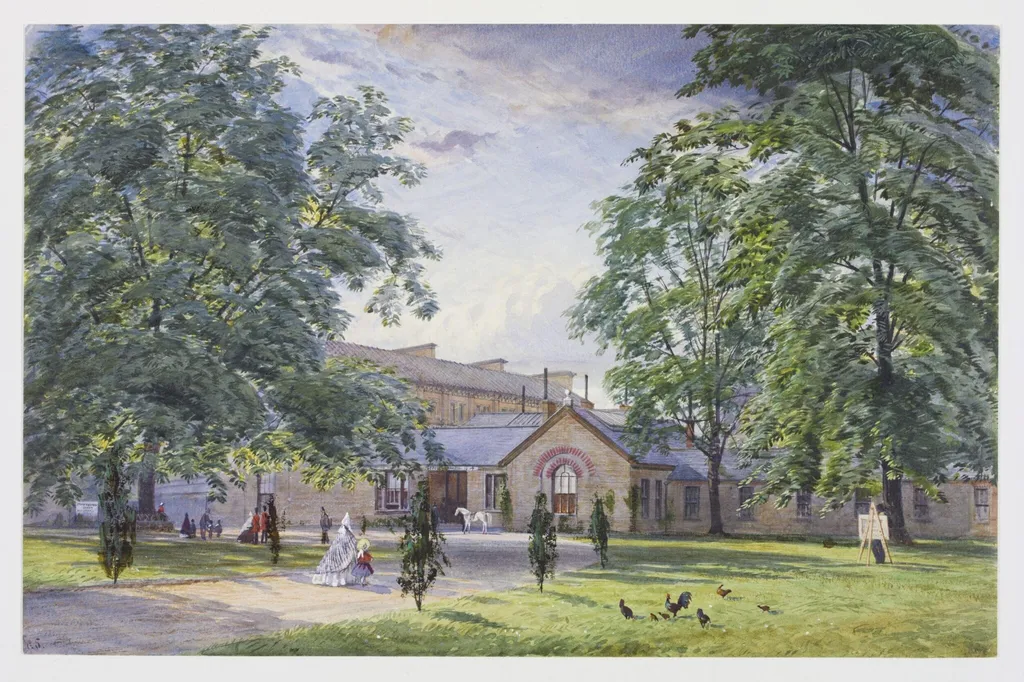
Sir James Pennethorne's office building (the 'junction') in 1863, after the erection behind it of the Residences is a watercolor work on paper by the Impressionist artist Anthony Carey Stannus. It dates from 1863 and is held in the collection of the Victoria and Albert Museum.
About this work
This watercolour from 1863 shows a busy spot at the Victoria and Albert Museum.
This watercolour from 1863 shows a busy spot at the Victoria and Albert Museum. It’s the ‘Junction’ building, designed by James Pennethorne. This small office block linked older and newer parts of the museum site.
The building was already too small by 1860. The museum’s first director called the space “packed as close as pigs.” That tells you how tight things were back then.
Look next at the Victoria and Albert Museum.
Overview
This 1863 watercolour by Anthony Carey Stannus captures a temporary structure on the early Victoria and Albert Museum site, known as the 'Junction.' Designed by Sir James Pennethorne, it served as a functional connector between older and newly added buildings, housing offices, a library, and a lecture theatre. Its modest scale reflected the provisional nature of the museum’s initial development, before permanent structures were realized.
Subject & Meaning
The 'Junction' building symbolized the transitional phase of the museum’s expansion. It physically and functionally linked inherited structures like Brompton Park House with temporary iron galleries such as the Brompton Boilers. Its cramped conditions, noted by director Henry Cole as 'packed as close as pigs,' underscored the urgency for more substantial architecture, making it a quiet testament to institutional growth under constraint.
Technique & Style
Stannus rendered the scene in delicate watercolour, capturing architectural detail with precision and atmospheric light. The composition emphasizes the building’s utilitarian form against the emerging Residences range in the background, using subtle tonal shifts to distinguish materials and spatial relationships. The work reflects a documentary approach, prioritizing clarity over ornamentation, typical of early museum records.
History & Provenance
Constructed around 1858, the Junction building was soon outgrown, prompting plans for permanent replacements under Francis Fowke. By the mid-1860s, it was partially dismantled, and by the late 1870s, fully demolished to make way for the Art Library. Stannus’s watercolour, dated 1863, is among the few visual records of its existence, alongside later depictions from 1872 now held in the museum’s collection.
Context
In the early 1860s, the museum site was a patchwork of inherited and temporary buildings, reflecting limited funding and evolving purpose. The Junction was a pragmatic solution to connect disparate functions, while the looming Residences block signaled a shift toward grander, permanent architecture. This moment marked the transition from ad hoc arrangements to a coherent institutional vision.
Legacy
Though short-lived, the Junction building played a critical role in the museum’s operational development. Its demolition made space for the National Art Library, fulfilling the very functions it once inadequately housed. Stannus’s watercolour preserves a fleeting moment in the museum’s architectural evolution, offering insight into the practical realities behind its public ambitions.
Artist & collection
Artist
Anthony Carey Stannus painted quiet watercolours of 19th-century buildings and streets.

 The first lecture theatre at the South Kensington Museum, later the Victoria and Albert Museum
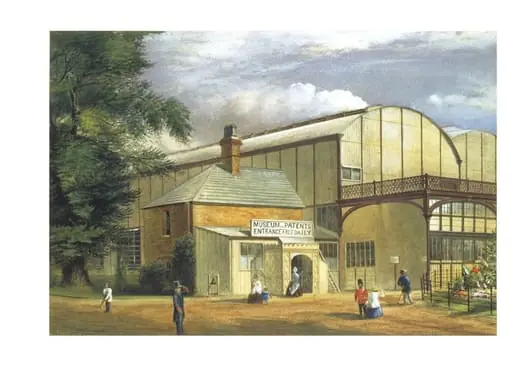 South Kensington Museum: South End of Iron Building
 Alexander Palace in Tsarskoye Selo
 Royal Horticultural Society's Gardens, Chiswick
 The Naval Home, Gray's Ferry, Philadelphia
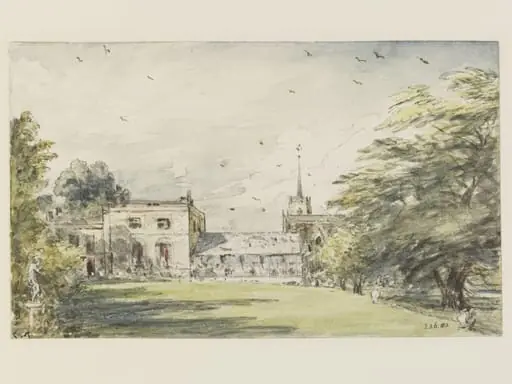 Pitt Place, Epsom, the house of Mr. Digby Neave
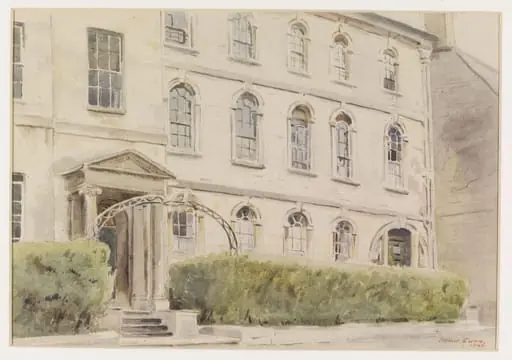 Park House, Cirencester
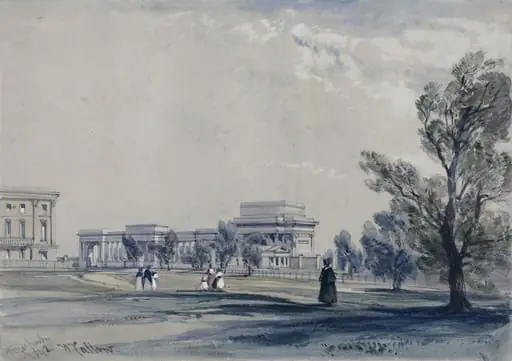 Entrance to Hyde Park at Hyde Park Corner
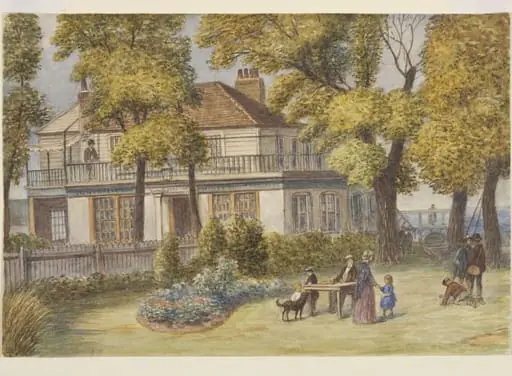 The Horse and Groom by the River Lea
 Front View of Buitenzorg Palace after the Earthquake of 10 October 1834
 Cloetis