Artwork
Portrait of Countess Anna Alexandrovna Chernyshova
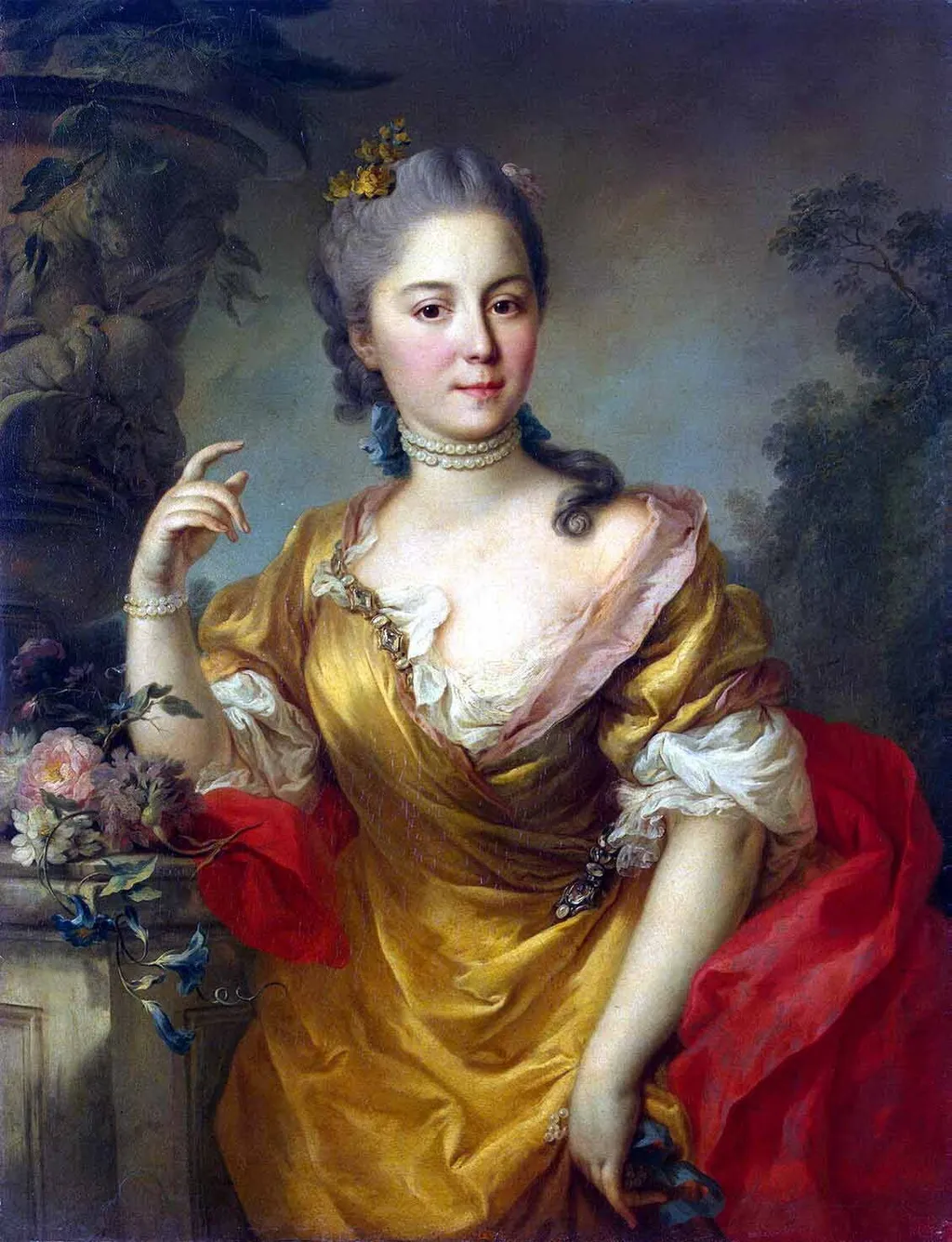
Portrait of Countess Anna Alexandrovna Chernyshova is an oil painting by the Rococo painting artist Stefano Torelli. It dates from 1763 and is held in the collection of the Hermitage Museum.
About this work
Overview
Stefano Torelli’s oil portrait, executed in 1763, presents Countess Anna Alexandrovna Chernyshova. The work is part of the collection of the State Hermitage Museum in Saint Petersburg, where it remains on display as a representative example of mid‑eighteenth‑century portraiture.
Subject & Meaning
The sitter, Countess Chernyshova, is shown in a refined yellow gown with voluminous sleeves, a low neckline, and a contrasting red train. A pearl necklace and bracelet accentuate her status, while her dark hair, adorned with flowers, frames a composed expression that meets the viewer’s gaze directly, suggesting poise and confidence.
Technique & Style
Torelli employs a smooth, luminous oil technique that renders the fabric’s texture and the delicate sheen of the pearls.
Torelli employs a smooth, luminous oil technique that renders the fabric’s texture and the delicate sheen of the pearls. The background is rendered in muted tones, allowing the figure’s attire and skin tones to dominate the visual field. The composition balances the figure’s relaxed pose—right hand on a stone ledge with floral motifs, left hand adjusting the dress edge—with a restrained, classical elegance.
History & Provenance
Created in 1763, the portrait entered the Hermitage’s holdings during the museum’s early acquisitions of Russian aristocratic portraiture. Documentation traces its presence in the imperial collection before its transfer to the public institution, where it has been catalogued as a work by the Italian‑born painter active in Russia.
Context
Torelli, an Italian artist who worked in the Russian court, frequently painted members of the nobility, integrating Western European portrait conventions with local tastes. The countess’s attire reflects contemporary Russian fashion influenced by French styles, while the inclusion of floral elements and a stone ledge aligns with the period’s penchant for symbolic background details.
Artist & collection

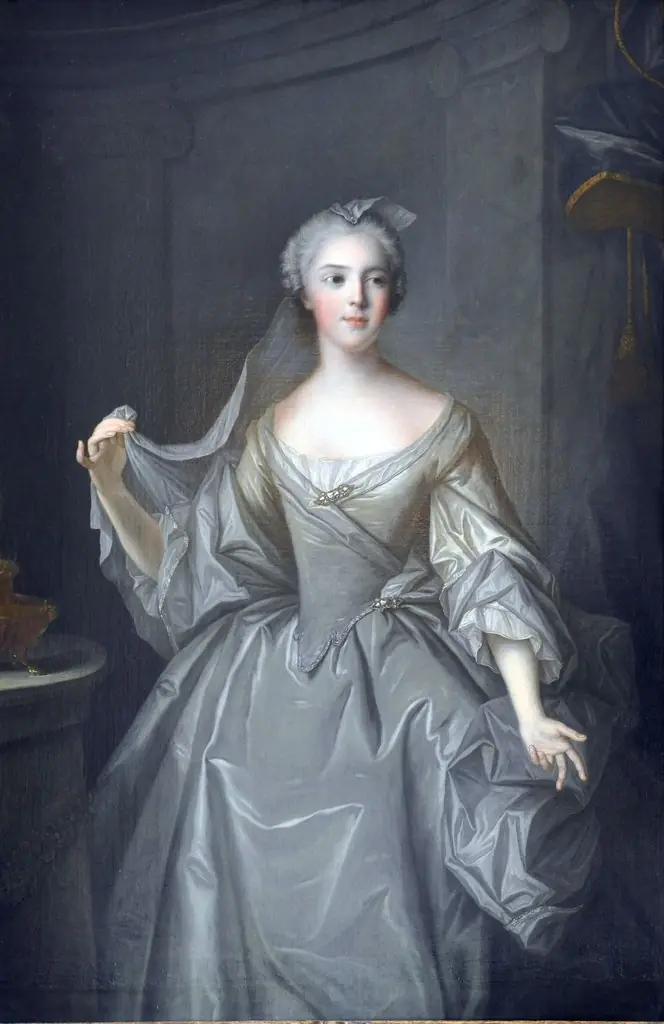 Madame Sophie of France as a Vestal Virgin
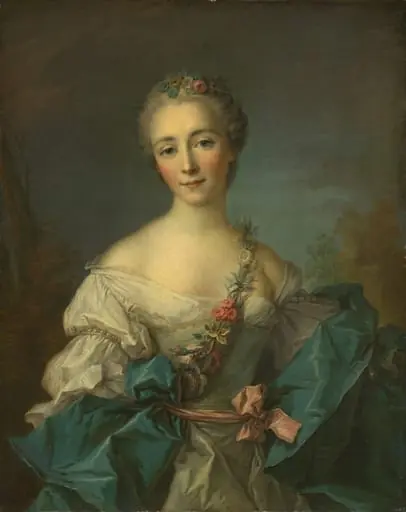 Portrait of a Young Woman
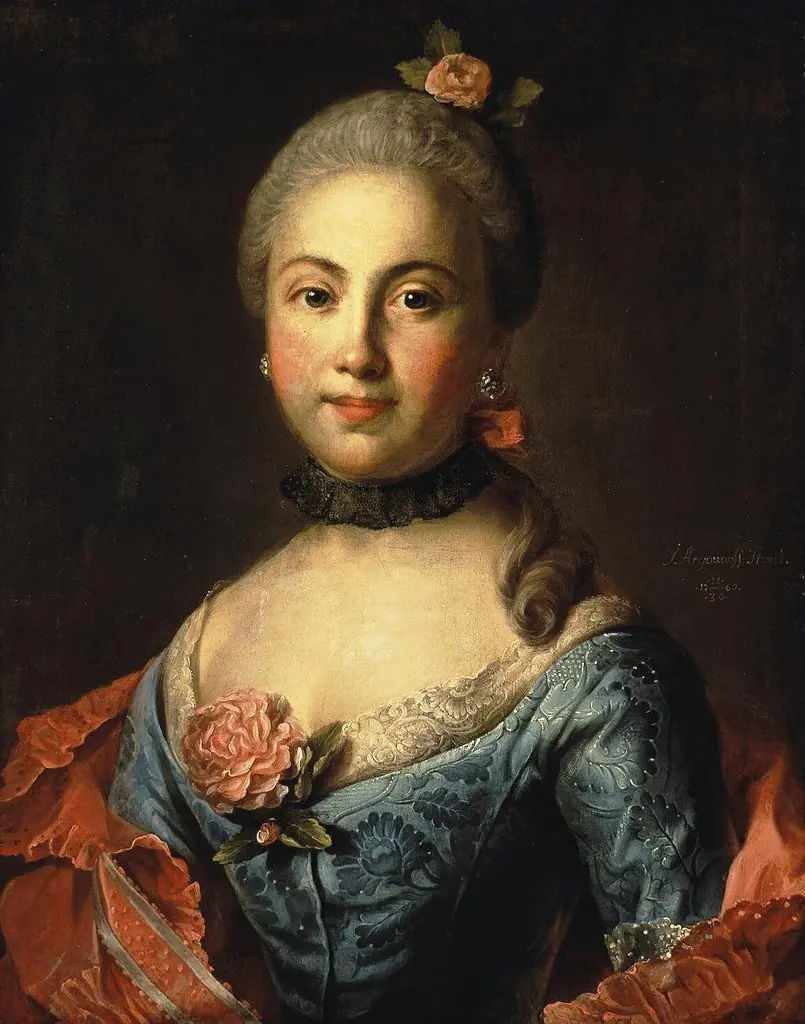 Portrait of a Woman in a Blue Dress
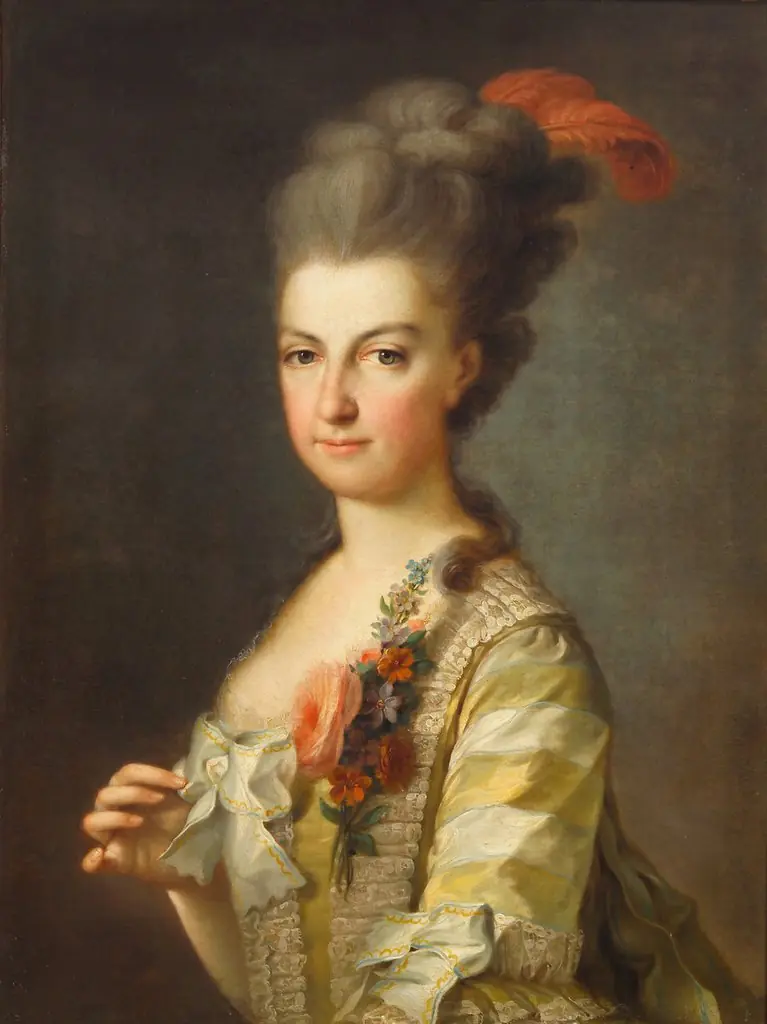 Erzherzogin Maria Christine (1742-1798), Herzogin von Sachsen - Teschen, in gestreiftem Seidenkleid, Halbfigur
 Marcybela Ogiński
 Porträt der Maria Josepha of Austria (1699-1757), Electress of Saxony and Queen of Poland
 Portrait of A.I. Kurakina
 Friederike Charlotte Fürstin Lubomirska (1701-1755)
 Kreivitär Antoinetta Virginia Gyllenborg
 Naisen muotokuva
 Madame Sophie of France
 Portrait of Countess A.M. Vorontsova