Artwork
Catafalque for Ranuccio II in the Church of the Steccata
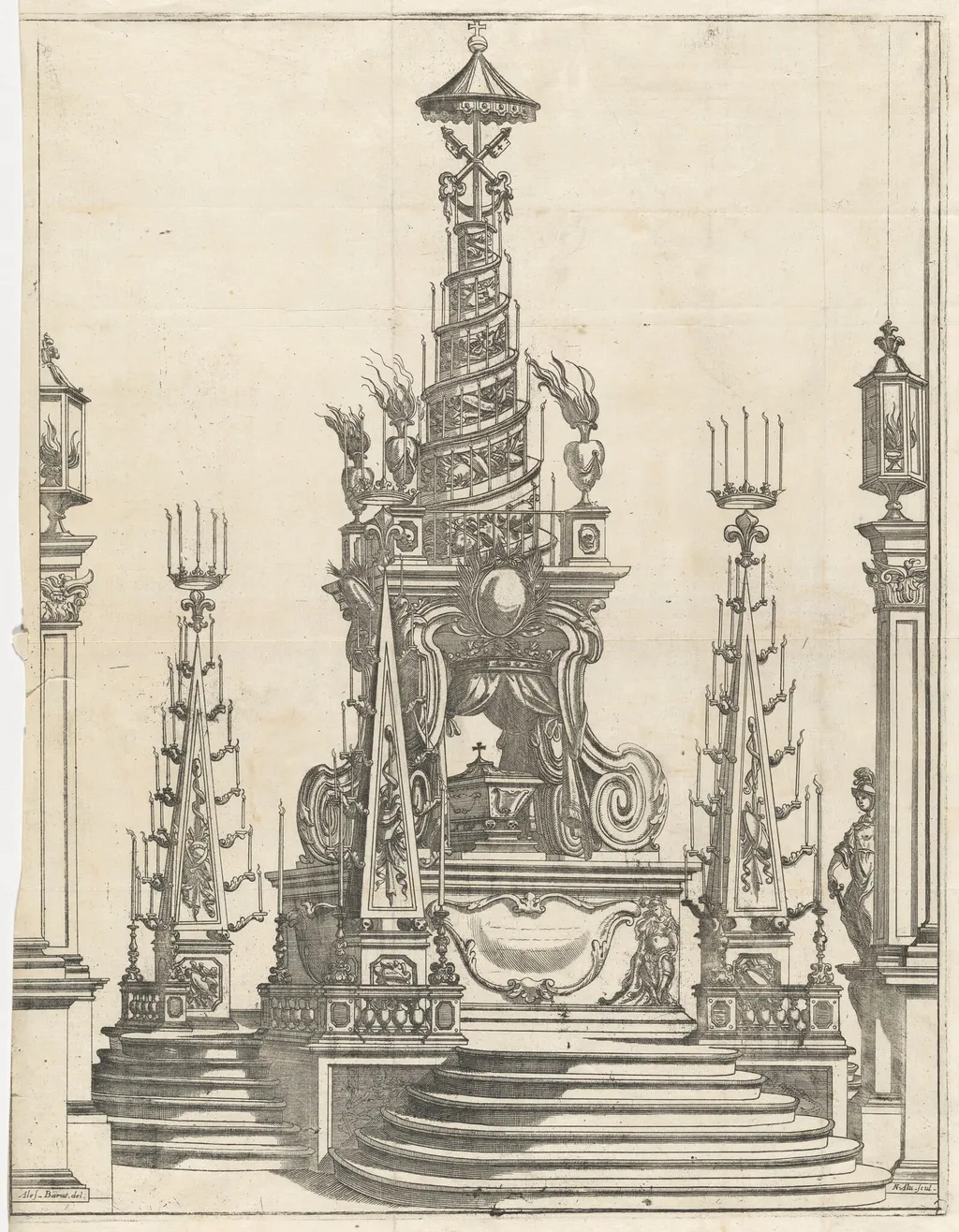
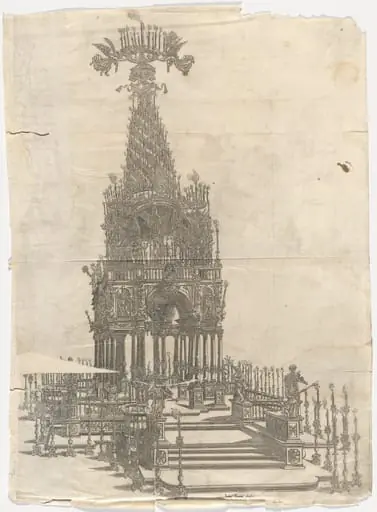
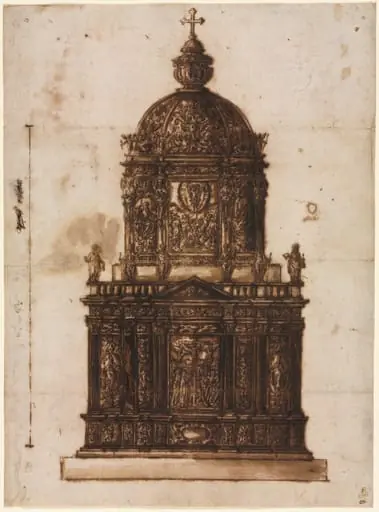
Catafalque for Ranuccio II in the Church of the Steccata is an ink print by the Baroque artist Alù. It dates from 1695 and is held in the collection of the National Gallery of Art.
About this work
Candlesticks line the sides, and a draped coffin sits in the center, surrounded by swirling scrollwork and religious symbols.
This drawing shows a towering, ornate funeral structure in a church. It’s made of carved wood and metal, with spiraling columns, flickering flames, and a crown on top. Candlesticks line the sides, and a draped coffin sits in the center, surrounded by swirling scrollwork and religious symbols.
The detail work is wild—every corner has curls, crosses, and tiny figures. This was built for a funeral in 1695, but the artist, Alù, packed it with dramatic flair.
Next, check out etching to see how artists like this made precise, layered prints.
Overview
Catafalque for Ranuccio II in the Church of the Steccata is a 1695 etching on laid paper by Alù, currently in the collection of the National Gallery of Art, Washington.
Subject & Meaning
The etching depicts a grand, ornate catafalque erected in the Church of the Steccata for the funeral of Ranuccio II. The structure is adorned with spiraling columns, flames, a crown, candlesticks, and intricate scrollwork, incorporating religious symbols and miniature figures, reflecting the solemnity and pomp of the occasion.
Technique & Style
Alù's etching showcases meticulous detail and layered precision, characteristic of the medium. The level of intricacy, with curls, crosses, and small figures, highlights the artist's skill in capturing the dramatic and elaborate nature of the catafalque.
History & Provenance
Created in 1695 for Ranuccio II's funeral, the catafalque itself was a temporary structure. The etching by Alù, however, has endured, now residing in the National Gallery of Art, Washington, as part of its print collection.
Artist & collection

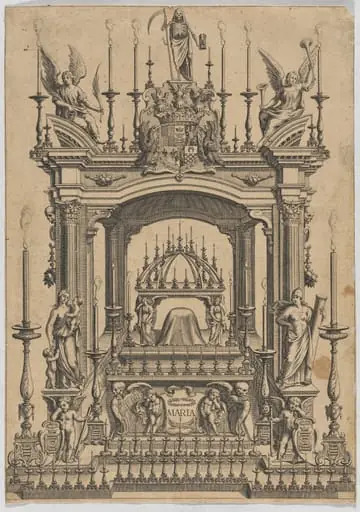 Catafalque for an Unknown Woman Named Maria
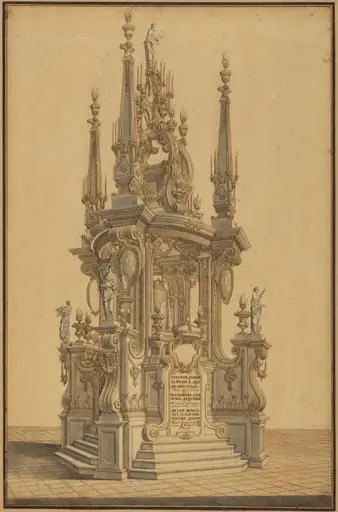 Magnificent Catafalque in Honor of John III, King of Poland
 Design for a Gothic Fountain
 Frontispiece with Triumphal Arch with Christ and the Apostles
 Plan et elevation des plus beaux confessionnaux de Paris, tres fidelemant mesure
 Magnificent Catafalque for a Deceased Noble
 Design for a Ciborium