Artwork
Tudor Vladimirescu și pandurii săi
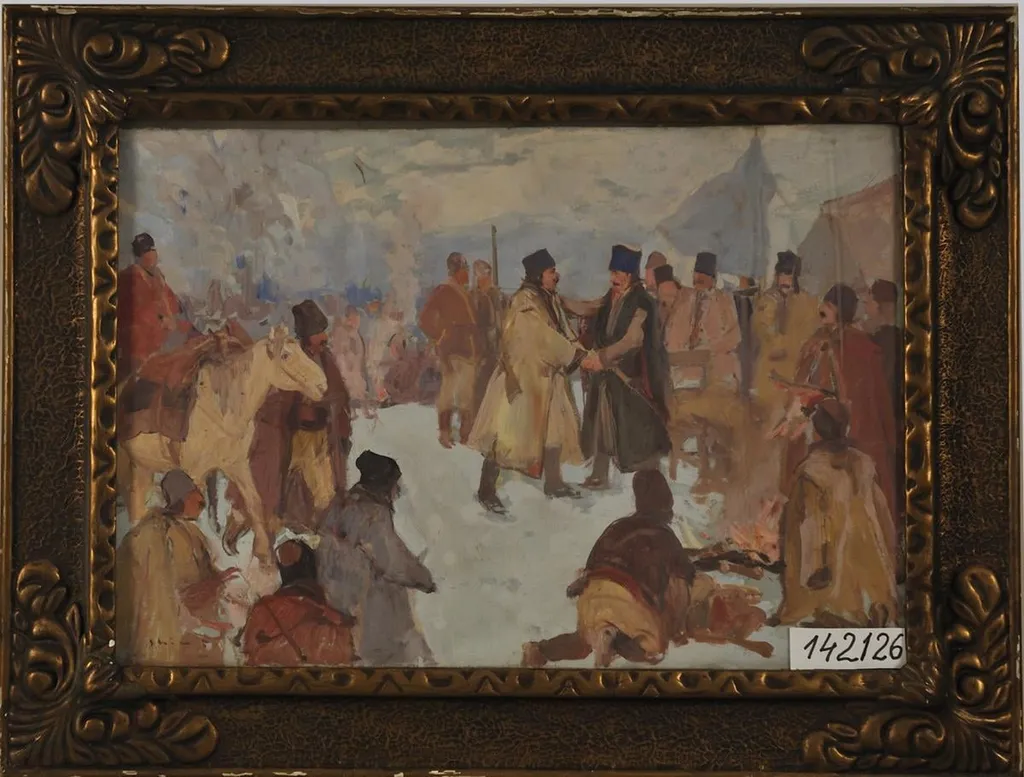
Tudor Vladimirescu și pandurii săi is an unspecified painting by Ion Stoica Dumitrescu. It is held in the collection of the National Museum of Romanian History.
About this work
Overview
The thick, visible brushwork suggests a sense of immediacy, as if the moment was recorded in real time rather than composed in a studio.
The painting depicts a winter scene in which Tudor Vladimirescu, a Romanian revolutionary leader, is shown shaking hands with a companion amid a group of followers. Surrounded by snow-covered terrain and makeshift tents, the figures are bundled in heavy winter garments. The thick, visible brushwork suggests a sense of immediacy, as if the moment was recorded in real time rather than composed in a studio.
Subject & Meaning
The handshake at the center symbolizes an alliance or agreement between Vladimirescu and another figure, likely a fellow leader or representative. The gathering of armed followers in a cold, open landscape underscores the precariousness of their cause. The scene captures a pivotal moment of unity during a time of political upheaval, emphasizing solidarity amid hardship rather than triumph.
Technique & Style
The artist employs impasto to build texture across the canvas, using heavy layers of paint to convey the weight of winter clothing and the roughness of the snowy ground. Brushstrokes are broad and unrefined, avoiding smooth finishes in favor of a raw, urgent quality. This approach enhances the sense of a fleeting moment, prioritizing emotional resonance over polished detail.
History & Provenance
The painting was created in the 19th century, likely as part of a broader effort to commemorate national heroes during Romania’s formative years. It was produced after Vladimirescu’s death, reflecting a retrospective effort to visualize his role in the 1821 uprising. Its early ownership remains undocumented, but it entered public collections in the late 1800s as national identity became a cultural priority.
Context
Tudor Vladimirescu led a peasant revolt in 1821 against Phanariot rule and Ottoman influence, seeking social reform and autonomy. Though his movement was ultimately suppressed, he became a symbol of early Romanian nationalism. This painting emerged decades later, during a period when artists and intellectuals were constructing visual narratives to legitimize emerging national consciousness.
Legacy
The work remains a reference point in Romanian historical art, illustrating how revolutionary figures were visually framed as grounded, human leaders rather than distant icons. Its rough technique and unidealized setting distinguish it from more heroic portrayals of the era, offering a quieter, more intimate vision of resistance rooted in endurance rather than glory.
Artist & collection
Artist
Ion Stoica Dumitrescu made paintings, prints, and sculpture that look like historical scenes you’d see in old books.

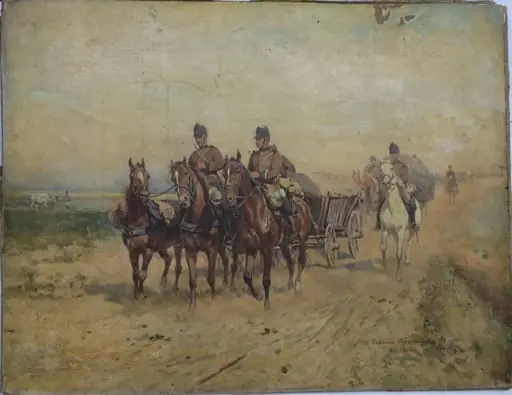 Coloana regimentară (tren regimentar de artilerie)
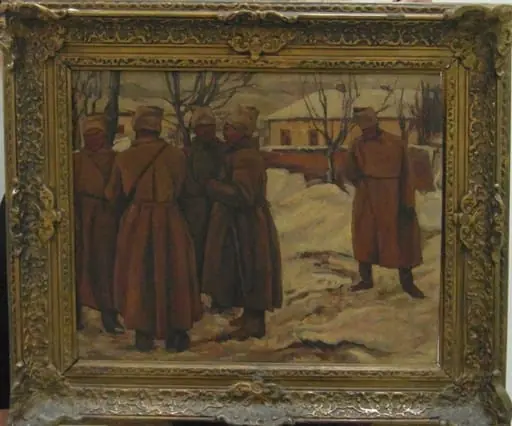 Soldați în 1918
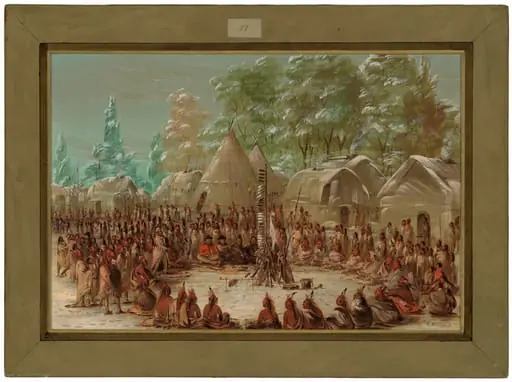 La Salle's Party Feasted in the Illinois Village. January 2, 1680
 Ratsumiehiä talon pihalla
 Uhlans’ stopever in the snow
 De Tonty Suing for Peace in the Iroquois Village. January 2, 1680
 Schiță “1907”
 Roșiorul
 Târg la munte
 Ofițer călare din timpul primului război mondial
 The Fish Market on the Beach, Hastings