Artwork
Mihai Viteazul si Preda Buzescu
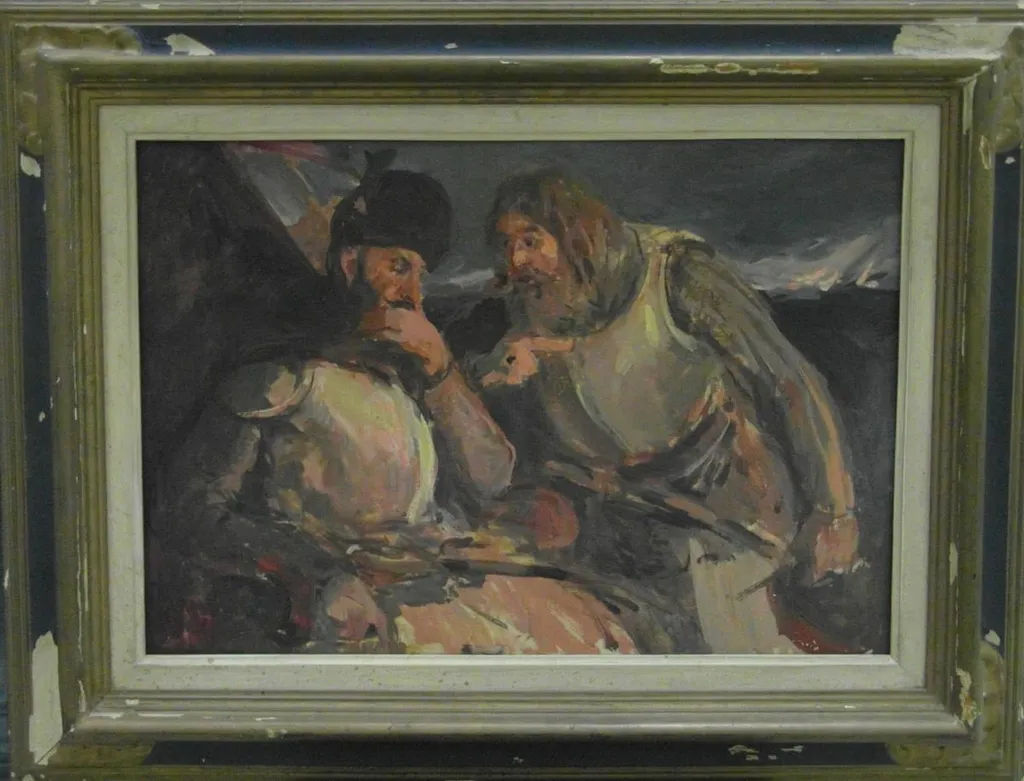
Mihai Viteazul si Preda Buzescu is a print by Ion Stoica Dumitrescu. It is held in the collection of the National Museum of Romanian History.
About this work
Overview
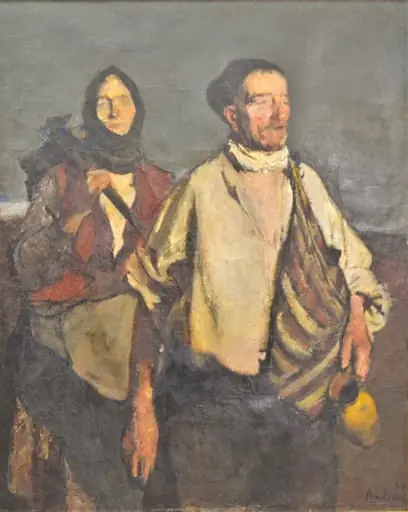
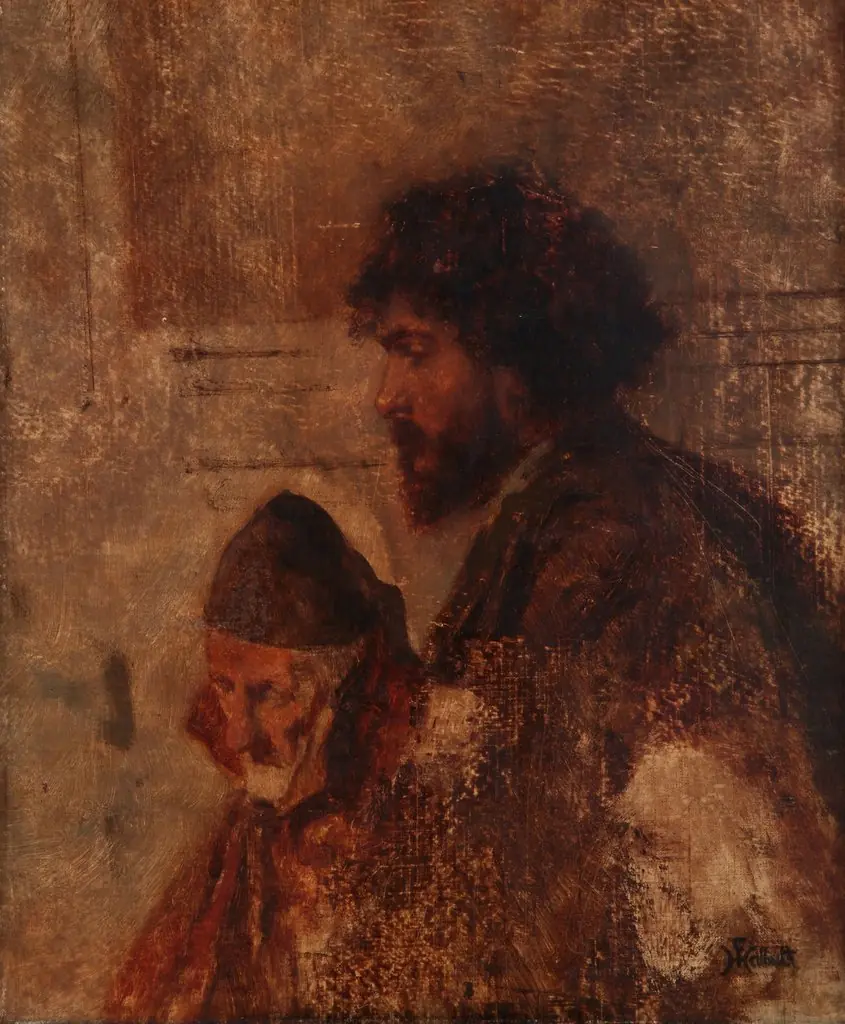
The painting portrays two male figures in a quiet, introspective moment, set against a dark, atmospheric background with faint mountain outlines.
The painting portrays two male figures in a quiet, introspective moment, set against a dark, atmospheric background with faint mountain outlines. The composition emphasizes their faces through strong contrasts of light and shadow, isolating them from the surrounding space. The somber mood and focused lighting suggest a narrative weight, though the specific event or relationship between the figures remains ambiguous.
Subject & Meaning
The two men, identified as Mihai Viteazul and Preda Buzescu, are depicted in a moment of silent exchange, possibly during a strategic or personal decision. Their postures and expressions convey gravity, hinting at historical tension or mutual resolve. The absence of overt action or setting shifts focus to their psychological presence, inviting interpretation of their unspoken dialogue within a moment of political or personal consequence.
Technique & Style
The artist employs bold, expressive brushwork and pronounced chiaroscuro to model the figures’ forms and heighten emotional intensity. Dark, unbroken backgrounds amplify the luminosity of their faces and shirts, creating a theatrical focus. The texture of the paint is deliberate and tactile, with visible strokes that convey urgency rather than polish, reinforcing the painting’s somber and introspective tone.
History & Provenance
The painting’s origins are tied to Romanian historical iconography, likely produced in the 19th or early 20th century during a period of national romanticism. It reflects a broader effort to visualize key figures from Wallachian history. While its exact commission and early ownership are undocumented, its subject matter aligns with state-sponsored cultural projects that sought to reinforce national identity through historical portraiture.
Context
Created amid rising nationalist sentiment in Eastern Europe, the work draws on the legacy of Mihai Viteazul, a 16th-century ruler celebrated for uniting Romanian principalities. Preda Buzescu, a lesser-known noble, was likely included to symbolize loyalty or alliance. The painting’s restrained setting and emotional gravity reflect a trend in historical art that prioritized psychological depth over narrative spectacle.
Legacy
Though not widely exhibited internationally, the painting remains a reference in Romanian art history for its emotional directness and use of light to convey historical gravity. It exemplifies how 19th-century artists adapted European techniques like chiaroscuro to localize national narratives, influencing later generations who sought to portray historical figures with psychological realism rather than idealized heroism.
Artist & collection
Artist
Ion Stoica Dumitrescu made paintings, prints, and sculpture that look like historical scenes you’d see in old books.