Artwork
Abraham giving up Hagar
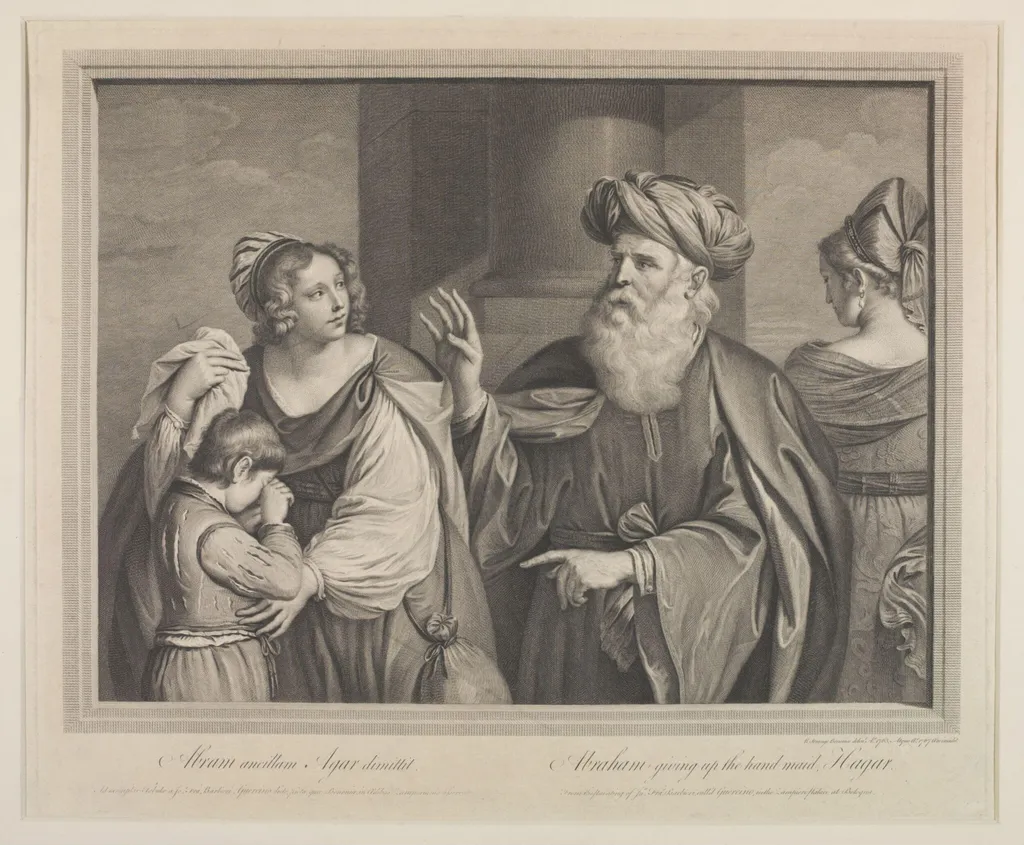
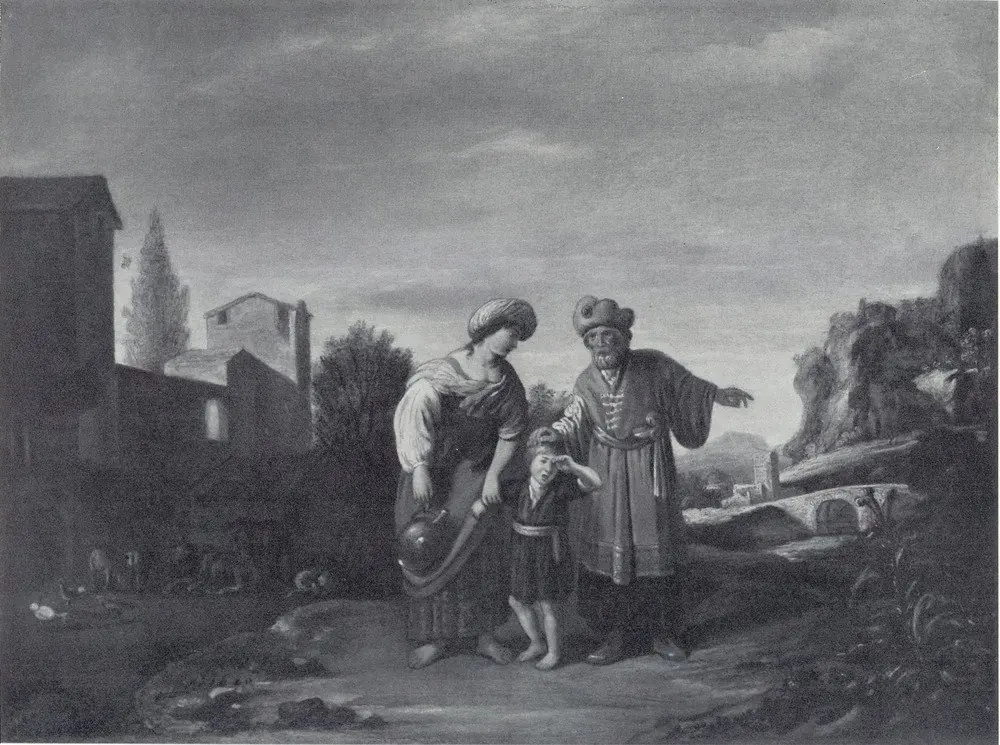
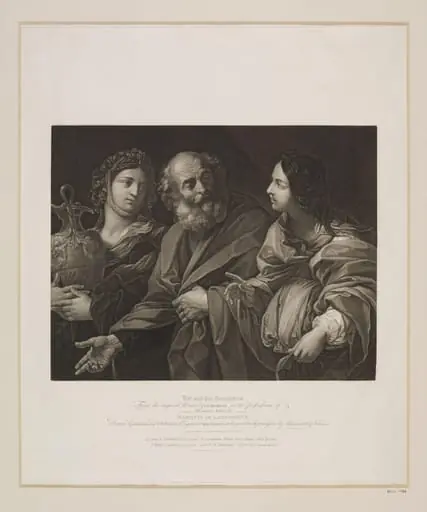
Abraham giving up Hagar is a print by Robert, Sir Strange. It dates from 1750 and is held in the collection of the Victoria and Albert Museum. This 1750 print by Robert Strange illustrates the biblical moment when Abraham departs Hagar and her son Ishmael.
About this work
Overview
Strange’s technique emphasizes the human drama rather than ornamental detail, aligning with 18th-century printmaking traditions that valued narrative clarity.
This 1750 print by Robert Strange illustrates the biblical moment when Abraham departs Hagar and her son Ishmael. Based on a composition by Guercino, the work is a copperplate engraving on paper, capturing the emotional gravity of the scene through precise line work and tonal contrast. Strange’s technique emphasizes the human drama rather than ornamental detail, aligning with 18th-century printmaking traditions that valued narrative clarity.
Subject & Meaning
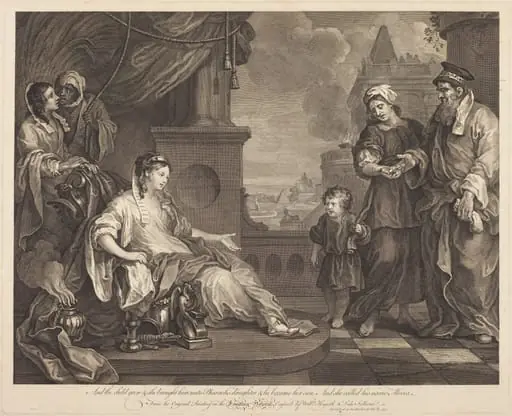
The scene portrays Abraham, identified by his beard and turban, directing Hagar and her child away, while a second woman observes from behind. This moment from Genesis reflects divine command and human sacrifice, a theme of displacement and obedience. The composition avoids overt sentimentality, instead presenting the act with solemn restraint, inviting contemplation of duty, loss, and divine will.
Technique & Style
Strange employed fine-line engraving to model form through controlled hatching and cross-hatching, creating strong chiaroscuro effects. Light falls diagonally across the figures, accentuating facial expressions and the texture of draped fabrics. The rendering has the immediacy of a preparatory sketch, yet achieves a polished finish typical of reproductive prints of the period, translating Guercino’s painted composition into a graphic medium.
History & Provenance
Created in 1750, the print was part of a broader trend in Britain of reproducing Old Master compositions for wider audiences. Robert Strange, a noted engraver and later engraver to King George III, specialized in translating Italian Baroque works into print. The piece entered the Victoria and Albert Museum’s collection as part of its extensive holdings in British graphic arts, preserving its role in 18th-century visual culture.
Context
In mid-18th-century Britain, reproductive prints served as accessible conduits for religious and classical narratives. Strange’s work reflects the era’s interest in moral storytelling through visual art, often drawn from biblical or classical sources. The popularity of such prints coincided with rising literacy and the growth of private collections, making religious scenes like this one familiar to middle-class households.
Legacy
Though not widely exhibited today, the print remains a representative example of British reproductive engraving. It illustrates how Baroque compositions were adapted for Northern European audiences through technical precision and restrained emotion. Its preservation in the Victoria and Albert Museum underscores its value as a historical artifact of print culture, rather than as a standalone artistic innovation.
Artist & collection