Artwork
Belisarius
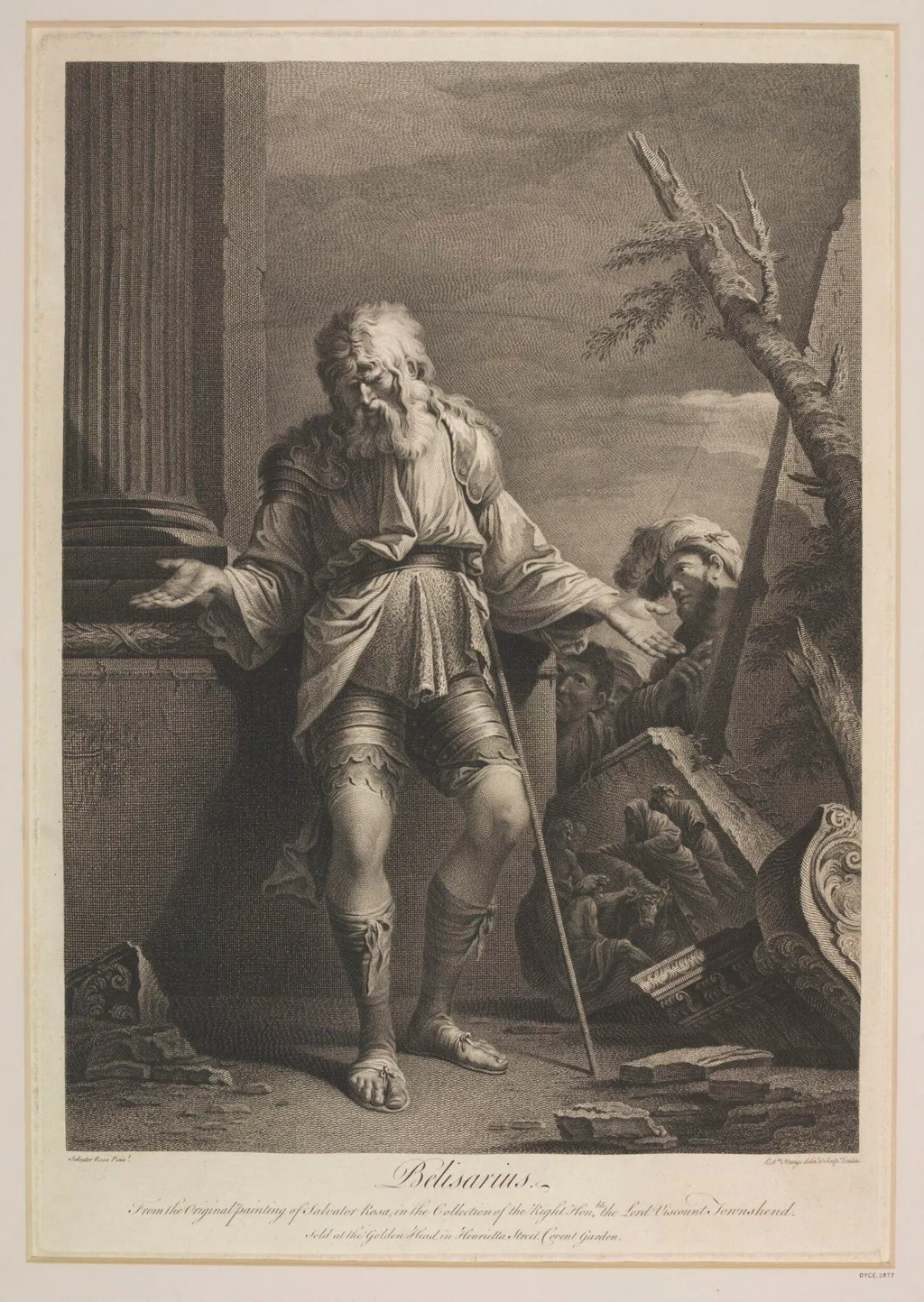
Belisarius is a print by Robert, Sir Strange. It dates from 1750 and is held in the collection of the Victoria and Albert Museum.
About this work
Overview
Robert Strange’s engraving, titled *Belisarius*, translates a composition originally painted by Salvator Rosa into a black‑and‑white print on paper.
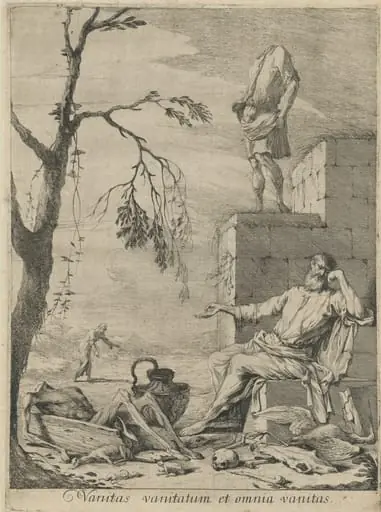
Robert Strange’s engraving, titled *Belisarius*, translates a composition originally painted by Salvator Rosa into a black‑and‑white print on paper. The image centers on an aged, solemn figure in draped robes and armor, extending a hand toward a group of figures on the ground. Ruined architecture—a tall column, a crumbling wall, and a broken pillar occupied by a perched bird—frames the scene, while stark contrasts of light and shadow give the composition a dramatic depth.
Subject & Meaning
The central figure represents the Byzantine general Belisarius, historically noted for his military successes and later disgrace. By portraying him in a desolate, ruin‑filled setting with an outstretched hand, the print suggests themes of loss, redemption, and the fleeting nature of power. The surrounding figures and the bird on the broken pillar reinforce the sense of abandonment and the passage of time, inviting contemplation of the general’s tragic fate.
Technique & Style
Executed as an engraving, the work relies on chiaroscuro—intense contrasts between illuminated areas and deep shadows—to model forms and create spatial depth. Fine line work defines the folds of the robes, the texture of the armor, and the crumbling stone, while cross‑hatching builds tonal variation. The monochrome palette emphasizes the emotional gravity of the scene, a hallmark of Rosa’s dramatic baroque sensibility carried into Strange’s printmaking.
History & Provenance
The print is a direct adaptation of a painting by the 17th‑century Italian artist Salvator Rosa, known for his imaginative historical and mythological subjects. Robert Strange, an 18th‑century Scottish engraver, reproduced the composition for wider distribution, a common practice that allowed the image to reach audiences beyond the original canvas. The work survives on paper, typical of Strange’s oeuvre, and is catalogued among his series of literary and historical engravings.
Artist & collection