Artwork
Esther a suppliant before Ahasuerus
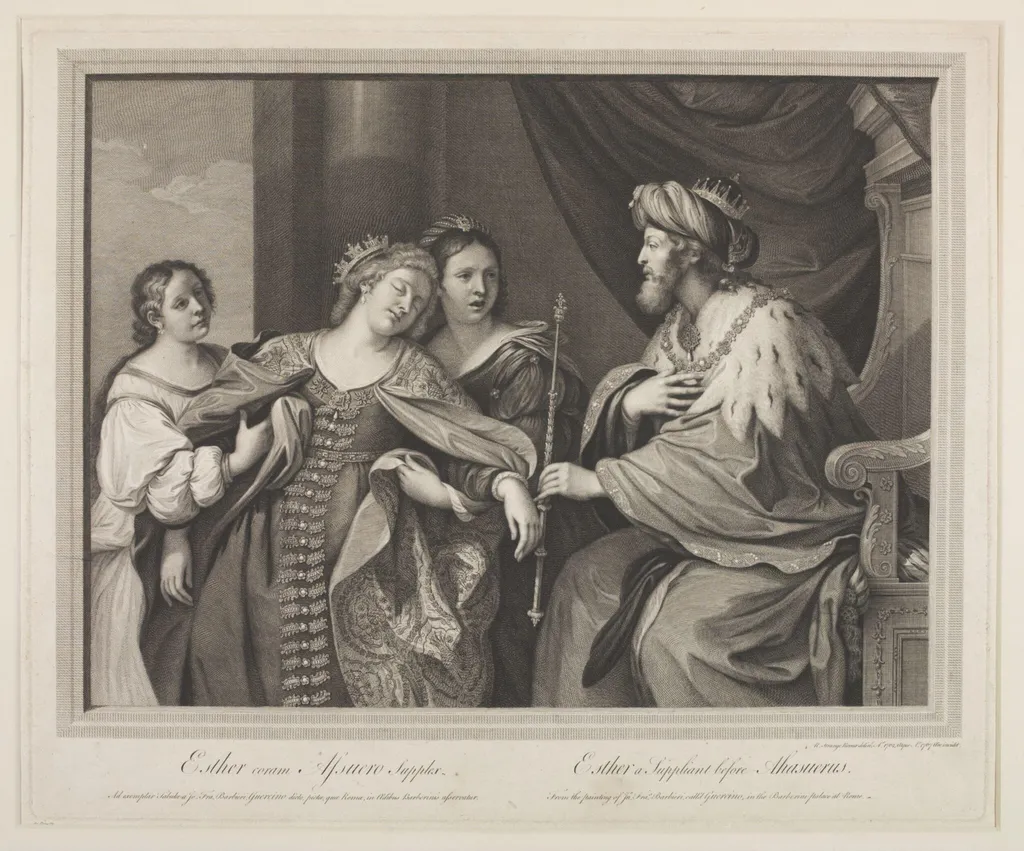
Esther a suppliant before Ahasuerus is a print by Robert, Sir Strange. It dates from 1750 and is held in the collection of the Victoria and Albert Museum.
About this work
Overview
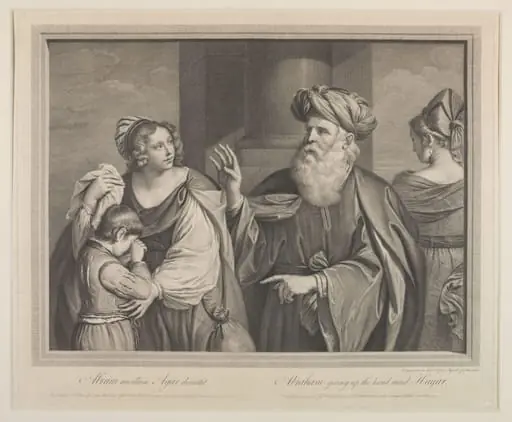
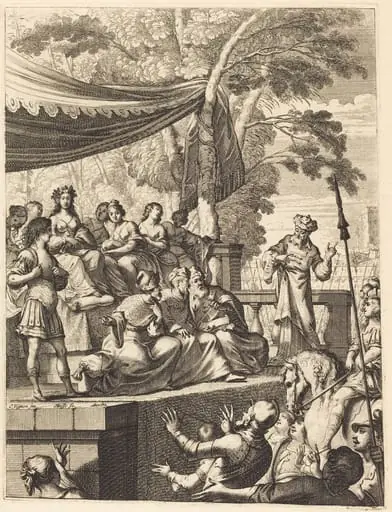
This 1750 print by Robert Strange illustrates a moment from the biblical Book of Esther, where the queen pleads for her people before King Ahasuerus. Based on a painting by Guercino, the composition was translated into etching and engraving on paper. The scene captures a tense, quiet confrontation, emphasizing Esther’s vulnerability and the gravity of her appeal.
Subject & Meaning
Esther, crowned and robed, kneels before Ahasuerus, her hands clasped in supplication—a gesture signaling both deference and desperation. Behind her, two attendants observe silently, one holding a garment, the other watching intently. The moment reflects Esther’s courage in risking her life to intercede for the Jewish people, turning a courtly encounter into a moral turning point.
Technique & Style
Strange employed etching and engraving to render fine linear detail and tonal contrast. Chiaroscuro is used to model the figures, deepening the emotional weight of the scene. Light falls sharply on Esther’s face and hands, drawing focus to her plea, while the background recedes into shadow, enhancing the intimacy and tension of the moment.
History & Provenance
Created in 1750, the print was part of Strange’s efforts to reproduce significant European paintings for British collectors. He adapted Guercino’s original composition, which had been widely admired in Italy. The print circulated among connoisseurs and was likely included in collections focused on biblical narratives and reproductive engraving traditions of the period.
Context
In mid-18th-century Britain, reproductive prints were a primary means of accessing major artworks. Strange’s work aligned with a broader interest in classical and biblical themes, as well as the growing market for illustrated narratives. His prints bridged continental art and British audiences, making Italian Baroque compositions accessible beyond the continent.
Legacy
Strange’s print preserved Guercino’s composition for wider dissemination, influencing how the Esther narrative was visually understood in Britain. Though not an original invention, the work exemplifies the role of engravers in shaping artistic reception. It remains a documented example of 18th-century print culture’s engagement with religious and historical subjects.
Artist & collection