Artwork
Joseph and Potiphar's Wife
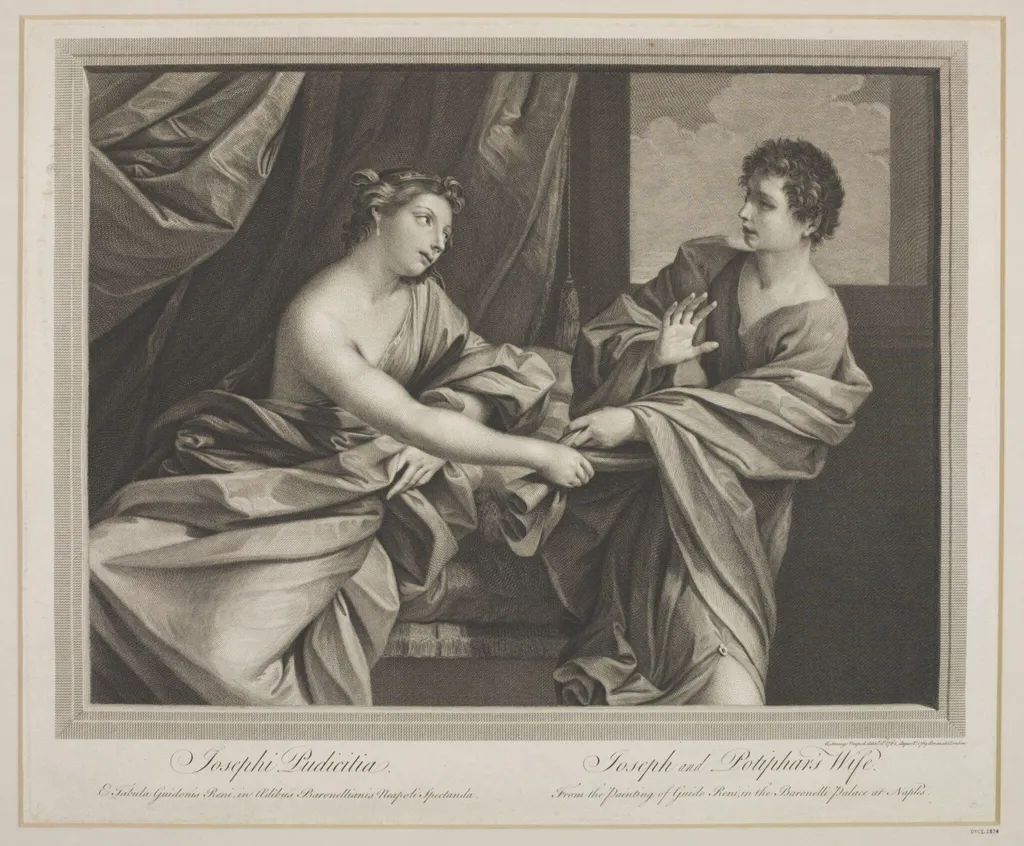
Joseph and Potiphar's Wife is a print by Robert, Sir Strange. It dates from 1750 and is held in the collection of the Victoria and Albert Museum.
About this work
Overview
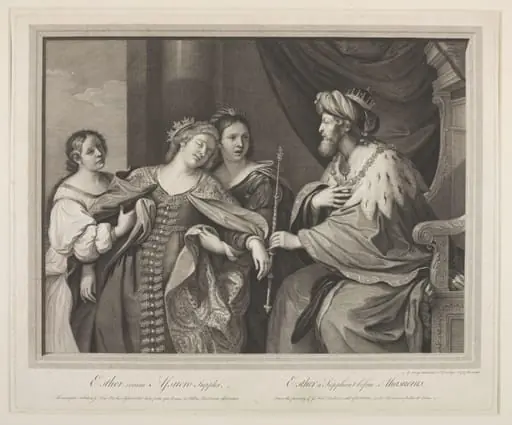
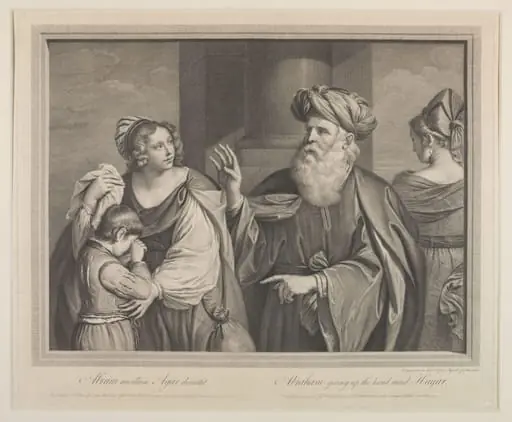
This print reproduces a biblical narrative originally composed by Guido Reni, depicting the moment Joseph resists the advances of Potiphar’s wife.
This print reproduces a biblical narrative originally composed by Guido Reni, depicting the moment Joseph resists the advances of Potiphar’s wife. Executed on paper, the work belongs to a tradition of reproductive prints that disseminated major paintings to wider audiences. The scene is rendered with careful attention to gesture and composition, reflecting the influence of Baroque dramatic expression.
Subject & Meaning
The scene illustrates Joseph’s moral steadfastness as he rejects the seduction of Potiphar’s wife, a story from Genesis that became a symbol of chastity and integrity in Christian iconography. The wife’s outstretched hand and Joseph’s raised palm create a visual tension that underscores the moral conflict. Their classical attire and the intimate setting emphasize the personal nature of the confrontation.
Technique & Style
The print employs fine linework and tonal gradations to capture the texture of fabric and the subtlety of facial expression. Drapery is rendered with precise folds, and the cloudy sky visible through the window adds atmospheric depth. The style aligns with 17th-century reproductive printmaking, aiming to translate the emotional intensity of Reni’s painting into a graphic medium.
History & Provenance
The print derives from a painting by Guido Reni, created in the early 1600s, which was widely copied across Europe. This version likely dates to the late 17th or early 18th century, produced by an anonymous engraver or publisher seeking to meet demand for religious imagery. Its paper support and technique suggest it was made for private devotion or scholarly circulation rather than public display.
Context
During the Baroque period, biblical scenes emphasizing moral virtue were popular subjects for both painting and print. Joseph’s resistance to temptation resonated with contemporary ideals of piety and self-control. Reproductive prints like this one allowed such themes to reach audiences beyond those who could access original paintings in churches or collections.
Legacy
Though the print’s maker remains unidentified, its existence reflects the broader cultural practice of translating major artworks into accessible formats. It contributed to the persistence of Reni’s compositional model in religious imagery well into the 18th century, influencing how biblical narratives were visually understood across Europe.
Artist & collection