Artwork
The Beheading of Saint John the Baptist
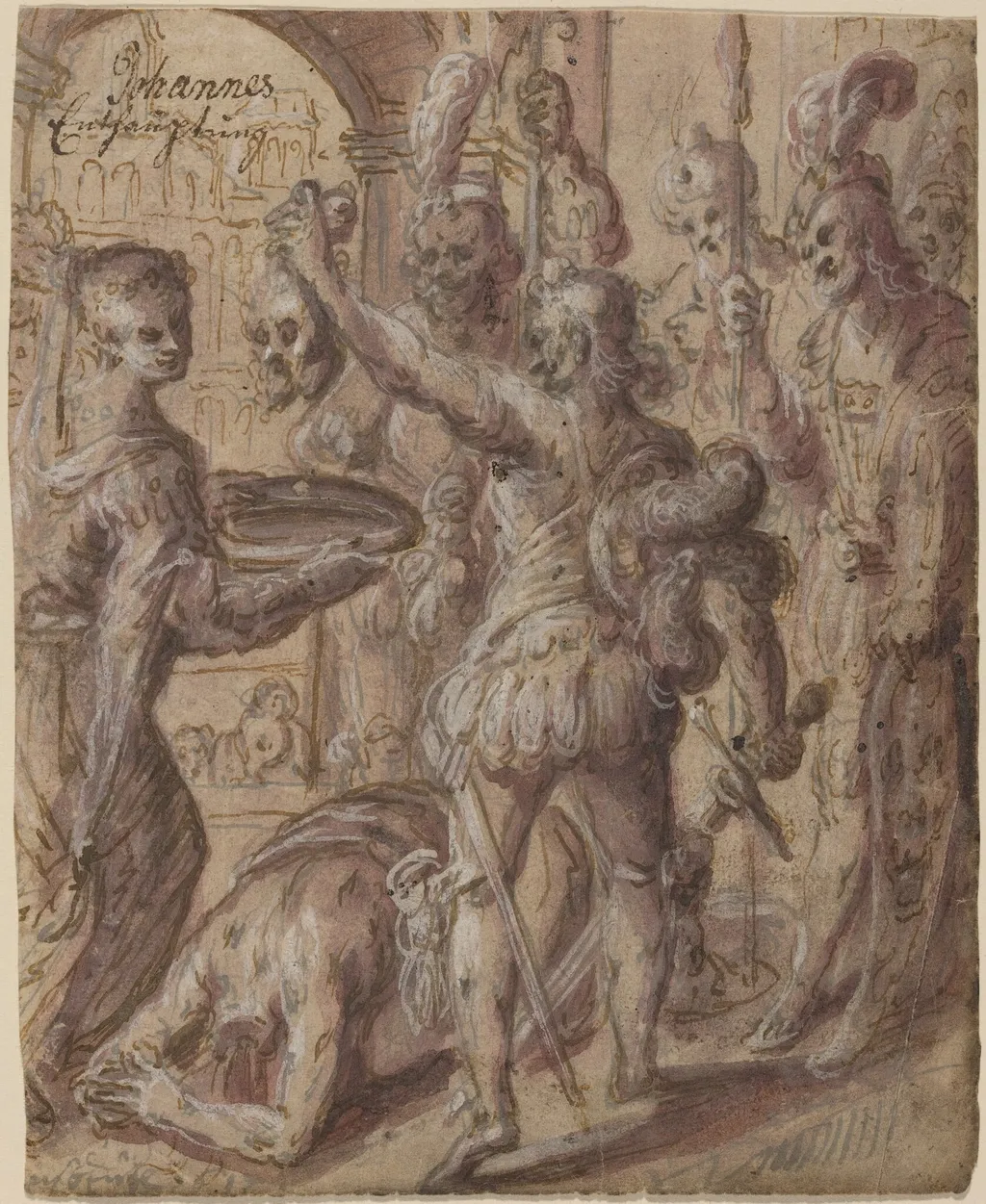
The Beheading of Saint John the Baptist is an ink drawing by the Baroque artist Hans Stutte. It dates from 1617 and is held in the collection of the National Gallery of Art.
About this work
Overview
Hans Stutte’s 1617 drawing, titled The Beheading of Saint John the Baptist, depicts the biblical execution in a compact, pen‑and‑ink composition on laid paper. The work measures roughly a sheet of paper and is rendered with brown and gray ink, accented by a red‑violet wash and touches of white, giving the scene a stark, nocturnal atmosphere.
Subject & Meaning
The image captures the moment a severed head is presented on a platter, a reference to the martyrdom of John the Baptist. Figures surrounding the platter are caught in varied gestures—kneeling, pointing, or gazing downward—conveying the tension and moral gravity of the event within a confined interior space.
Technique & Style
Stutte employs rapid, sketchy strokes and dense cross‑hatching to model forms and generate deep shadows. The brown and gray inks establish the overall tonal structure, while a thin red‑violet wash highlights the blood‑stained platter. White highlights punctuate the composition, and the laid paper’s texture, with its stains and smudges, contributes to the work’s aged appearance.
History & Provenance
Created in 1617, the drawing is attributed to the German artist Hans Stutte, known for religious subjects in the early seventeenth century. The piece has remained in paper format, preserving its original medium and scale, and is documented in collections that focus on Baroque devotional drawings.
Artist & collection


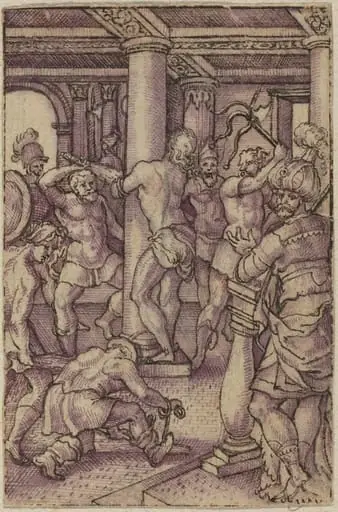 Christ at the Column
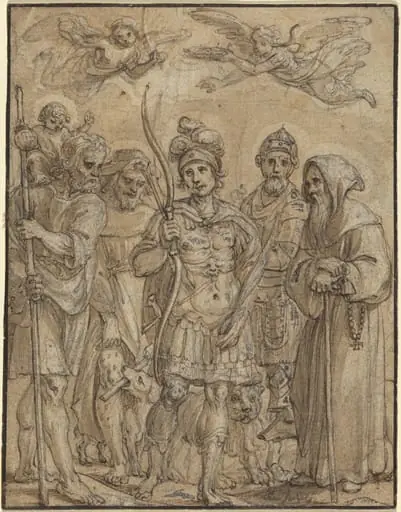 Five Saints
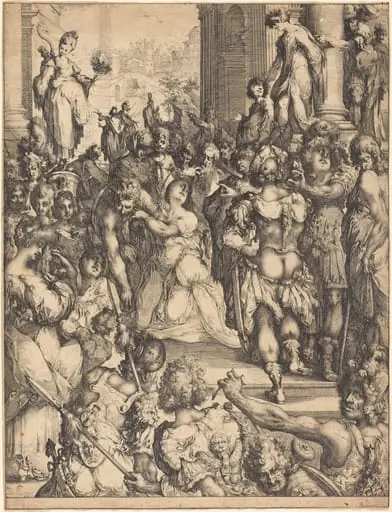 Martyrdom of Saint Lucy
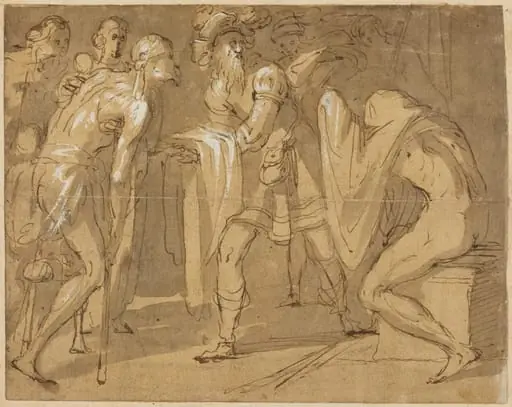 Saint Homobono
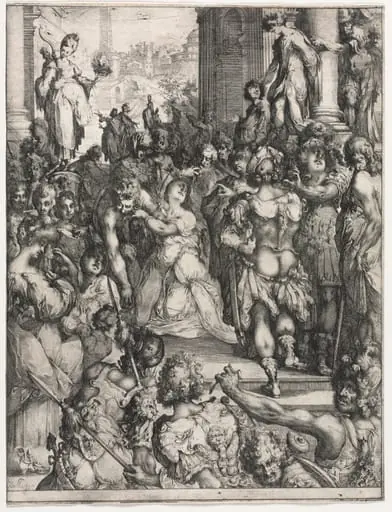 The Martyrdom of Saint Lucy
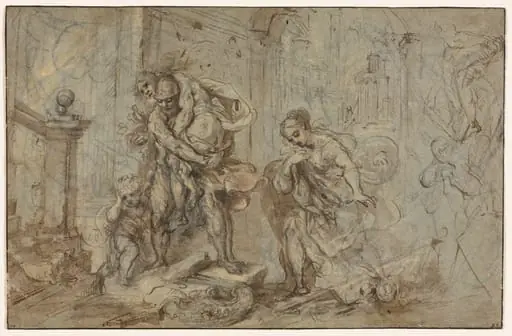 Aeneas Saving Anchises at the Fall of Troy
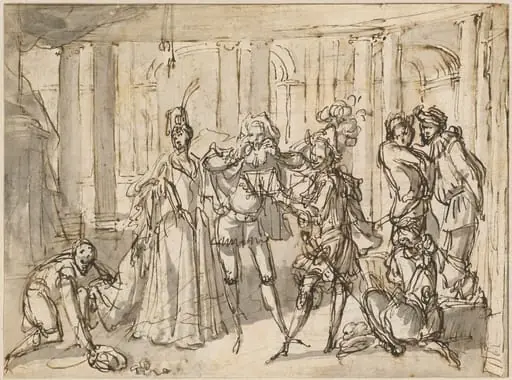 A Performance by the Commedia dell'Arte
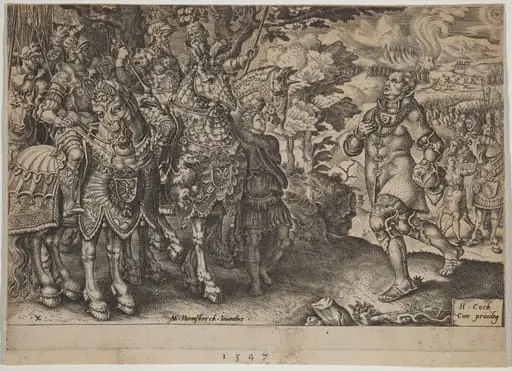 The Surrender of John Frederick, Elector of Saxony, After the Battle of Mühlberg
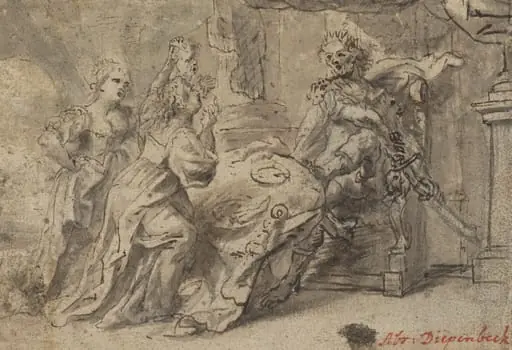 Philomela, Procne, and the Thracian King Tereus
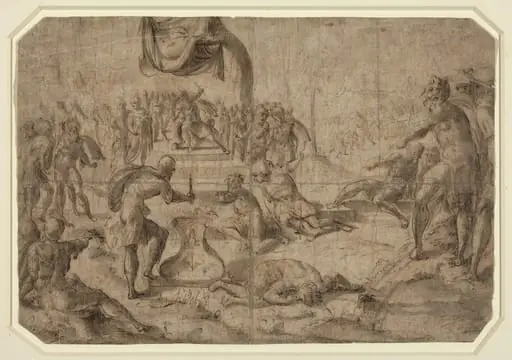 Sacrifice Scene (Gaius Mucius Scaevola?)
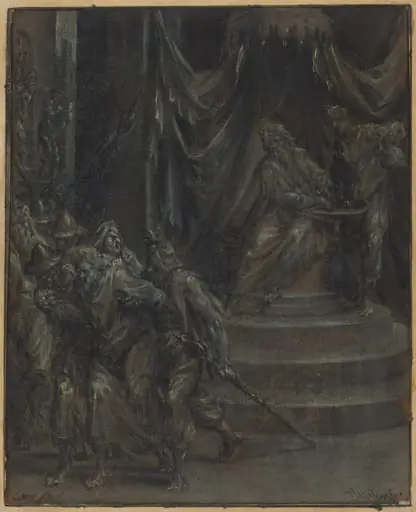 Pilate Washing His Hands as Christ Is Led Away
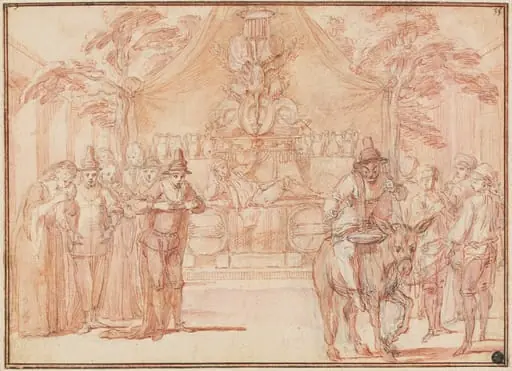 Scene from "The Tomb of Master André"