Artwork
Christ at the Column
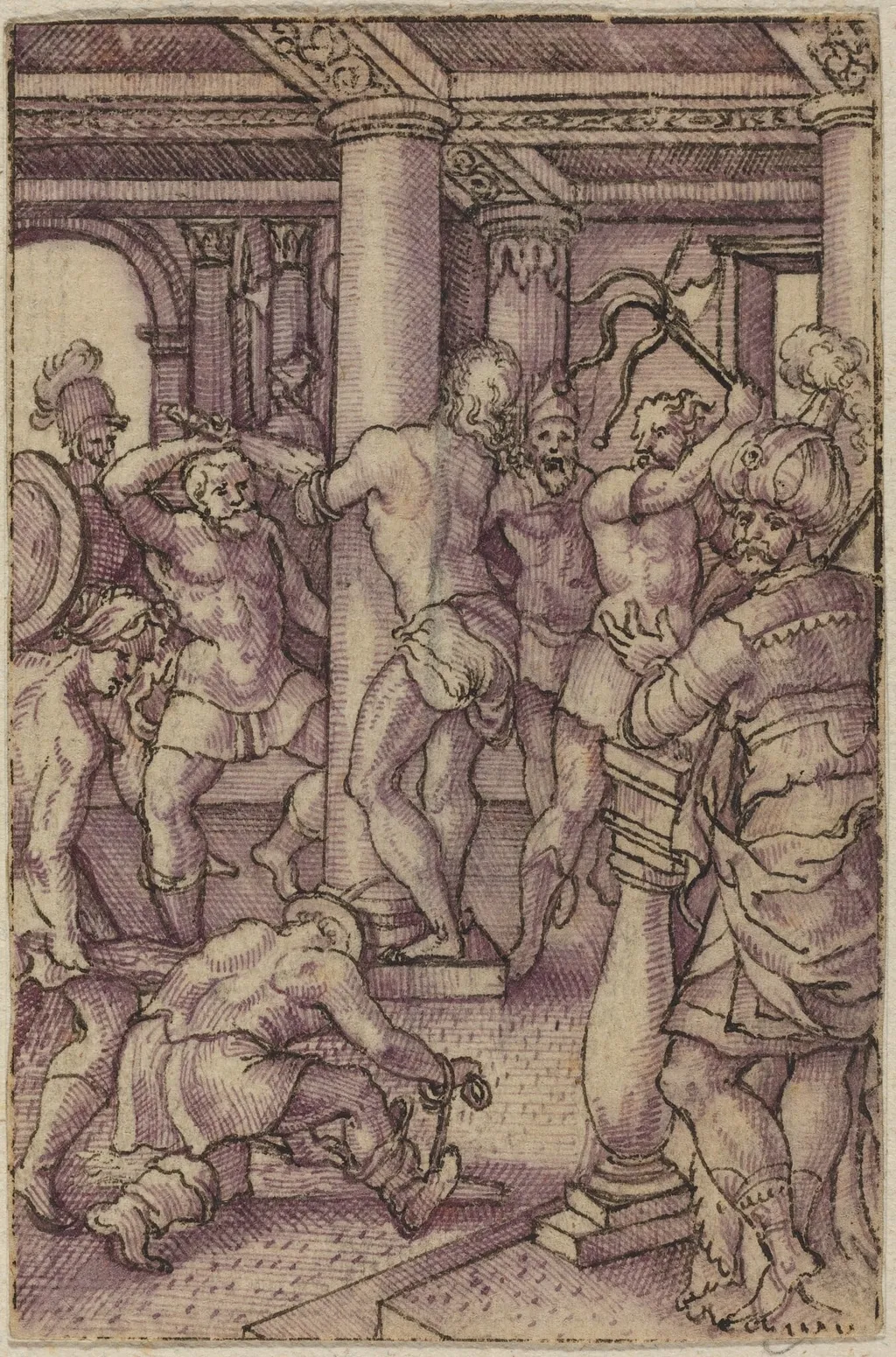
Christ at the Column is an ink drawing by the Renaissance artist Virgil Solis. It dates from 1538 and is held in the collection of the National Gallery of Art.
About this work
Overview
Virgil Solis, a Nuremberg‑born draughtsman active in the mid‑16th century, produced the drawing *Christ at the Column* in 1538. Executed with pen and both black and violet inks on laid paper, the work measures roughly a single sheet and presents a densely populated scene that centers on a half‑clothed figure bound to a tall column.
Subject & Meaning
The composition portrays the moment of Christ’s flagellation, a common Passion episode. The central figure, restrained to the column, is surrounded by a tumult of onlookers—some pulling at his limbs, others shouting or reaching out—while a fallen individual lies in the foreground, heightening the sense of violence and collective involvement.
Technique & Style
Solis employs a vigorous cross‑hatching system, layering tight, intersecting strokes to model the bodies, the column, and architectural fragments. The use of violet ink alongside black creates subtle tonal variations, while the dense network of lines generates a textured, almost tactile surface that conveys the scene’s harsh atmosphere.
History & Provenance
Although best known for his engravings, etchings, and woodcuts, Solis also produced drawings such as this one, reflecting the family workshop’s output in the 1500s. The piece remains documented as part of the artist’s oeuvre from 1538, offering insight into his approach to religious narrative beyond his print work.
Artist & collection

Artist
Virgil Solis or Virgilius Solis (1514 – 1 August 1562), a member of a prolific family of artists, was a German draughtsman and printmaker in engraving, etching and woodcut who worked in his native city of Nuremberg.

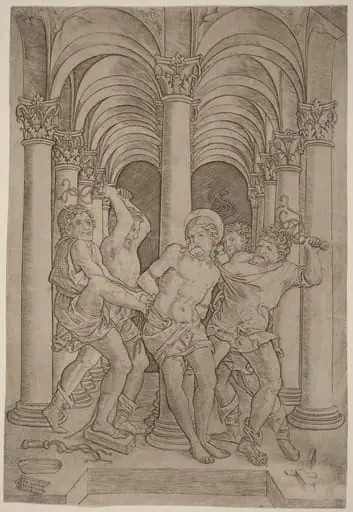 Flagellation
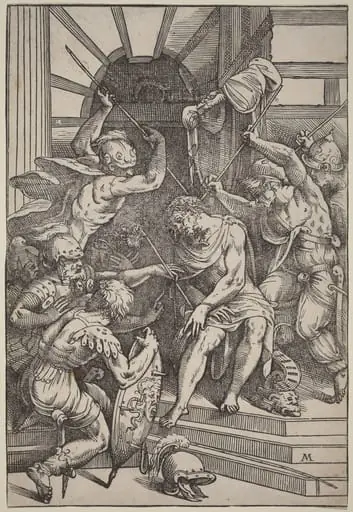 Christ Crowned with Thorns
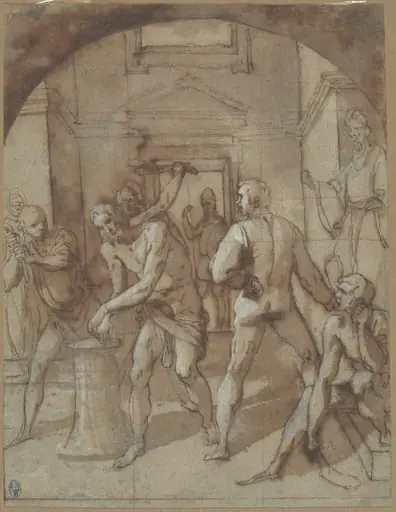 The Flagellation
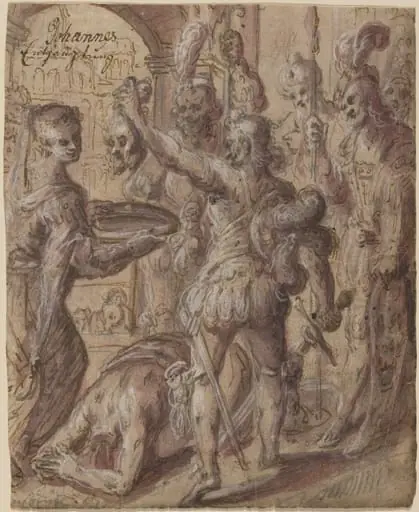 The Beheading of Saint John the Baptist
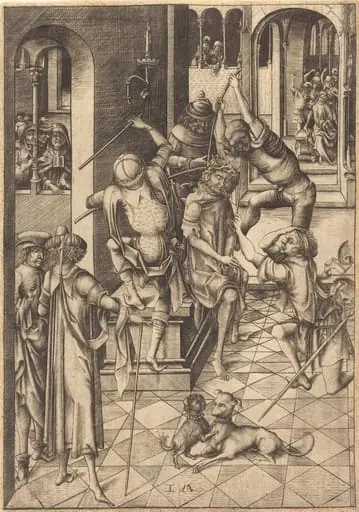 The Crowning with Thorns
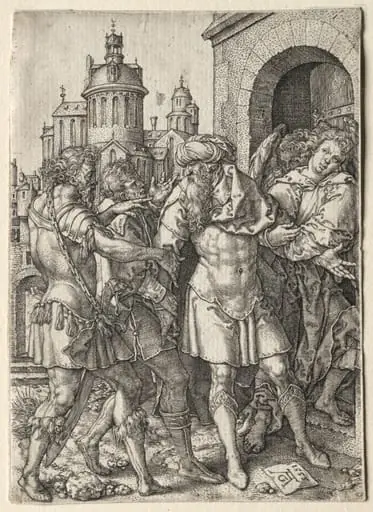 The Story of Lot: Lot Prevents the Sodomites from Violence
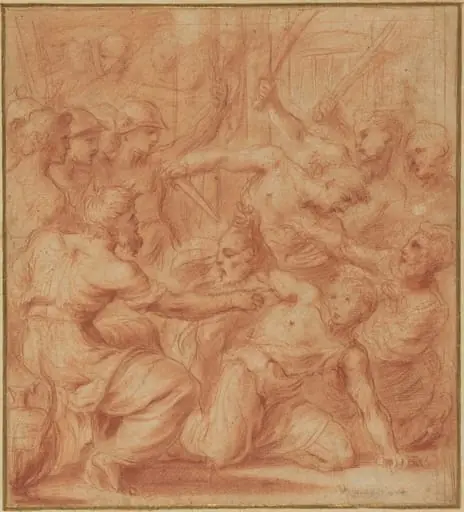 David Offering the Head of Goliath to King Saul
 Flagellation of Christ, with the Pavement
 The Flagellation of Christ
 Flagellation of Christ, with the Pavement
 The Passion: Christ Before the High Priest