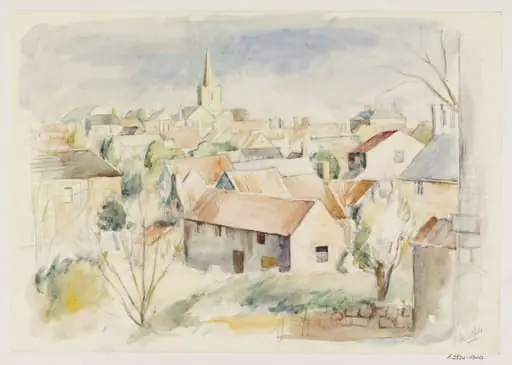
Artwork
Evening View of Sudbury from the South-west
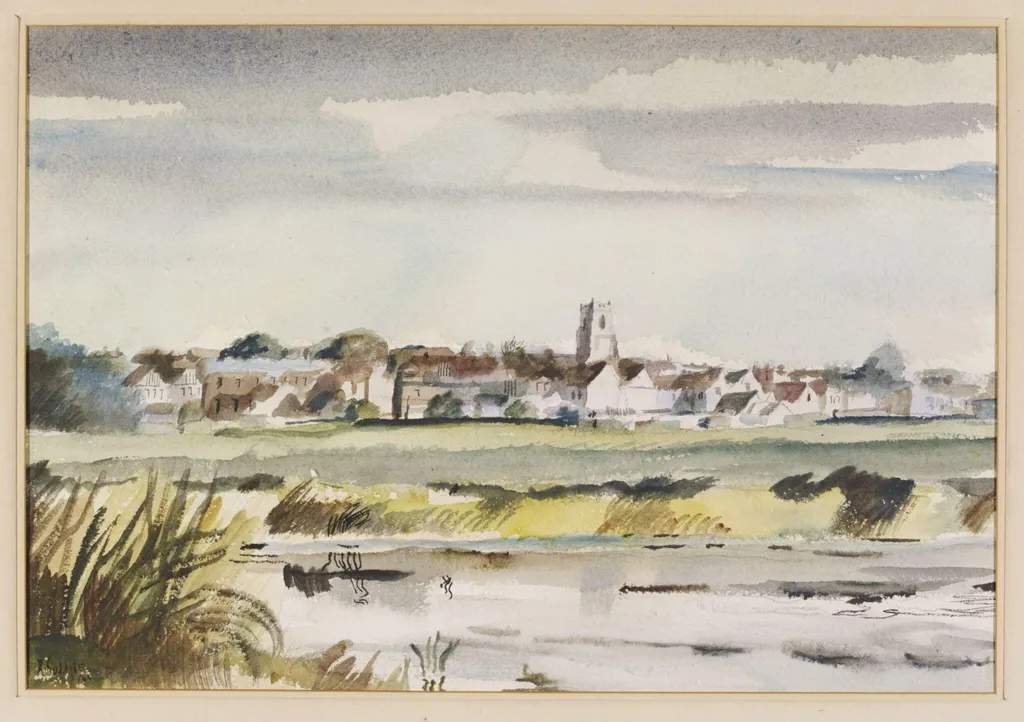
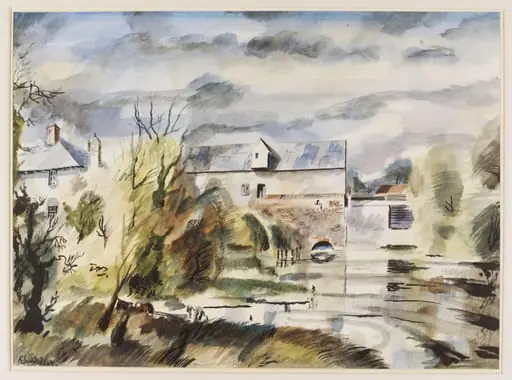
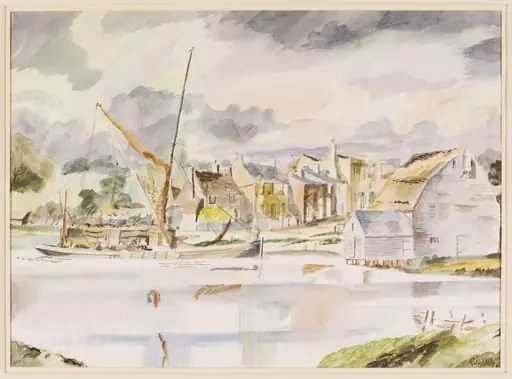
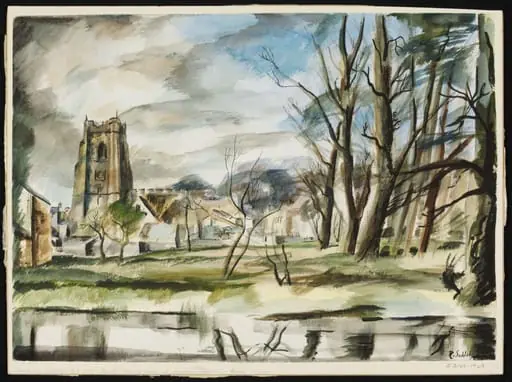
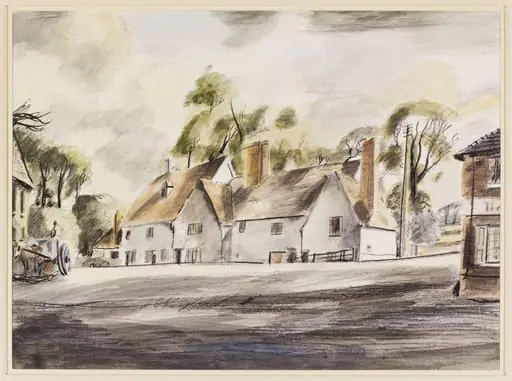
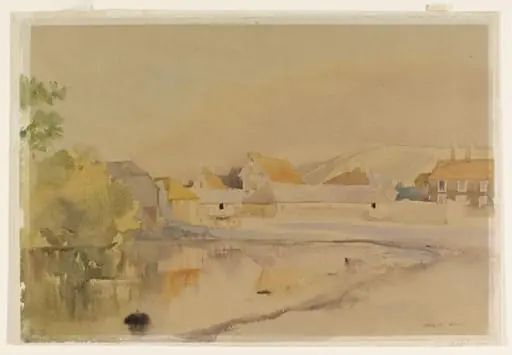
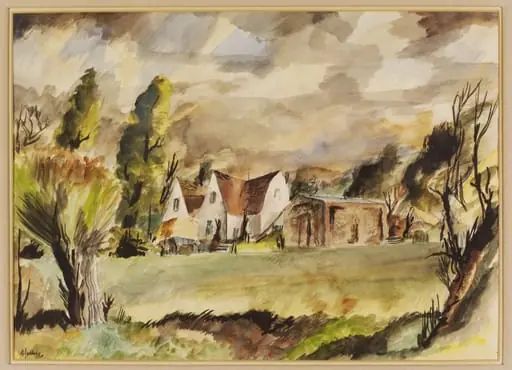
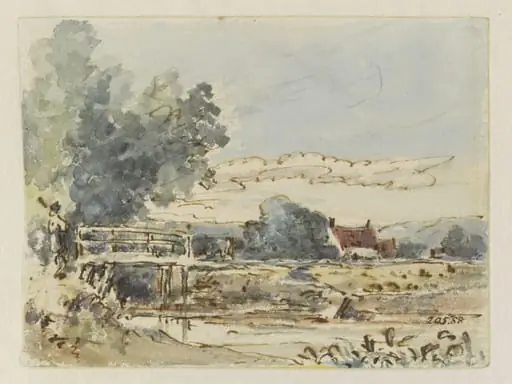
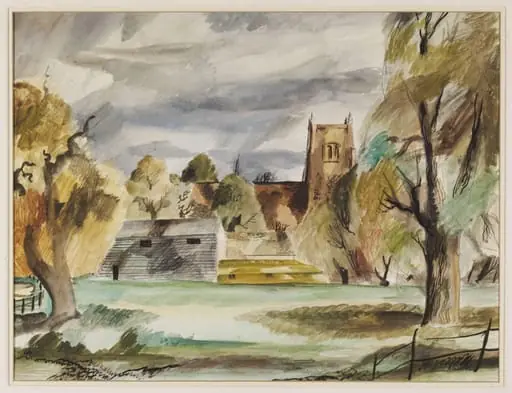
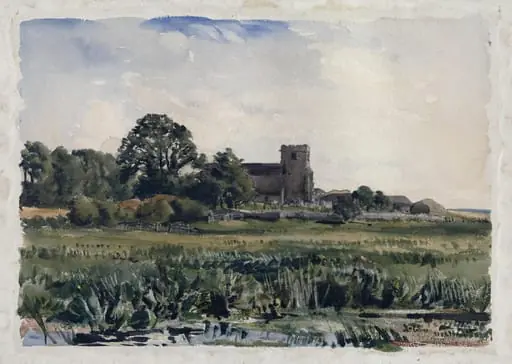
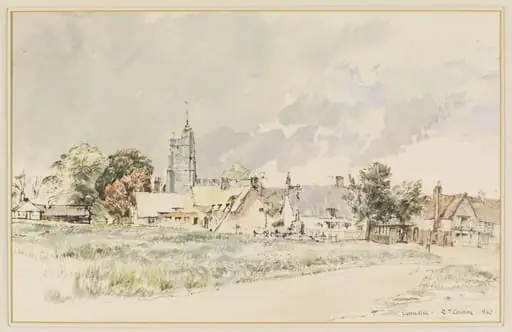
Evening View of Sudbury from the South-west is a watercolor work on paper by the British Romanticist artist Rowland Suddaby. It dates from 1940 and is held in the collection of the Victoria and Albert Museum. Painted in 1940, this watercolour captures Sudbury from the south-west at twilight.
About this work
This painting is called Evening View of Sudbury from the South-west.
It was created by Rowland Suddaby in 1940.
The artist spent a lot of time painting Suffolk landscapes, and this watercolour might be a tribute to Thomas Gainsborough, a famous painter from Sudbury.
To learn more about the artist's style and other works, check out the Victoria and Albert Museum.
Overview
Painted in 1940, this watercolour captures Sudbury from the south-west at twilight. Created by Rowland Suddaby, it stands out among his three known views of the town for its atmospheric intensity. Suddaby, originally from Surrey, developed a deep connection with Suffolk’s landscape over decades of observation and depiction, making this work a personal and regional statement.
Subject & Meaning
The scene presents Sudbury’s skyline softened by dusk, with muted tones and delicate washes suggesting the quiet transition from day to night. While not explicitly narrative, the painting’s contemplative mood may reflect a quiet homage to Thomas Gainsborough, Sudbury’s most renowned artist, whose legacy Suddaby later helped preserve through his curatorial role at Gainsborough’s House.
Technique & Style
Suddaby employed transparent watercolour with restrained brushwork, allowing the paper’s texture to contribute to the hazy quality of the evening light. Layers of diluted pigment build subtle gradations in the sky and distant buildings, while minimal detail in the foreground enhances the sense of distance and stillness characteristic of his mature style.
History & Provenance
The painting’s current location is not specified, but it is held in public collections associated with British watercolour traditions.
Suddaby moved to Sudbury after the Second World War and became curator of Gainsborough’s House, a position that deepened his engagement with the town’s artistic heritage. This 1940 work predates his tenure there, suggesting his affinity for the locale began earlier. The painting’s current location is not specified, but it is held in public collections associated with British watercolour traditions.
Context
In the late 1930s and early 1940s, British artists increasingly turned to regional landscapes as a form of cultural grounding amid national upheaval. Suddaby’s focus on Sudbury aligns with this trend, situating his work within a broader movement that valued local identity and topographical memory over urban or heroic subjects.
Legacy
Though not widely known outside Suffolk, Suddaby’s body of work contributes to the documented visual history of the region. His later role at Gainsborough’s House ensured the preservation of local artistic heritage, and his watercolours, including this one, remain as quiet records of a place’s evolving character through the mid-20th century.
Artist & collection