Artwork
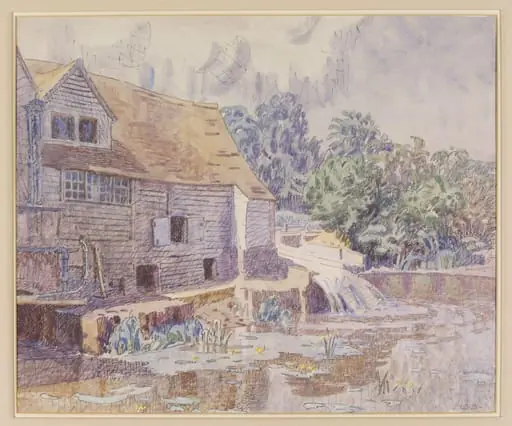
Henning Mill on the Stour
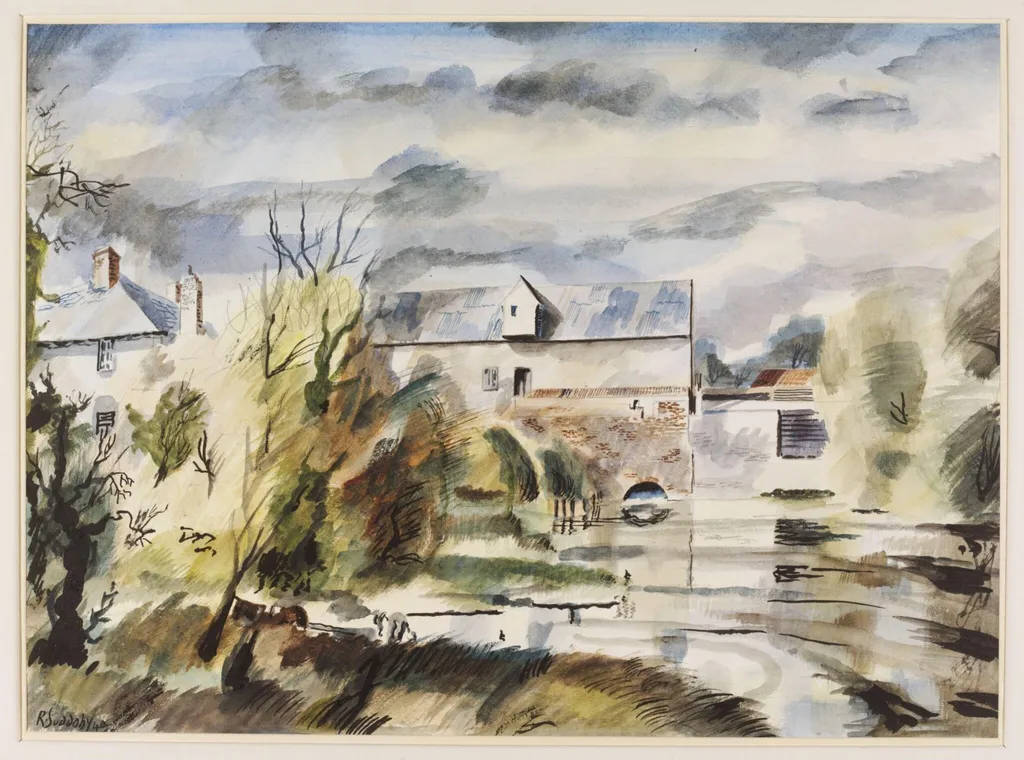
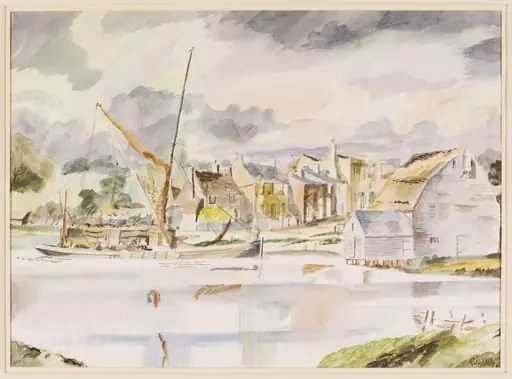
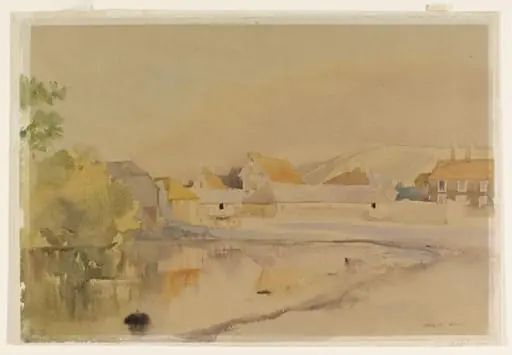
Henning Mill on the Stour is a watercolor work on paper by the British Romanticist artist Rowland Suddaby. It dates from 1940 and is held in the collection of the Victoria and Albert Museum.
About this work
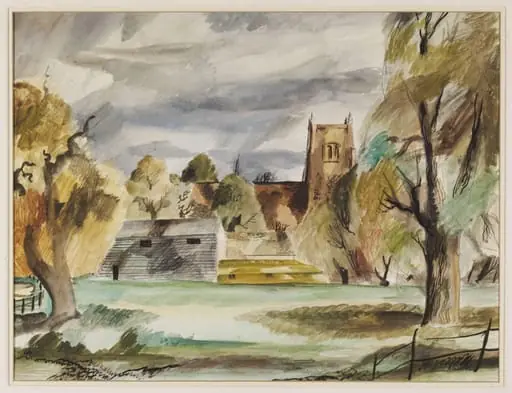
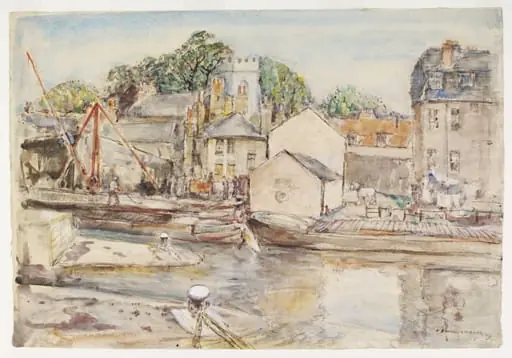
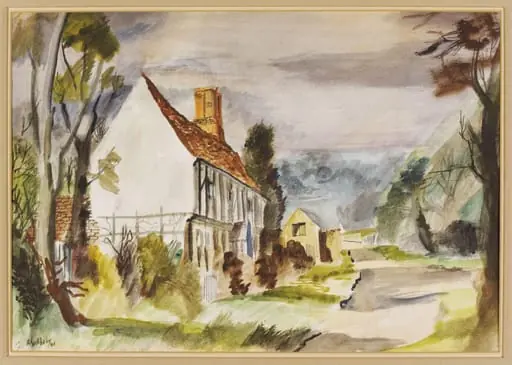
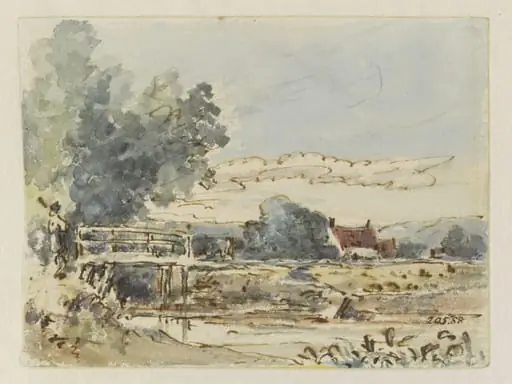
This watercolor shows a quiet mill on the River Stour. Rowland Suddaby painted it in 1940. The work captures the old mills that once powered the local economy.
Most Stour mills were already out of use by 1940. Suddaby leaves out any signs of modern change. His scene feels unchanged from an earlier time.
Check out more work by Rowland Suddaby.
Overview
The work belongs to a series of regional landscapes that document the quiet remnants of industrial infrastructure.
Rowland Suddaby created this watercolour in 1940, depicting Henning Mill on the River Stour. The work belongs to a series of regional landscapes that document the quiet remnants of industrial infrastructure. Though mechanization had largely replaced water-powered mills by this time, Suddaby chose to portray the structure in isolation, free from contemporary intrusions like roads, machinery, or urban development.
Subject & Meaning
Henning Mill represents a fading aspect of rural Suffolk’s economic past. Once central to grain processing and local trade, such mills had become obsolete by the mid-20th century. Suddaby’s depiction avoids nostalgia or lament; instead, it presents the building as a quiet, enduring fixture. The absence of human figures or signs of modernity suggests a deliberate focus on continuity rather than decline.
Technique & Style
Executed in watercolour, the painting employs soft washes and restrained detail to convey atmosphere over precision. Suddaby’s brushwork is deliberate but unobtrusive, allowing the natural light and water reflections to guide the viewer’s eye. The composition is balanced and calm, with the mill centered against a muted sky and gentle riverbank, reinforcing a sense of stillness and timelessness.
History & Provenance
Painted during the early years of the Second World War, the work was likely made in Suffolk, where Suddaby lived and worked. It reflects his personal interest in documenting regional architecture before it disappeared. The painting remained in private hands for decades, with no public exhibition record until the late 20th century, when interest in regional watercolours revived.
Context
By 1940, most water mills along the Stour had ceased operation, replaced by steam and electric power. While some were preserved as curiosities, few retained functional use. Suddaby’s image aligns with a broader artistic trend among regional painters who sought to capture vanishing rural scenes, often drawing stylistic parallels to 19th-century landscape traditions like those of Constable.
Legacy
Suddaby’s watercolour contributes to a modest but significant archive of 20th-century English regional art. It does not seek to elevate the mill as a monument but to record its quiet presence amid change. Today, it serves as a visual document of a transitional moment in rural industry, valued for its unembellished observation rather than its technical innovation.
Artist & collection