Artwork
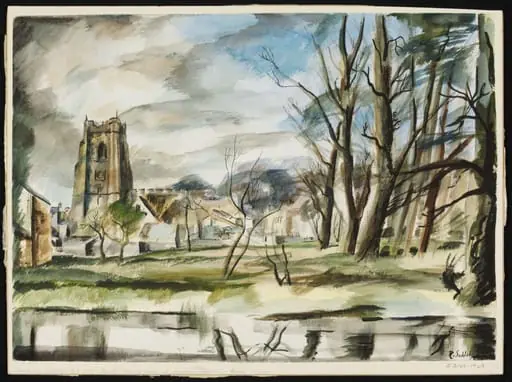
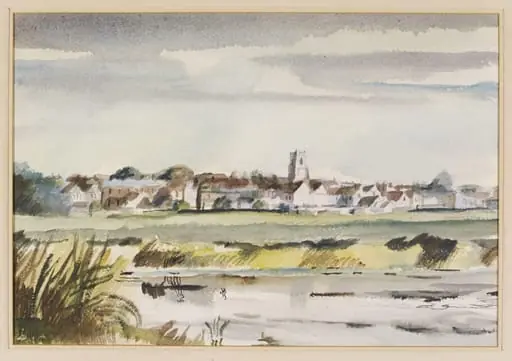
Stoke-by-Nayland; distant view
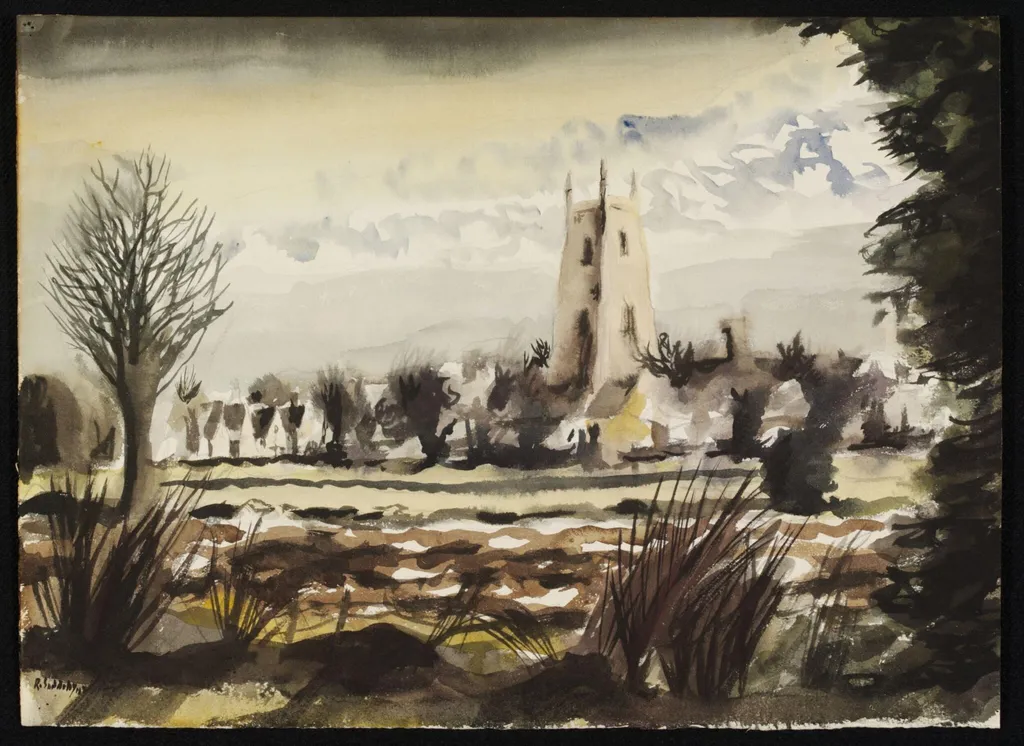
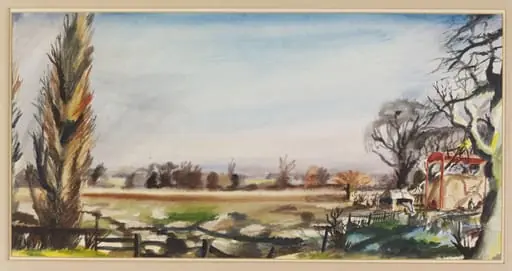
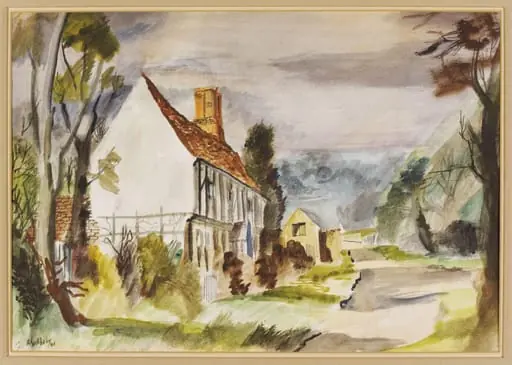
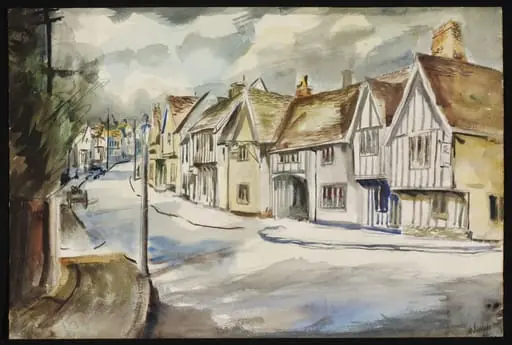
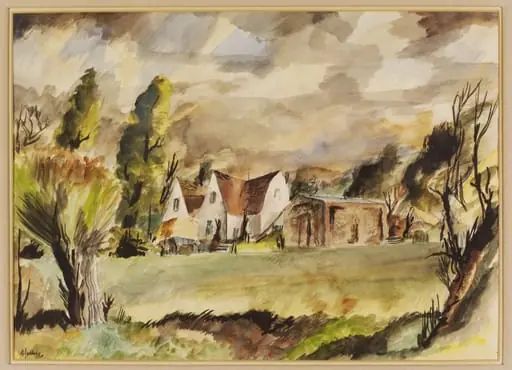
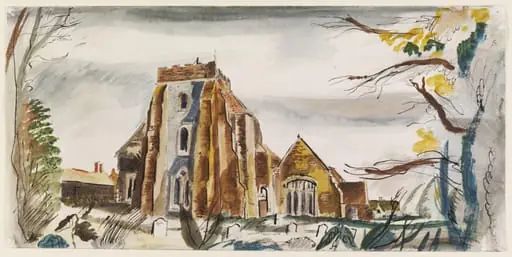
Stoke-by-Nayland; distant view is a watercolor work on paper by Suddaby. It dates from 1942 and is held in the collection of the Victoria and Albert Museum.
About this work
Overview
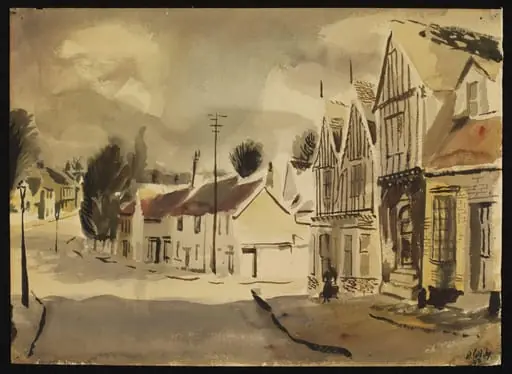
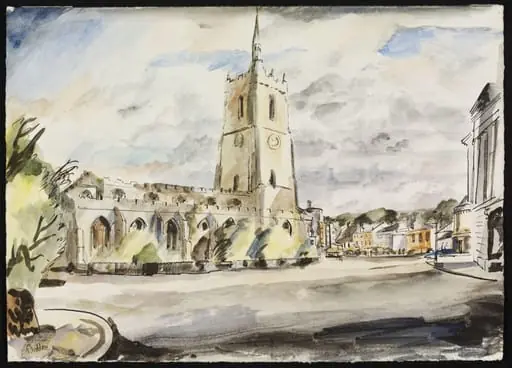
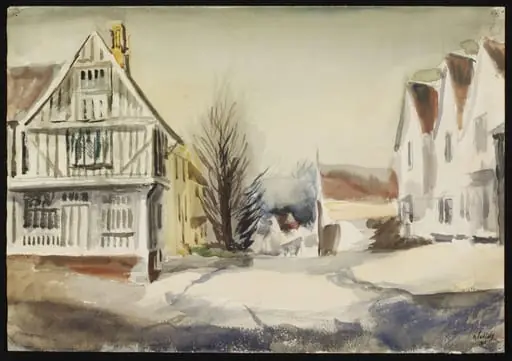
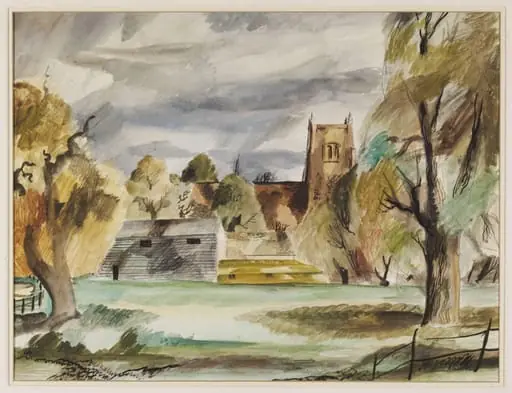
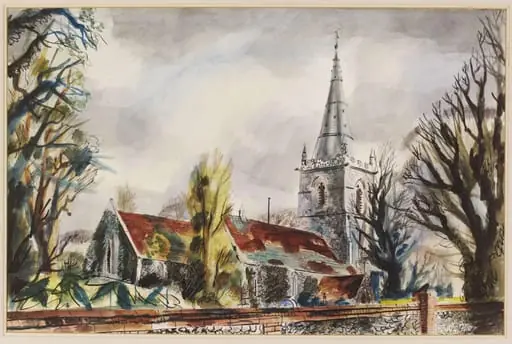
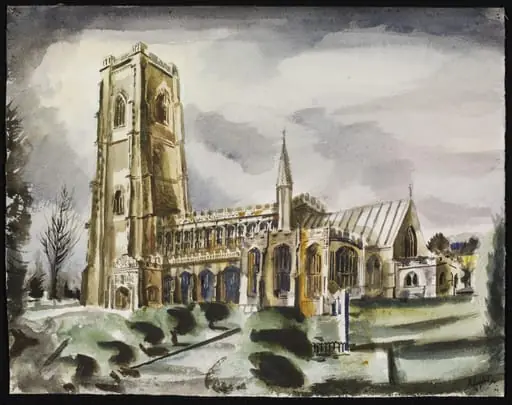
This watercolour, titled 'Stoke-by-Nayland; distant view,' was painted in 1942 as part of the 'Recording Britain' initiative. It captures a quiet rural scene in Suffolk, rendered in subdued earth tones and soft washes. The work reflects a broader effort during wartime to preserve visual records of England’s landscapes and vernacular architecture before they could be altered or lost.
Subject & Meaning
The painting presents a distant view of the village, dominated by its church tower rising above low-lying fields. A muddy path winds through reeds and shallow water, leading the eye toward the tower, while small figures move along it. The composition conveys stillness and solitude, suggesting a landscape untouched by immediate conflict, yet subtly marked by the passage of time and human presence.
Technique & Style
The artist employed loose, transparent watercolour techniques to evoke atmospheric depth and seasonal chill. Muted grays, browns, and pale washes create a restrained palette, emphasizing the quietude of winter. Wet-on-wet strokes suggest diffuse light and damp air, while minimal detail in the figures and foliage reinforces the sense of distance and contemplation.
History & Provenance
The painting entered the Victoria and Albert Museum’s holdings as part of this national archive, preserved for its historical and cultural significance.
Commissioned by the Ministry of Labour and National Service and funded by the Pilgrim Trust, this work belongs to the 'Recording Britain' collection, overseen by Sir Kenneth Clark. Created during World War II, the project enlisted artists to document vulnerable rural scenes. The painting entered the Victoria and Albert Museum’s holdings as part of this national archive, preserved for its historical and cultural significance.
Context
The 'Recording Britain' project emerged amid fears of wartime destruction and rapid modernization. Artists were sent across the country to record market towns, churches, and countryside views at risk from bombing, development, or agricultural change. This work is one of over 1,500 pieces produced by 97 artists, forming a visual archive of a nation’s heritage during a time of uncertainty.
Legacy
The 'Recording Britain' collection remains a vital resource for understanding mid-20th-century English landscapes. This watercolour, like others in the series, offers a quiet but enduring record of rural life during wartime. Its preservation in the Victoria and Albert Museum ensures continued access for scholars and the public, anchoring the visual memory of a specific place in a moment of national transition.
Artist & collection
Artist
A British watercolor artist from the mid-20th century, Suddaby painted quiet, detailed scenes of East Anglia’s streets and churches in the 1940s.