Artwork
Grapes
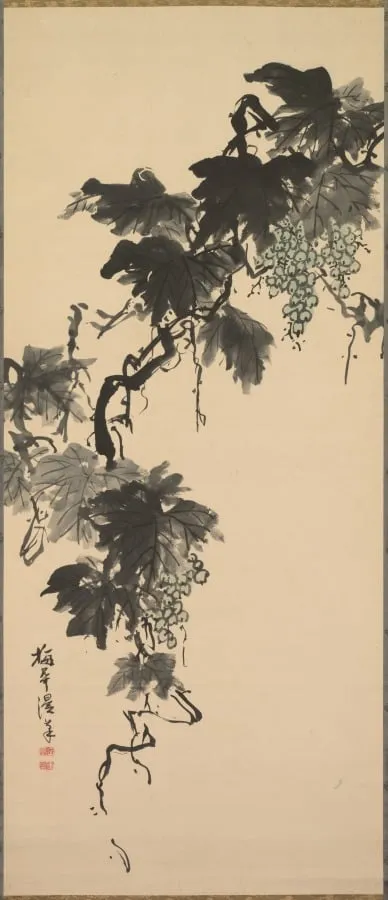
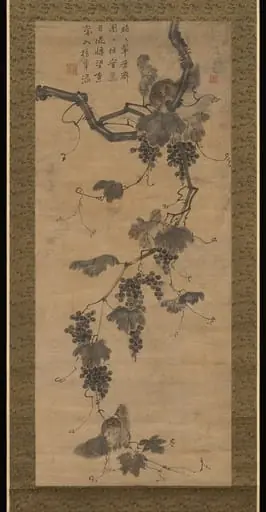
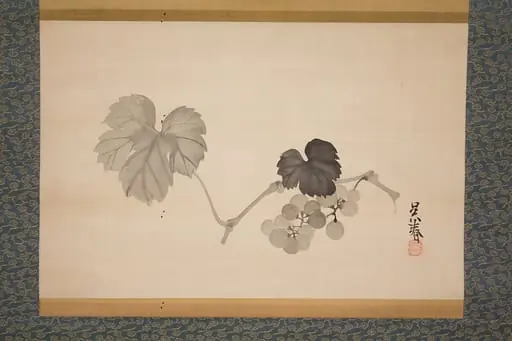
Grapes is an unspecified painting by the Nihonga artist Sugai Baikan. It dates from 1804 and is held in the collection of the Cleveland Museum of Art.
About this work
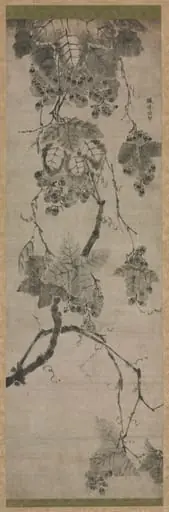
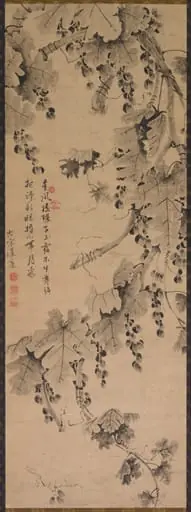
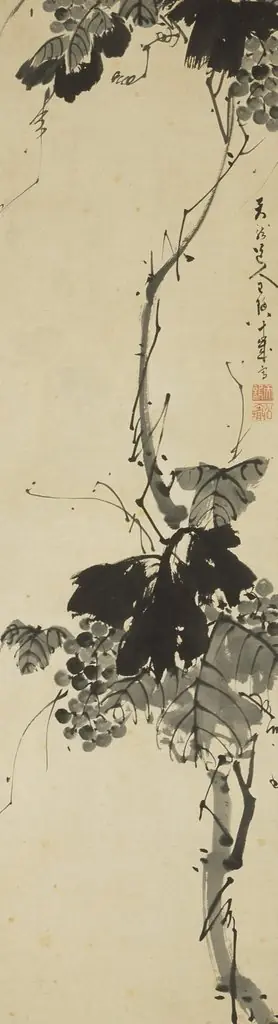
You see a single bunch of grapes hanging on a thin vine, painted in soft black ink.
This wasn’t meant to be a formal work—Baikan likely dashed it off for a friend. The loose brushstrokes feel almost careless, but that’s the charm. It’s a quiet moment, not a grand statement.
If you like this easy, everyday feel, look up *Japan, Edo period (1615–1868)*.
Overview
The work depicts a solitary bunch of grapes suspended from a slender vine, rendered in delicate black ink. Executed with an informal, spontaneous hand, the painting conveys a fleeting, everyday observation rather than a formal study. Its modest scale and unembellished composition suggest it was produced quickly, likely as a personal gesture toward an acquaintance.
Subject & Meaning
The solitary grapes serve as a quiet still‑life, emphasizing the simple beauty of a common fruit. By isolating the bunch against an empty background, the artist invites contemplation of transience and the ordinary, aligning with a broader aesthetic that values understated, momentary scenes over grand narratives.
Technique & Style
Brushwork is loose and seemingly careless, employing soft, fluid strokes that capture the grape’s roundness and the vine’s fragility. Executed entirely in black ink, the piece relies on tonal variation rather than color, a hallmark of Japanese ink painting that foregrounds line and wash to suggest form and volume.
History & Provenance
Created by Sugai Baikan, a painter originally known for ink landscapes in the Sendai region, the piece likely dates from his later years after extensive travel through Edo, Kyoto, and Nagasaki. Baikan studied under Chinese artist Jiang Jiapu in Nagasaki, absorbing Chinese painting techniques before returning to Sendai, where personal misfortunes culminated in his suicide.
Context
Baikan’s career unfolded during the Edo period, a time when Japanese artists increasingly engaged with Chinese artistic traditions. His exposure to Jiang Jiapu’s fan paintings and subsequent study in Nagasaki reflect the period’s cross‑cultural exchanges, while the informal nature of this grape study illustrates the era’s appreciation for spontaneous, everyday subjects.
Artist & collection