Artwork
Untitled
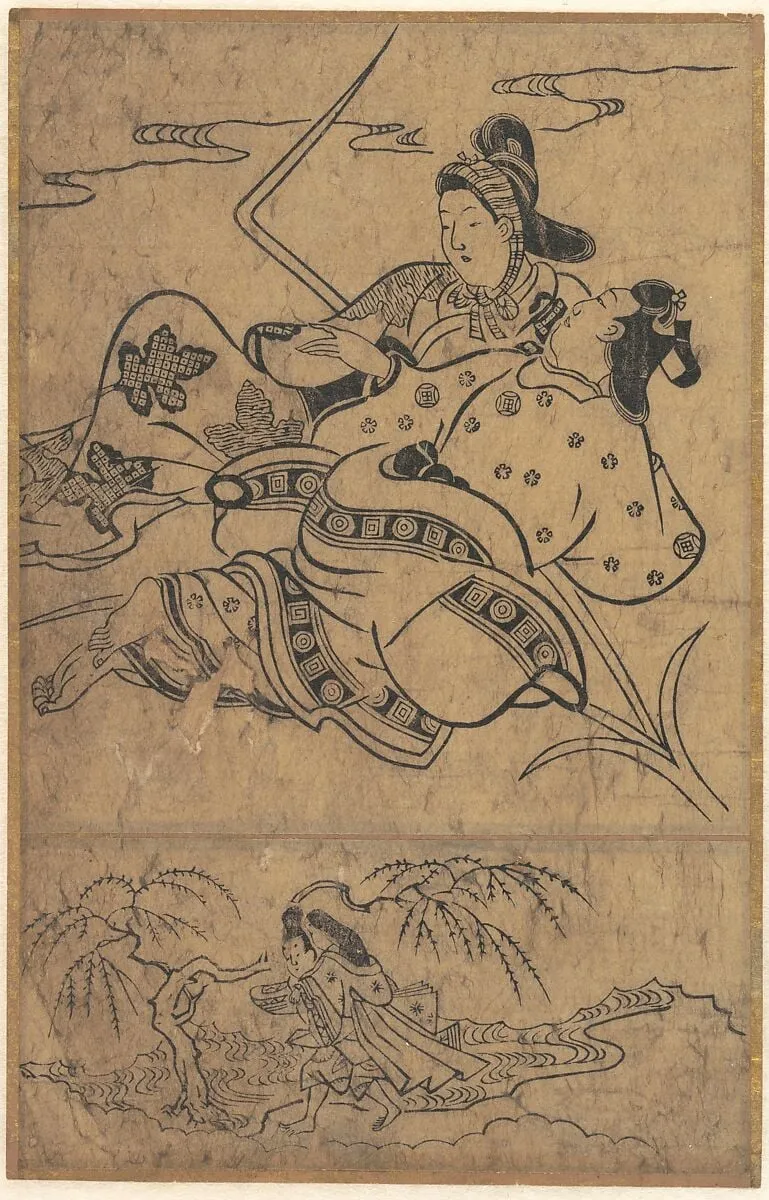
Untitled is an ink print by the Baroque artist Sugimura Jihei Masataka. It dates from 1692 and is held in the collection of the Metropolitan Museum of Art. Created in 1692 by Sugimura Jihei, this monochrome woodblock print is executed in ink on paper.
About this work
Overview
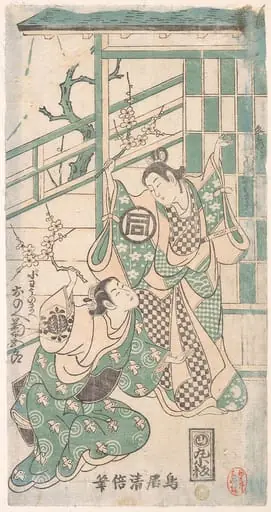
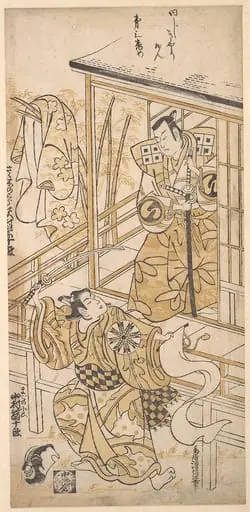
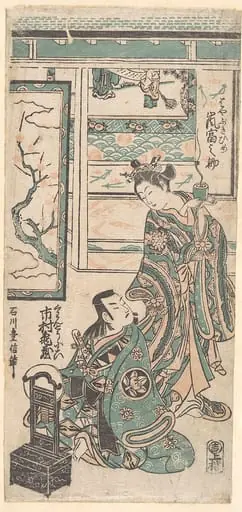
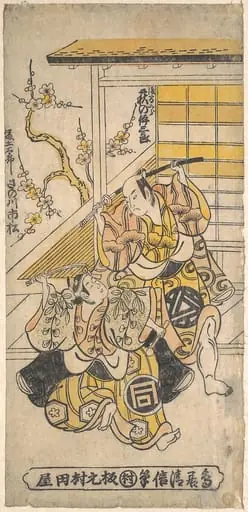
Created in 1692 by Sugimura Jihei, this monochrome woodblock print is executed in ink on paper. It is part of the collection at The Metropolitan Museum of Art. The composition captures two figures in dynamic motion against a layered background of clouds, architecture, and turbulent waves, reflecting the visual language of early Edo-period narrative prints.
Subject & Meaning
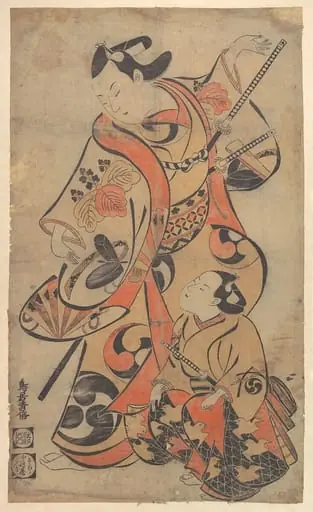
The scene depicts two armed figures: one mounted on horseback, wielding spear and bow, and another crouched below near a pine tree.
The scene depicts two armed figures: one mounted on horseback, wielding spear and bow, and another crouched below near a pine tree. Their postures and attire suggest warrior status, yet the lack of clear narrative context invites interpretation. The contrast in scale and gaze—mounted figure forward, lower figure downward—hints at tension or transition, possibly symbolizing hierarchy or internal conflict.
Technique & Style
Sugimura Jihei employed bold, fluid lines and controlled cross-hatching to convey motion and texture. Shading is used not for realism but to emphasize volume and drama, particularly in the armor’s geometric patterns and the swirling clouds. The woodblock medium allowed for sharp contrasts between inked areas and blank paper, enhancing the print’s rhythmic energy and theatrical feel.
History & Provenance
The print dates to the late 17th century, a period when woodblock printing flourished in Edo for both commercial and artistic purposes. It entered The Metropolitan Museum of Art’s collection as part of its broader acquisition of Japanese prints, preserving a rare example of Sugimura’s work, whose output was largely ephemeral and rarely signed.
Context
Produced during the Genroku era, the print aligns with popular visual culture that celebrated warrior themes, even as peace stabilized Japan. While not illustrating a known literary tale, its dramatic composition reflects the influence of kabuki theater and illustrated scrolls, where movement and stylized action were central to visual storytelling.
Legacy
Sugimura Jihei’s prints, though less documented than those of his contemporaries, contribute to understanding the diversity of early ukiyo-e. This work exemplifies how artists adapted traditional techniques to convey psychological tension and kinetic energy, influencing later printmakers who prioritized expressive form over literal representation.
Artist & collection

Artist
Sugimura Jihei spent his short life in Edo, today’s Tokyo, making bold prints of kabuki actors and courtesans.