Artwork
Untitled
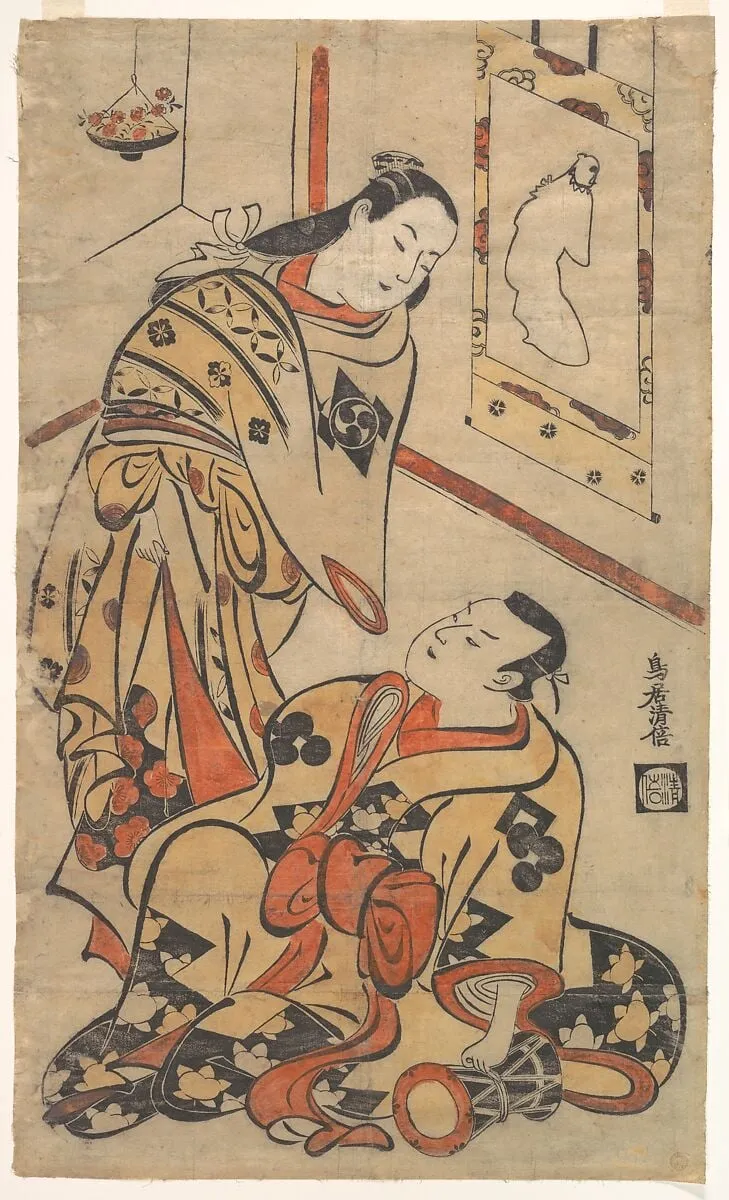
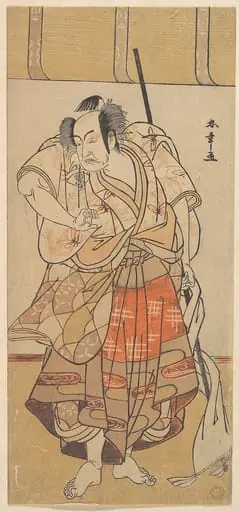
Untitled is an ink print by the Baroque artist Torii Kiyomasu I. It dates from 1710 and is held in the collection of the Metropolitan Museum of Art.
About this work
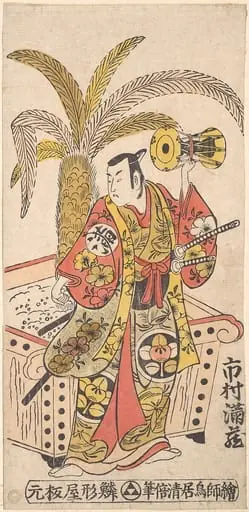
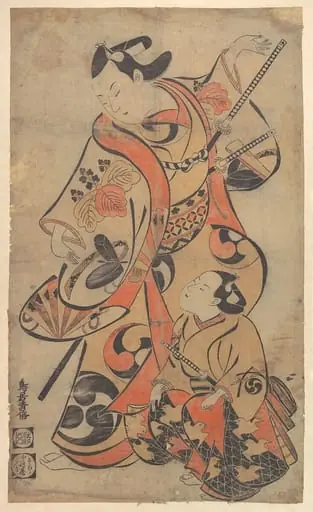
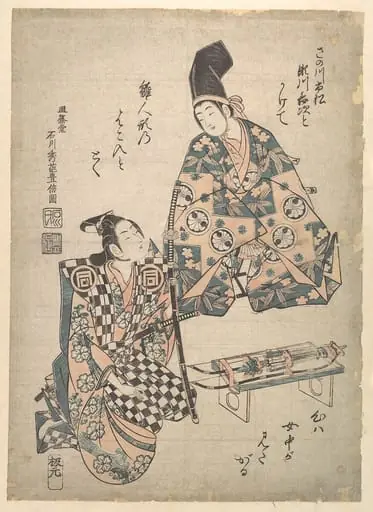
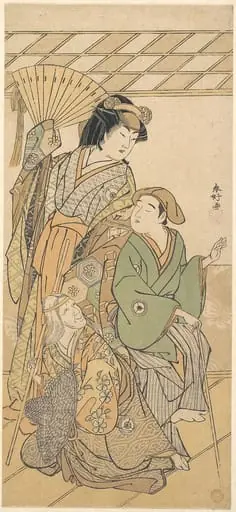
The standing person wears a long, patterned robe with bold red and black designs, holding a fan.
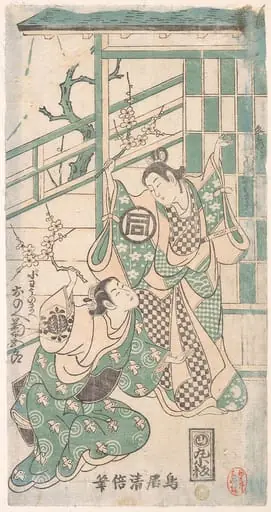
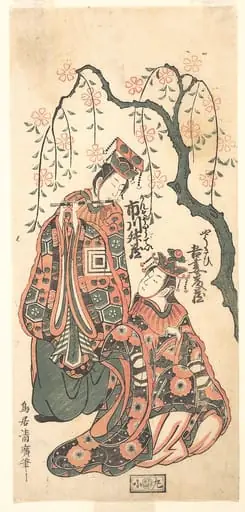
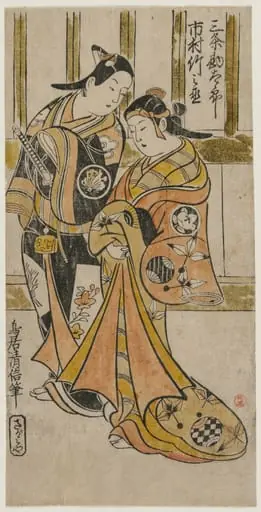
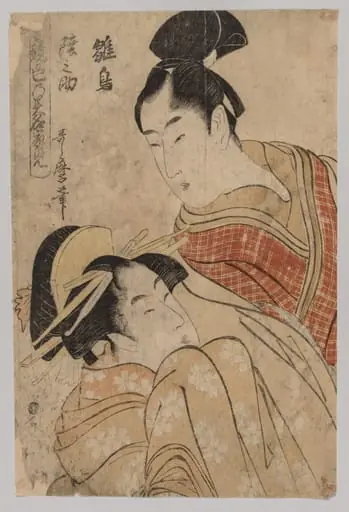
This print shows two figures in a room. The standing person wears a long, patterned robe with bold red and black designs, holding a fan. The other person sits on the floor in bright red pants and a yellow top, holding a scroll. Behind them, a screen depicts a woman in a simple pose.
Notice the sharp lines and bold colors—this style was popular in Japan around 1710. The figures look like they’re performing or practicing something.
If you like this, check out *cross-hatching* to see how artists create depth with lines.
Overview
This woodblock print, dated around 1710, is attributed to Torii Kiyomasu I and belongs to the Metropolitan Museum of Art’s collection. Executed in ink and color on paper, it exemplifies early 18th-century ukiyo-e aesthetics. The composition centers on two figures in an interior setting, rendered with strong outlines and vivid pigments typical of the Torii school’s theatrical style. The work reflects the period’s growing interest in depicting performers and intimate moments within domestic or stage-like spaces.
Subject & Meaning
Two figures occupy the scene: one stands, clad in a robe marked by bold red and black patterns, holding a fan; the other sits cross-legged, dressed in bright red trousers and a yellow upper garment, clutching a scroll. A background screen shows a solitary female figure in a quiet pose, possibly a reference to classical themes or a visual echo of the main subjects. The arrangement suggests a rehearsal or ritualized performance, hinting at the cultural prominence of theater and disciplined artistic practice in Edo-period Japan.
Technique & Style
The print employs sharp, clean lines and flat areas of saturated color, characteristic of early ukiyo-e woodblock printing. The figures are outlined with precision, and the patterns on clothing are rendered through contrasting blocks of red, black, and yellow, minimizing shading in favor of graphic clarity. The background screen introduces subtle depth without perspective, maintaining the decorative flatness favored by Torii artists. This approach prioritizes visual rhythm and symbolic clarity over naturalism.
History & Provenance
Created circa 1710, the work originates from the Torii school, which dominated early ukiyo-e production by specializing in actor portraits and theater-related imagery. Though unsigned, stylistic analysis attributes it to Kiyomasu I, a key figure in the school’s formative years. The print entered the Metropolitan Museum of Art’s collection through established acquisition channels, likely as part of a broader 20th-century effort to preserve Japanese prints for Western audiences.
Context
In early 18th-century Edo, woodblock prints served as affordable visual media for urban populations, often illustrating kabuki actors, courtesans, or scenes from daily life. The Torii school, to which Kiyomasu belonged, was instrumental in shaping the visual language of theater posters and performance-related imagery. This print reflects the era’s fascination with performance culture, where the boundary between stage and private space was fluid, and visual motifs were reused across media.
Legacy
Though less widely known than later ukiyo-e artists, Kiyomasu I’s work laid foundational techniques for the genre’s evolution. His emphasis on bold outlines and theatrical composition influenced successors like Kiyonaga and Utamaro. This print remains a representative example of the Torii school’s contribution to the codification of ukiyo-e aesthetics, preserving a moment when printmaking transitioned from commercial ephemera to enduring artistic record.
Artist & collection
Artist
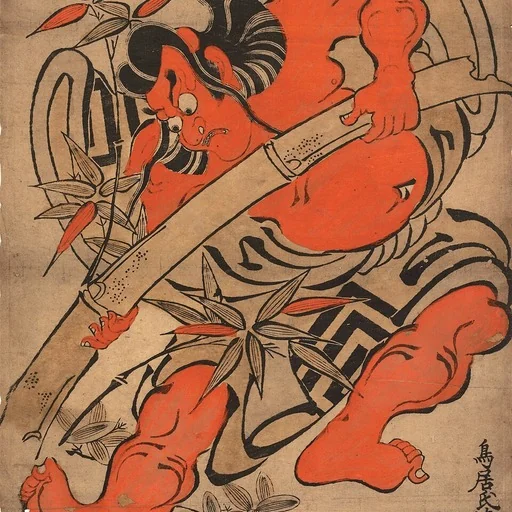
Torii Kiyomasu was the shop name of a printmaker in Edo—modern Tokyo—who spent his short career plastering the city with bold, eye-catching posters.