Artwork
Untitled

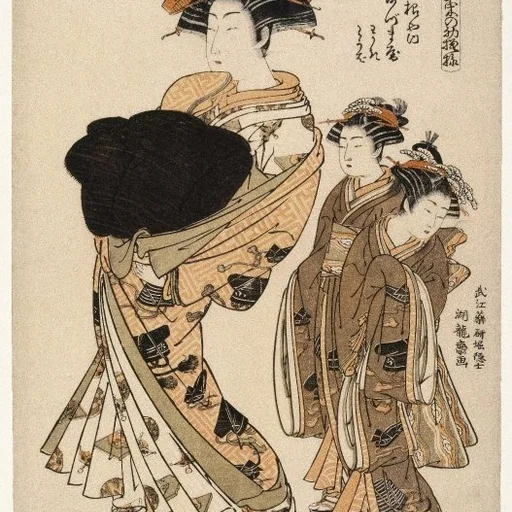
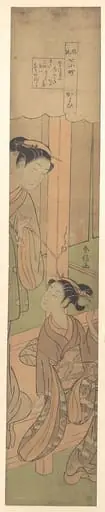
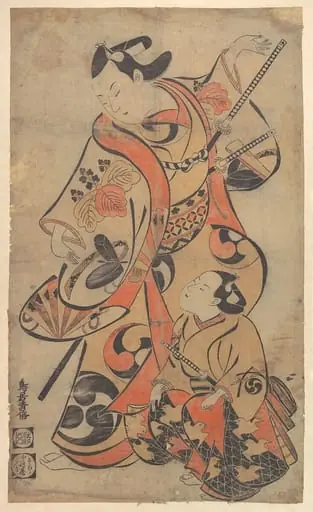
Untitled is an ink print by the Romanticist artist Isoda Koryūsai. It dates from 1769 and is held in the collection of the Metropolitan Museum of Art.
About this work
Overview
Made with ink and color on paper, it was one of many impressions pulled from a single carved wood block, enabling affordable access for urban dwellers.
Created around 1769 by Isoda Koryūsai, this woodblock print is an example of ukiyo-e, a popular Japanese art form produced for mass consumption. Made with ink and color on paper, it was one of many impressions pulled from a single carved wood block, enabling affordable access for urban dwellers. The print is now part of The Metropolitan Museum of Art’s collection, representing the commercial and aesthetic vitality of Edo-period printmaking.
Subject & Meaning
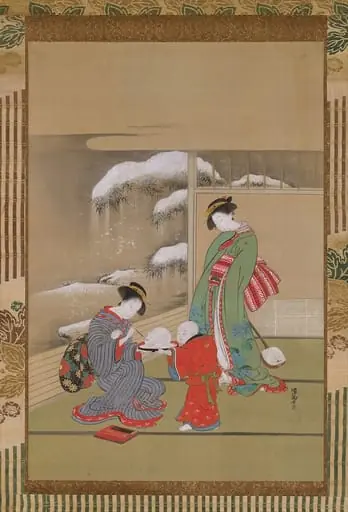
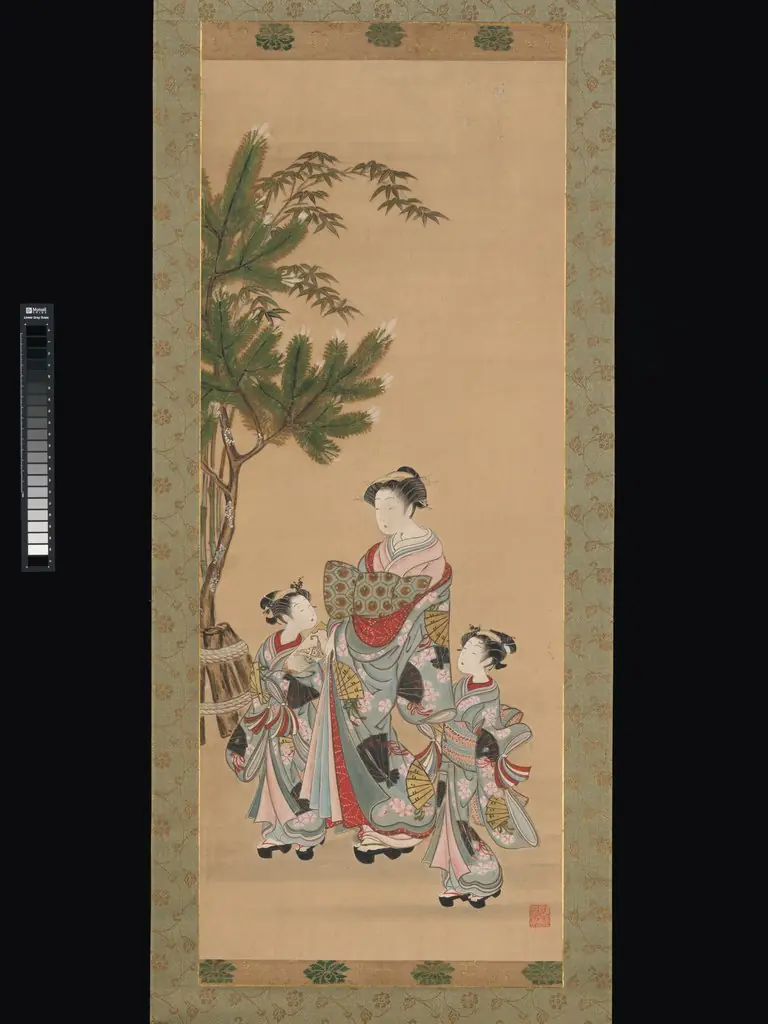
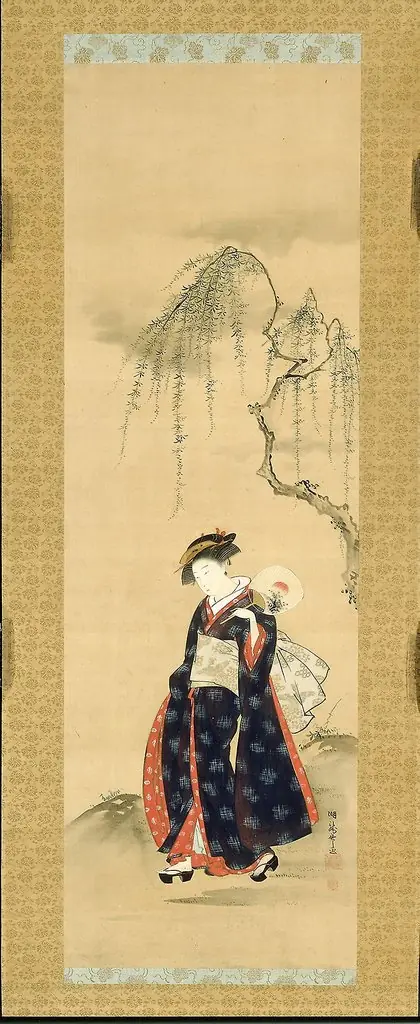
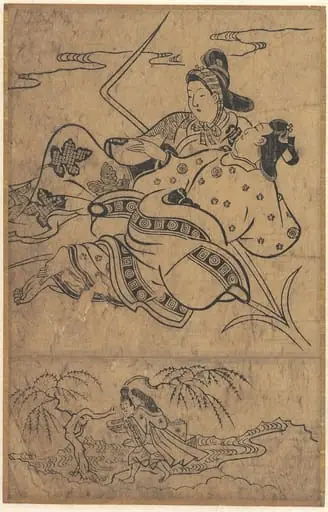
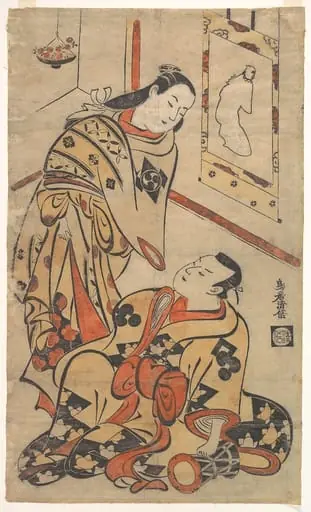
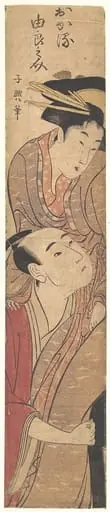
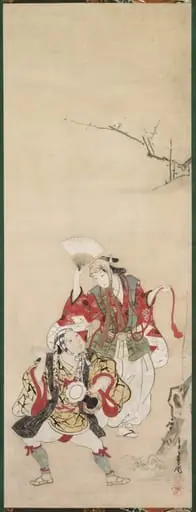
The scene depicts two women and a young boy indoors, their postures suggesting a quiet domestic moment. Dressed in elaborately patterned kimonos, they appear engaged in ordinary activity, perhaps conversation or leisure. The lack of dramatic narrative or symbolic detail points to a focus on everyday life, reflecting the ukiyo-e tradition’s interest in the transient pleasures of the common world rather than myth or history.
Technique & Style
The print employs woodblock carving and hand-coloring, typical of Edo-period commercial printing. Facial features are rendered with minimal detail, giving them a stylized, almost mask-like quality. In contrast, the textiles are rendered with fine cross-hatching—delicate intersecting lines that suggest texture and depth. This contrast between simplified forms and intricate fabric patterns highlights the artist’s skill in balancing economy with visual richness.
History & Provenance
Produced during the height of ukiyo-e’s popularity, the print was likely sold in Edo’s commercial districts for modest prices, making it accessible to merchants and artisans. Its survival in good condition suggests it was preserved as a personal keepsake rather than discarded after use. It entered The Metropolitan Museum of Art’s collection through established acquisition channels, contributing to Western understanding of Japanese print culture.
Context
In late 18th-century Japan, woodblock prints were a thriving medium tied to urban culture and rising literacy. Koryūsai’s work emerged within a competitive market of print publishers and artists catering to a growing middle class. This piece reflects the era’s fascination with fashion, interior life, and the visual language of pleasure—values central to the floating world aesthetic that defined ukiyo-e.
Legacy
Though unsigned and produced in quantity, works like this helped define the visual vocabulary of Japanese printmaking. Their accessibility and aesthetic clarity influenced later generations of artists, both in Japan and abroad. Today, such prints serve as vital records of daily life in Edo-period Japan, valued not for rarity but for their quiet documentation of ordinary moments.
Artist & collection