Artwork
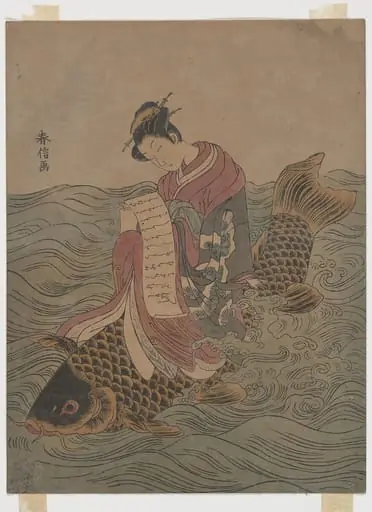
The Courtesan Writing from a Book from the series A Collection of Beautiful Women of the Yoshiwara
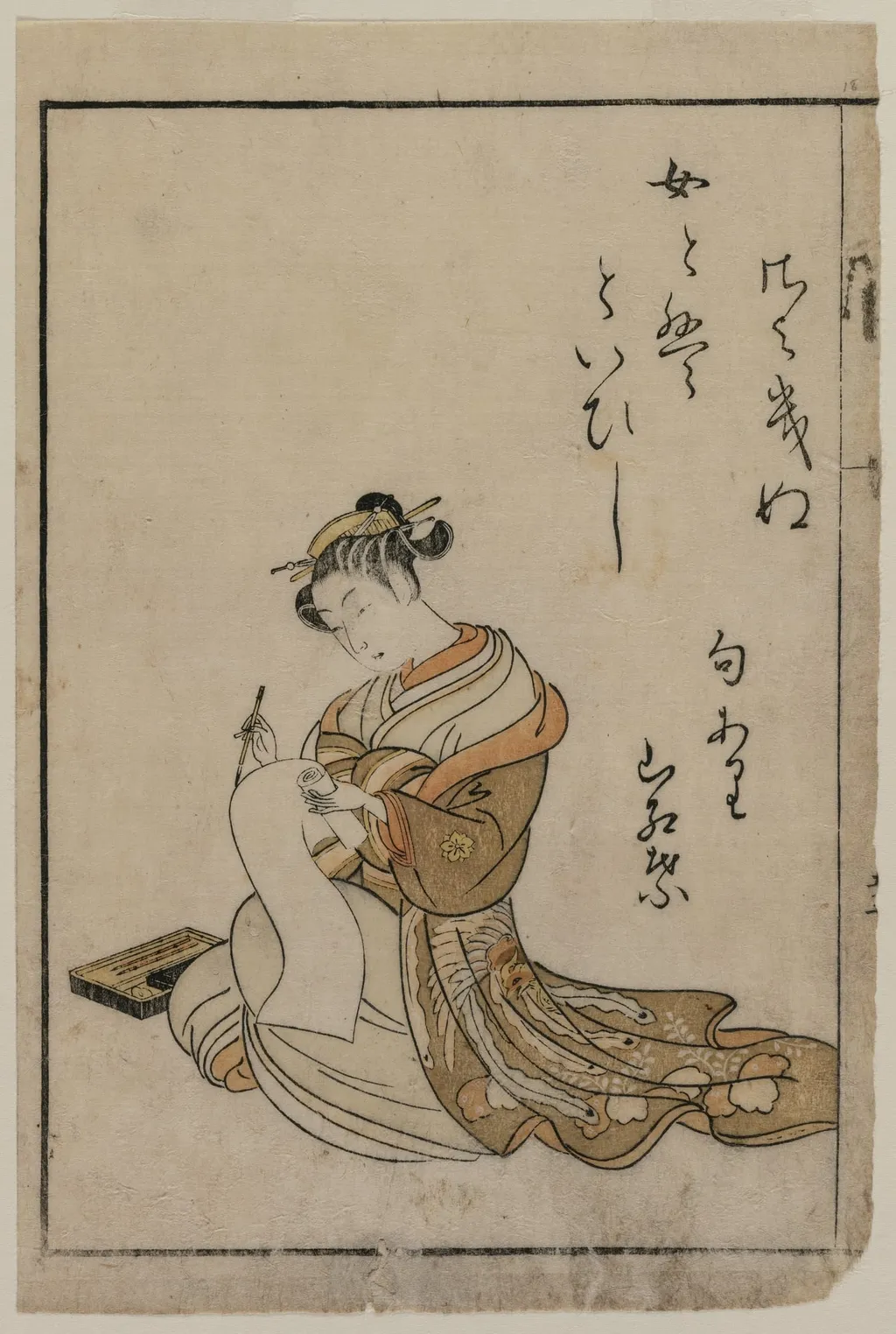
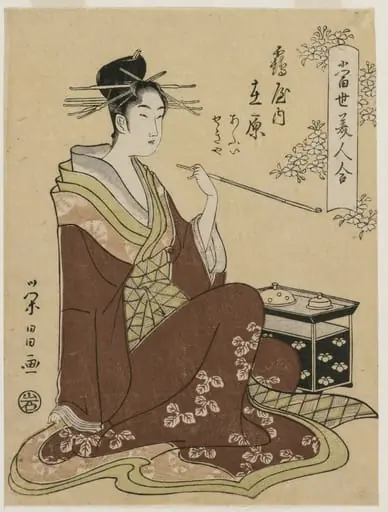
The Courtesan Writing from a Book from the series A Collection of Beautiful Women of the Yoshiwara is a print by the Romanticist artist Suzuki Harunobu. It dates from 1770 and is held in the collection of the Cleveland Museum of Art.
About this work
The woman is a courtesan, which was a common subject in Japanese art during this time, often depicted in scenes of everyday life.
The painting shows a woman writing from a book.
She's dressed in traditional Japanese clothing.
The woman is a courtesan, which was a common subject in Japanese art during this time, often depicted in scenes of everyday life.
The artist included many details in the scene, like the woman's hair and clothes.
These details give us a glimpse into what life was like in Japan during the Edo period.
You can learn more about this style by looking at the work of artist: Suzuki Harunobu (Japanese, 1724–1770).
Overview
Created in 1770 by the ukiyo‑e master Suzuki Harunobu, this woodblock print belongs to his series titled *A Collection of Beautiful Women of the Yoshiwara*. The image portrays a courtesan seated at a low table, poised to copy text from an open book. The work is part of the Cleveland Museum of Art’s collection and exemplifies the refined elegance of late‑Edo portraiture.
Subject & Meaning
The figure is a Yoshiwara courtesan, a professional entertainer whose lives were a frequent focus of Edo‑period visual culture. By showing her engaged in the quiet act of reading and writing, the print hints at the cultivated education and literary interests expected of high‑ranking pleasure‑district women, offering a glimpse into their private, intellectual pursuits beyond public performance.
Technique & Style
Harunobu employed multicolored woodblock printing (nishiki-e), a relatively new technology that allowed subtle gradations of hue and intricate line work. The delicate rendering of the silk kimono’s pattern, the glossy lacquered accessories, and the fine hairpins demonstrates his characteristic attention to detail and his skill in conveying texture within the flat plane of the print.
History & Provenance
The print was produced during the final years of Harunobu’s career, shortly before his death in 1770. It entered the Cleveland Museum of Art’s collection through a 20th‑century acquisition of Japanese prints, where it has been catalogued as a representative example of the artist’s late series on Yoshiwara beauties.
Context
In the mid‑18th century, the Yoshiwara district of Edo was a hub of fashion, literature, and art, inspiring numerous ukiyo‑e series that documented its inhabitants. Harunobu’s work reflects the period’s fascination with the interplay of beauty and literacy, aligning with contemporary trends that celebrated the refined tastes of urban pleasure‑seeking society.
Artist & collection

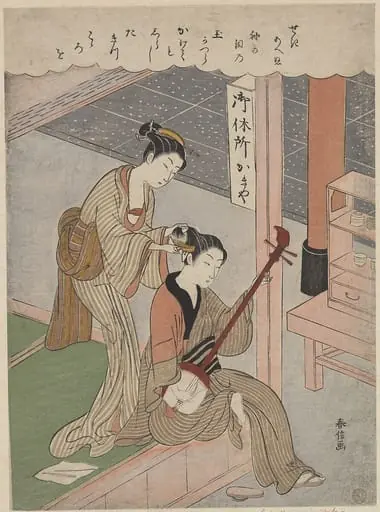
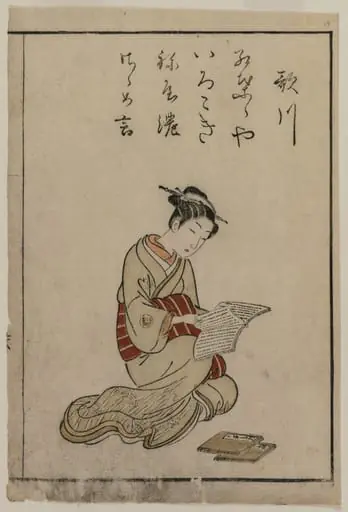 The Courtesan (From A Collection of Beautiful Women of the Yoshiwara)
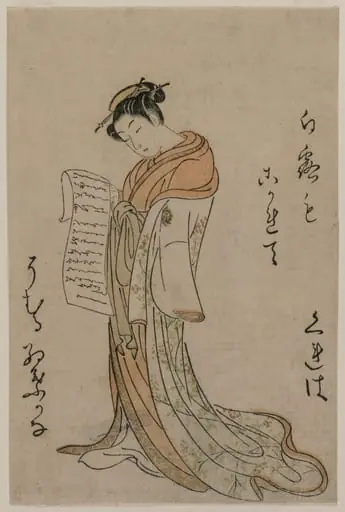 Kureha of Gakuiseya, from Selection of Beauties from the Pleasure Quarters
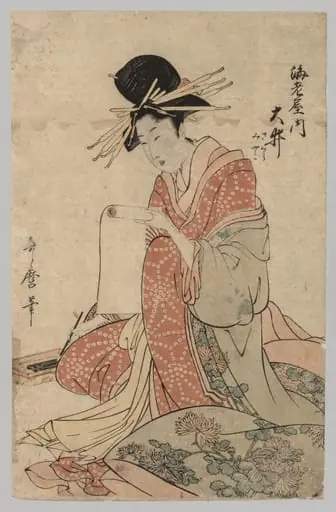 Woman of the Yoshiwara Reading Scroll
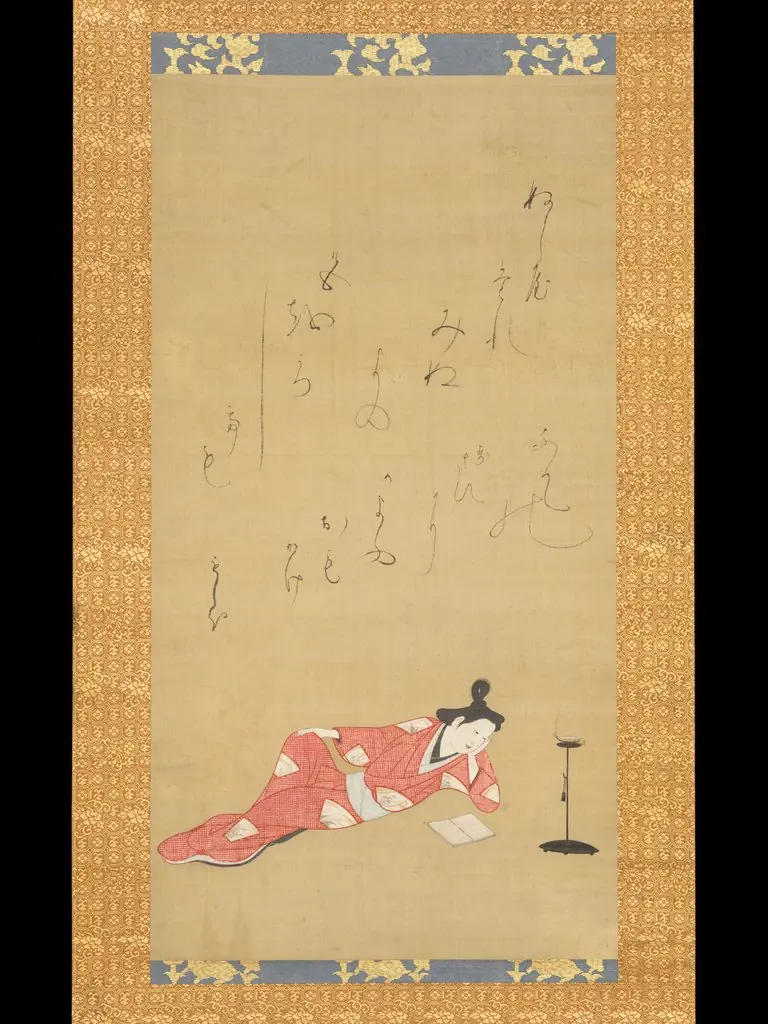 The Courtesan Moshio Reading a Book
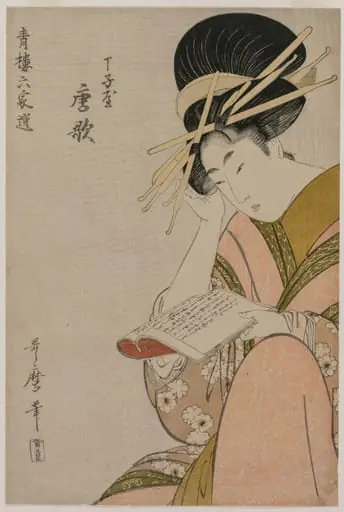 The Courtesan Karauta of Chojiya Reading a Book (from the series Six Authors of the Green Houses)
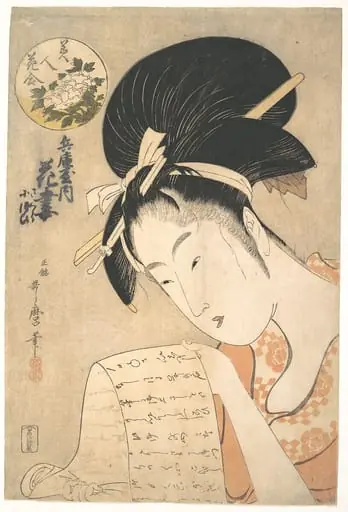 喜多川歌麿画 『美人花合』 「兵庫屋内 花妻図」|“The Courtesan Hanazuma Reading a Letter,” from the series Beauties Compared to Flowers (Bijin hana awase)
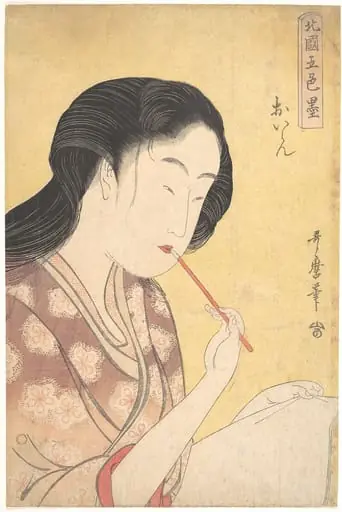 『北国五色墨』「おいらん」|“High-Ranking Courtesan” (Oiran), from the series Five Shades of Ink in the Northern Quarter (Hokkoku goshiki-zumi),
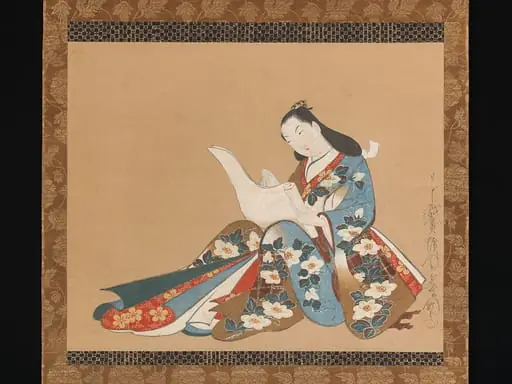 懐月堂度辰筆 文を書く遊女図|Courtesan Writing a Letter
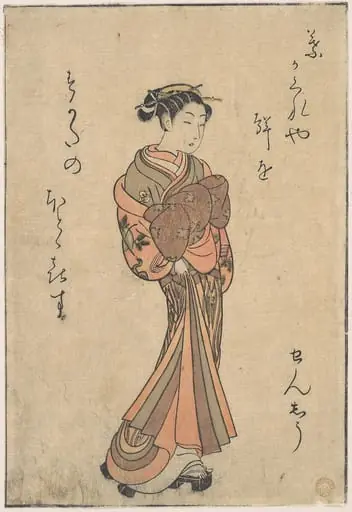 青楼美人合|The Courtesans, from the Series, "Seiro Bijin Awase Carver End Shigoro" (sic.)
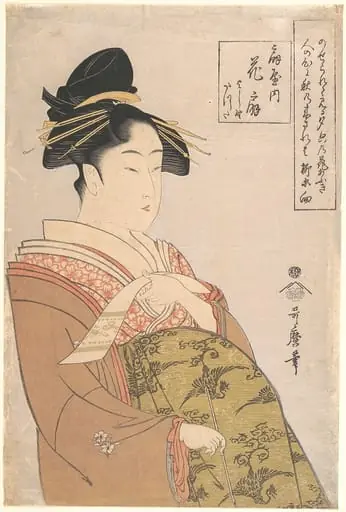 「扇屋内花扇図」|The Courtesan Hanaōgi of the Ōgiya Brothel in Yoshiwara (Ōgiya uchi Hanaōgi, Yoshino, Tatsuta)
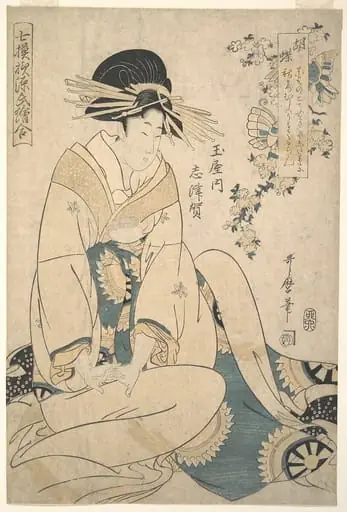 玉屋内 志津賀|A Courtesan
 The Courtesan Ariwara of the Tsuruya Seated by a Smoking Chest (From the series A Collection of Modern Beauties)