Artwork
Untitled
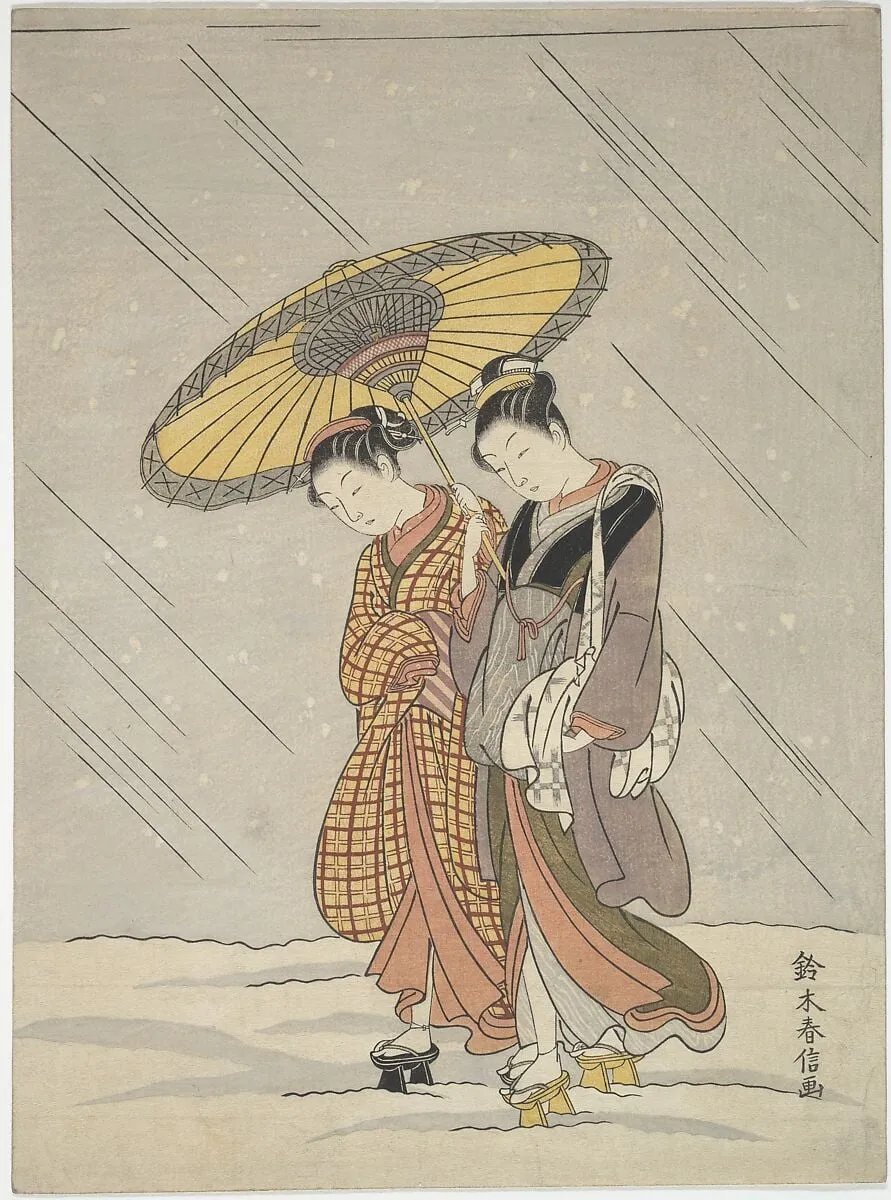
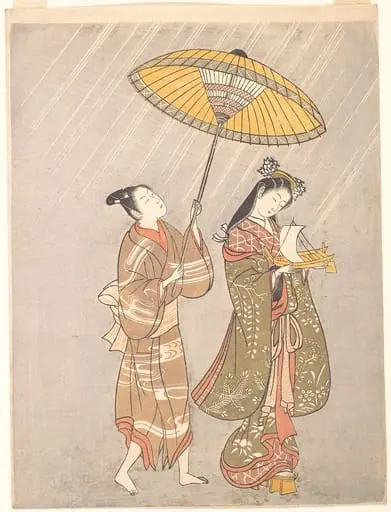
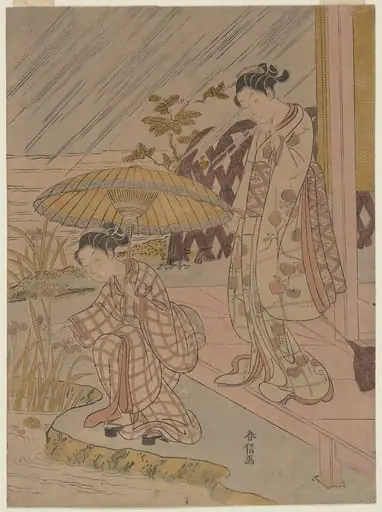
Untitled is an ink print by the Romanticist artist Suzuki Harunobu. It dates from 1768 and is held in the collection of the Metropolitan Museum of Art.
About this work
Overview
Executed in the nishiki-e style, the work utilizes full-color woodblock printing, a technique Harunobu helped pioneer and popularize during the Edo period.
Created in 1768, this untitled woodblock print by Suzuki Harunobu depicts two women navigating a rain shower. The composition centers on a figure in a vibrant kimono sheltering beneath a large red paper umbrella, with raindrops rendered as fine diagonal lines. A second woman follows closely, holding a smaller umbrella and a lantern. Executed in the nishiki-e style, the work utilizes full-color woodblock printing, a technique Harunobu helped pioneer and popularize during the Edo period. Prior to this innovation, ukiyo-e prints were typically monochromatic or limited to a few hand-applied colors. This piece exemplifies the artist's mastery in integrating delicate line work with rich, multi-block color registration to capture atmospheric effects and everyday elegance. The print marks a significant moment in the history of Japanese art, demonstrating the technical and aesthetic potential of polychrome printing. It reflects Harunobu's broader contribution to the ukiyo-e movement, shifting the genre toward more sophisticated depictions of contemporary life and seasonal moods.
Subject & Meaning
The composition focuses on two women navigating a gentle rain, emphasizing the elegance of ordinary activities. The contrast between the bright kimono, the red umbrella, and the soft illumination of the lantern conveys a sense of quiet intimacy and the subtle beauty found in everyday encounters.
Technique & Style
Harunobu employed the emerging nishiki-e method, one of the earliest fully colored woodblock techniques, allowing a broad palette beyond the limited hues of earlier prints. The delicate rendering of rain and the luminous quality of the lantern demonstrate his skill in using multiple blocks to achieve nuanced tonal variations.
History & Provenance
Produced during the late Edo period, the print reflects Harunobu’s pioneering role in advancing color printing in Japan. While specific ownership records are scarce, the work is recognized as part of his extensive output that helped define the aesthetic of mid‑18th‑century ukiyo-e.
Context
At the time of its creation, most Japanese prints were monochrome or featured only a few colors. Harunobu’s adoption of full‑color woodblock printing marked a significant shift, influencing contemporaries and expanding the visual possibilities for depicting urban life and its fleeting moments.
Artist & collection

 Amagoi Komachi|Komachi Praying for Rain
 Untitled
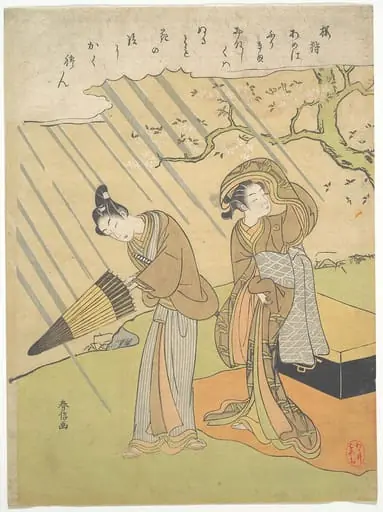 鈴木春信画 桜狩|Young Man and Woman Caught in the Rain while Enjoying Cherry Blossoms (Sakura-gari)
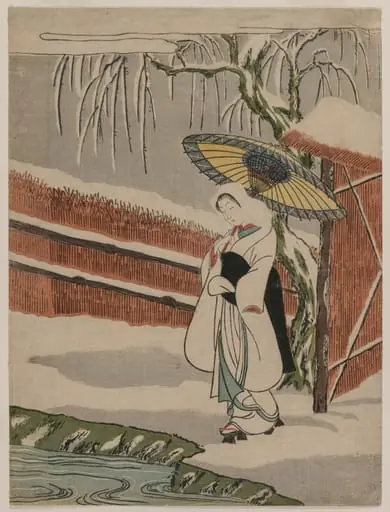 The Heron Maiden Standing Beneath a Willow Tree
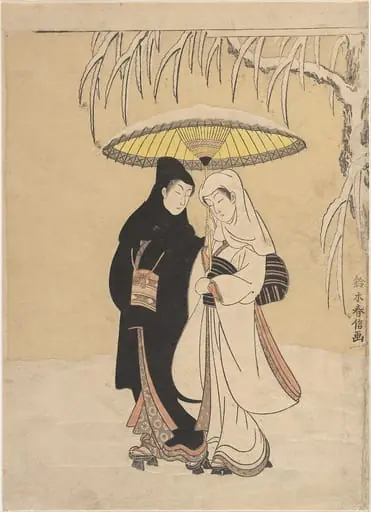 Untitled
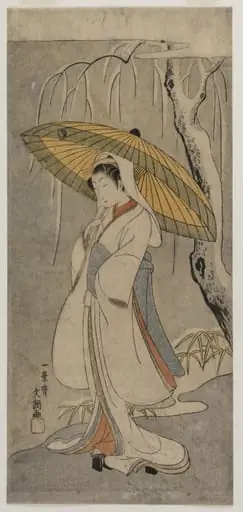 Segawa Kikunojo II as the Heron Maiden (from the series Ichimura Theater)
 Untitled
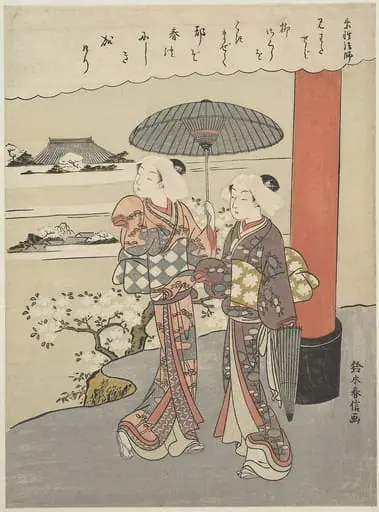 百人一首 素性法師|Poem by the Monk Sosei (act. 850-97)
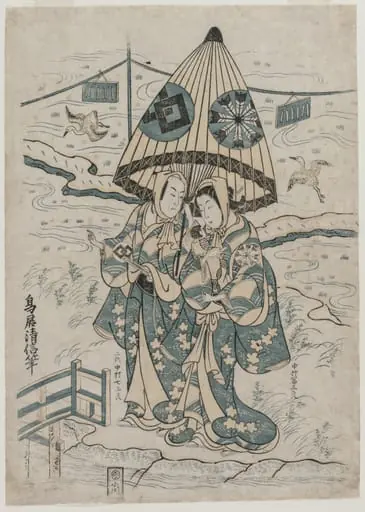 Nakamura Tomijuro and Nakamura Shichisaburo II as the Lovers Agemaki and Sukeroku
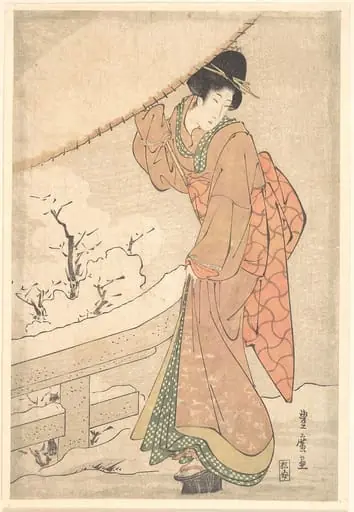 Untitled
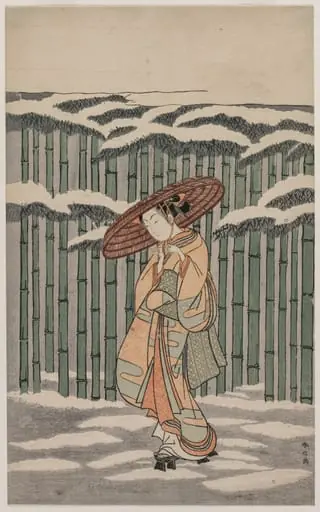 Passing the Bamboo Grove
 Kitchugi|Geisha of the Tachibana Street