Artwork
Woman and Maid Servant
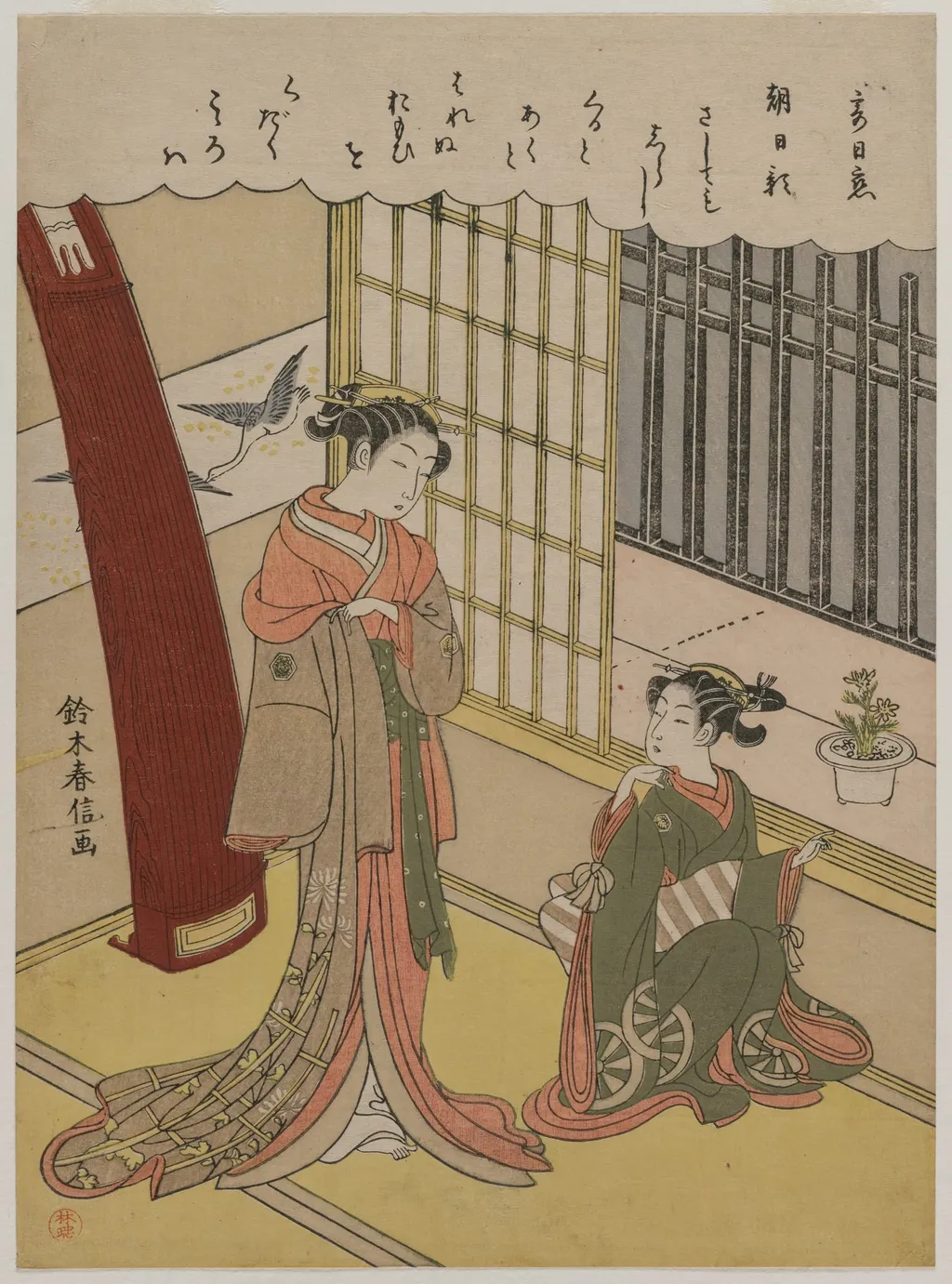
Woman and Maid Servant is a print by the Romanticist artist Suzuki Harunobu. It dates from 1764 and is held in the collection of the Cleveland Museum of Art.
About this work
The woman on the left is wearing a kimono with a long train and is holding a fan.
In this painting, two women are shown. The woman on the left is wearing a kimono with a long train and is holding a fan. She is standing in front of a window with a bird flying outside. The woman on the right is kneeling and holding a box. There is a plant in a pot next to her. The background is a room with a window and a wall. The colors are muted, with shades of brown, beige, and green. The overall atmosphere is peaceful and serene. The painting is a beautiful example of Japanese art from the late 18th century. Check out more works by Suzuki Harunobu.
Overview
Woman and Maid Servant, a print by Suzuki Harunobu (c. 1764), depicts a serene domestic scene featuring two women in a tranquil room. Held in The Cleveland Museum of Art's collection, it exemplifies late 18th-century Japanese aesthetics.
Subject & Meaning
The print contrasts two female figures: a woman of higher status, indicated by her long-trained kimono and fan, stands near a window observing a bird in flight, symbolizing freedom or the outside world. Conversely, the kneeling maid servant, accompanied by a plant and holding a box, embodies domestic duty and indoor life.
Technique & Style
Characterized by muted tones of brown, beige, and green, the work showcases Harunobu's restraint in color choice, contributing to its peaceful ambiance. The composition's simplicity and the use of negative space are typical of Japanese printmaking during this period.
History & Provenance
Created around 1764, the print is attributed to Suzuki Harunobu, a prominent figure in Japanese ukiyo-e woodblock printing. Its current location is The Cleveland Museum of Art, though detailed provenance prior to its acquisition is not specified here.
Context
Emerging from the Edo period, this work reflects the growing interest in depicting everyday life, particularly the lives of women, within Japanese art. It also highlights the social stratification of the time through the contrast between the two subjects.
Legacy
As part of Harunobu's oeuvre, Woman and Maid Servant contributes to the broader legacy of ukiyo-e in influencing both Japanese and Western art movements, notably for its serene and intimate portrayal of domestic scenes.
Artist & collection

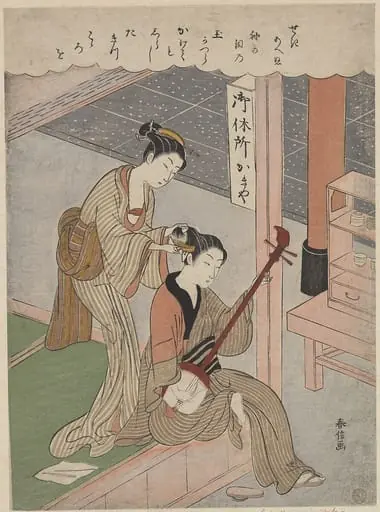
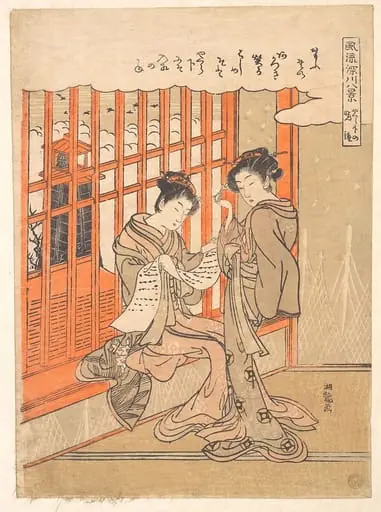 Untitled
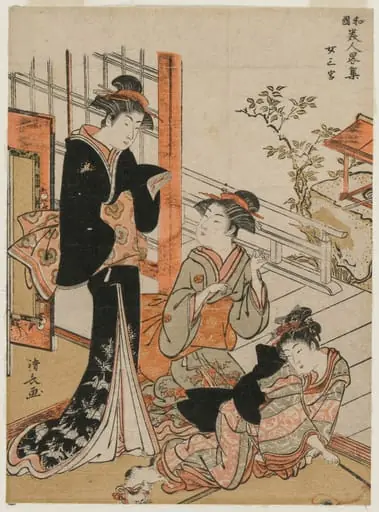 Three Women (from the series A Brief Collection of Japanese Beauties)
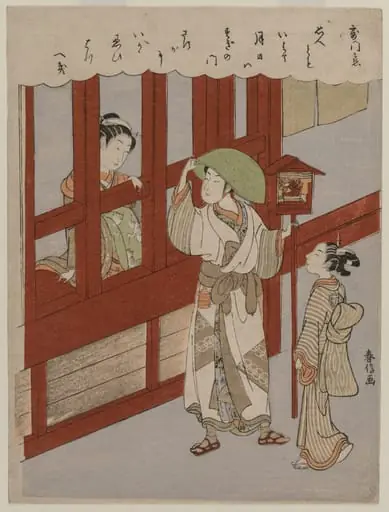 Love at the Brothel Gate
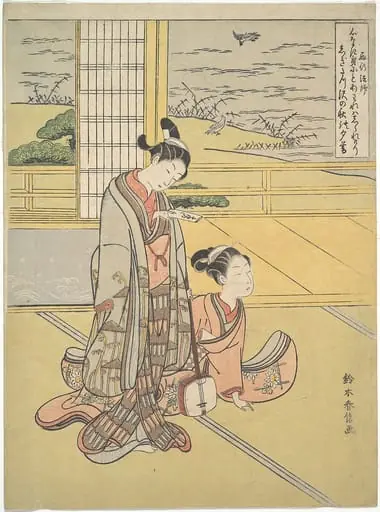 鈴木春信画 見立三夕 「西行法師」|A Young Man and Woman with a Shamisen; Monk Saigyō, from a series alluding to the Three Evening Poems (Sanseki waka)
 Untitled
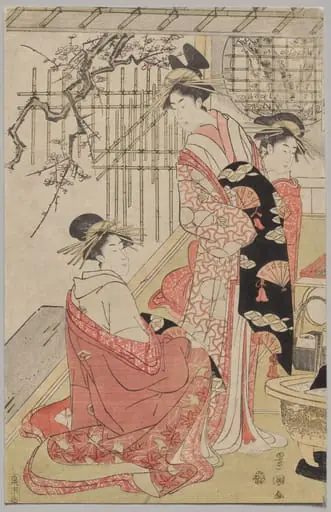 Courtesans of the Ōgiya on a Spring Outing
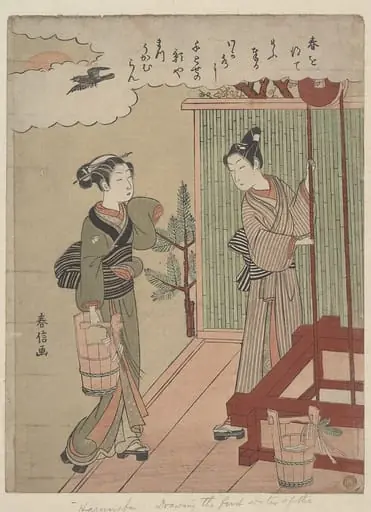 鈴木春信画 若水を汲む男女|Drawing the First Water of the New Year
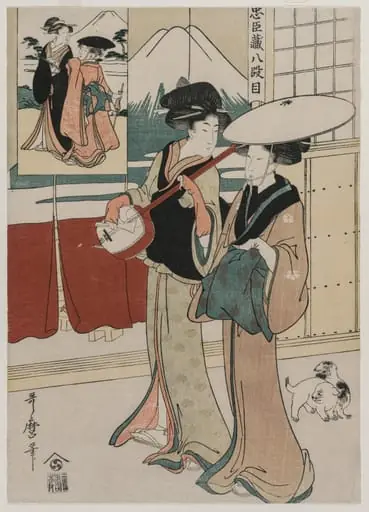 Chushingura: Act VIII of The Storehouse of Loyalty
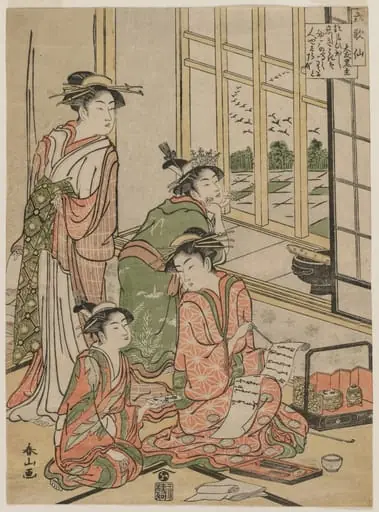 Courtesans at Leisure from the series The Six Immortal Poets
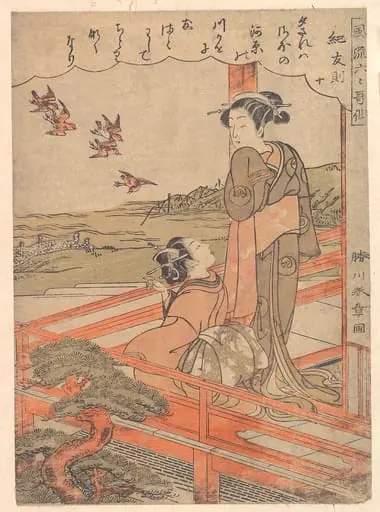 「風流六く歌仙紀友則 十」|“Two Young Women on a Verandah Watching Plovers,” from the series Stylish Six Poetic Immortals (Fūryū rokkasen: Ki no Tomonori, jū)
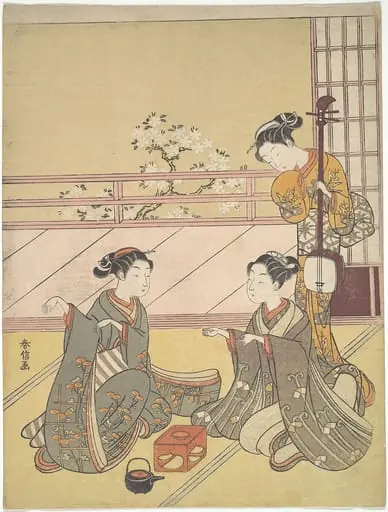 Untitled
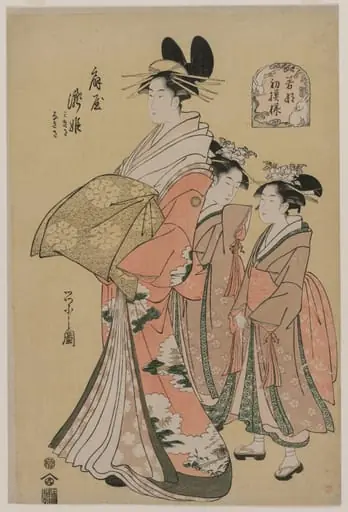 The Courtesan Takihime and Attendants (from the series New Patterns of Young Greens)