Artwork
百人一首 天智天皇|Sympathy
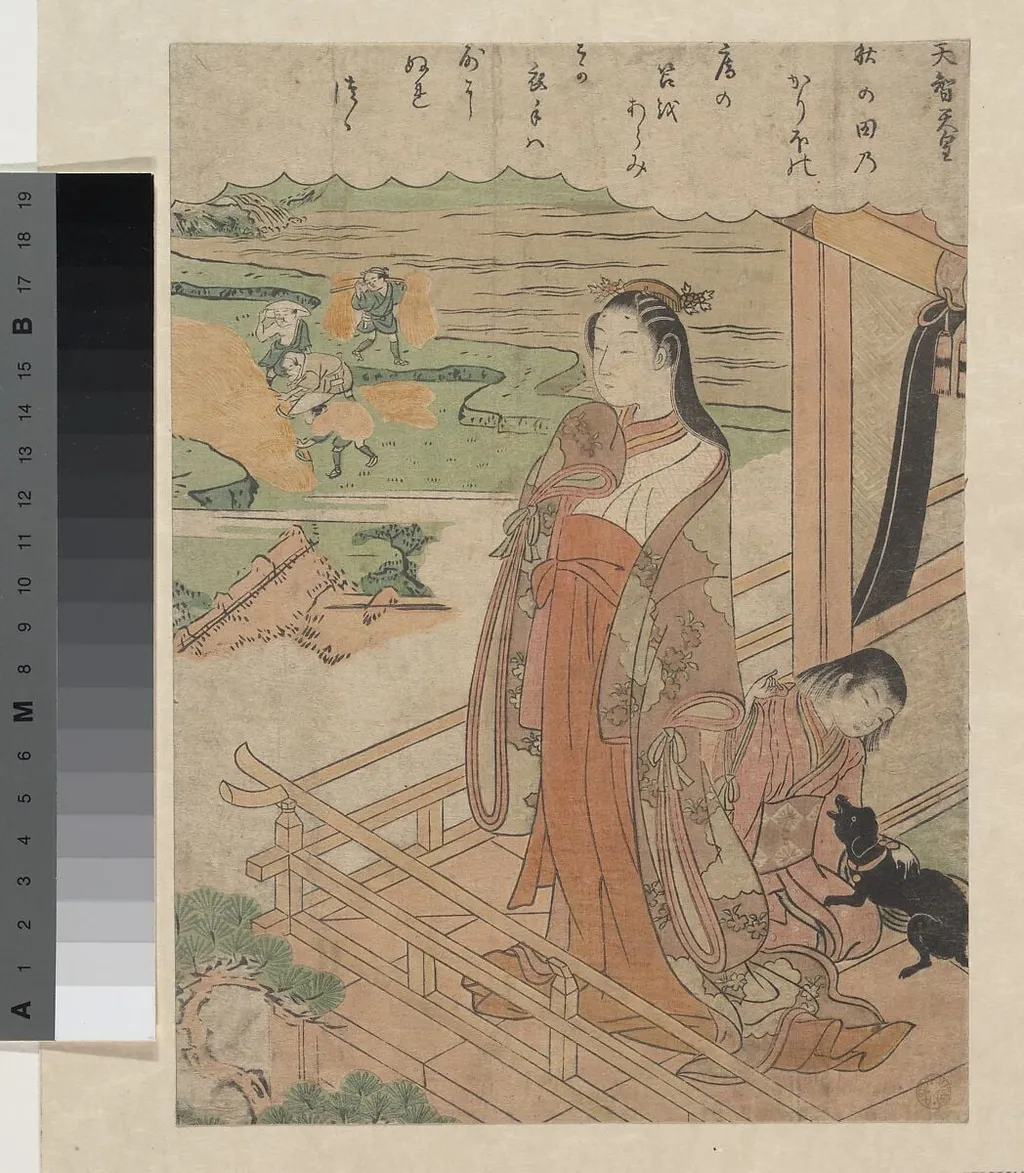
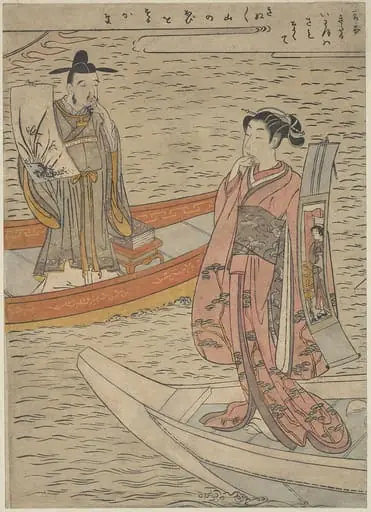
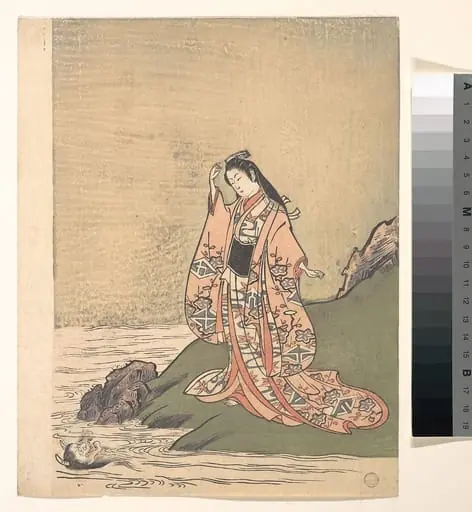
百人一首 天智天皇|Sympathy is an ink print by the Romanticist artist Suzuki Harunobu. It dates from 1768 and is held in the collection of the Metropolitan Museum of Art.
About this work
If you're interested in learning more about this style, you might want to check out the Romanticism movement.
This painting shows a woman in a kimono standing on a balcony, looking out at a landscape. She's holding a fan and has a dog by her side. In the background, there are hills and a body of water.
The woman's kimono is decorated with flowers, and she has a small crown on her head. The dog is black and looks like it's barking. The landscape in the background is peaceful, with a few trees and hills.
The painting is done in a style that's reminiscent of Japanese art from the 18th century. If you're interested in learning more about this style, you might want to check out the Romanticism movement.
Overview
Suzuki Harunobu’s woodblock print, dated around 1768, is part of the Metropolitan Museum of Art’s collection. Executed with ink and color on paper, the work exemplifies the ukiyo-e tradition of the late Edo period, presenting a domestic scene rendered in delicate line and subtle hues.
Subject & Meaning
The image portrays a woman in a floral kimono standing on a balcony, holding a fan while a small black dog accompanies her. She gazes outward toward a tranquil landscape of hills and water, suggesting a moment of contemplation or longing within an interior setting.
Technique & Style
Harunobu employs the multicolor woodblock technique (nishiki-e), combining fine carving with layered pigments to achieve nuanced patterns on the kimono and soft atmospheric effects in the background. The composition balances foreground detail with a simplified, almost poetic rendering of nature, characteristic of mid‑18th‑century ukiyo‑e.
History & Provenance
Created in the late 1760s, the print reflects Harunobu’s mature period, when he was renowned for his elegant depictions of courtly and everyday subjects. The piece entered the Metropolitan Museum of Art’s collection through acquisition in the 20th century, where it remains catalogued under the title “百人一首 天智天皇|Sympathy.”
Artist & collection

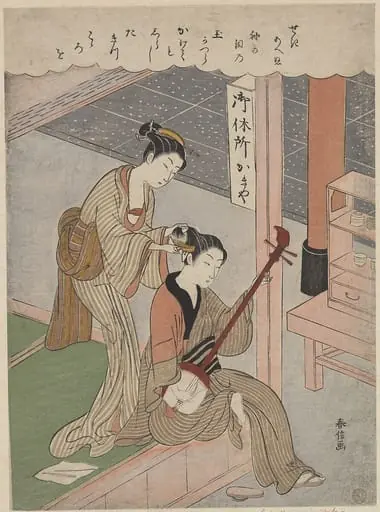
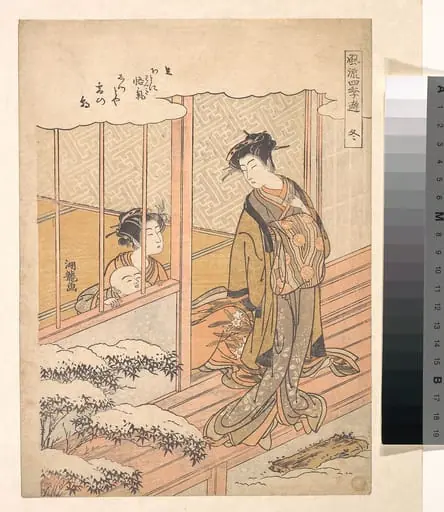 Untitled
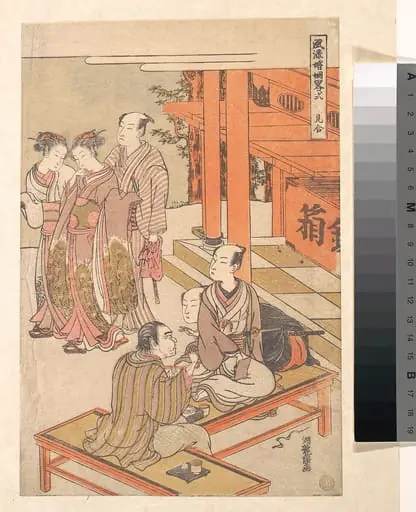 Untitled
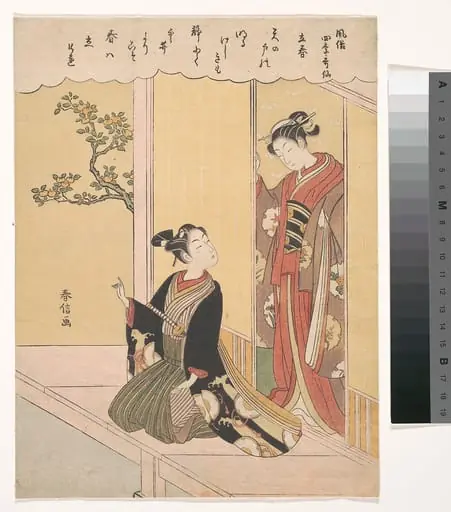 鈴木春信画「風俗四季歌仙 立春」|The First Day of Spring (Risshun), from the series Fashionable Poetic Immortals of the Four Seasons (Fūzoku shiki Kasen)
 Untitled
 Untitled
 Untitled
 Untitled
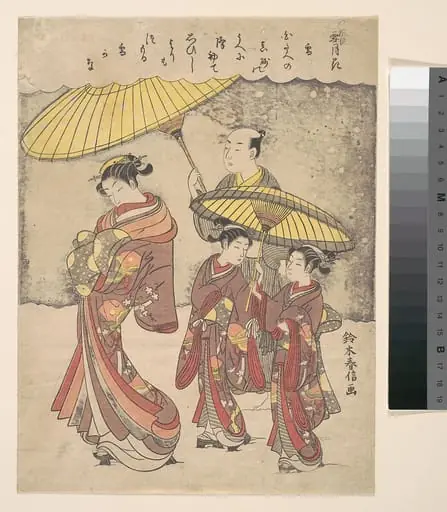 Yuki|雪月花 雪|Snow
 Untitled
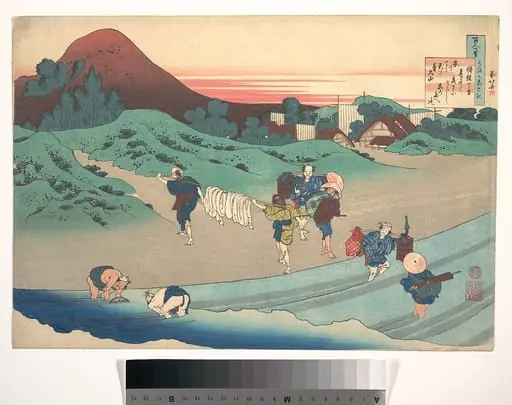 百人一首 うはかゑとき 持統天皇|Poem by Jitō Tenno (Empress Jitō), from the series One Hundred Poems Explained by the Nurse (Hyakunin isshu uba ga etoki)