Artwork
青楼美人合|Two Girls Play the Finger Game of Kitsume Ken
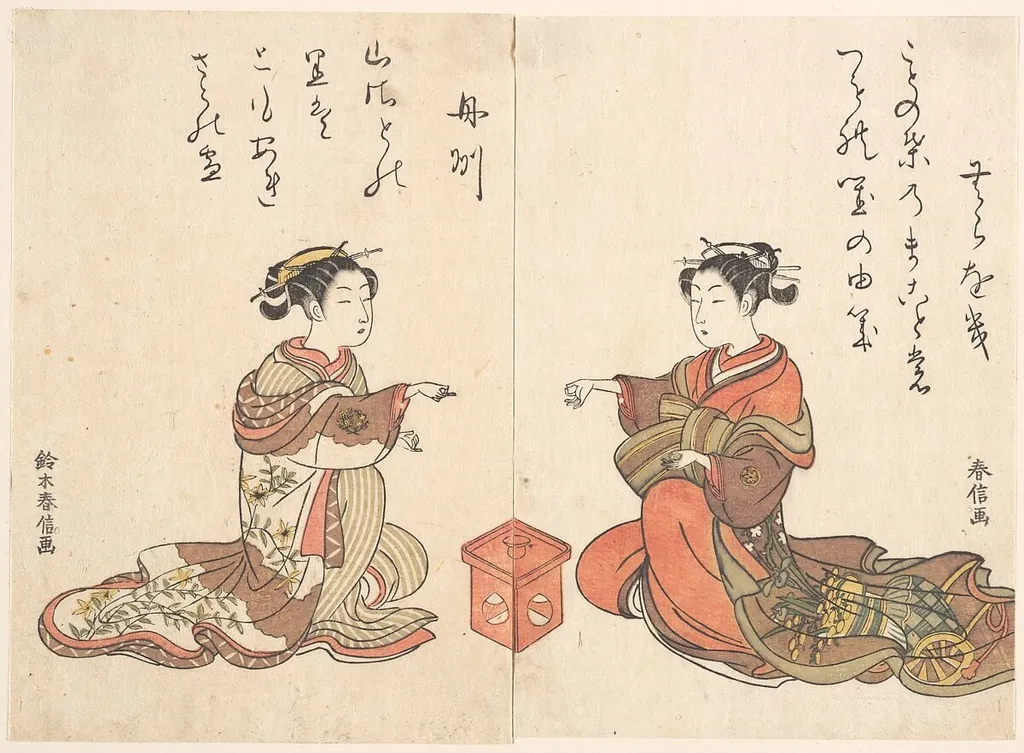
青楼美人合|Two Girls Play the Finger Game of Kitsume Ken is an ink print by the Baroque artist Suzuki Harunobu. It dates from 1748 and is held in the collection of the Metropolitan Museum of Art.
About this work
Overview
This diptych by Suzuki Harunobu consists of two woodblock prints on paper, each depicting a young woman engaged in a quiet, intimate moment.
This diptych by Suzuki Harunobu consists of two woodblock prints on paper, each depicting a young woman engaged in a quiet, intimate moment. Created around 1748, the work belongs to the ukiyo-e tradition of Edo-period Japan. The prints are rendered in ink and color, with minimal background detail, emphasizing the figures and their interaction. The Metropolitan Museum of Art holds the pair as part of its collection of early color prints.
Subject & Meaning
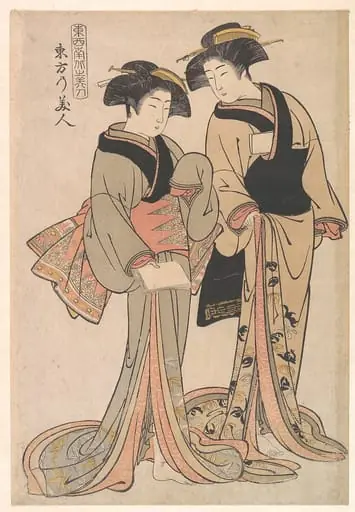
The two women are engaged in a finger game known as kitsume ken, a traditional pastime involving concealed objects and guesswork. One holds a small red box, while the other gestures toward it, suggesting anticipation or challenge. The scene captures a private, domestic moment rather than a public spectacle, reflecting the refined leisure of urban courtesans. The game implies playful intimacy, common in depictions of female companionship in Edo-period art.
Technique & Style
Harunobu employs delicate lines and flat, unmodulated areas of color typical of early nishiki-e prints. The kimonos feature intricate, bold patterns rendered with precision, contrasting with the plain background that isolates the figures. Hairpins and fabric folds are rendered with subtle detail, enhancing realism without depth or shadow. The composition is balanced and restrained, prioritizing elegance over dramatic effect.
History & Provenance
Produced during the 1740s, this diptych emerged at the dawn of full-color woodblock printing in Edo. Harunobu was among the first to popularize multi-block techniques for subtle color gradations. The prints were likely distributed as affordable art for urban elites. The Metropolitan Museum of Art acquired the pair in the 20th century, preserving them as early examples of refined genre printmaking.
Context
In mid-18th century Edo, depictions of courtesans and female leisure were common in ukiyo-e, reflecting the city’s vibrant pleasure districts. Harunobu’s focus on quiet, everyday moments distinguished his work from more overtly theatrical scenes. These prints catered to a growing literate middle class seeking aesthetic pleasure in domestic tranquility, aligning with broader cultural shifts toward refined, intimate subjects.
Legacy
Harunobu’s use of color and composition in works like this helped define the aesthetic of later ukiyo-e artists. His ability to convey emotion through subtle gesture and pattern influenced generations of printmakers. Though modest in scale, this diptych exemplifies the quiet sophistication of early color prints, contributing to the global recognition of Japanese woodblock art as a distinct visual language.
Artist & collection

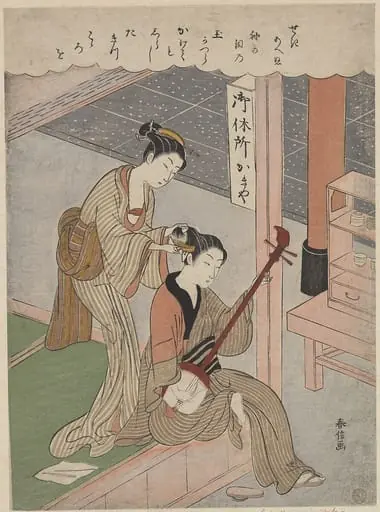
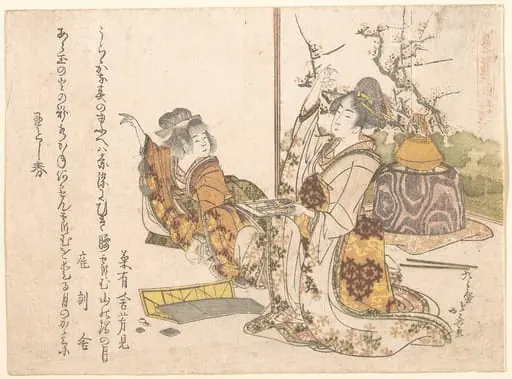 Untitled
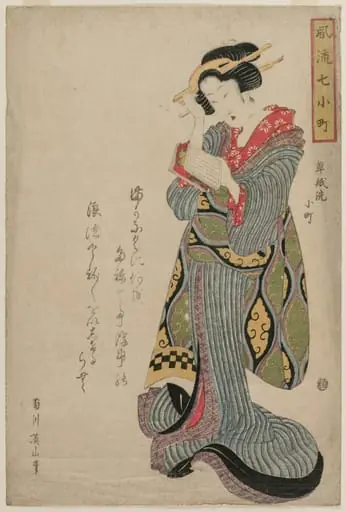 Komachi Washes the Book (from the series Seven Elegant Episodes from the Life of the Poetess Ono no Komachi)
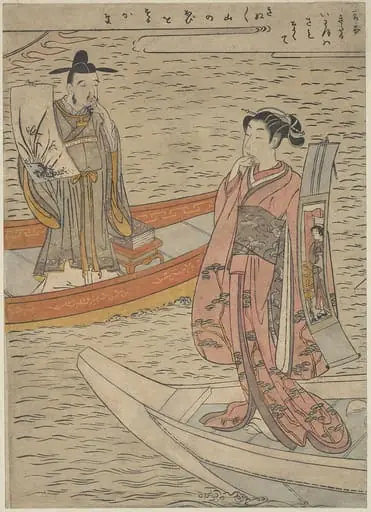
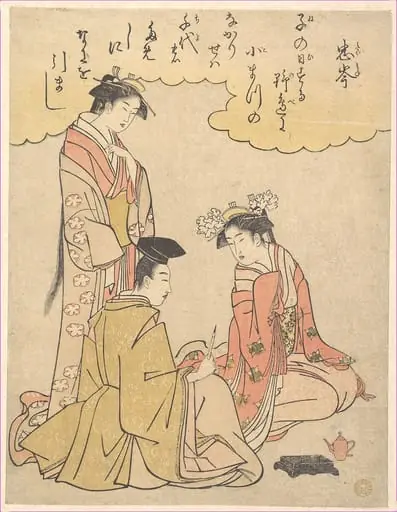 礫川亭永理 (鳥橋斎栄里)画 壬生忠岑の見立絵|Courtier and Two Ladies of the Court, with a Poem by Mibu no Tadamine
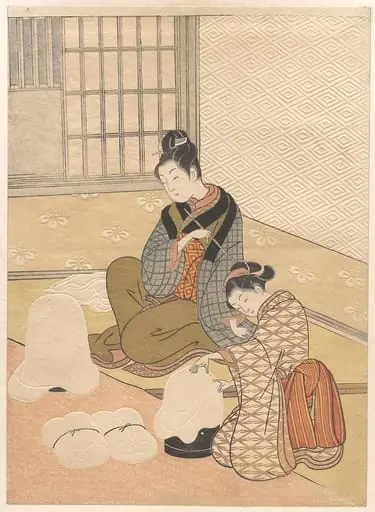
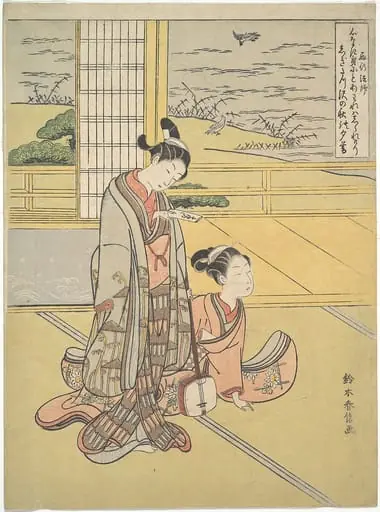 鈴木春信画 見立三夕 「西行法師」|A Young Man and Woman with a Shamisen; Monk Saigyō, from a series alluding to the Three Evening Poems (Sanseki waka)
 Untitled
 Untitled
 Untitled
 Untitled
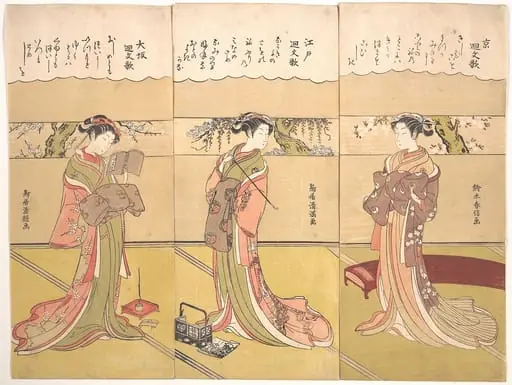 回文歌 京 大阪 江戸|Palindromic Poems (Kaibunka): Kyo
 Untitled