Artwork
Untitled
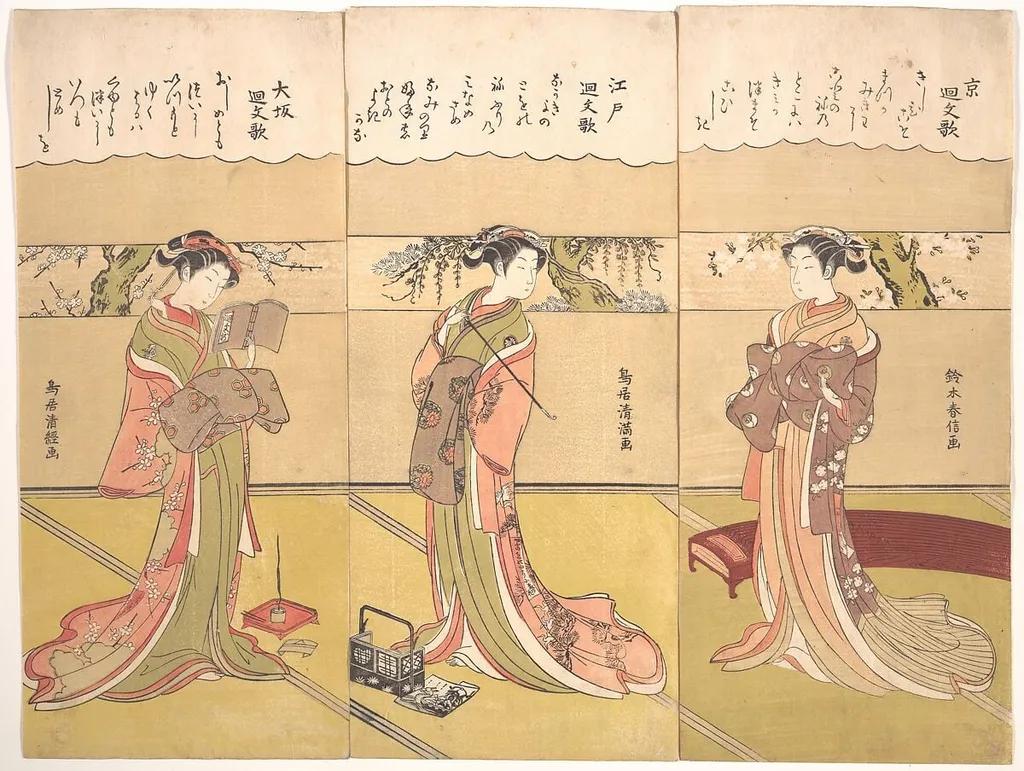
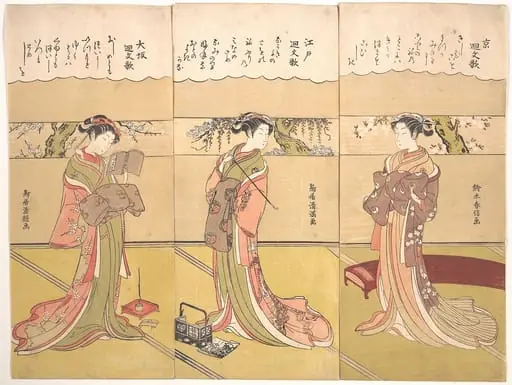
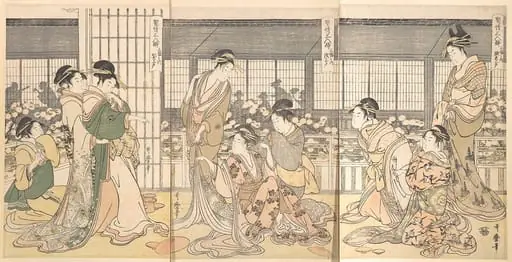
Untitled is an ink print by the Romanticist artist Torii Kiyotsune. It dates from 1768 and is held in the collection of the Metropolitan Museum of Art.
About this work
Overview
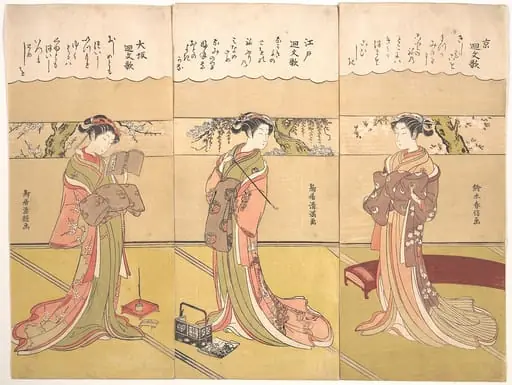
This print is the left panel of a triptych by Torii Kiyotsune, dated around 1768. Executed in ink and color on paper, it belongs to the ukiyo-e tradition of Japanese woodblock printing. The work is part of The Metropolitan Museum of Art’s collection and reflects the refined aesthetic of late Edo-period commercial prints, emphasizing elegance over dramatic narrative.
Subject & Meaning
The inclusion of poetic text at the top implies a connection to literary culture, possibly evoking seasonal themes or courtly ideals of grace and restraint.
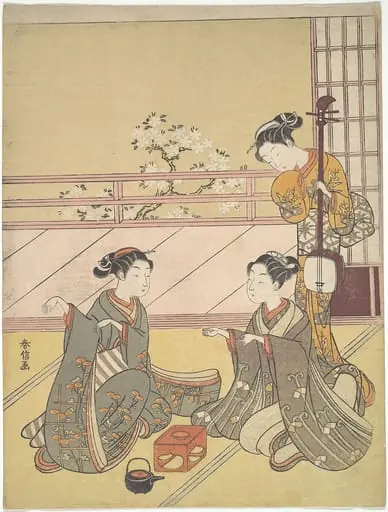
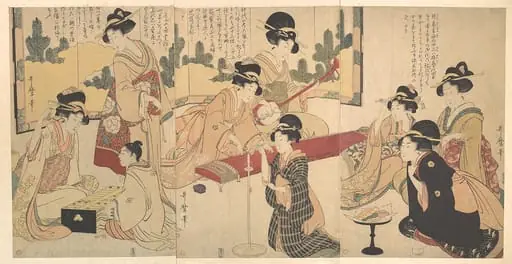
Three women, dressed in elaborately patterned robes and wearing tall black hats, are depicted in quiet, interior settings. Each holds a different object—a fan, a scroll, or a basket—suggesting activities tied to literary or domestic refinement. The inclusion of poetic text at the top implies a connection to literary culture, possibly evoking seasonal themes or courtly ideals of grace and restraint.
Technique & Style
Kiyotsune employed bold, clean outlines and flat areas of soft color—reds, greens, and browns—to create harmony across the composition. The background features minimal detail: faint trees and a horizontal band of text. The figures are rendered with subtle variations in posture and gesture, avoiding symmetry to suggest individuality while maintaining a balanced, decorative rhythm characteristic of the Torii school.
History & Provenance
Created during the late 1760s, this triptych was likely produced for the urban market in Edo, where woodblock prints were widely collected. The Metropolitan Museum of Art acquired the print as part of its broader collection of Japanese prints, preserving it as an example of Torii Kiyotsune’s contribution to the genre during a period of stylistic transition in ukiyo-e.
Context
Kiyotsune worked within the Torii studio, known for its association with kabuki theater posters and elegant depictions of women. This triptych diverges from theatrical subjects, instead focusing on refined, non-narrative scenes of women in private moments. Such works reflect a growing interest in domestic serenity and literary culture among Edo’s urban elite during the mid-Edo period.
Legacy
Though less widely known than contemporaries like Utamaro, Kiyotsune’s prints contributed to the evolution of bijin-ga, or pictures of beautiful women. His restrained palette and emphasis on compositional balance influenced later artists who sought to depict quiet, introspective moments rather than overt spectacle, helping to broaden the expressive range of ukiyo-e.
Artist & collection


 Untitled
 Untitled
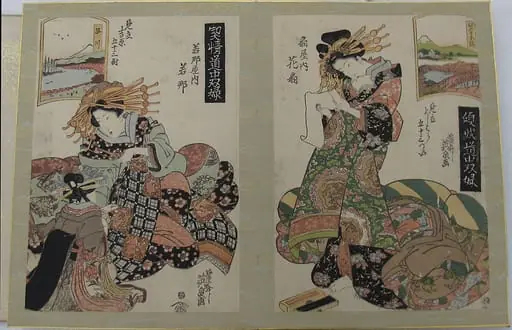 「傾城道中双六 見立よしはら五十三つい」|Album of prints from the series A Tōkaidō Board Game of Courtesans, Fifty-three Pairings in the Yoshiwara (Keisei dōchū sugoroku, Mitate Yoshiwara gojūsan tsui)
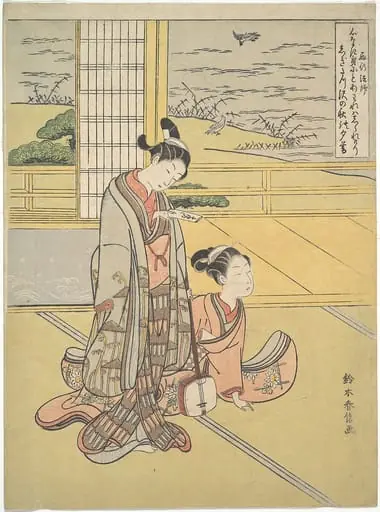 鈴木春信画 見立三夕 「西行法師」|A Young Man and Woman with a Shamisen; Monk Saigyō, from a series alluding to the Three Evening Poems (Sanseki waka)
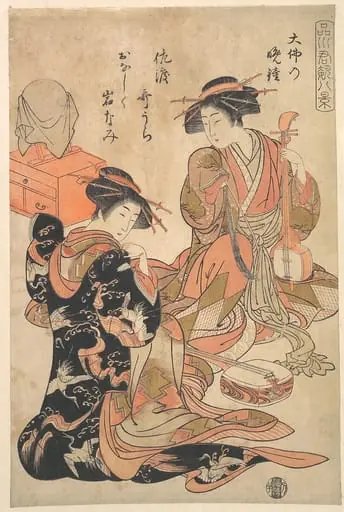 Daibutsu no bansho|Vesper Bell of the Temple of Great Buddha
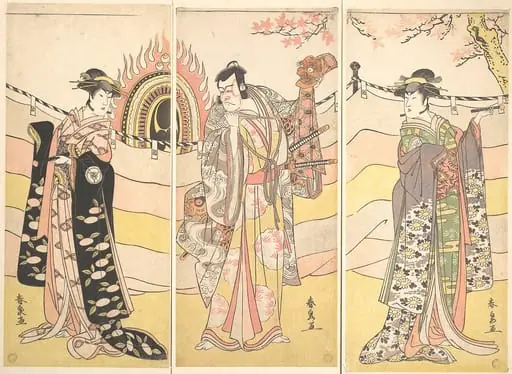 Untitled
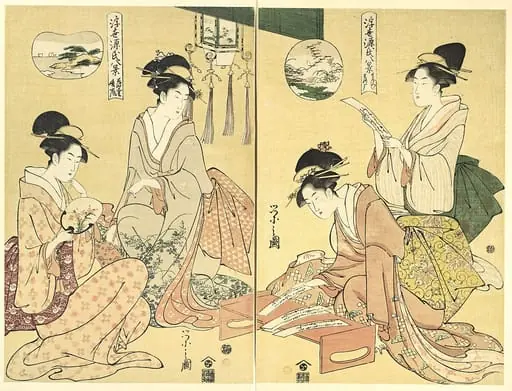 鳥文斎栄之画 「浮世源氏八景 幻 落雁 薄雲 晴嵐」|Spirit Summoner; Wild Geese Returning Home (Maboroshi; Rakugan) (right) and A Thin Veil of Clouds; Clearing Weather (Usugumo; Seiran) (left), from the series Eight Views of The Tale of Genji in the Floating World (Ukiyo Genji hakkei)
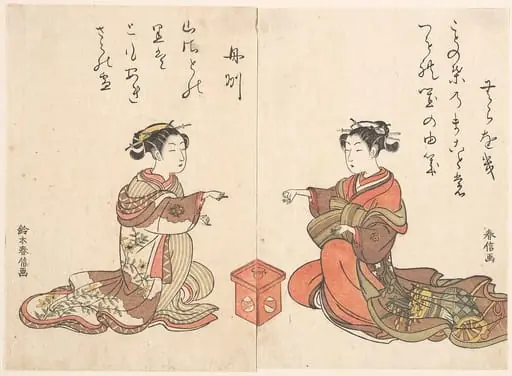 青楼美人合|Two Girls Play the Finger Game of Kitsume Ken
 契情三人酔 三幅之内 腹立上戸 泣上戸 笑上戸|Three Intoxicated Courtesans