Artwork
Untitled
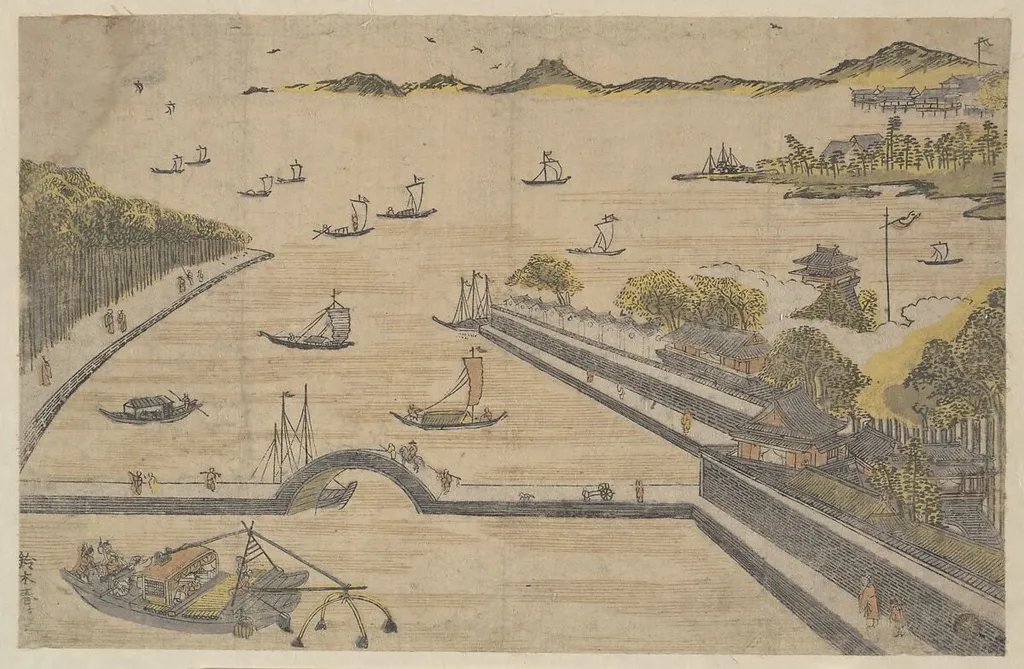
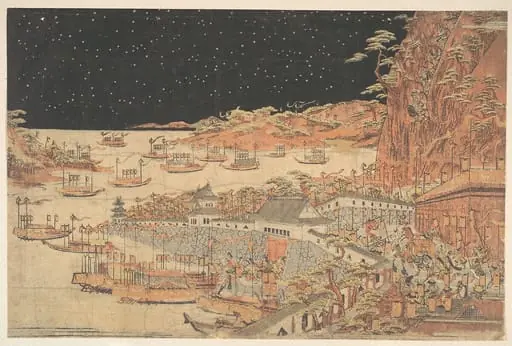
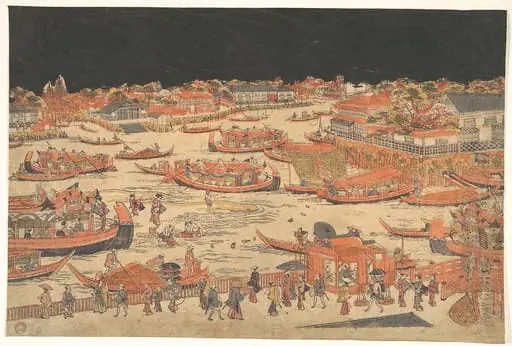
Untitled is an ink print by the Romanticist artist Suzuki Harunobu. It dates from 1764 and is held in the collection of the Metropolitan Museum of Art.
About this work
Overview
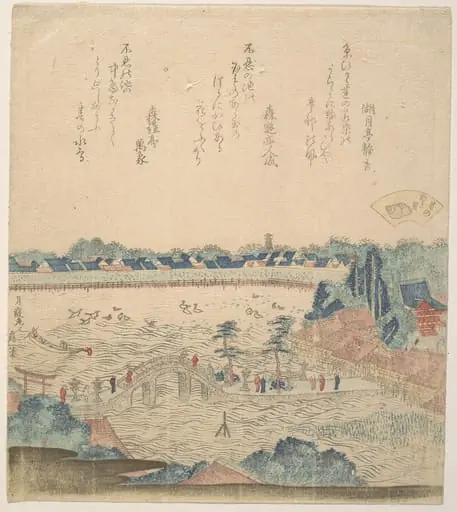
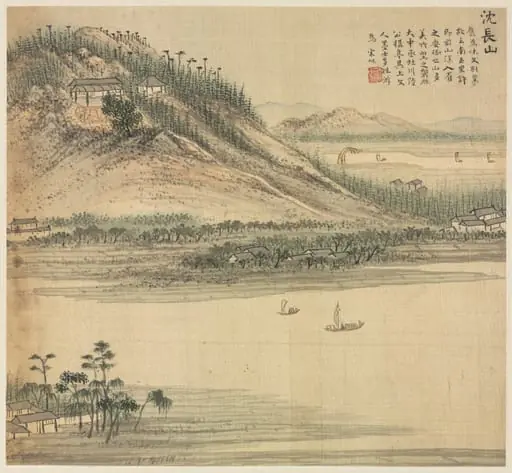
This woodblock print, dated around 1764, is attributed to Suzuki Harunobu and belongs to the ukiyo-e tradition. Executed in ink and color on paper, it depicts a tranquil riverscape with boats, a curved bridge, and distant hills. The work is part of the collection at The Metropolitan Museum of Art, where it exemplifies early full-color printing techniques that emerged in Edo-period Japan.
Subject & Meaning
The composition invites contemplation of harmony between human presence and natural topography, typical of Harunobu’s gentle, observational style.
The scene captures everyday life along a waterway, with vessels transporting people and goods beneath a long, arched bridge lined with modest structures and foliage. The quiet activity suggests a routine, unremarkable moment rather than a ceremonial or dramatic event. The composition invites contemplation of harmony between human presence and natural topography, typical of Harunobu’s gentle, observational style.
Technique & Style
Harunobu employed fine, layered lines to construct subtle tonal variations through cross-hatching, avoiding bold outlines. Colors are applied in soft, translucent washes, enhancing the atmospheric quality of the scene. The delicate handling of ink and pigment creates a sense of lightness, as if the landscape hovers between reality and memory, a hallmark of his refined aesthetic.
History & Provenance
Produced during the mid-1760s, this print reflects the early development of nishiki-e, or full-color woodblock prints, which became commercially viable around this time. It entered The Metropolitan Museum of Art’s collection through documented acquisitions, likely from early 20th-century Japanese art dealers, preserving its original condition and historical context.
Context
Harunobu’s work emerged during a period when ukiyo-e shifted from monochrome to polychrome prints, catering to a growing urban middle class. His landscapes, though less common than his figures, reveal a broader interest in everyday environments. This print aligns with contemporary trends favoring intimate, lyrical scenes over dramatic narratives or kabuki actors.
Legacy
Though not as widely recognized as his portraits, this print illustrates Harunobu’s contribution to expanding ukiyo-e’s thematic range. His use of subtle color and delicate line work influenced later artists who sought to convey mood through restraint rather than spectacle, helping to shape the evolution of Japanese printmaking beyond commercial subjects.
Artist & collection

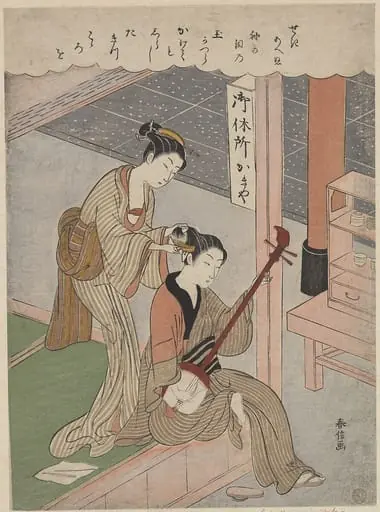
 Untitled
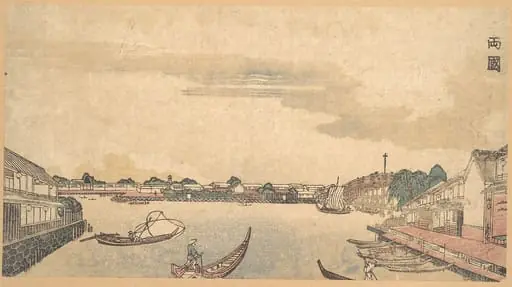 Untitled
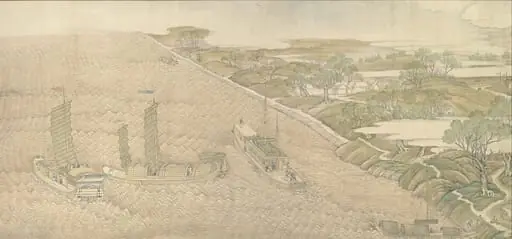 清 徐揚等 乾隆南巡圖, 第四卷﹕黃淮交流|The Qianlong Emperor's Southern Inspection Tour, Scroll Four: The Confluence of the Huai and Yellow Rivers (Qianlong nanxun, juan si: Huang Huai jiaoliu)
 Untitled
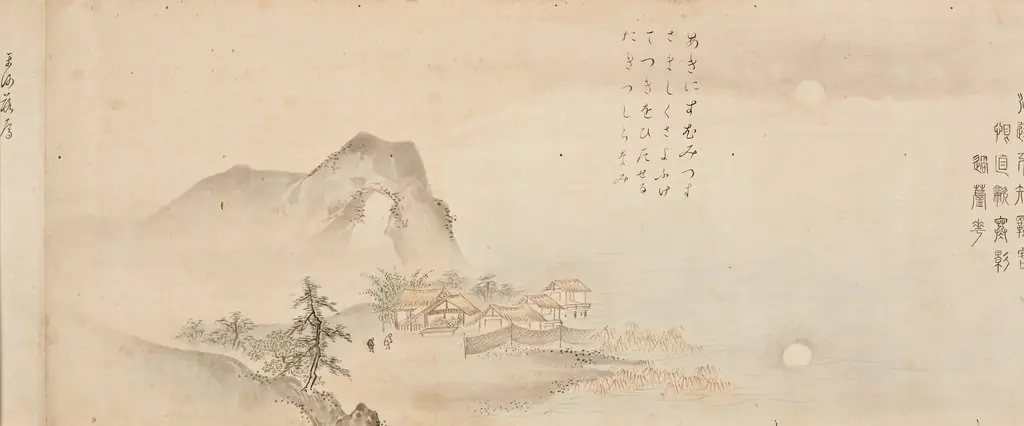 Eight Views of the Xiao and Xiang Rivers
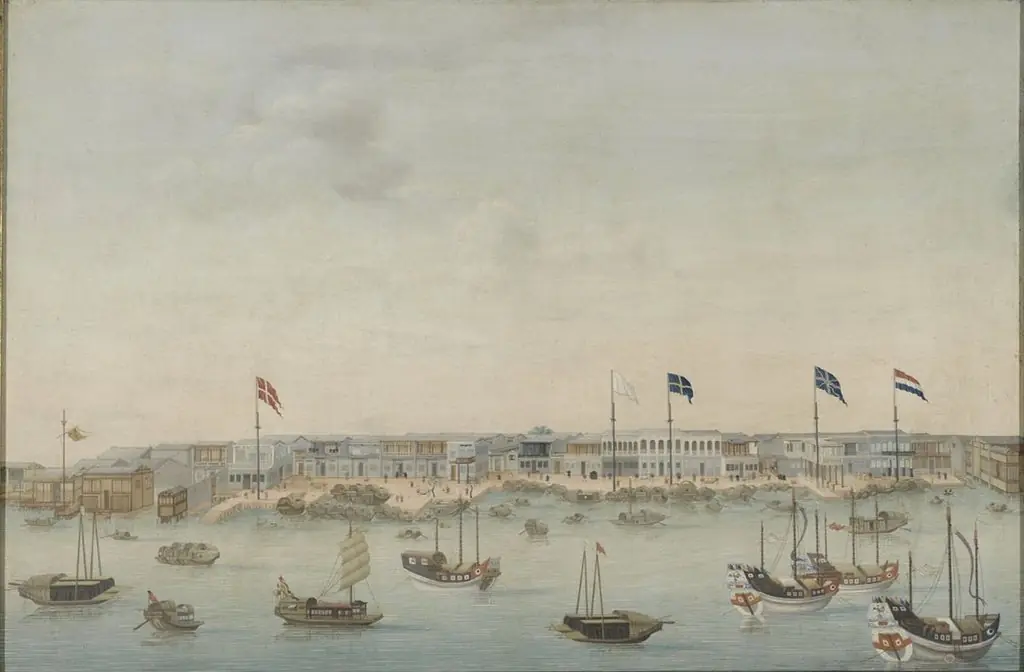 Drie gezichten op de Parelrivier: Kanton, Macao, Whampoa
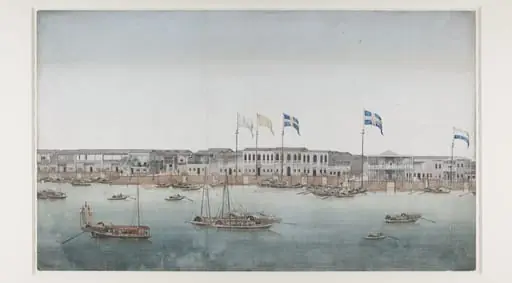 a view of the Canton waterfront
 Untitled
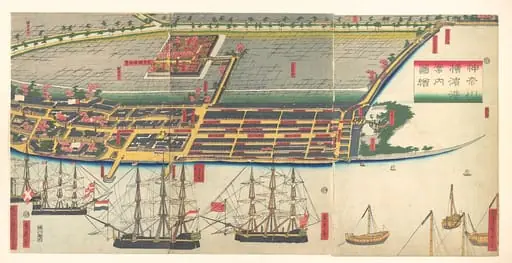 Kanagwa Yokohama minato...zue|Pictorial Guide to Yokohama Harbor
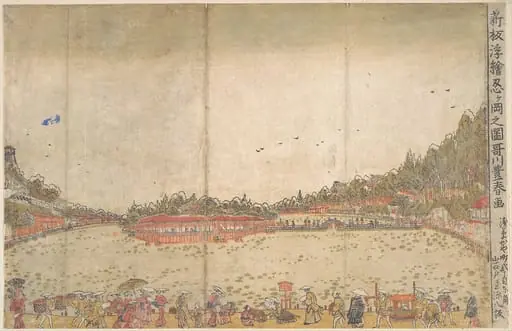 新板浮絵忍ヶ岡之圖|Perspective Print: Shinobazu Pond
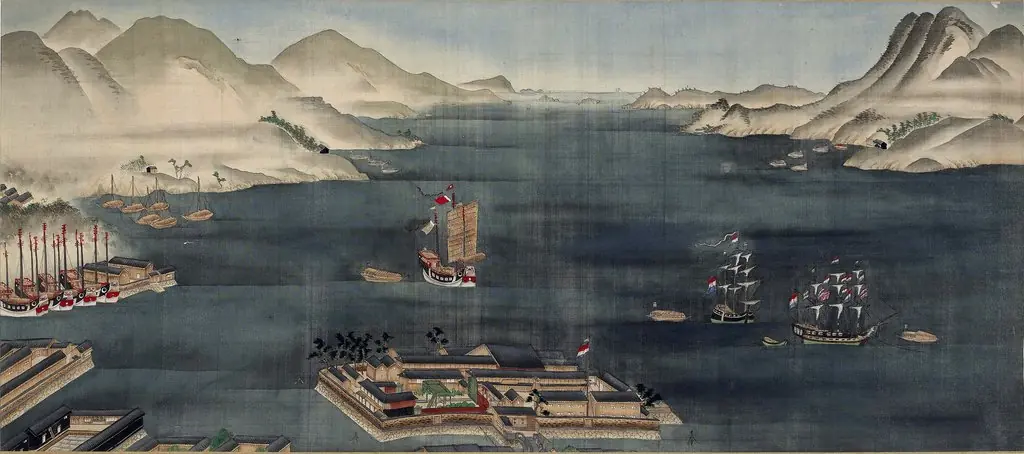 Untitled
 Mt. Shenchang