Artwork
Kanagwa Yokohama minato...zue|Pictorial Guide to Yokohama Harbor
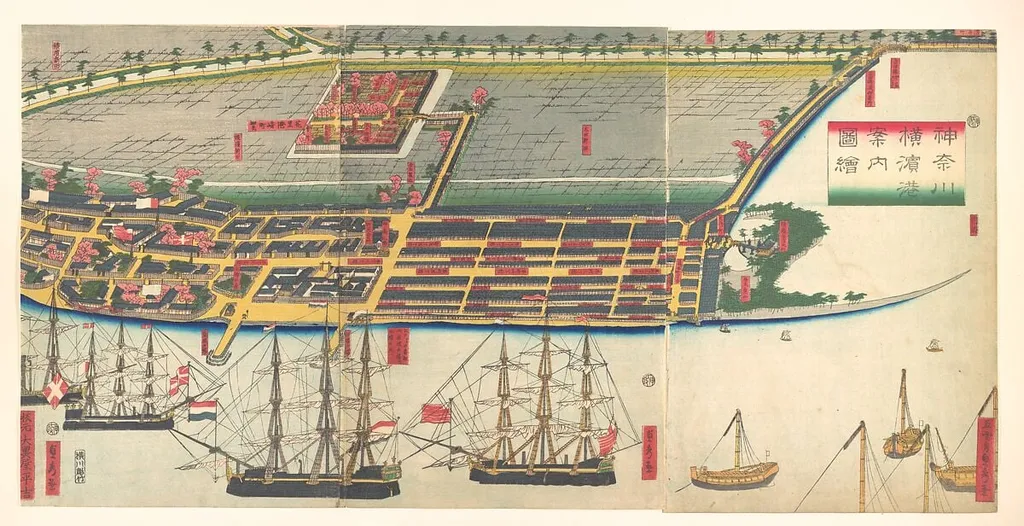
Kanagwa Yokohama minato...zue|Pictorial Guide to Yokohama Harbor is an ink print by the Impressionist artist Utagawa (Gountei) Sadahide. It dates from 7 and is held in the collection of the Metropolitan Museum of Art. This triptych woodblock print, titled 'Pictorial Guide to Yokohama Harbor,' was produced by Utagawa Sadahide in the late 1850s.
About this work
Overview
The composition spans three panels, capturing the harbor’s dynamic activity and the emerging urban landscape with precise detail and layered color.
This triptych woodblock print, titled 'Pictorial Guide to Yokohama Harbor,' was produced by Utagawa Sadahide in the late 1850s. It presents a panoramic view of Yokohama’s port during a period of rapid foreign engagement following Japan’s opening to international trade. The composition spans three panels, capturing the harbor’s dynamic activity and the emerging urban landscape with precise detail and layered color.
Subject & Meaning
The scene portrays Yokohama as a newly accessible international port, teeming with foreign vessels, Japanese laborers, and Western-style architecture. Flags and banners, including red ones, mark commercial and diplomatic presence, signaling the city’s transformation from a quiet fishing village into a hub of cross-cultural exchange. The print functions as both a topographical record and a cultural document of Japan’s early modernization.
Technique & Style
Sadahide employed traditional ukiyo-e woodblock methods with Western-influenced perspective and shading to achieve depth and realism. Fine linework defines buildings, ships, and figures, while subtle color gradations enhance spatial atmosphere. The use of imported aniline dyes, particularly vibrant reds, reflects the period’s technological shifts in print production and the artist’s adaptation to new materials.
History & Provenance
Created around 1859–1860, the triptych was among the earliest visual records of Yokohama after the port opened to foreign trade in 1858. It circulated as a commercial print, likely sold to curious locals and foreign residents. The Metropolitan Museum of Art acquired it as part of its broader collection of Japanese prints, preserving it as a key artifact of mid-19th-century urban change.
Context
Yokohama’s opening followed the Treaty of Kanagawa, which ended Japan’s isolationist policies. The print captures the tension and curiosity surrounding foreign presence—Western ships, unfamiliar attire, and new architecture juxtaposed with traditional Japanese structures. Such images helped Japanese audiences navigate and interpret the sudden influx of global influences during a time of national transition.
Legacy
Sadahide’s work contributed to a genre of urban topographical prints that documented Japan’s modernization. This triptych remains a valuable resource for understanding how visual culture mediated public perception of foreign contact. Its detailed realism influenced later artists and historians seeking to reconstruct the physical and social landscape of early Meiji-era Japan.
Artist & collection

Artist
Utagawa Sadahide , also known as Gountei Sadahide, was a Japanese artist best known for his prints in the ukiyo-e style as a member of the Utagawa school.

 Untitled
 Untitled
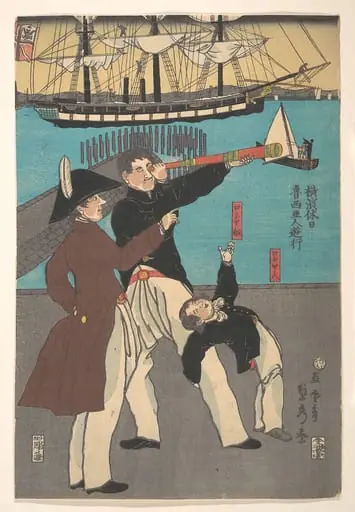 歌川五雲亭貞秀画 『横浜休日 魯西亜人遊行』|Russians Enjoying a Holiday in Yokohama (Yokohama kyūjitsu Roshiajin yūkō)
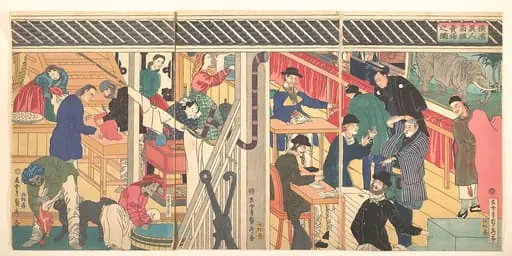 「横浜異人商館買場之圖」|Foreign Business Establishment in Yokohama (Yokohama ijin shōkan uriba no zu)
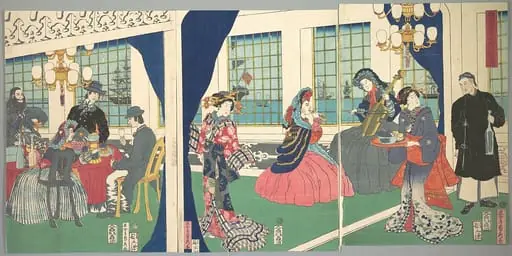
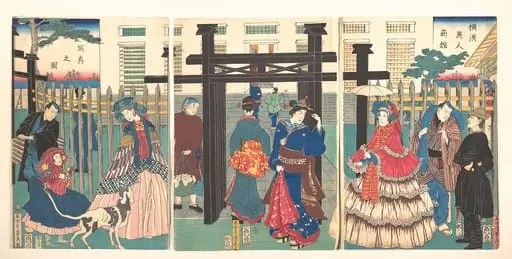 歌川五雲亭貞秀画 『横浜異人商館 写真之図』|Foreign Business Establishment in Yokohama (Yokohama ijin shōkan shashin no zu)
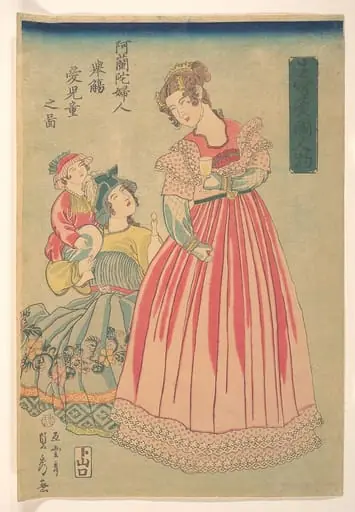 歌川五雲亭貞秀画 『生写異国人物 阿蘭陀婦人舉觴 愛児童之図』|Dutch Woman and Child (Seisha ikoku jinbutsu Oranda fujin aijidō no zu)
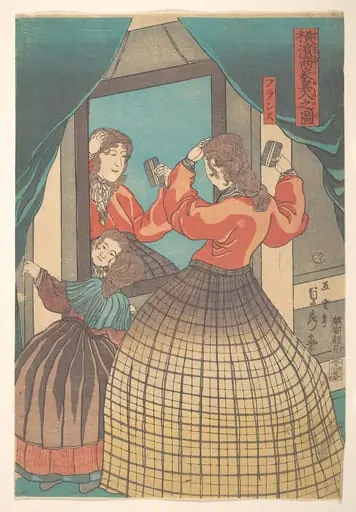 歌川五雲亭貞秀画 『横浜商家異人之図』|French Woman and Girl, from the series Foreign Merchants in Yokohama (Yokohama shōka ijin no zu)
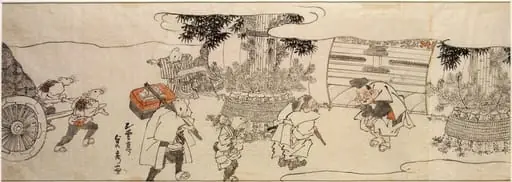 Daikoku and rats bringing rice bales to Ebisu
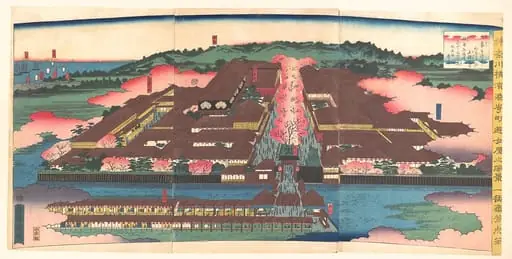 神奈川横浜港崎町遊女屋光景|View of the Miyozaki Brothel District in Yokohama, Kanagawa (Kanagwa Yokohama Miyozaki machi yūjoya kōkei)
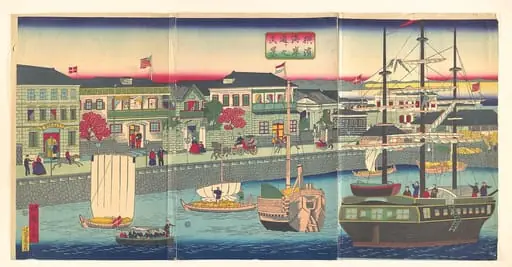 横浜海岸通り之風景|View of the Seafront in Yokohama (Yokohama Kagandori no fūkei)
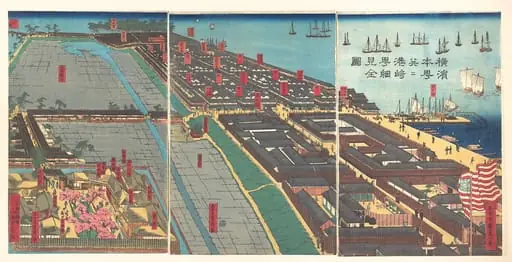 Yokohama Hon-chō...ni Miyozaki...kenkin zu|Detailed Print of Yokohama Hon-chō and the Miyozaki Pleasure Quarter
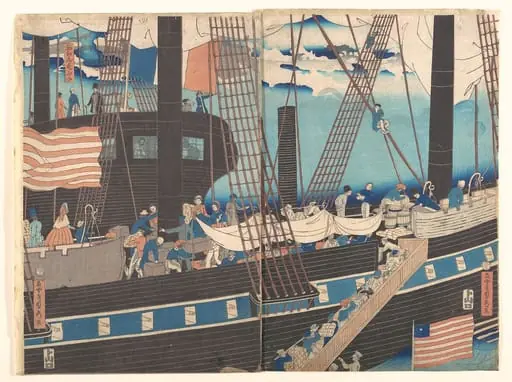 「横浜交易西洋人荷物運送之圖」|“Yokohama Trade: Westerners Loading Cargo”
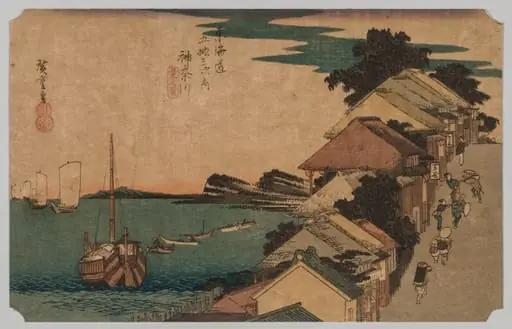 Kanagawa, Inland Sea: Top of the Street
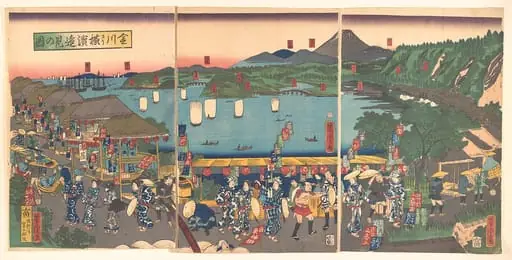 Kanagawa yōri Yokohama...ken no zu|A Distant View of Yokohama from Kanagawa
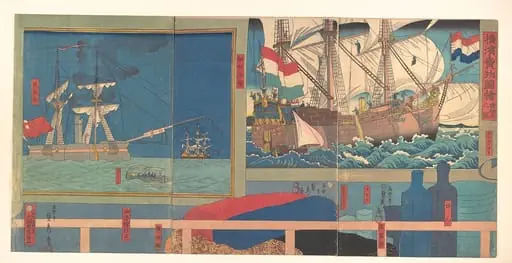 「横浜買物圖繒 唐物店之圖」|Curio Shop in Yokohama
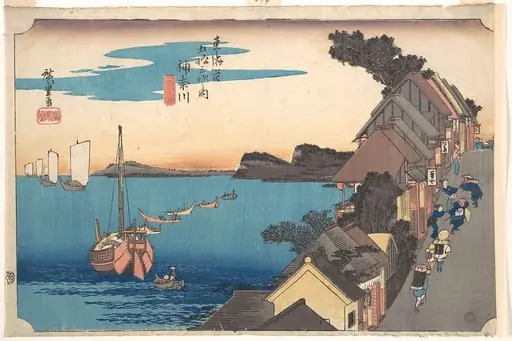 東海道五十三次之内 神奈川 宿台之景|View of the Kanagawa station at sunset