Artwork
Elijah in the Wilderness
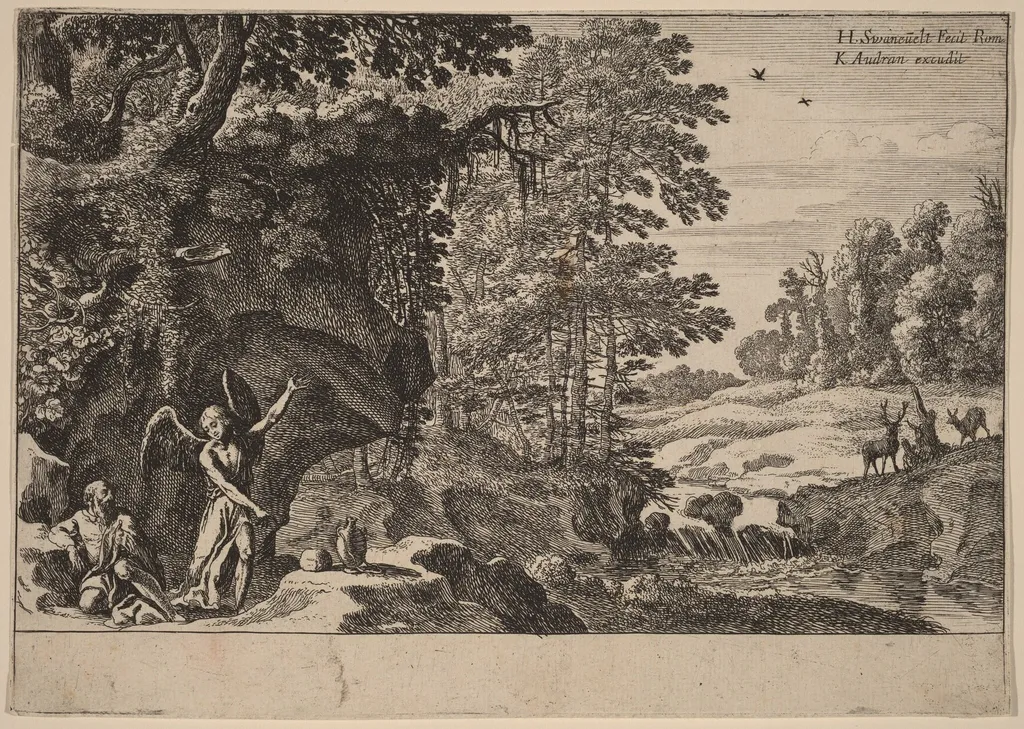
Elijah in the Wilderness is an ink print by the Baroque artist Herman van Swanevelt. It dates from 1628 and is held in the collection of the National Gallery of Art.
About this work
Overview
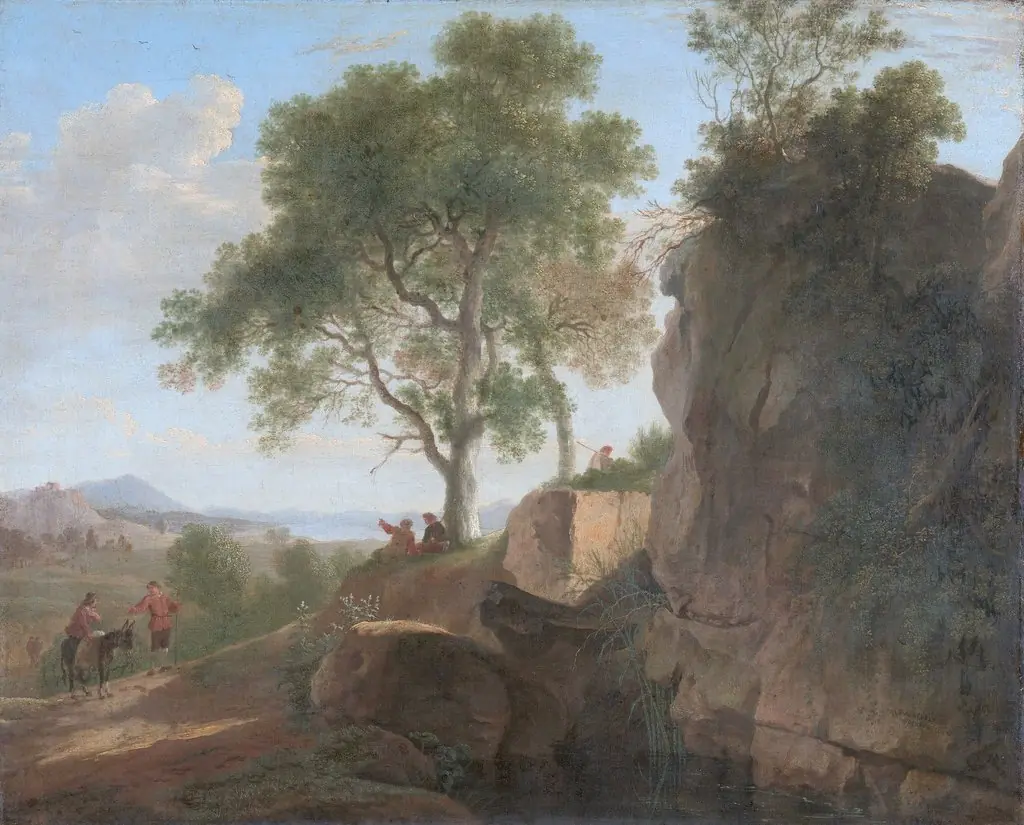
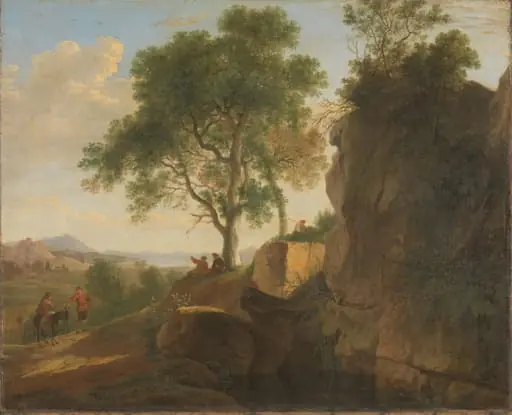
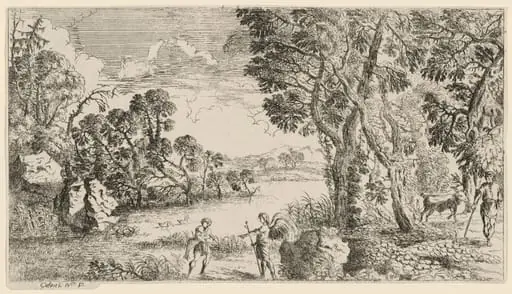
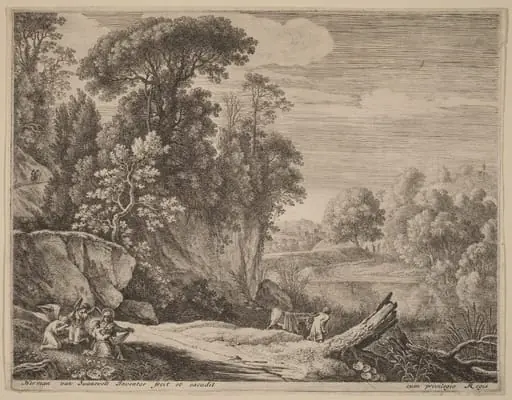
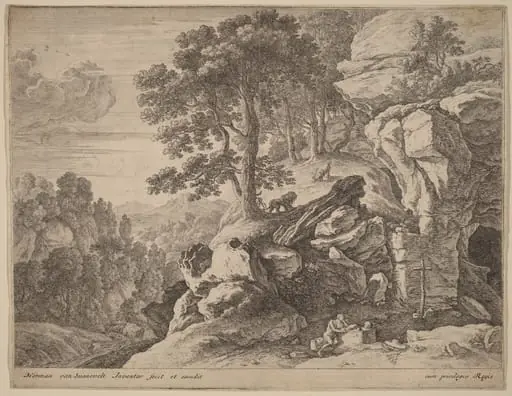
Elijah in the Wilderness is an etching executed by the Dutch artist Herman van Swanevelt in 1628. The work is a monochrome print that depicts a solitary figure amidst a densely wooded landscape, with a rocky slope and a winding stream. In the background, grazing animals are visible near a low fence, providing a sense of depth and narrative context.
Subject & Meaning
The central figure, arms outstretched, evokes a moment of supplication or divine encounter, aligning with the biblical story of the prophet Elijah’s retreat into the desert. The surrounding wilderness, rendered with towering trees and a meandering watercourse, reinforces themes of isolation, spiritual trial, and the search for sustenance in a hostile environment.
Technique & Style
The overall composition balances chiaroscuro with a restrained tonal palette typical of early 17th‑century Dutch printmaking.
Van Swanevelt employed the etching process, incising fine lines into a copper plate to achieve intricate detailing. The artist’s use of cross‑hatching creates pronounced shadows that give the foliage a three‑dimensional quality, while delicate line work defines the rocky terrain and flowing water. The overall composition balances chiaroscuro with a restrained tonal palette typical of early 17th‑century Dutch printmaking.
History & Provenance
Created in 1628, the print reflects van Swanevelt’s early period before his later work in Italy. While specific ownership records are limited, the piece has been catalogued in several European collections of Baroque prints and is frequently cited in studies of Dutch etching practices of the early seventeenth century.
Artist & collection

 River Landscape with Tobias and the Angel
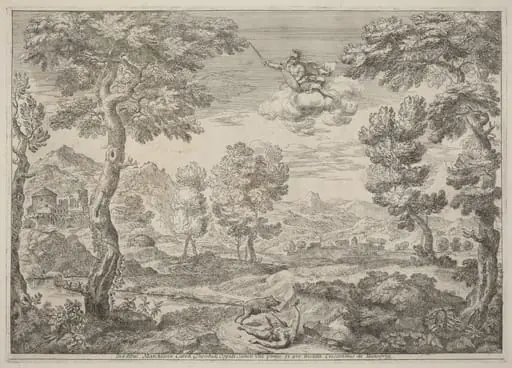 Mars's Revenge on Adonis
 Landscape with a Bridge and Three Farm Buildings
 Jupiter in a Landscape
 The Donkey Led to the River
 Saint Jerome
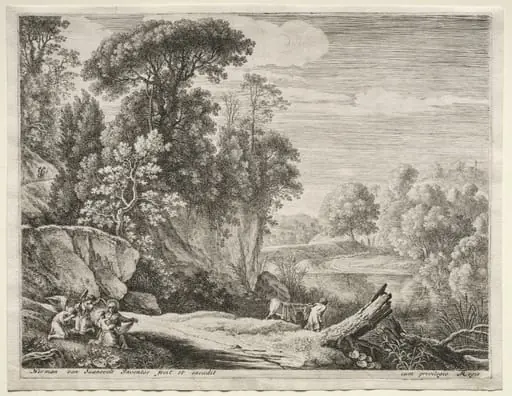 The Flight into Egypt: The Donkey Led to the River
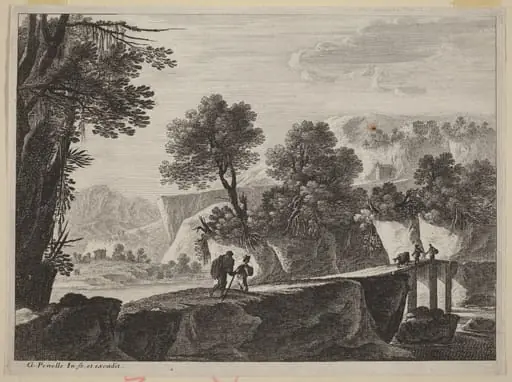 Travelers Approaching a Bridge
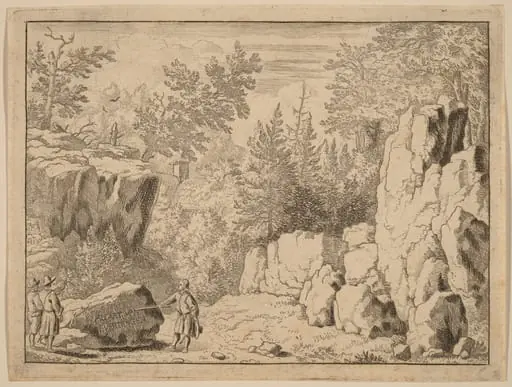 The Inscription on the Rock
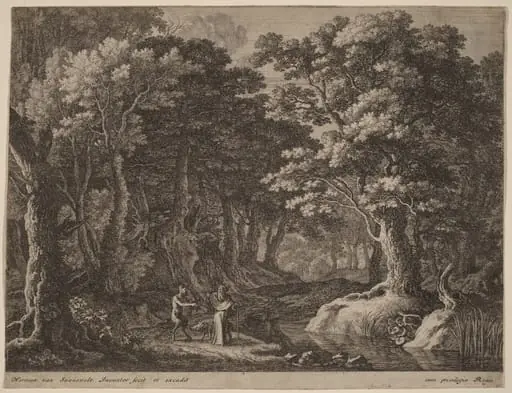 Devil Tempting St. Anthony
 Saint Jerome in the Wilderness
 Venus Offering Diana a Choice between Cupid and Adonis