Artwork
The Grotto of the Nymph Egeria
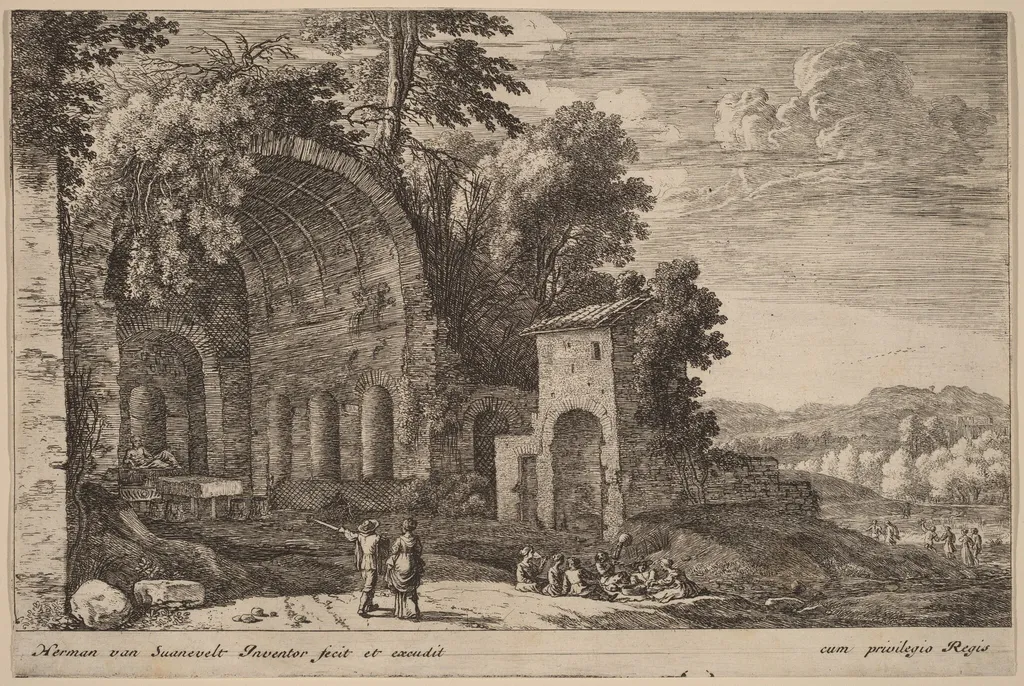
The Grotto of the Nymph Egeria is an ink print by the Baroque artist Herman van Swanevelt. It dates from 1628 and is held in the collection of the National Gallery of Art.
About this work
Overview
Rendered on laid paper, the work captures a quiet, pastoral scene with architectural and natural elements intertwined.
Created in 1628, this etching by Herman van Swanevelt depicts a secluded grotto dedicated to the nymph Egeria. Rendered on laid paper, the work captures a quiet, pastoral scene with architectural and natural elements intertwined. The composition centers on a moss-covered archway crowned by vegetation, framed by figures engaged in contemplative or resting postures, suggesting a moment of stillness within a mythic landscape.
Subject & Meaning
The grotto references Egeria, a water nymph from Roman myth who served as advisor to King Numa Pompilius. The scene evokes a sacred grove where divine communication occurred, blending classical legend with the 17th-century European fascination with antiquity. The figures—pointing, standing, seated—hint at pilgrimage or reverence, reinforcing the site’s spiritual resonance without overt narrative.
Technique & Style
Van Swanevelt employed etching to achieve fine gradations of light and texture, using delicate lines to suggest foliage, stone weathering, and atmospheric depth. The contrast between the dark archway and the softly shaded hills enhances spatial recession. His approach favors quiet realism over dramatic flair, aligning with the Northern Italianate tradition that emphasized harmonious, lyrical landscapes.
History & Provenance
The print was produced during Van Swanevelt’s formative years in Rome, where he absorbed classical ruins and pastoral themes. Though specific early ownership records are sparse, the work aligns with prints circulated among collectors of Italianate landscape art in the early 1600s. Its survival in museum collections reflects its status as a representative example of his graphic output.
Context
In early 17th-century Rome, artists increasingly turned to mythological and classical landscapes as subjects for prints, catering to scholarly and aristocratic tastes. Van Swanevelt’s work emerged alongside contemporaries like Claude Lorrain, contributing to a visual language that idealized nature as a vessel for ancient memory, distinct from the more theatrical styles of Baroque painting.
Legacy
Van Swanevelt’s etchings, including this one, influenced later landscape printmakers through their restrained composition and attention to natural detail. While not widely known today, his work remains a touchstone in studies of Northern artists working in Italy, illustrating how classical themes were reinterpreted through intimate, graphic forms during the Baroque era.
Artist & collection

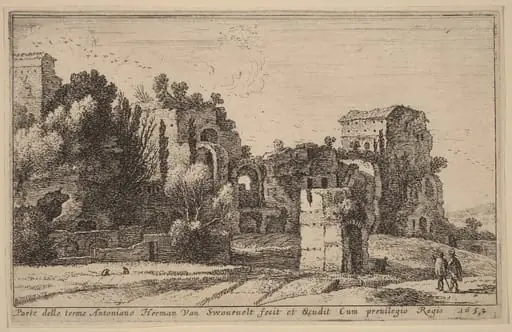 The Baths of Caracalla
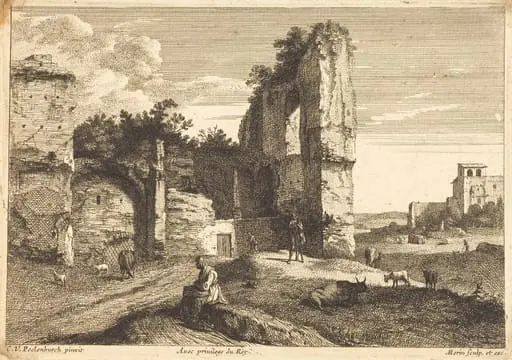 Old Woman Seated
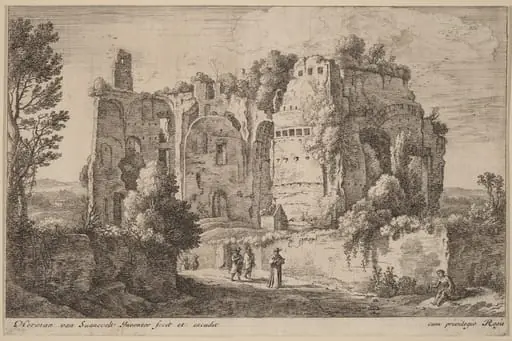 Landscape with the Cardinal
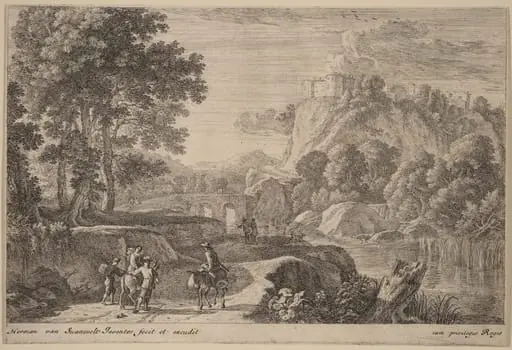 Travelers on Road to Left of a Stream
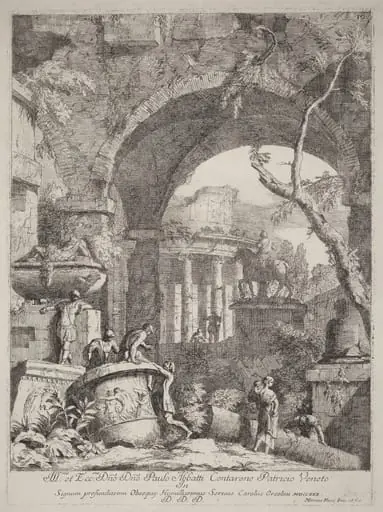 Capriccio: Ruins
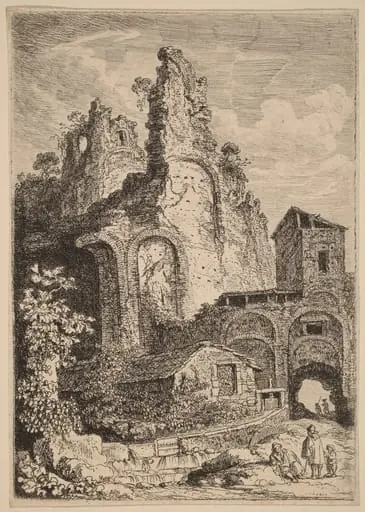 The Old Palace at Tivoli
 AEdis antiquae, AEdificiorumque adiacentium fragmenta
 Antique Ruins of an Amphitheatre
 Second View of the Forum of Nerva
 Seventh View of the Colosseum
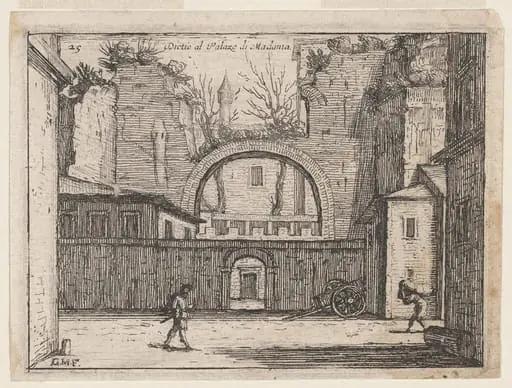 Dictio al Palazo di Madama
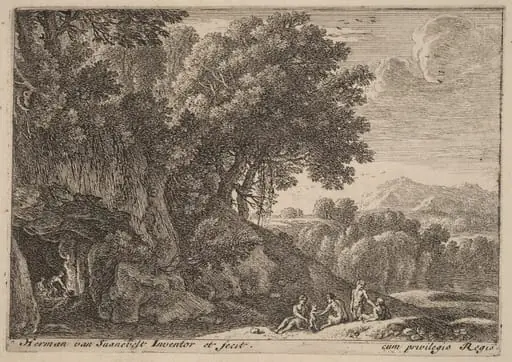 Satyrs around a Fire