Artwork
View of an Italian Villa
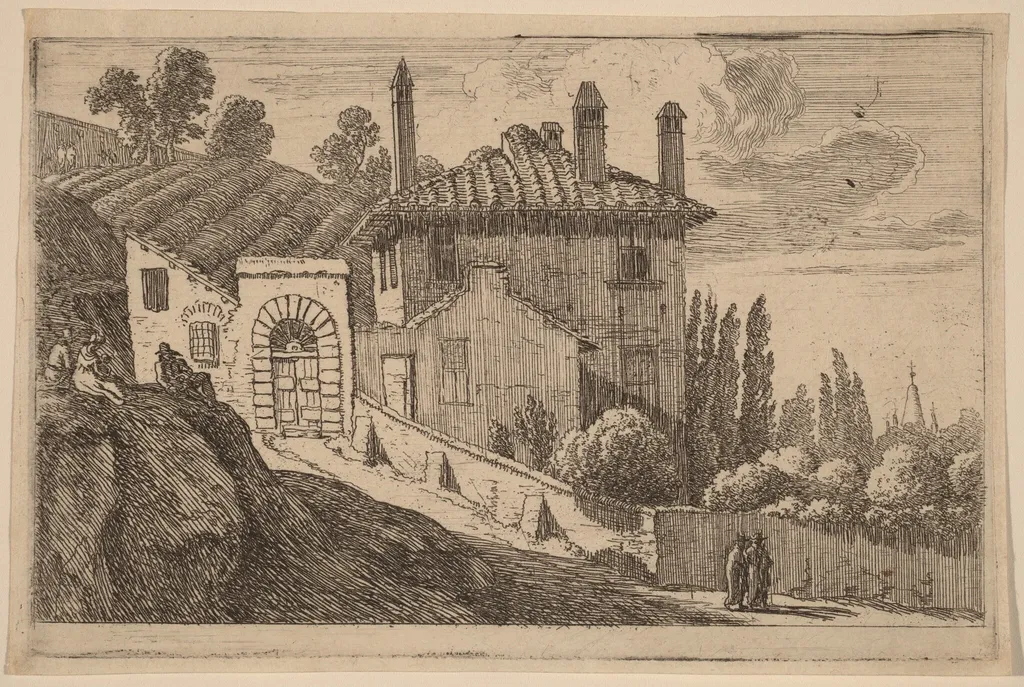
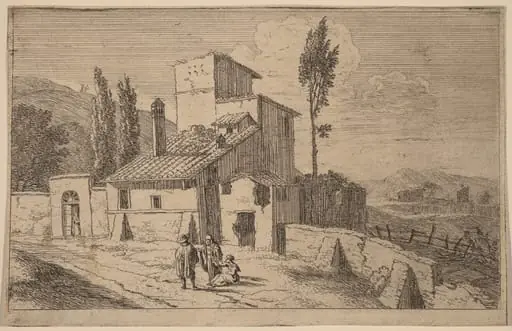
View of an Italian Villa is an ink print by the Baroque artist Herman van Swanevelt. It dates from 1628 and is held in the collection of the National Gallery of Art.
About this work
Overview
It depicts a tranquil Italianate landscape featuring a modest stone structure and a more imposing villa nestled among rolling hills.
Created in 1628, View of an Italian Villa is an etching by Dutch artist Herman van Swanevelt. It depicts a tranquil Italianate landscape featuring a modest stone structure and a more imposing villa nestled among rolling hills. The composition balances architectural detail with natural elements, conveying a sense of quiet solitude. The work exemplifies the precision and tonal subtlety characteristic of early 17th-century printmaking.
Subject & Meaning
The scene presents an idealized rural villa, likely inspired by Roman countryside estates rather than a specific location. A solitary figure near the foreground wall suggests human presence without narrative, reinforcing the contemplative mood. The villa’s classical features—balustrades, arched windows, and tall chimneys—evoke Renaissance ideals of harmony and order, reflecting contemporary European fascination with Italian antiquity.
Technique & Style
Van Swanevelt employed fine, controlled etching lines to render textures of stone, bark, and foliage with delicate precision. The sky is softly suggested with minimal cloud markings, allowing the architecture and landscape to dominate. The tonal range is restrained, emphasizing gradations of light and shadow rather than dramatic contrast. This method highlights the artist’s skill in translating three-dimensional forms into linear detail on copper.
History & Provenance
The etching was produced during van Swanevelt’s time in Rome, where he lived among other Northern European artists drawn to Italy’s classical ruins and pastoral scenery. Though its early ownership is undocumented, the work aligns with a broader trend of landscape prints circulated among collectors in the Low Countries and beyond. Its survival in multiple museum collections attests to its enduring appeal among connoisseurs of topographical printmaking.
Context
In the 1620s, etching emerged as a favored medium for landscape depiction, particularly among Dutch and Flemish artists working in Italy. Van Swanevelt’s work reflects the influence of Claude Lorrain and other Italianate painters, who transformed real and imagined scenery into serene, composed visions. These prints served both as artistic studies and as portable souvenirs of the Grand Tour experience for Northern European audiences.
Legacy
Van Swanevelt’s View of an Italian Villa contributed to the development of the topographical etching tradition in Northern Europe. His attention to architectural detail and atmospheric calm influenced later landscape printmakers, including those in the Dutch Golden Age. While not widely known today, the work remains a representative example of how early modern artists translated the Italian landscape into intimate, finely wrought prints for private contemplation.
Artist & collection

 View of a Convent
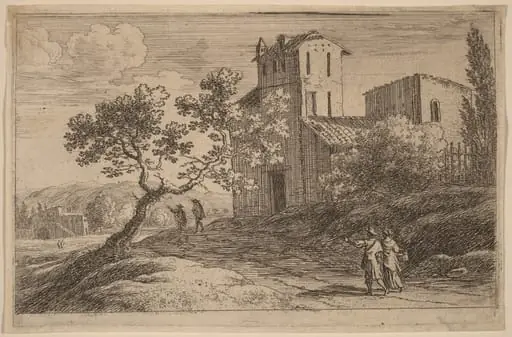 The Bent Tree
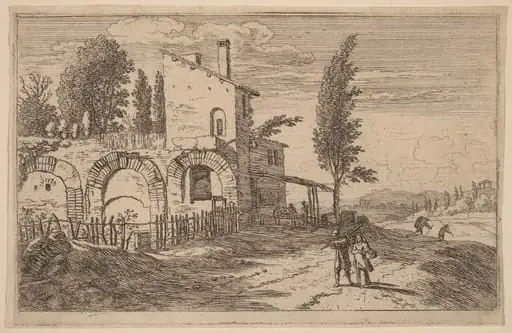 Inn in the Ruins of the Palace of the Emperors
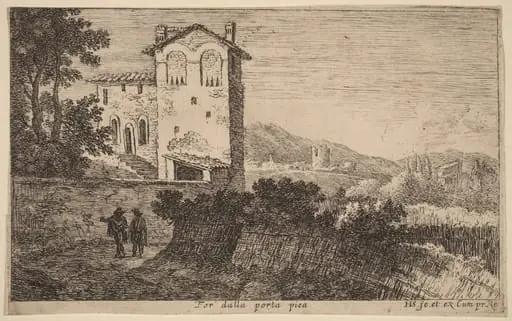 For dalla porta pia (Villa outside the Porta Pia)
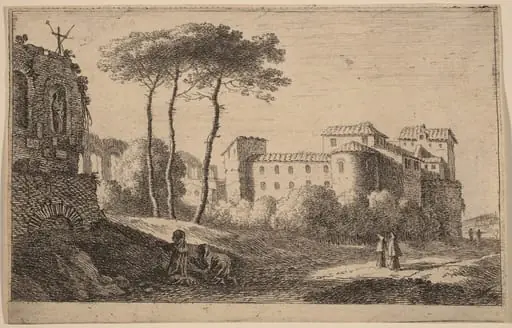 View of the Church "Quattro Santi Coronati"
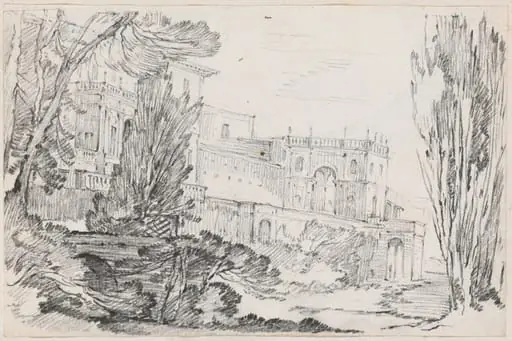 Villa d'Este, Tivoli
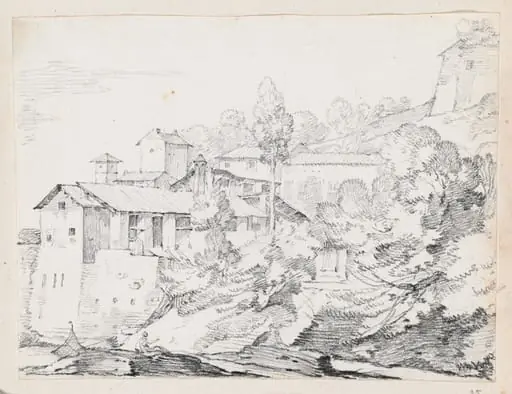 Italian Buildings on a Hillside
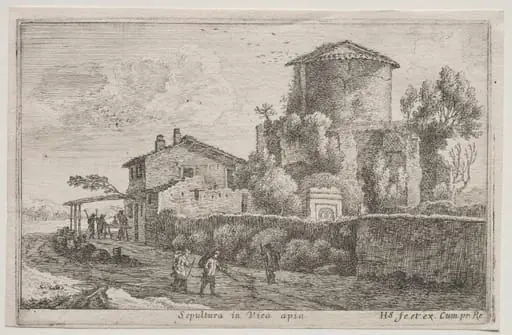 Diverse Views in and around Rome: Tomb along the Appian Way
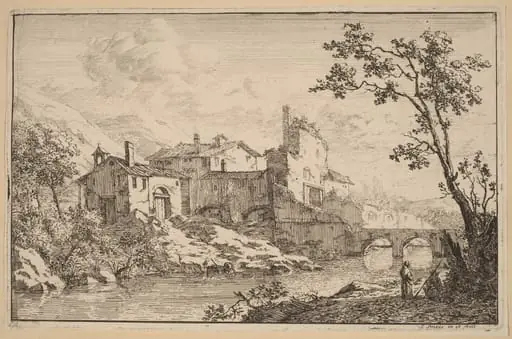 Houses at the Side of a River
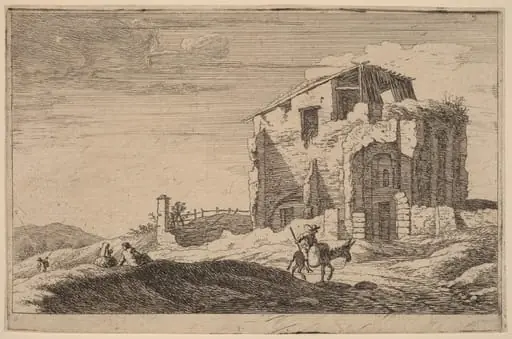 View of a Ruined Building