Artwork
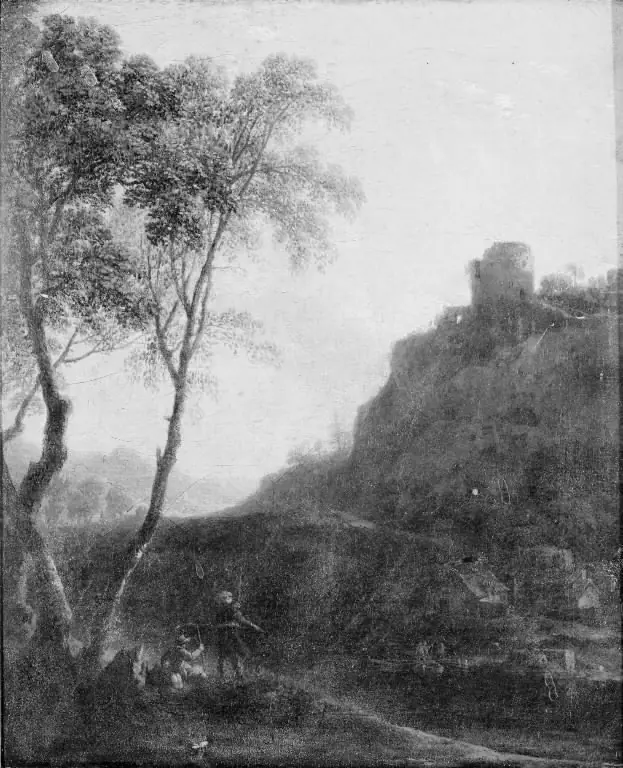
The Bent Tree
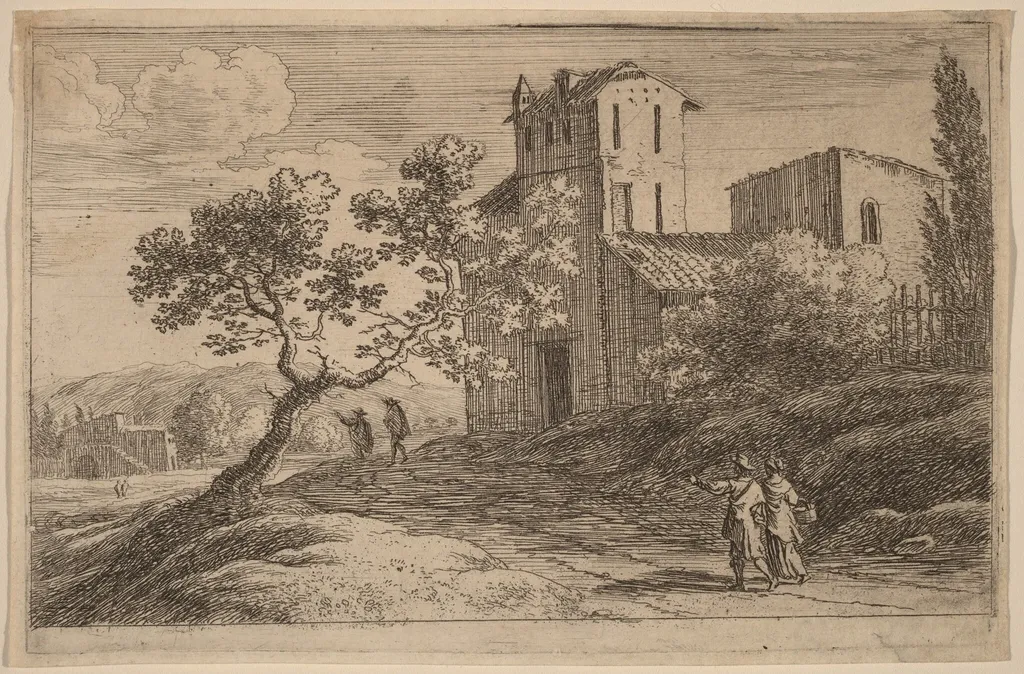
The Bent Tree is an ink print by the Baroque artist Herman van Swanevelt. It dates from 1628 and is held in the collection of the National Gallery of Art.
About this work
Overview
Herman van Swanevelt’s 1628 etching titled The Bent Tree presents a calm, open landscape dominated by a curved tree on the left side of the composition. The tree’s trunk descends into shadow while its limbs reach upward, drawing the eye toward a distant building complex and a handful of figures placed in the foreground.
Subject & Meaning
The work juxtaposes natural and architectural elements, using the bent tree as a visual anchor that suggests both resilience and the passage of time. The modest human presence and the quiet architecture reinforce a sense of peaceful coexistence between people, built environment, and the surrounding countryside.
Technique & Style
Executed in the etching medium, the image relies on a gradation of tones from deep blacks in the tree’s bark to lighter washes that model the sky and structures. Van Swanevelt’s handling of line and wash creates a subtle atmospheric depth, characteristic of early 17th‑century Dutch landscape prints.
History & Provenance
Created in 1628, The Bent Tree is among the early prints attributed to van Swanevelt, a Dutch artist known for his landscape compositions. The etching’s provenance traces through several European collections, though specific ownership details remain limited in the surviving records.
Own this work as a print
Artist & collection

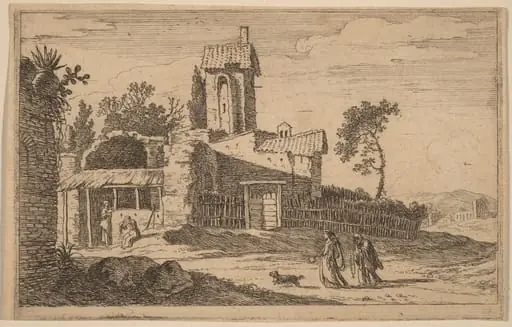 Ruined Building with a Tower
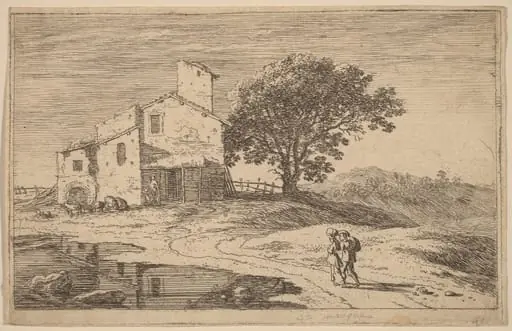 Large Tree near a House
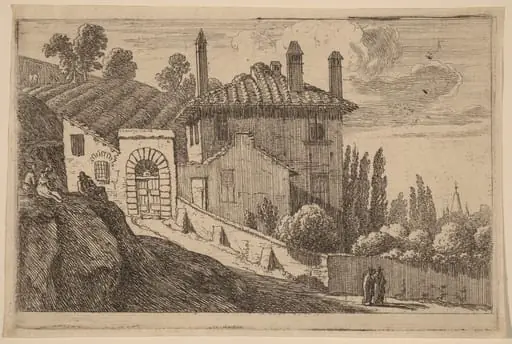 View of an Italian Villa
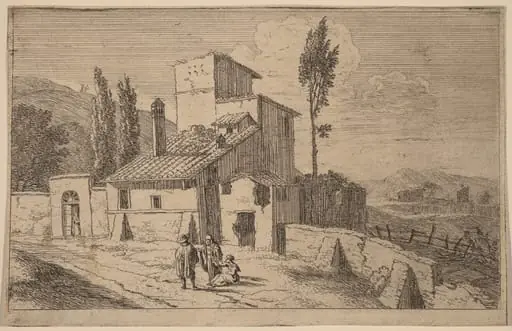 View of a Convent
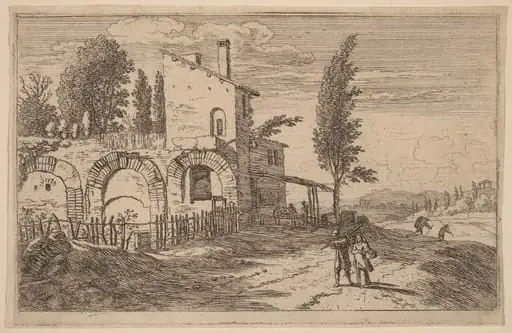 Inn in the Ruins of the Palace of the Emperors
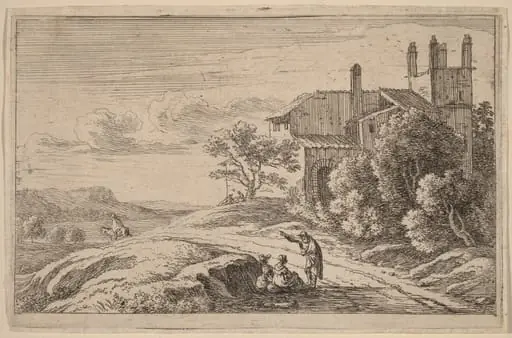 Building with a Square Tower
 View of a Ruined Building
 Landscape with a Dead Tree
 Il Greco in Troia: Plate 7
 The Walk by the Water
 The Hinny Drover, via Appia
 Large House with a Turret