Artwork
Hakurai taizo no zu|View of the Large Imported Elephant
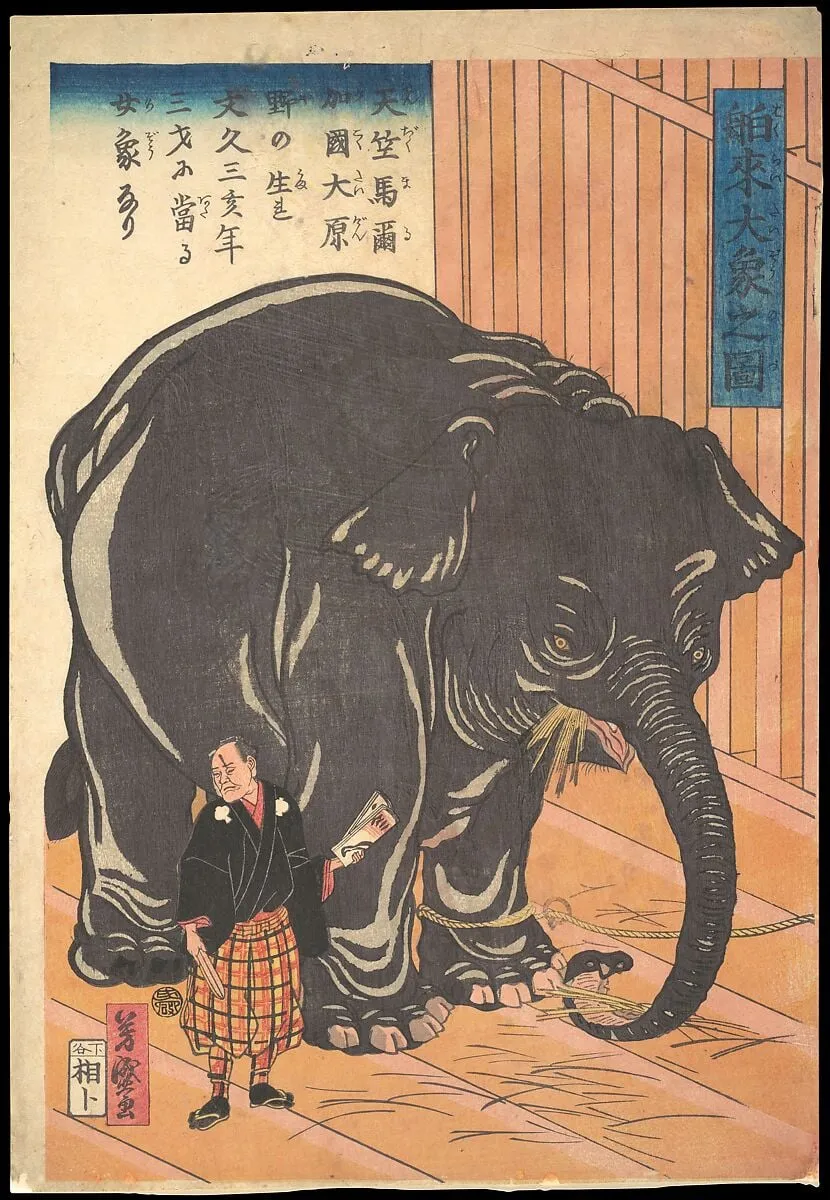
Hakurai taizo no zu|View of the Large Imported Elephant is an ink print by the Impressionist artist Taguchi (Utagawa) Yoshimori. It dates from 1863 and is held in the collection of the Metropolitan Museum of Art.
About this work
Overview
Created in 1863 by Taguchi Yoshimori, this woodblock print captures a rare sight in mid-19th century Japan: a live elephant brought from abroad.
Created in 1863 by Taguchi Yoshimori, this woodblock print captures a rare sight in mid-19th century Japan: a live elephant brought from abroad. Rendered in ink and color on paper, the image presents the animal as a central, dominant figure against a minimal urban backdrop. The print belongs to the ukiyo-e tradition, reflecting public fascination with foreign novelties during Japan’s opening to the world.
Subject & Meaning
The print centers on an elephant, its massive form dominating the composition, beside a man in traditional attire who gestures toward it. The figure’s posture suggests awe or instruction, emphasizing the animal’s unfamiliarity to Japanese viewers. The elephant symbolized global connection and scientific curiosity, representing the cultural shifts occurring as Japan ended its isolationist policies.
Technique & Style
Taguchi employed bold, dark outlines and flat areas of vivid color to heighten visual impact, typical of popular ukiyo-e prints. The elephant’s skin is rendered with dense, textured lines to convey weight and surface detail, contrasting with the sparse background of a wooden fence and a single painted sign. The composition prioritizes clarity and immediacy, suited for mass reproduction and public consumption.
History & Provenance
The print was produced during a period when exotic animals were exhibited in Japan as public spectacles, often arriving via foreign trade routes. It was likely circulated as a commemorative image of one such event. The Metropolitan Museum of Art acquired the work as part of its broader collection of Japanese prints documenting social and cultural change in the Edo and Meiji eras.
Context
In the early 1860s, Japan was transitioning from isolation to international engagement. The arrival of elephants—first seen in decades—generated widespread public interest. Such prints served as visual news, translating foreign phenomena into familiar artistic forms. They reflected both curiosity and the tension between tradition and emerging global influences.
Legacy
This print remains a document of Japan’s encounter with the wider world during a pivotal historical moment. It illustrates how art mediated unfamiliar experiences for domestic audiences, preserving the cultural resonance of rare events. Though not part of the fine art canon, it holds value as a record of popular perception and societal transformation.
Artist & collection

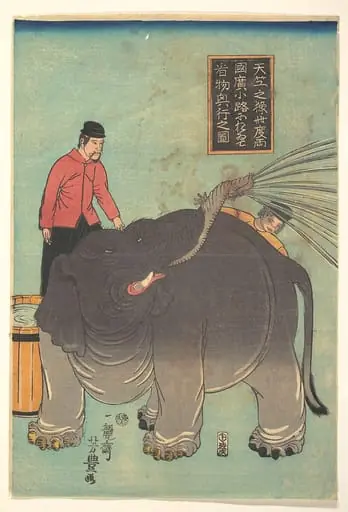
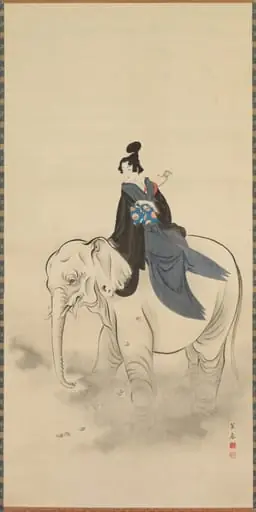
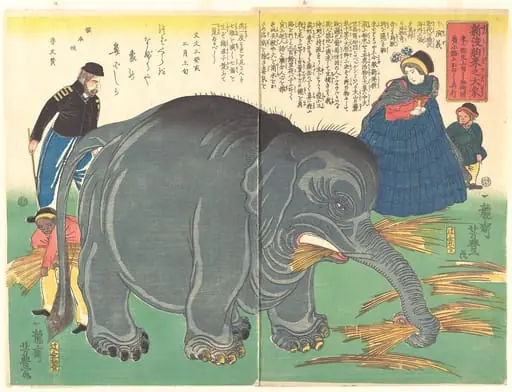
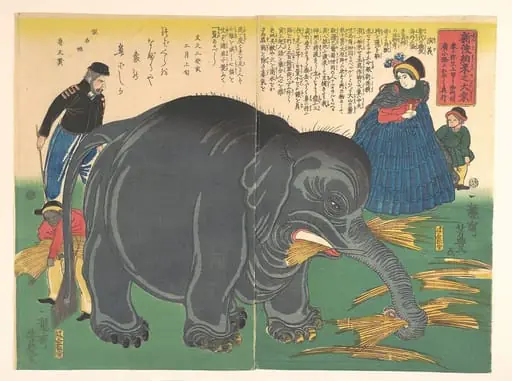 一龍斎芳豊画 「新渡舶来之大象」|Newly Imported Great Elephant (Shinto hakurai no daizō)
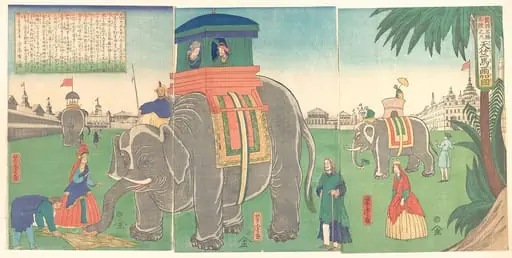 Tenjiku maru no zu|A View of Indian Elephants
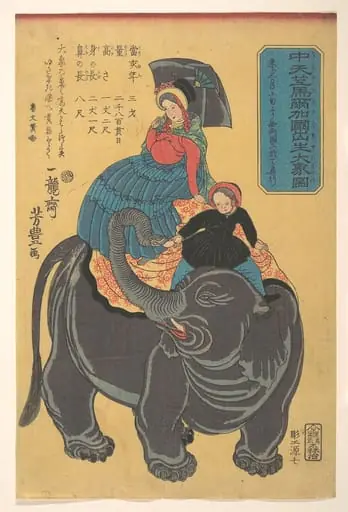 Chū tenjiku Maruka koku shūsshō daizō zu|Picture of an Elephant Born in Maruka in Central India
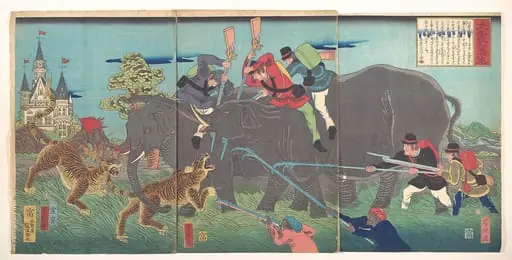 Daizō shasei|Big Elephants Being Attacked
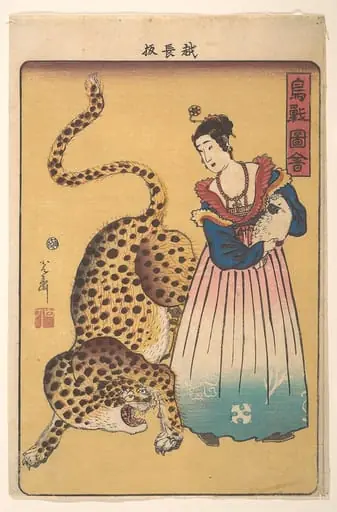 歌川芳盛画 「鳥獣図會」豹と阿蘭陀婦人|“Dutchwoman with Leopard,” from the series Pictures of Birds and Animals (Chōjū zue)