Artwork
勝川春好画 七代目片岡仁左衛門 五代目市川團十郎|Kabuki Actor Kataoka Nizaemon VII
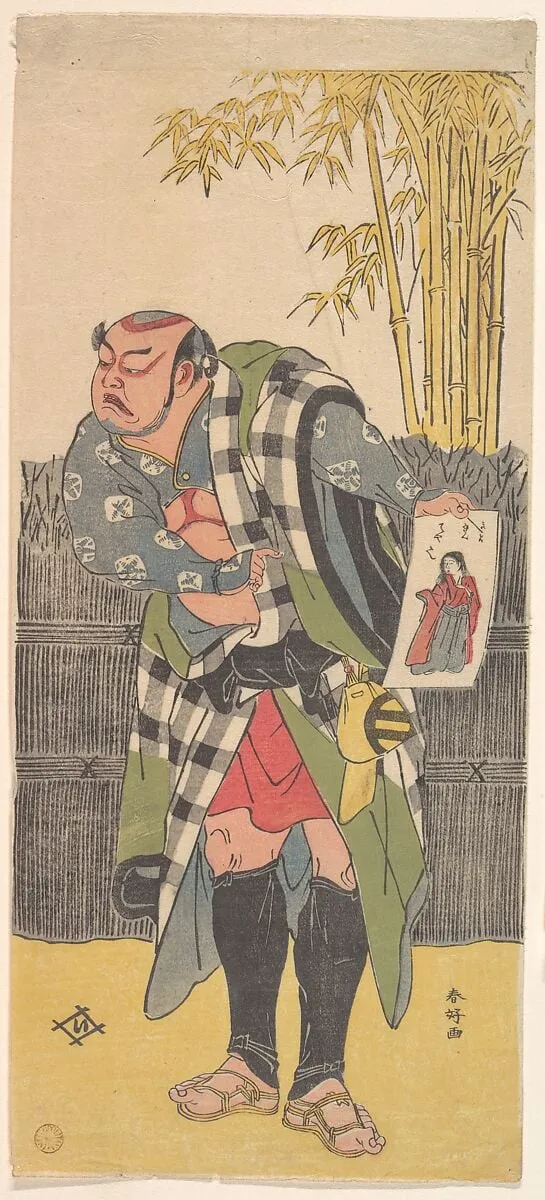
勝川春好画 七代目片岡仁左衛門 五代目市川團十郎|Kabuki Actor Kataoka Nizaemon VII is an ink print by the Romanticist artist Katsukawa Shunkō. It dates from 1789 and is held in the collection of the Metropolitan Museum of Art.
About this work
Overview
Created around 1789 by the Edo‑period printmaker Katsukawa Shunkō, this ink and color woodblock is one half of a diptych. The work is part of the Metropolitan Museum of Art’s collection and portrays the celebrated kabuki performer Kataoka Nizaemon VII in a stylised pose.
Subject & Meaning
The figure stands before a stylised bamboo grove, his posture suggesting a moment of contemplation. He holds a small portrait of a woman dressed in a vivid red robe, a motif often linked to romantic or dramatic roles in kabuki theatre. The red stripe across his forehead marks the actor’s stage makeup, identifying his character.
Technique & Style
Executed with traditional ukiyo‑e woodblock methods, the print combines black ink outlines with subtle colour washes. The actor’s kimono displays a contrasting black‑and‑white checkered pattern, while the background is rendered in muted beige tones, using gradated shading to convey depth without overwhelming detail.
History & Provenance
Katsukawa Shunkō, a leading figure of the Katsukawa school, produced this image during a period when actor prints were highly popular among urban audiences. The piece entered the Metropolitan Museum of Art’s holdings through a 20th‑century acquisition, reflecting the museum’s broader commitment to Japanese print culture.
Context
In the late 18th century, kabuki actors were celebrated as cultural icons, and their likenesses were widely disseminated in print form. This portrait aligns with the era’s fascination with theatrical personalities, offering viewers a glimpse of stage costume, makeup, and the visual language of performance.
Legacy
The print remains a valuable example of Edo‑period portraiture, illustrating both the technical skill of the Katsukawa workshop and the enduring appeal of kabuki imagery. Its preservation in a major museum ensures continued study of the intersection between Japanese theatre and visual art.
Artist & collection

Artist
Katsukawa Shunkō spent his life in Edo, where crowded theaters and teahouses buzzed around him.

 Untitled
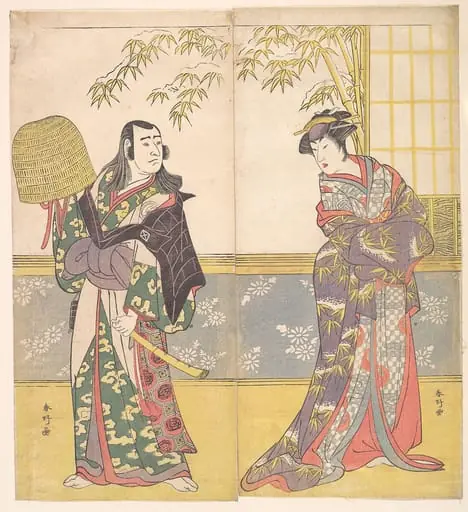 勝川春好画 三代目澤村宗十郎 三代目佐野川市松 |Kabuki Actors Sawamura Sōjūrō III and Sanogawa Ichimatsu III in "A Courtesan’s Mirror for the Eastern Provinces" (Keisei Azuma kagami)
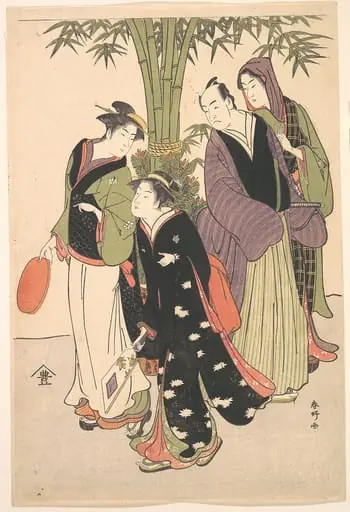 勝川春好画 三代目瀬川菊之丞・二代目市川門之助|Kabuki Actors Segawa Kikunojō III and Ichikawa Monnosuke II and Two Courtesans Celebrating the New Year
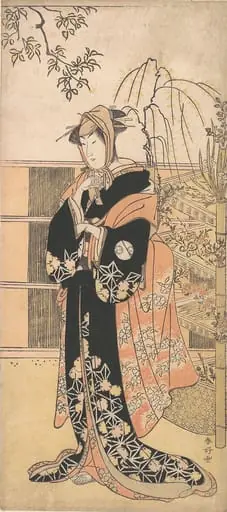 勝川春好画 三代目瀬川菊之丞|Kabuki Actor Segawa Kikunojō III in a Woman’s Role
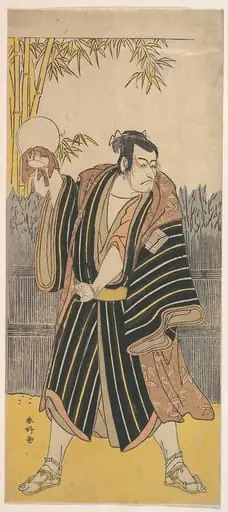 勝川春好画 七代目片岡仁左衛門 五代目市川團十郎|Kabuki Actor Ichikawa Danjūrō V
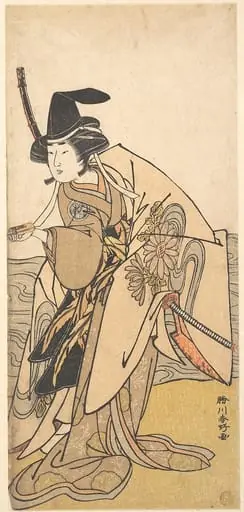 Untitled
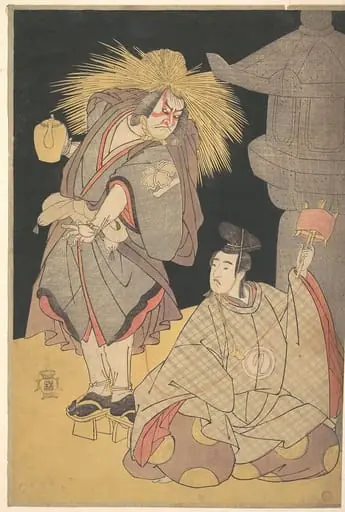 Untitled
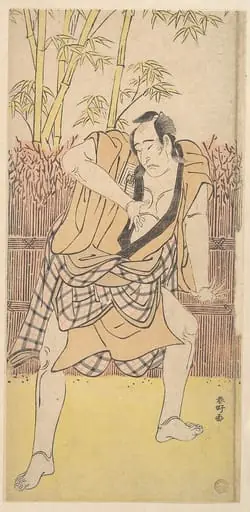 Untitled
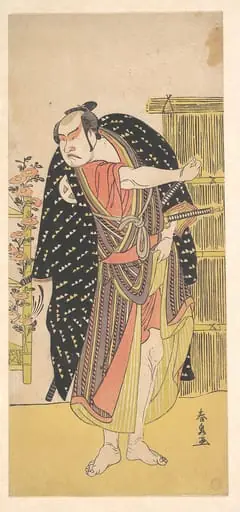 勝川春泉画 三代目大谷廣次|Kabuki Actor Ōtani Hiroji III
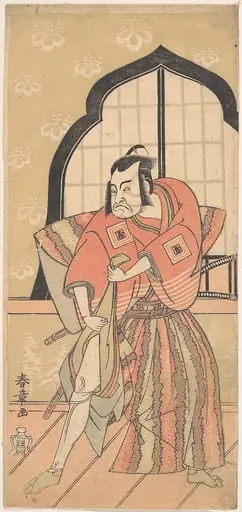 勝川春章画 三代目市川団蔵|Kabuki Actor Ichikawa Danzō III
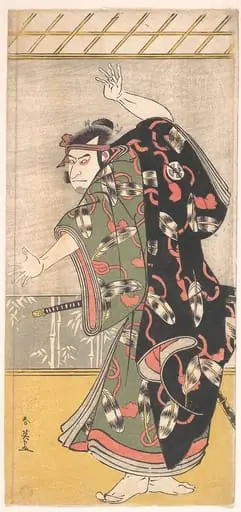 勝川春英画 三代目大谷鬼次|Kabuki Actor Ōtani Oniji III
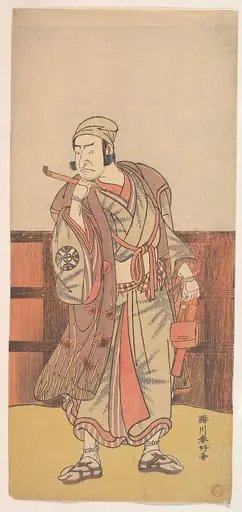 勝川春好画 初代中村仲蔵|Kabuki Actor Nakamura Nakazō I
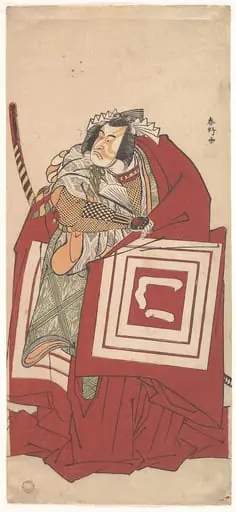 二代目市川門之助|Kabuki Actor Ichikawa Monnosuke II as Shinozuka in a Shibaraku (Stop Right There!) Scene
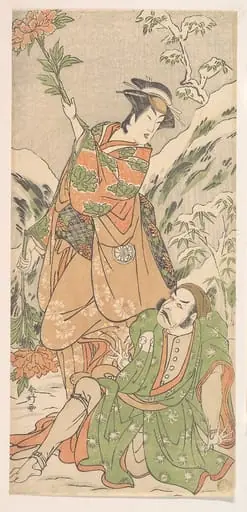 二代目嵐龍藏・三代目瀬川菊之丞|Kabuki Actors Arashi Ryūzō II and Segawa Kikunojō III
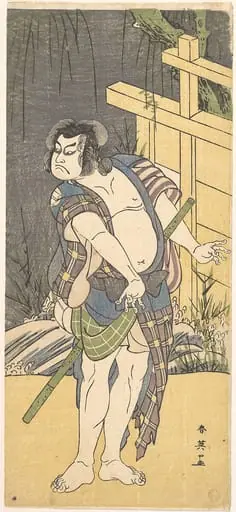 三代目坂田半五郎|Kabuki Actor Sakata Hangorō III as an Outlaw
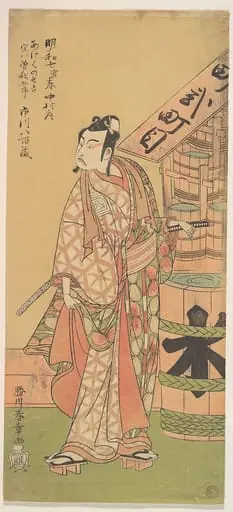 二代目市川八百蔵|Kabuki Actor Ichikawa Yaozō II
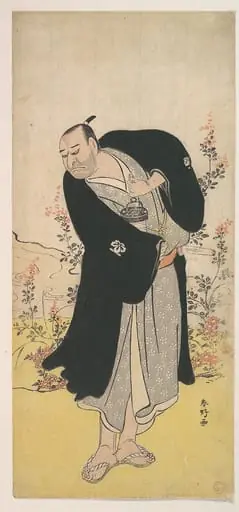 六代目中山小十郎|Kabuki Actor Nakayama Kojūrō VI
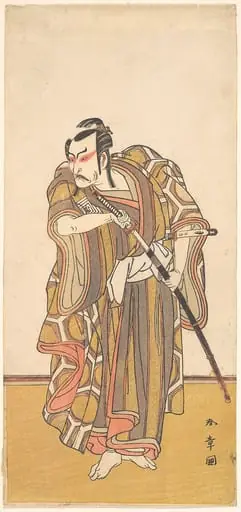 四代目市川團蔵|Kabuki Actor Ichikawa Danzō IV