Artwork
Daizō shasei|Big Elephants Being Attacked
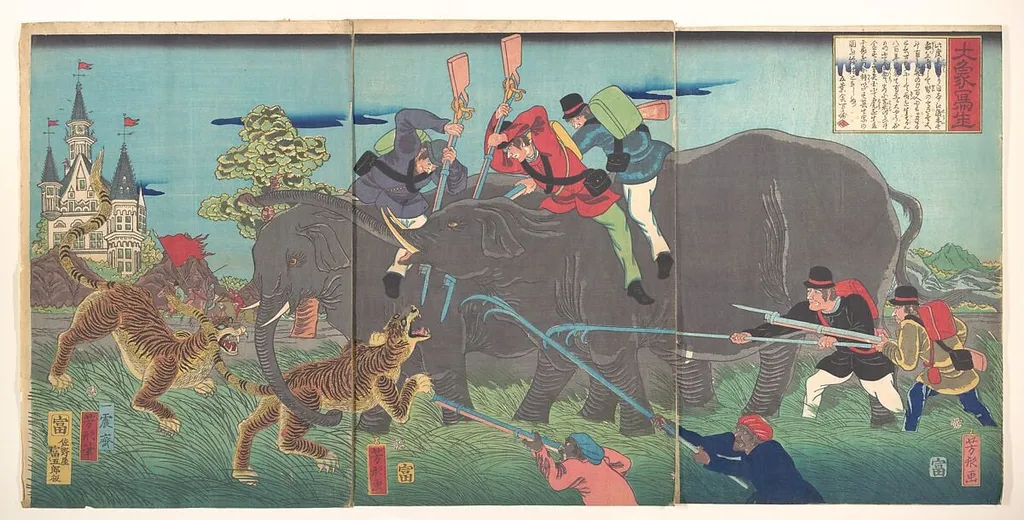
Daizō shasei|Big Elephants Being Attacked is an ink print by the Impressionist artist Isshinsai Yoshikata. It dates from 2 and is held in the collection of the Metropolitan Museum of Art.
About this work
Overview
Daizō shasei, also known as *Big Elephants Being Attacked*, is a three‑panel woodblock print by the Edo‑period artist Isshinsai Yoshikata. Executed in ink and color on paper, the work presents a vivid, action‑filled tableau that is now part of the collection of the Metropolitan Museum of Art.
Subject & Meaning
The central scene shows a massive elephant under assault by a group of men armed with spears and swords, while a tiger lunges into the fray. The figures, dressed in traditional Japanese attire, surround the animal on the ground and even climb onto its back, suggesting a narrative of human‑animal conflict and the chaos of a sudden attack.
Technique & Style
Created as a triptych, the print employs the characteristic bold outlines and saturated pigments of ukiyo‑e woodblock printing. The composition balances dynamic diagonal lines with a deep blue sky and scattered clouds, while the background features stylized hills, trees, and a distant castle or temple, enhancing the sense of depth and movement.
History & Provenance
Issued by Isshinsai Yoshikata in the early nineteenth century, the work entered the Metropolitan Museum of Art’s holdings through a later acquisition, where it is displayed as an example of dramatic narrative prints from the late Edo period.
Context
The print reflects a popular Edo‑period fascination with exotic animals and spectacular confrontations, themes often found in theatrical and literary sources of the time. By portraying a foreign beast such as an elephant alongside a tiger, the artist taps into contemporary curiosity about the wider world while employing familiar visual conventions of Japanese print culture.
Artist & collection

 Untitled
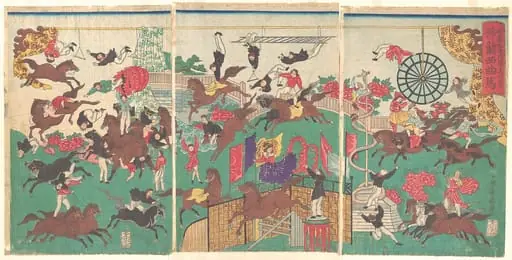 浅草観音境内ニ於イテ興行仕候 佛蘭西曲馬|French Equestrian Circus on the grounds of Asakusa Kannon temple (Asakusa kannon keidai ni oite kōgyō tsukawashi sōrō-Furansu kyokuba)
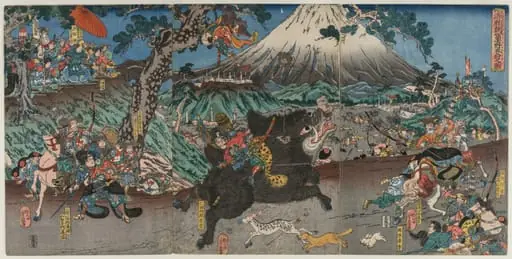 Picture of Minamoto no Yoritomo's Hunt on the Slopes of Mount Fuji
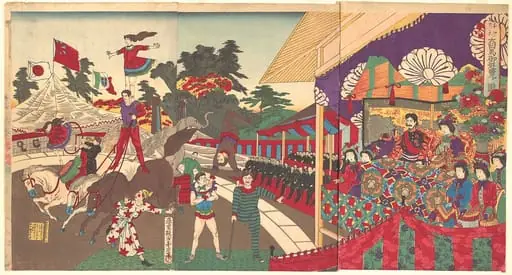 チャリネ大曲馬御遊覧ノ図|Illustration of the Imperial Excursion to see the Charini's Circus (Charine daikyokuba goyūran no zu)
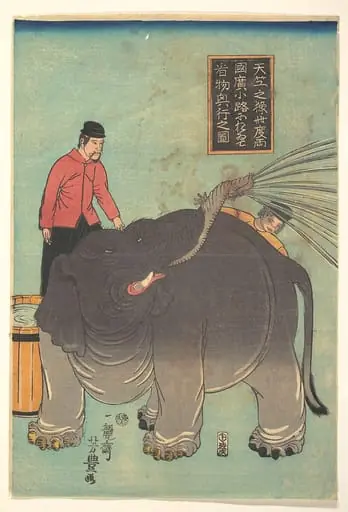 Untitled
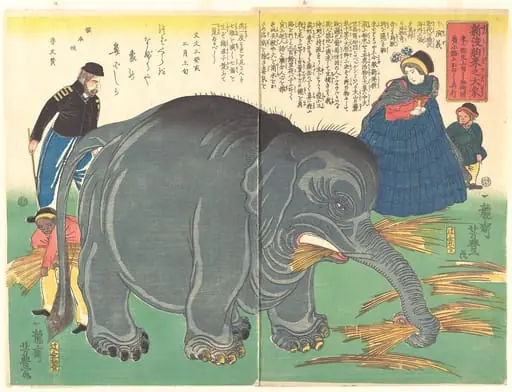 Untitled
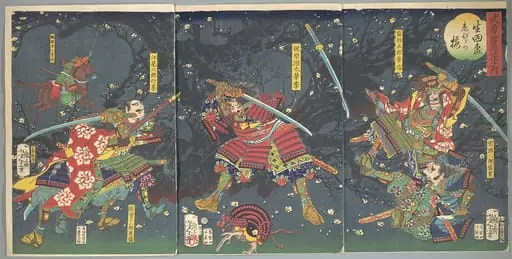 武勇雪月花之内 ゑびらの梅|Plum Blossoms in the Forrest of Ikuta, from the series Bravery-Beauty of the four seasons (Buyū setsugekka no uchi-Ikuta no mori, Ebira no ume)
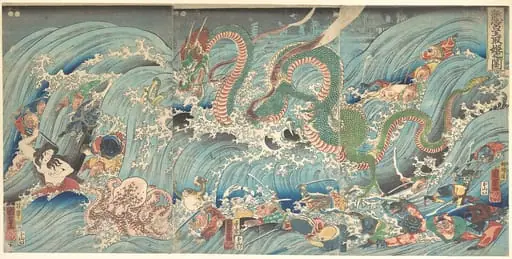 Ryugu Tamatori Hime no su|Recovering the Stolen Jewel from the Palace of the Dragon King