Artwork
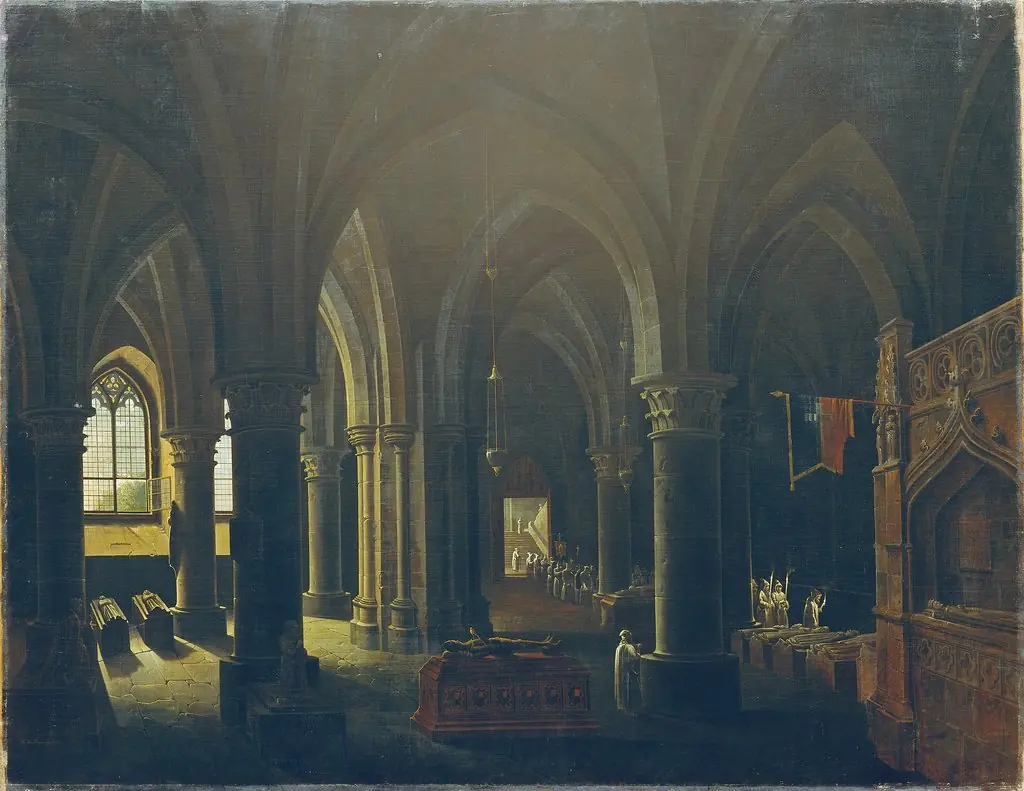
Tempelraum bei Nacht (Josef im Kerker, die Träume auslegend)
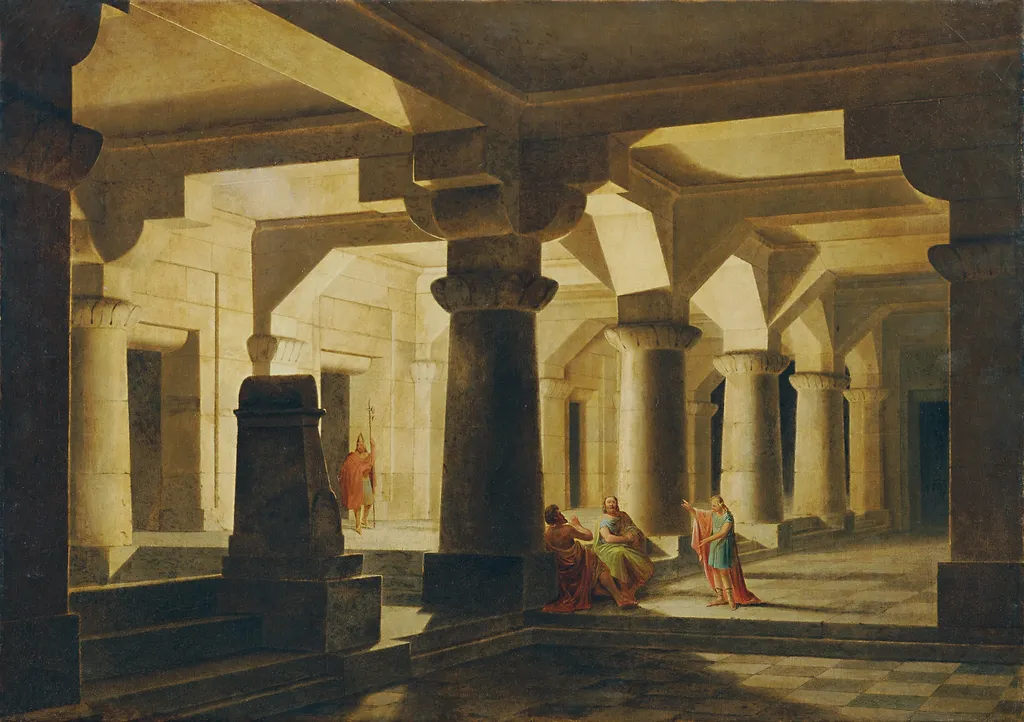
Tempelraum bei Nacht (Josef im Kerker, die Träume auslegend) is an oil painting by Štefan Dolinar. It dates from 1838 and is held in the collection of the Kunsthistorisches Museum.
About this work
Overview
Though titled with reference to Joseph in prison, the setting evokes a temple-like space rather than a dungeon, emphasizing contemplation over confinement.
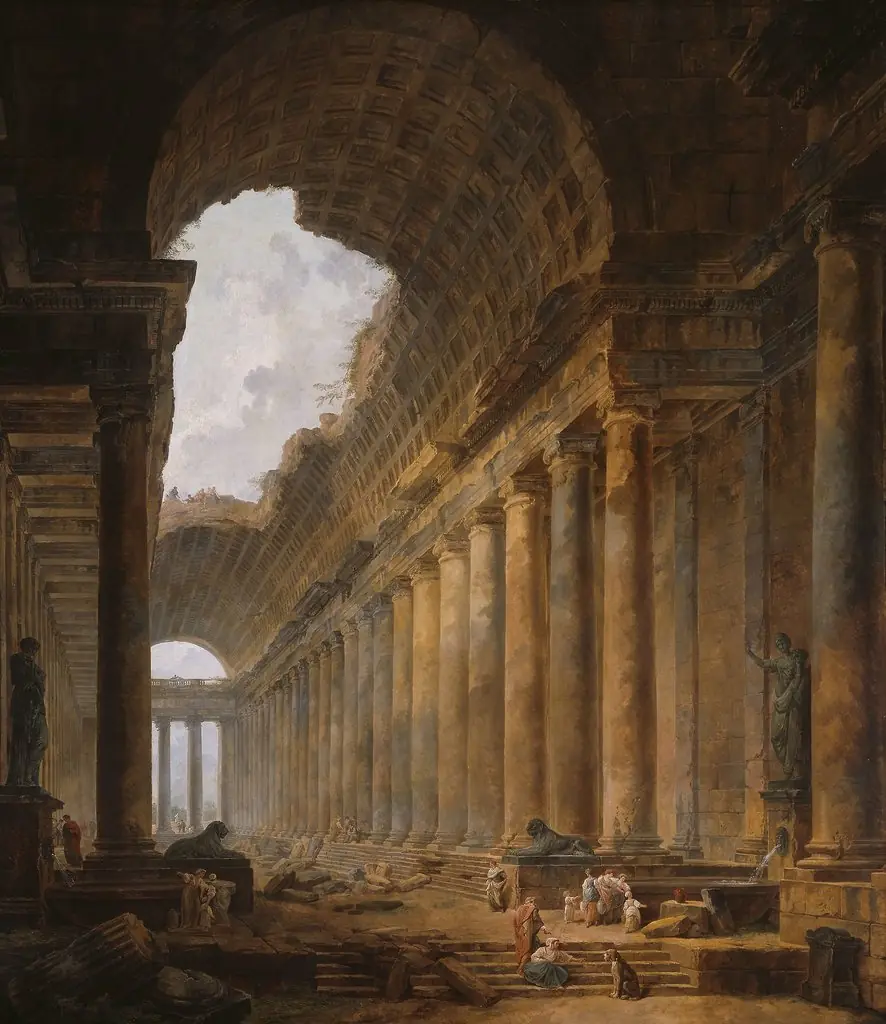
Painted in 1838 by Štefan Dolinar, Tempelraum bei Nacht (Josef im Kerker, die Träume auslegend) is an oil-on-canvas work currently held by the Kunsthistorisches Museum in Vienna. The scene portrays a group of figures gathered in a monumental, columned interior, interpreting dreams under the influence of natural light. Though titled with reference to Joseph in prison, the setting evokes a temple-like space rather than a dungeon, emphasizing contemplation over confinement.
Subject & Meaning
The painting illustrates the biblical episode of Joseph interpreting dreams while imprisoned, though the setting is idealized as a grand architectural space. Figures in flowing robes engage in quiet discourse, suggesting a moment of revelation rather than imprisonment. The absence of bars or darkness shifts focus from suffering to intellectual and spiritual interpretation, aligning the scene with Enlightenment ideals of reason and divine insight.
Technique & Style
Dolinar employs chiaroscuro to model forms and define spatial depth, with light streaming through arched openings to illuminate figures and stone surfaces. The contrast between bright zones and shadowed recesses enhances the architectural grandeur. Brushwork is precise yet restrained, favoring clarity over texture, and the palette is muted, dominated by earth tones and soft golds to sustain a reverent, tranquil mood.
History & Provenance
Created in 1838, the painting entered the collection of the Kunsthistorisches Museum shortly after its completion. Its acquisition reflects the museum’s early commitment to Central European academic art. No significant changes in ownership are recorded, and it has remained in Vienna since its creation, consistently displayed as part of the 19th-century European painting holdings.
Context
Dolinar worked during a period when historical and biblical subjects were favored in academic circles, often rendered with architectural grandeur to elevate their moral weight. The painting aligns with Viennese Neoclassical trends, where idealized spaces served as backdrops for narrative introspection. Unlike dramatic Romantic interpretations, Dolinar’s approach favors calm, ordered composition over emotional intensity.
Legacy
Though not widely reproduced, the painting remains a representative example of early 19th-century Slovenian-Austrian academic painting. It reflects the regional engagement with broader European artistic conventions and the use of architecture to frame spiritual themes. Its quiet intensity distinguishes it from more theatrical contemporaries, offering a restrained meditation on interpretation and divine meaning.
Own this work as a print
Artist & collection

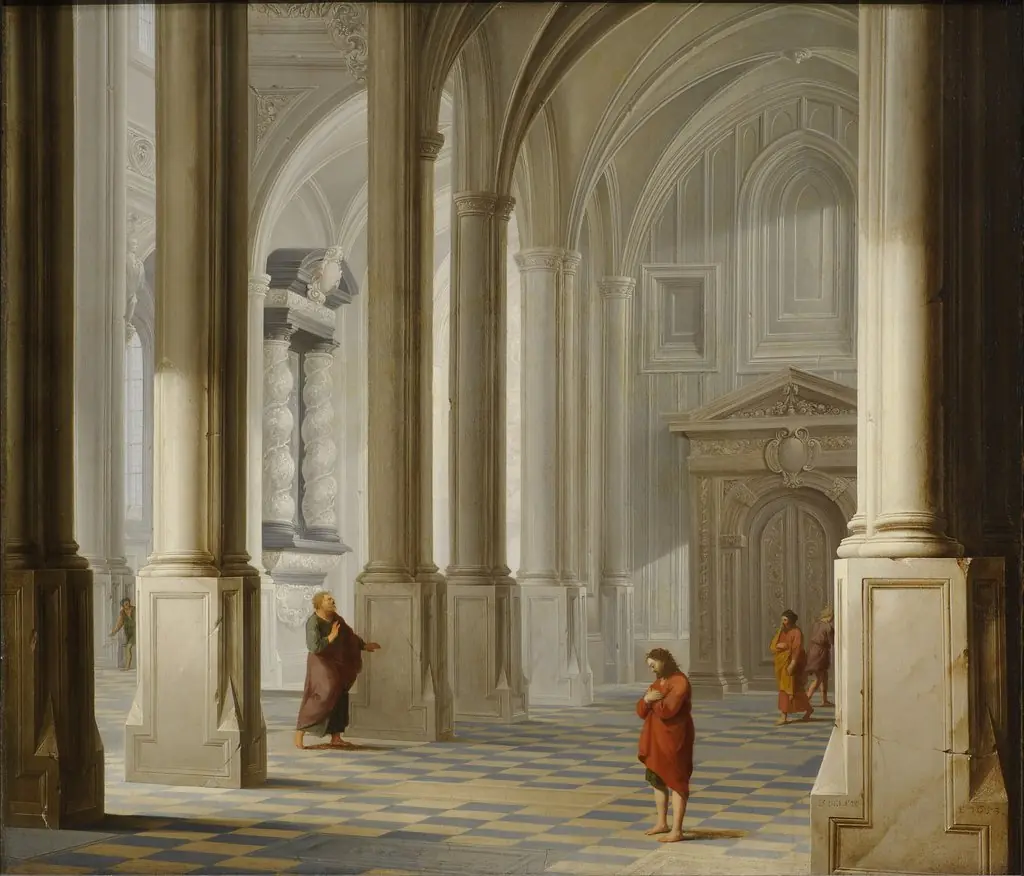 Church Interior with the Parable of the Pharisee and the Publican (Luke 18:9-14)
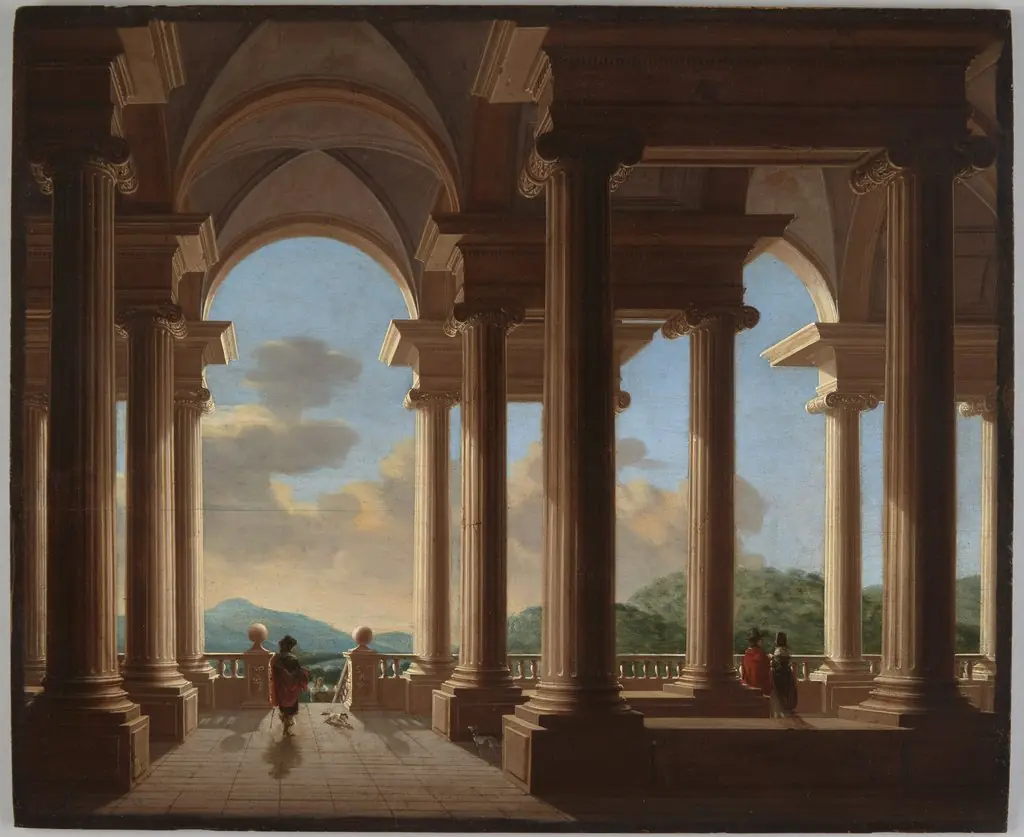 Terrace with a Colonnade
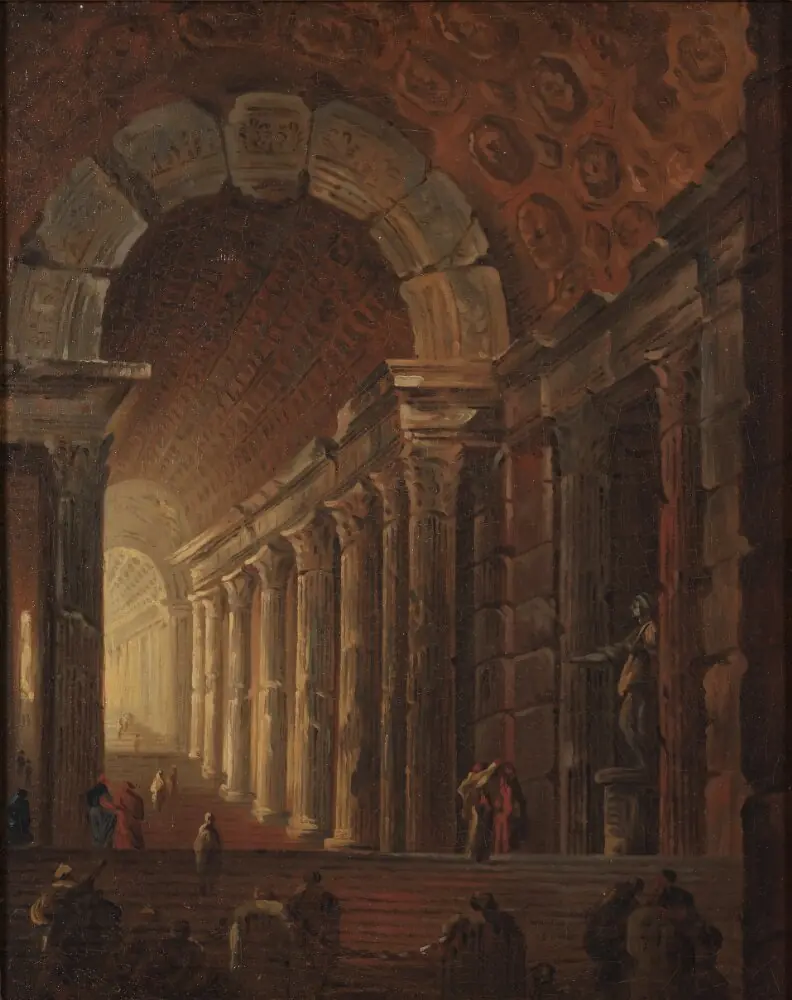 A Vaulted Staircase. Architectural Piece
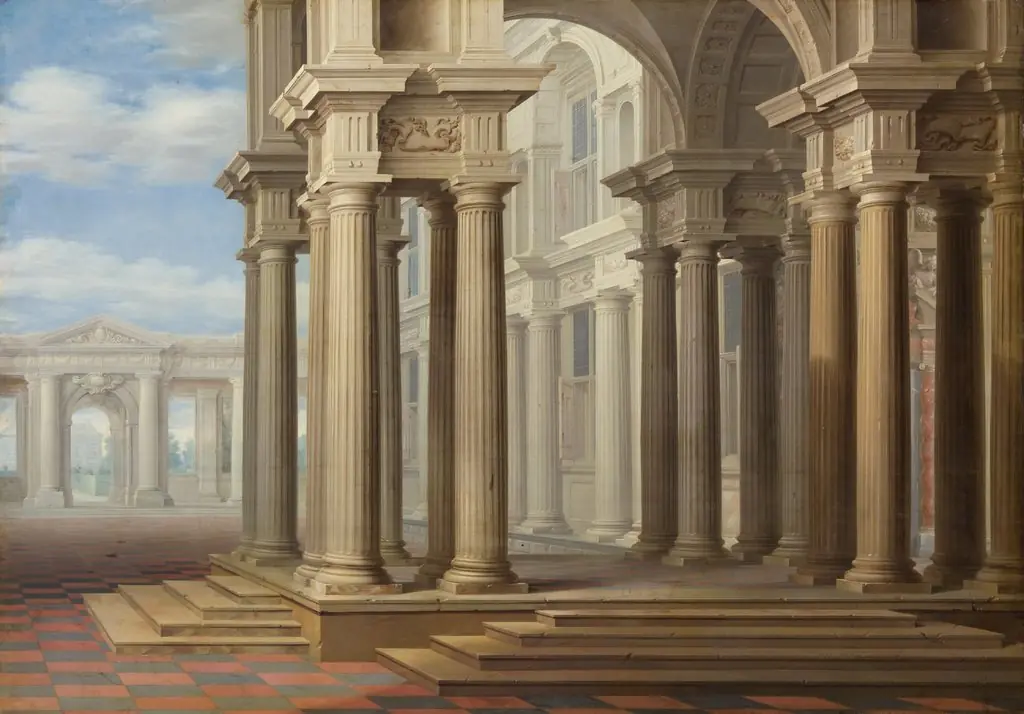 Fantasy architecture with steps and columns
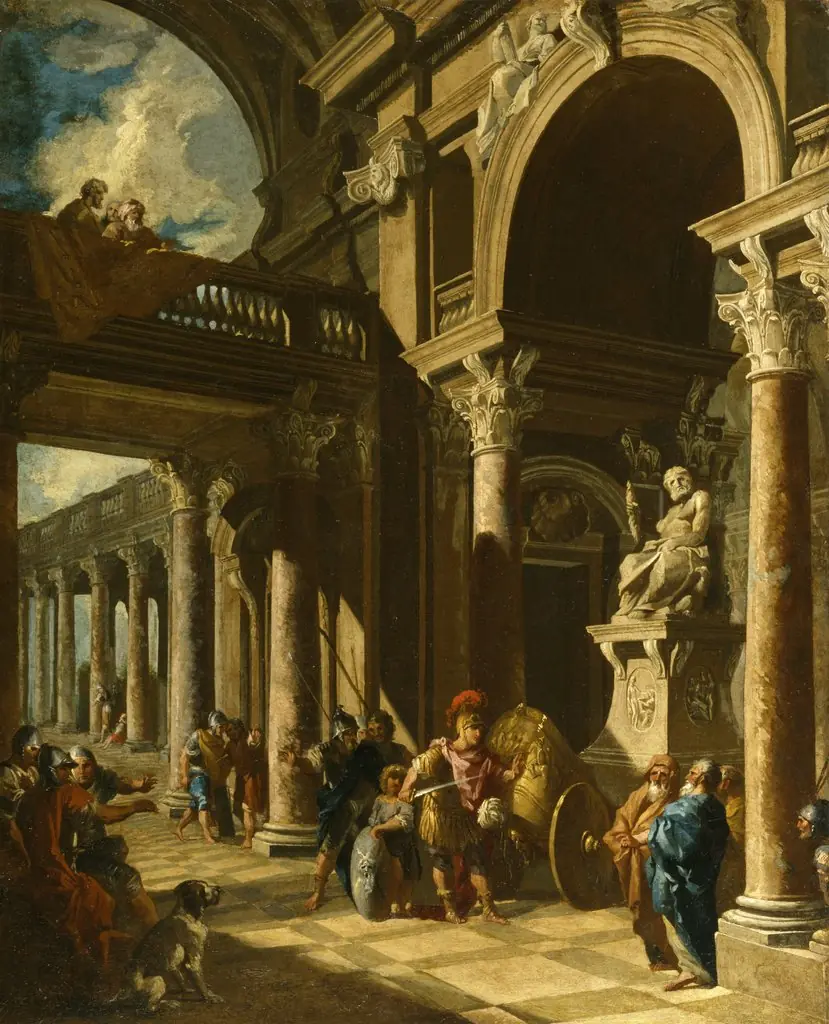 Alexander the Great Cutting the Gordian Knot
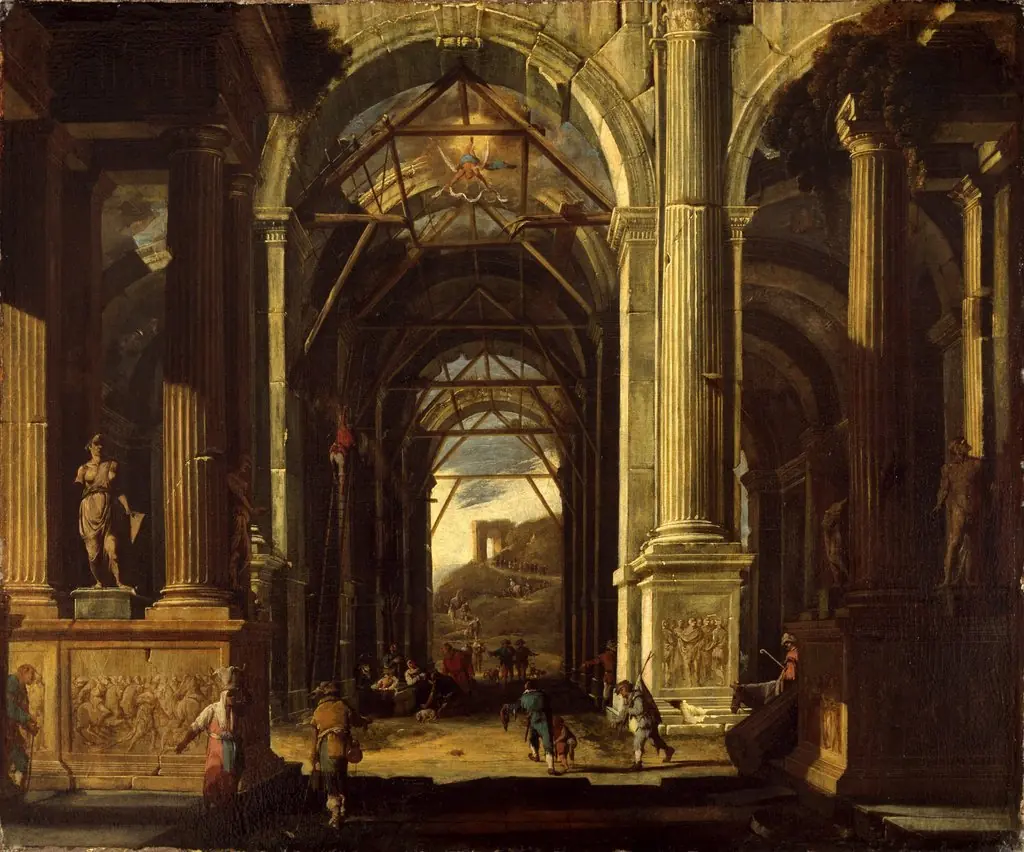 The Adoration of the Shepherds
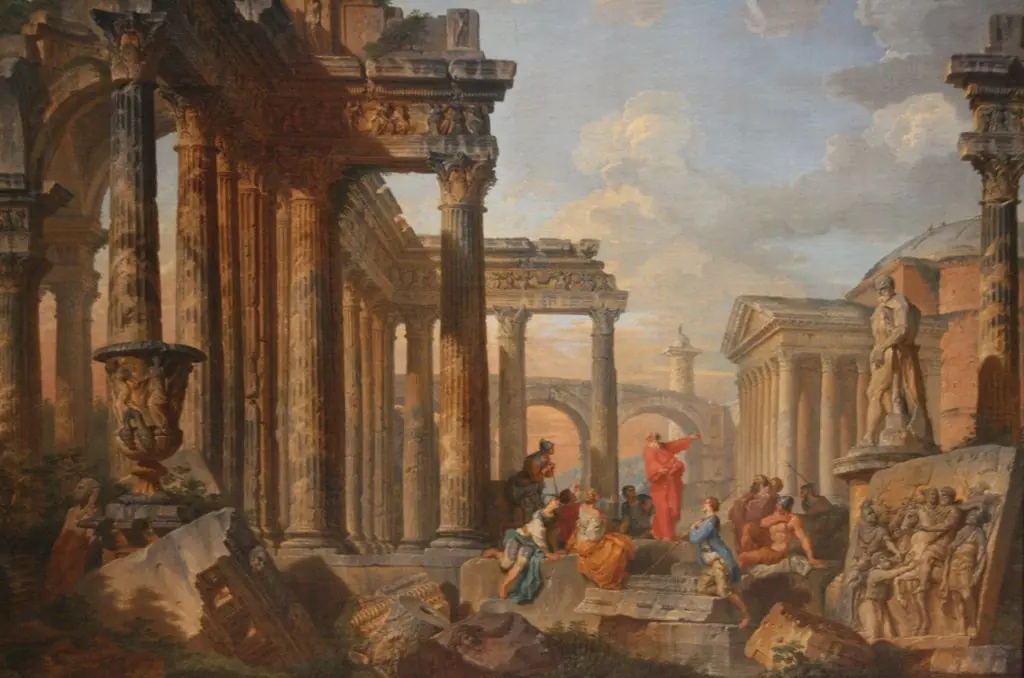 Roman Ruins with a Preacher
 Gotisches Gruftgewölbe
 The Obelisk
 Achilles Discovered Among the Daughters of Lycomedes
 The Obelisk
 The Old Temple