Artwork
Ruthenian woman – head of a peasant woman
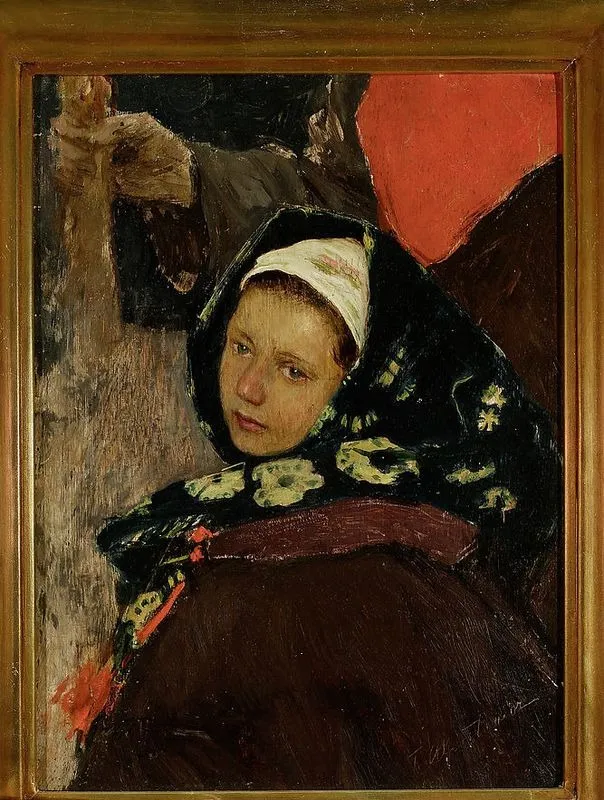
Ruthenian woman – head of a peasant woman is an oil painting by the Post-Impressionist artist Teodor Axentowicz. It dates from 1898 and is held in the collection of the National Museum in Warsaw.
About this work
Overview
Teodor Axentowicz, a Polish‑Armenian painter and former rector of the Academy of Fine Arts in Kraków, completed the oil painting *Ruthenian woman – head of a peasant woman* in 1898. The work is part of the National Museum in Warsaw’s collection and presents a close‑up portrait of a rural woman rendered in a post‑impressionist manner.
Subject & Meaning
The canvas shows the head and shoulders of a peasant woman, her dark dress and white headscarf indicating a traditional rural dress. Her expression is neutral and her gaze turns to the left, inviting contemplation of everyday life in the Carpathian region without overt narrative embellishment.
Technique & Style
Axentowicz employs a realistic rendering enhanced by chiaroscuro, using contrasting light and shadow to model the facial features and give the figure a three‑dimensional presence. The background blends dark and light tones, punctuated by a red shape that adds visual depth while maintaining a restrained palette typical of his post‑impressionist approach.
History & Provenance
Since its creation in 1898, the painting has remained in Poland, eventually entering the holdings of the National Museum in Warsaw. Its provenance reflects the artist’s reputation for documenting Hutsul and Ruthenian life, and the work has been displayed as part of the museum’s collection of 19th‑century Polish art.
Artist & collection
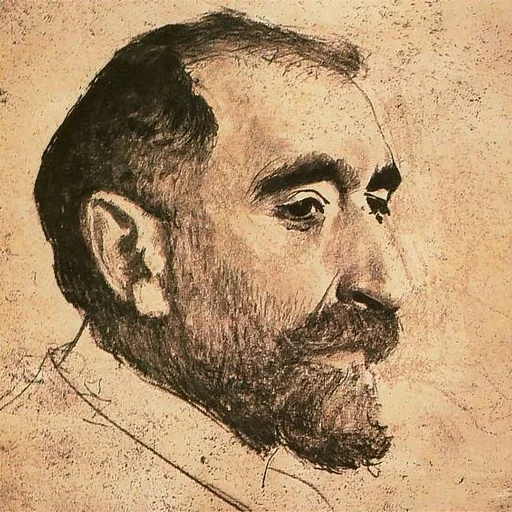
Artist
Teodor Axentowicz (Armenian: Թեոդոր Աքսենտովիչ, romanized: Tʻeodor Akʻsentovichʻ; 13 May 1859 – 26 August 1938) was a Polish-Armenian painter and university professor.

 La Ciociaretta
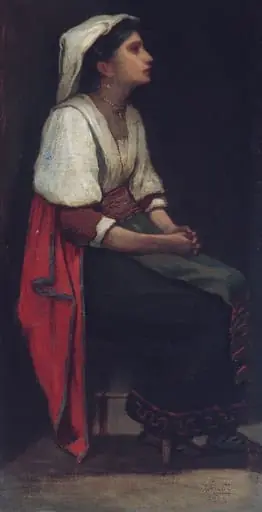 Italian Girl
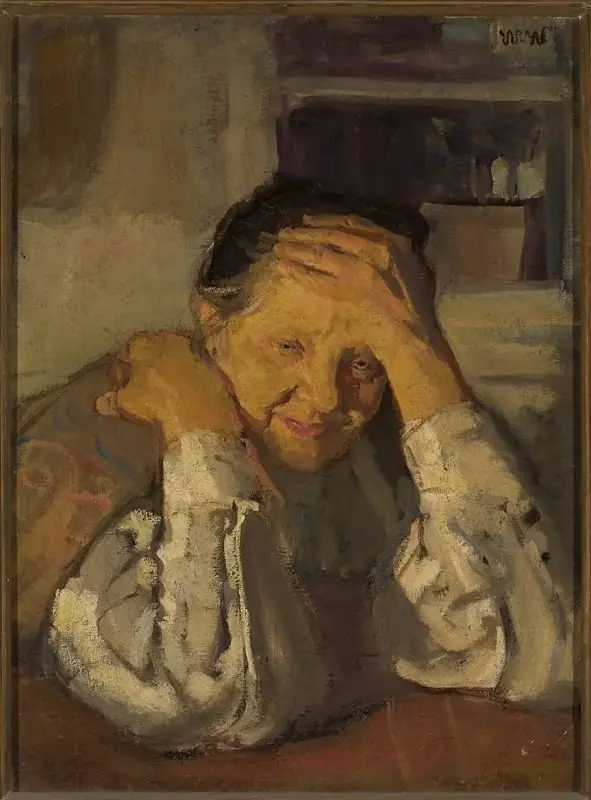 Portrait of artist’s mother
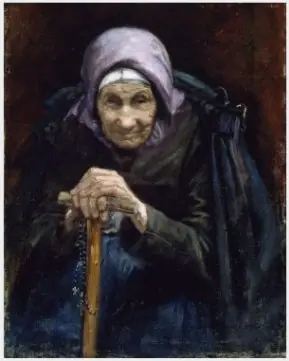 The Fisherman's Mother
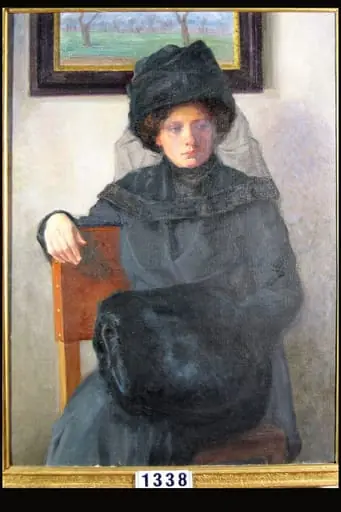 Portret de femeie
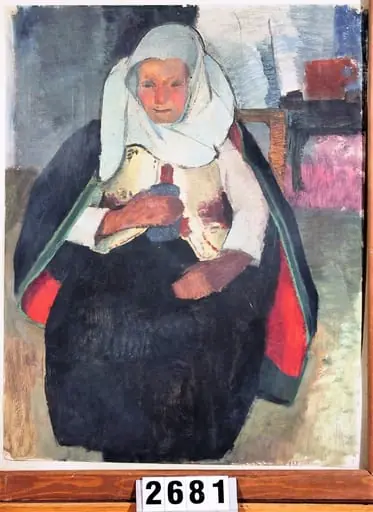 Țărancă săsoaică din Viscri
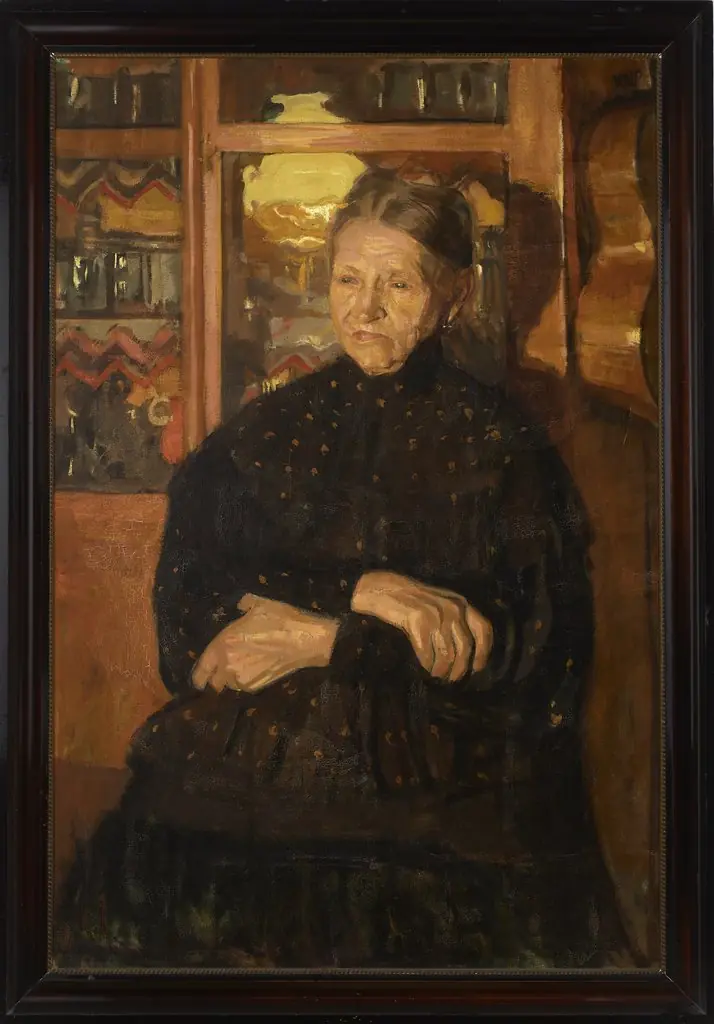 By Lightlamp – Portrait of Artist's Aunt
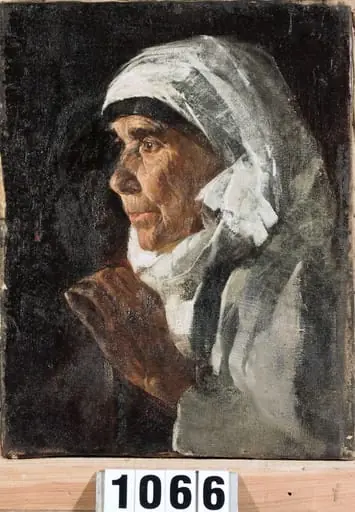 Portret de țigancă
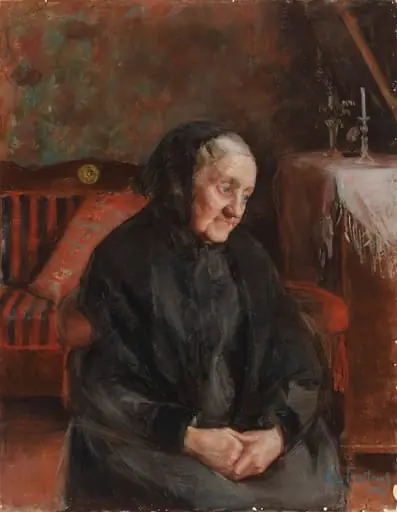 Isoäiti, tohtorinna Augusta Frosteruksen (os. Norling) muotokuva
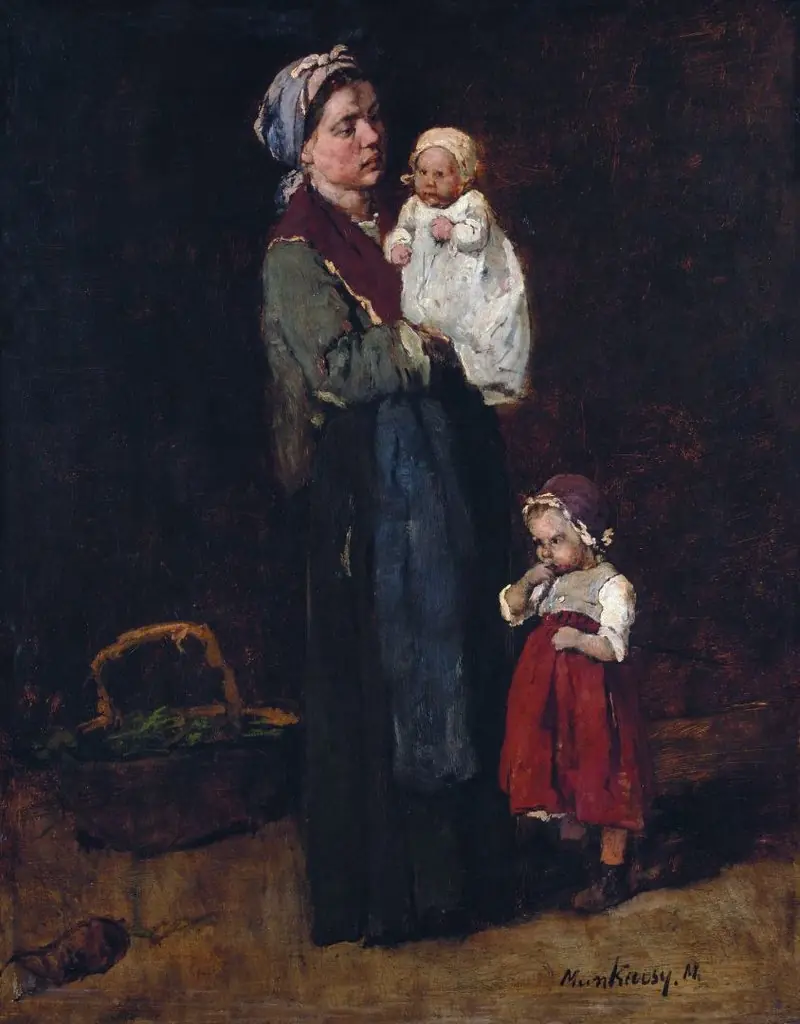 Study for the Pawnbroker's Shop
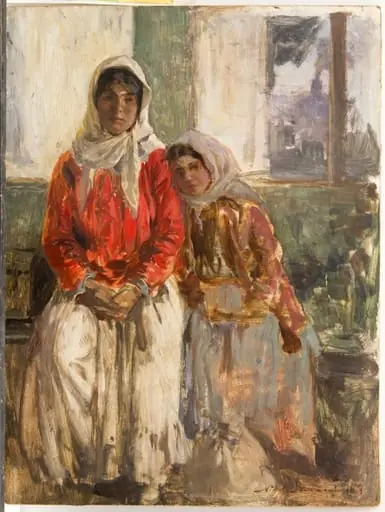 Două țigănci
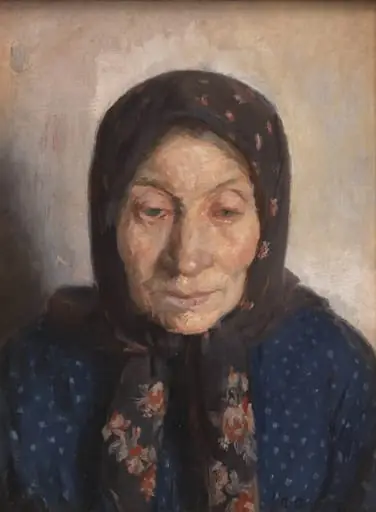 An Old Fisherman's Wife